
ALL KINDS OF FLOWERS!
By Fayla Schwartz, Autumn 2022
photos by Fayla Schwartz except as noted

photo by Thomas Noland
ALL KINDS OF FLOWERS!
By Fayla Schwartz, Autumn 2022
photos by Fayla Schwartz except as noted
The Salish Sea region is home to a wide variety of flowering plants. This article provides a short introduction to a few of the most common flowering plant families by highlighting some representative species. I’ve included a range of herbaceous plants, shrubs, and trees that display the diversity of flowering plants in our region. Getting to know even just a few representatives within these diverse families adds to enjoyment and exploration of nature, whether along a lowland trail through a local park or on a hike along the beach or in the mountains.

Pollinator on gumweed. photo by John F. Williams
Flowers are the reproductive parts of the group of plants called Angiosperms. These plants have evolved strategies to attract pollinators that ensure the formation of seeds. Flowers might display brightly colored petals (with colors tuned to the wavelengths of light most attractive to their pollinators), or offer high-energy nectar as a food source, or release scents that attract pollinators. In addition, some flowers do not attract pollinators at all, but use the wind to spread their pollen. The examples below highlight some of these fascinating flower-pollinator interactions.
Once the pollen reaches another flower of the same species, the plant will form seeds that carry the new generation. The main function of a fruit is to carry the seeds to a new place to grow. This may be facilitated by animals who eat the fruit and leave the seeds elsewhere, by the wind, or simply by heavy fruits falling from the parent plant and rolling on the ground.
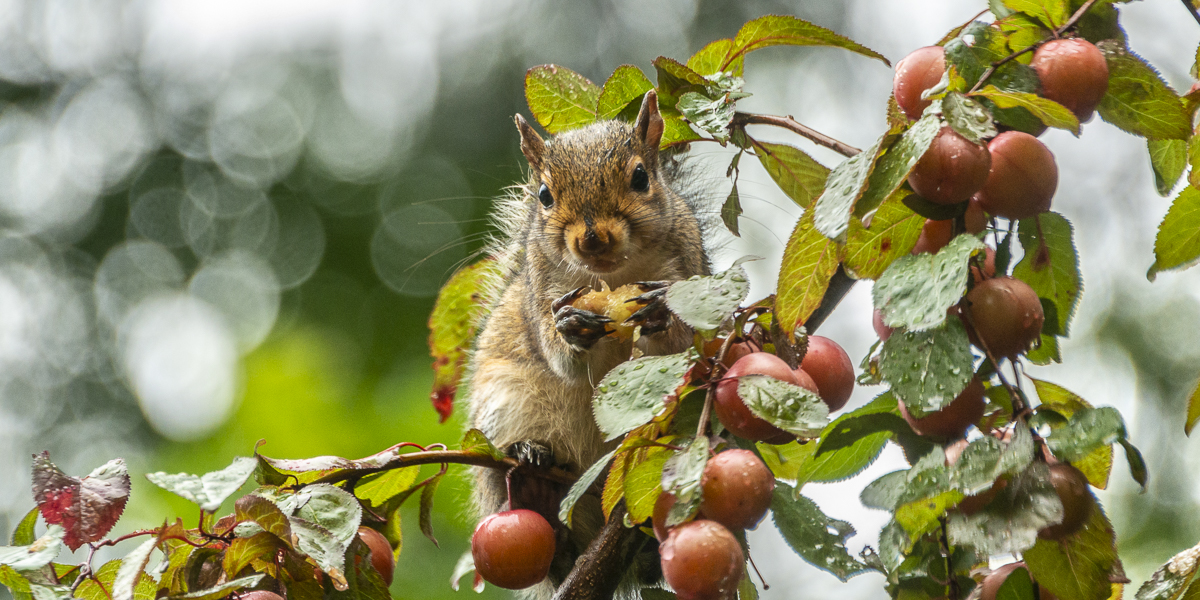
Squirrel eating plum. photo by John F. Williams
What is a “family” in biological terms? At a basic level, organisms that have similar characteristics and are evolutionarily related are grouped into families. For flowering plants, the family grouping has traditionally been based on similarities of flowers and fruits, rather than characteristics of stems or leaves. If reproductive characteristics were to vary a lot within a group of relatives, they probably would not continue to reproduce, but variations in leaves do not affect the production of offspring. Hence we see more similarities in the flowers among related species and individuals than we do in the leaves and stems. In recent years, DNA analyses have sharpened our understanding of plant family relatedness – hence the placement of large-leaved skunk cabbage and tiny duckweeds in the same family.
In this article I’ll attempt to give a short introduction to flowers of a few of the most common flowering plant families by highlighting one representative species for each family.
Heath or rhododendron family (Ericaceae)

Where better to start than with our Washington state flower, the Pacific Rhododendron or Rhododendron macrophyllum? Every spring, it is impossible to miss the Pacific Rhododendron shrubs bursting with beautiful pink flowers along roads and trails of the Olympic Peninsula. These flowers advertise their presence to pollinators with their bright color and extended stamens and styles. The stamens produce pink pollen that needs to be transferred by an insect to the curved style of another flower of the same species. Once the pollen (containing sperm) is rubbed onto the stigma at the tip of the curved (female) style, the sperm travels down through the style to the thicker ovary at the bottom where the eggs reside. The eggs are eventually fertilized by the sperm and form embryos. The ovary becomes a fruit that eventually dries and splits open to release seeds that will become the new Pacific Rhododendron generation.
In addition to Rhododendron, some common native members of the Heath family in our area include Pacific madrone, kinnikinnick, salal, and native huckleberries and cranberries.

Buttercup family (Ranunculaceae)
The red columbine, or Aquilegia formosa, is a favorite native wildflower in the Buttercup family.
Each flower consists of five tubular nectar spurs that boast their presence to hummingbirds, their favored pollinators. Hummingbirds are attracted to the red and yellow colors of the nectar spurs, and their long tongues easily reach to the bottom of the spur where they find sugary nectar. In the process of gathering the nectar, the flower’s pollen is brushed onto the birds’ feathers, and then deposited on the styles of the next flower visited.
Other well-known native plants in this family are anemones, clematis, and larkspur, as well as the western buttercup.

Rose family (Rosaceae)
The large Rose family includes herbaceous plants like strawberry as well as shrubs such as roses and trees like mountain ash. Many of our favorite sweet fruits come from the Rose family, including apple, pear, peach, cherry, strawberry, and blackberry. Despite different growth habits, most of these species have leaves with toothed margins and flowers with “many” (more than 10) stamens. The fruits vary from a simple drupe (such as a cherry) to pomes (e.g., apple) and even dry inedible follicles.
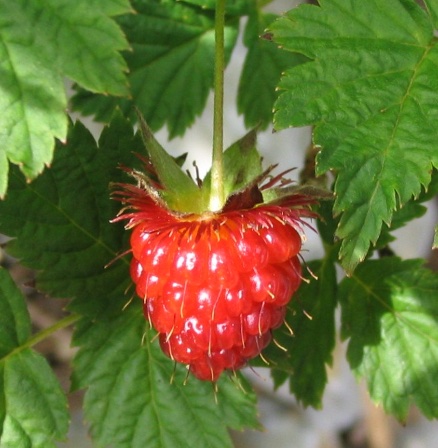
A quintessential Salish Sea region member of the genus Rubus (the blackberries and raspberries) is Salmonberry, Rubus spectabilis. This shrub can grow to be quite large and spreading. The bright pink flowers bloom in April at low elevations. Members of local Native tribes prize the “berry” (which is not actually a true berry but a cluster of tiny cherry-like fruits called drupelets) for making pies and jams.
Soapberry family (Sapindaceae)
In Washington state, this is a family of trees. The bigleaf maple, or Acer macrophyllum, is a large deciduous tree common to lowland forests, most commonly found in dry, sunny areas. Bigleaf maples provide shade for vulnerable western hemlock and western red cedar seedlings to start their growth, as well as homes for birds, insects, lichens, licorice ferns, and many more organisms that live on the maple’s branches.


The flowers of bigleaf maple open in the spring before the tree’s leaves come out. They form hanging clusters called racemes and produce nectar that attracts bees and other insects that pollinate them. Most bigleaf maple flowers are staminate (male only) but some have both male and female parts. After pollination, the wing-shaped ovaries grow, surrounding the developing seeds and forming hard, brown fruits (or samaras) with papery wings that fall from the tree or sail in the wind to carry the seeds to their new homes.
Birch family (Betulaceae)
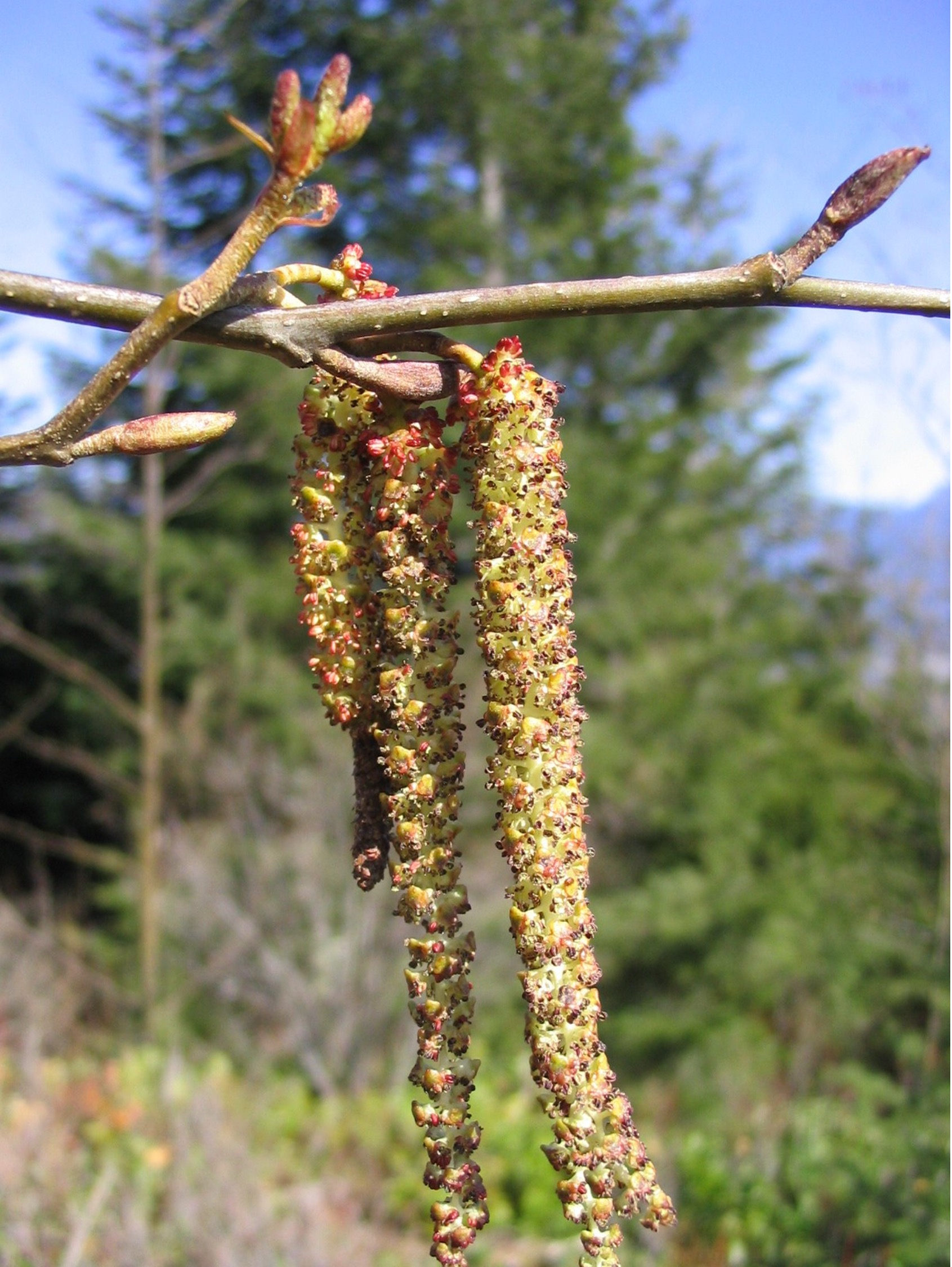
Another family of trees and shrubs includes red alder (Alnus rubra), whose seeds sprout and begin growing with very little difficulty once they have a little water. Red alder trees grow quickly to heights up to 80 feet. Both pollen and seeds of red alder are wind-dispersed. The flowers are clustered in catkins, which are hanging bunches of unisexual flowers that are reduced to either stamens only, or to ovaries and styles only. They have no sepals or petals, as they do not need to attract animal pollinators. The male catkins produce huge amounts of pollen in the spring, as every allergy-sufferer knows. The pollen blows in the wind and may or may not randomly land on female flowers of another red alder tree. Once the flowers of the female catkins are pollinated, seeds form in tiny winged fruits inside the familiar cone-like structures. The fruits then disperse with the wind as well, and new baby alder trees start growing.


Aster family (Asteraceae)
It’s difficult to pick a favorite plant from this very large family; here are just two examples. Walking along the beach, it is hard to miss the bright yellow “flowers” of Pacific gumweed, Grindelia integrifolia. These are actually not single flowers, but many tiny flowers clustered together to look like one large flower (called a pseudanthium, or false flower). If you look closely, you’ll see elongated ray flowers (petals) and inner disc flowers. When a bee comes to pollinate a gumweed pseudanthium, it gathers and deposits pollen on many of these tiny flowers at once, resulting in many seeds setting. This plant gets is name from the sticky latex exuded by its immature flower heads.
You have probably heard of, or even used, preparations of Arnica on sore muscles, bruises and skin wounds. Arnica is a popular medicinal herb from Europe, and we have several native species of our own, such as Mountain Arnica (Arnica latifolia) and Streambank Arnica (Arnica lanceolata). These plants are easy to identify to the genus Arnica, as they have solid yellow inflorescences of ray and disc flowers, and opposite leaves.
Some other native members of the Aster family in Washington are the purple “daisies” called fleabanes, yarrow, pearly everlasting, tarweeds, pussytoes, and thistles, as well as the showy balsamroot and aromatic sagebrush of central and eastern Washington.

Lily family (Liliaceae)
Lilies generally have showy flowers to attract their pollinators. One of the showiest lilies in the region is the Columbia lily, Lilium columbianum. The large, bright orange flowers are covered in dark red “freckles.” The color contrast between orange and red and the large petals situated at the top of tall stems (two to three feet high) attract the flowers’ pollinators, rufous hummingbirds and butterflies.
Other wildflower members of the Lily family native to forests and alpine areas of our state are the queen’s cup, avalanche and glacier lilies, fairy bells, and twisted-stalk. (Close relatives of these lilies are also included in several other plant families; see the Washington Flora Checklist linked below under Resources for more information.)

Orchid family (Orchidaceae)
Most people associate orchids with tropical environments. You may be surprised to learn that the Salish Sea region is home to many species of orchids, most of which are so small that they are not easily noticed. Our showiest common orchid, the fairy slipper or Calypso bulbosa, blooms in the spring in shady forested areas. It has only one leaf that hugs the ground, but the flowering stalk is a couple of inches high and the flowers sport stunning pink-purple petals and sepals. The flower’s lower petal (called the lip or labellum) invites small bees to land and then venture into the flower’s center where they find nectar and in the process pick up or drop off pollen.
Washington is also home to several dozen more native orchids, including the lady’s-slipper, rattlesnake-plaintain, bog orchids, and ladies’-tresses. A fascinating group within this family is the coralroots, forest species that have no leaves of their own, but intertwine with and depend on fungi in the soil to bring them nutrients from larger plants.

Arum family (Araceae)
One of the most unique and obvious flowering plants in western Washington is the early-blooming yellow skunk cabbage, Lysichiton americanus. These plants are easily recognized by their very large broad leaves, which can measure up to 36 inches long by 12-18 inches wide. Skunk cabbage grows in standing water, sometimes in roadside ditches and sometimes in springtime wetlands.
Its tiny flowers are clustered together on a flowering stalk called a spadix, which is surrounded by a large, bright yellow bract called a spathe. The spadix emits a pungent, “skunky” odor, which attracts the small rove beetles that pollinate the many tiny flowers. After pollination, the spathe withers and the ovaries of the flowers develop into reddish berries (containing seeds) that are plucked and dispersed by birds.
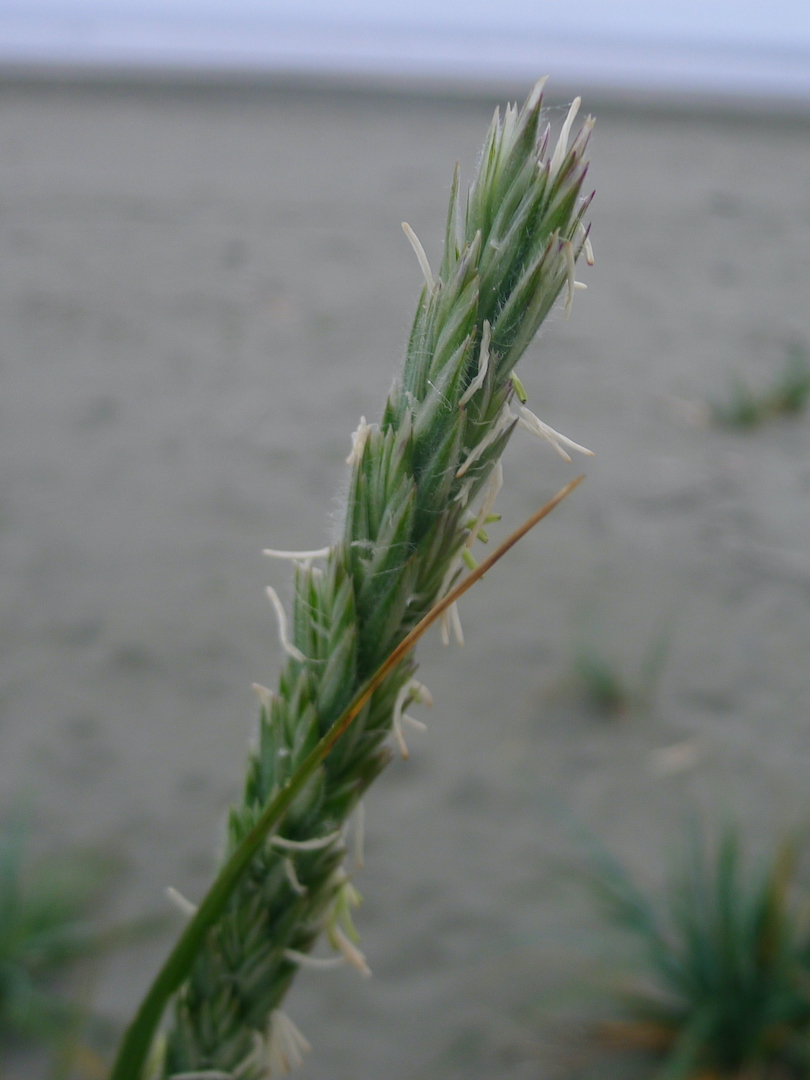
Flowering dunegrass (Leymus mollis). photo by icosahedron (CC BY 4.0)
Grass family (Poaceae)
Did you know that grasses are also flowering plants? The flowers are small and lack petals and sepals, since these wind-pollinated plants do not need to attract pollinators. Grasses are found in every habitat known on our planet, and they provide us with the staple grains of most diets on earth: wheat, rice, barley, corn, rye, and millet are all grasses. An easily recognized grass here in the Salish Sea area is the American dunegrass, Leymus mollis. This tall, sturdy, salt-tolerant perennial grass grows on shifting coastal sand dunes and marshes of Washington. The foot-long inflorescences start developing in the spring and flowers open in the summer.
Identifying grass species (and their relatives, sedges and rushes) is challenging because of the very small green flowers, but there are a few common species that are relatively easy to learn based on their size, features of the leaves and inflorescences, as well as their habitats. A field guide with photos such as Plants of the Pacific Northwest Coast is a good place to start.
FIND OUT MORE
guides to flower families and species
Washington Flora Checklist hosted by the University of Washington Herbarium at the Burke Museum. Note that botanists like to change how plants are grouped pretty frequently, and we recommend checking the Washington Flora Checklist for the latest information if you need the “official” up-to-date plant taxonomy for a particular species.
Burke Herbarium Image Collection. Great photos and plant information. Most useful if you know the name of the plant or the family you are searching for.
Botany in a Day: The Patterns Method of Plant Identification by Thomas J. Elpel, an easy-to-read and well-illustrated guide to understanding plant families in terms of their common features.
Plants of the Pacific Northwest Coast: Washington, Oregon, British Columbia, and Alaska edited by Jim Pojar and Andy MacKinnon, a classic plant ID book focused largely on native species (not as helpful for weeds)
flower anatomy terms and illustrations
Parts of a Flower: An Illustrated Guide | American Museum of Natural History
Flower – A Fascinating Organ of Angiosperms (Parts of a Flower) | CK-12 Foundation (ck12.org)
amazing flower development and pollination videos
(including close-up, slo-mo, and time lapse)
Slo-Mo Footage of a Bumble Bee Dislodging Pollen | YouTube (native bumblebees are in decline; watch their amazing “buzz” trick)
This Vibrating Bumblebee Unlocks a Flower’s Hidden Treasure | Deep Look – YouTube (if you like potatoes and tomatoes, don’t miss this)
Sexual Encounters of the Floral Kind – Oxford Scientific Films on YouTube (A classic 1980 pollination video, a bit racy with a lot of dry British humor; parents might want to screen before sharing with younger kids)
First Flower | NOVA video on You Tube. This video describes the revolution in plant names that has occurred with recent DNA analysis techniques, the search for the date of the first flowers on Earth, and the work of some historic and modern “plant explorers,” including Dan Hinckley of Kitsap County WA.
additional resources
Maple seeds: nature’s helicopters by Cliff Cantor in Trees Pacific Northwest
Bigleaf maple decline tied to hotter, drier summers in Washington by Michelle Ma in UW News
About Coralroot Orchids | USDA
Also in Salish Magazine: Red Alder (an entire article about these trees)
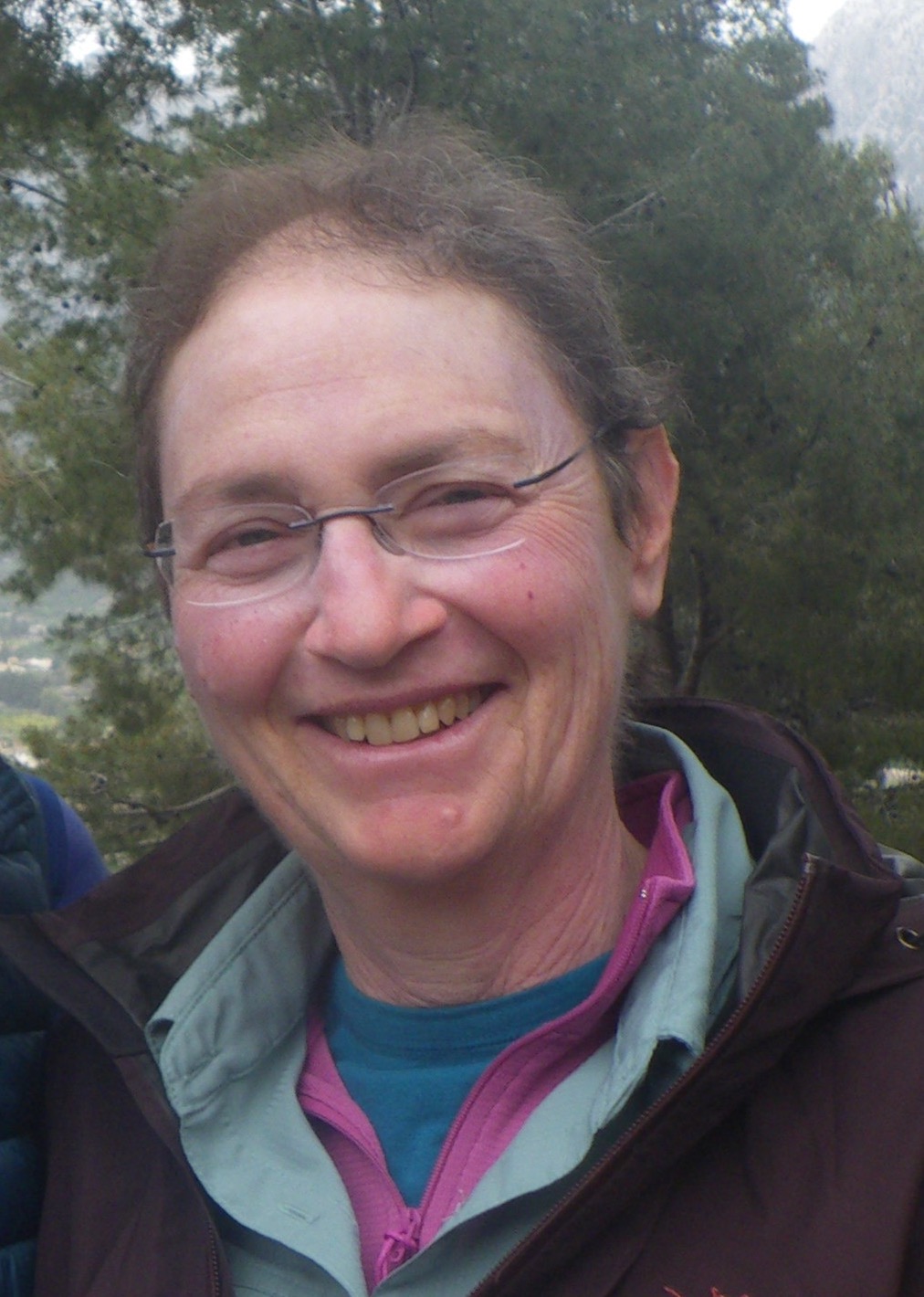
Fayla Schwartz earned her Masters’ degree in Biology from Eastern WA University and her PhD in Botany from the University of WA. She taught biology and botany at Everett Community College for 25 years, including a very popular class called Native Plants of Washington. Fayla lives in Port Townsend and is the Chair of the Olympic Peninsula Chapter of the Washington Native Plant Society.
Table of Contents, Issue #17, Autumn 2022
Mountain Lilies
By Laura Mariko Marx, Autumn 2022The white avalanche lily (Erythronium montanum) and the yellow glacier lily (Erythronium grandiflorum) are native Pacific Northwest flowers that are related, but are usually found at slightly different altitudes. The best time to see...
Dandelion Transformation
by John F. Williams, Autumn 2022 by John F. Williams, Autumn 2022A rugged-looking brown seed attached to a parachute glides through the air. How did that dandelion flower create dozens and dozens of these seeds? This six minute video takes a look at that...
Poetry-17
Autumn 2022 Autumn 2022All Goes Round Poem and photos by Barb Erickson Roundis the sun,seeming to rise each dayand descend each night,providing heat and light and morethan a touch of mysteryIt is roundwe are toldbut we dare not stare it in the faceto see for...
Sidewalk Wilderness
Text & photos by Sara and Thomas Noland, Autumn 2022 Queen Anne's lace.Text & photos by Sara and Thomas Noland, Autumn 2022The sidewalk is not the first place that comes to mind when thinking about habitat for plants and animals. Even discussions of “urban...
The Dandy Dandelion
By Sarah Lorse, Autumn 2022 photos by John F. Williams except as noted By Sarah Lorse, Autumn 2022 photos by John F. Williams except as notedThe dandelion is an iconic flower. It brings a burst of cheery yellow in early spring and summer seed-poofs to wish upon — a...
After the Camas
By Katherine Derbyshire, Autumn 2022Spring bloom on the prairie at Glacial Heritage Preserve near Grand Mound, Washington. photo by Thomas NolandBy Katherine Derbyshire, Autumn 2022Editor's Note: Mima Mounds near Littlerock, Washington, is one of several prairie...
Native Flowering Shrubs
By Julie O'Donald, Autumn 2022Flowering salal. photo by John F. WilliamsBy Julie O'Donald, Autumn 2022When it comes to wildflowers, native shrubs aren't the first thing most people think of, yet nature's gardens include an abundance of flowering shrubs at the right...
COPYRIGHT
Copyright SEA-Media
All rights reserved. Reproduction or distribution, in whole or in part. without consent of copyright owner is strictly prohibited — except for brief quotations in critical reviews and other noncommercial uses permitted by copyright laws.
SEA-Media is a 501(c)(3) nonprofit corporation
PLEASE HELP SUPPORT
SALISH MAGAZINE
DONATE
Salish Magazine contains no advertising and is free. Your donation is one big way you can help us inspire people with stories about things that they can see outdoors in our Salish Sea region.
We also don't advertise Salish Magazine, so please spread the word of this online resource to your friends and colleagues.
Thanks so much for your interest and your support.