
10 THINGS YOU MAY NOT KNOW ABOUT DUCKWEED
by Adelia Ritchie, Autumn 2020
Photos by John F. Williams, except as noted

10 THINGS YOU MAY NOT KNOW ABOUT DUCKWEED
by Adelia Ritchie, Summer 2020
Photos by John F. Williams, except as noted
1. Duckweed grows in dense colonies in quiet water that is undisturbed by wave action. We try to avoid insulting still waters by calling them “stagnant.” We prefer to call them “wetlands.”
2. Duckweed can be either a formidable enemy or a beneficial ally. Either way, it creates a stunning green blanket on a shady pond at the edge of a quiet forest.
3. Duckweeds (Lemna minor) are the smallest flowering plants known. They have no leaves or stems, but some have roots, and they float freely in dense colonies.
Some Other Stories
Birds on an Urban Lake
by Dave Galvin
Spring 2026
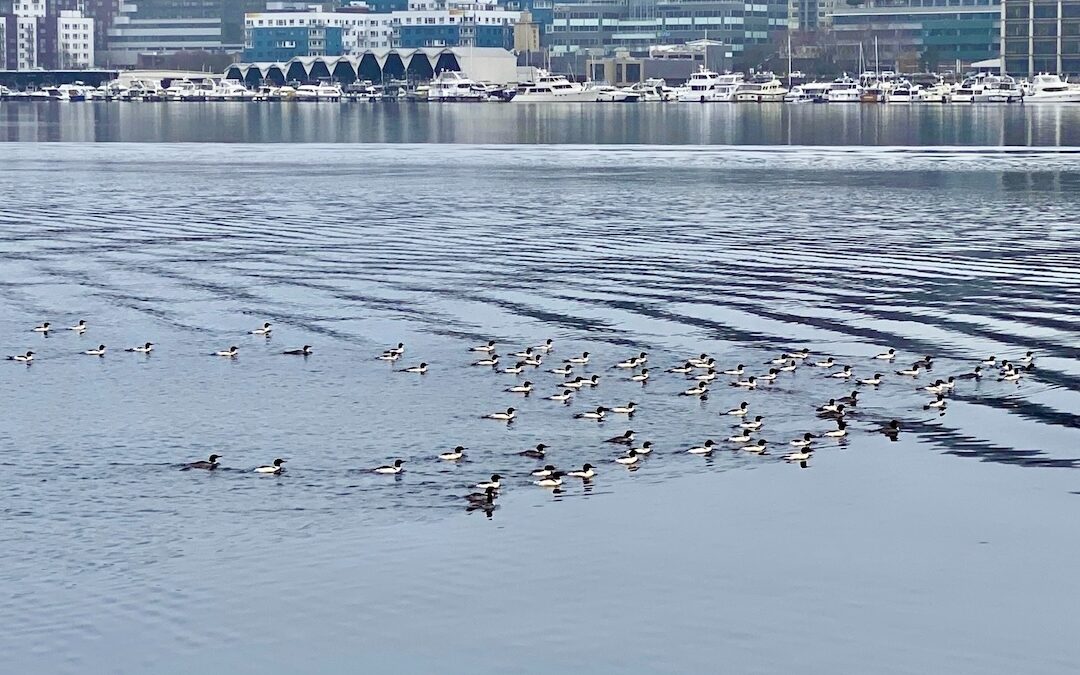
The Salish Sea is defined by water: the sea itself, the freshwater lakes and rivers, and rain that is the hallmark of the region. It is no surprise, then, to see waterbirds.
Mapping Red-Winged Blackbird Territories
by Mica Sage Richards
Spring 2026
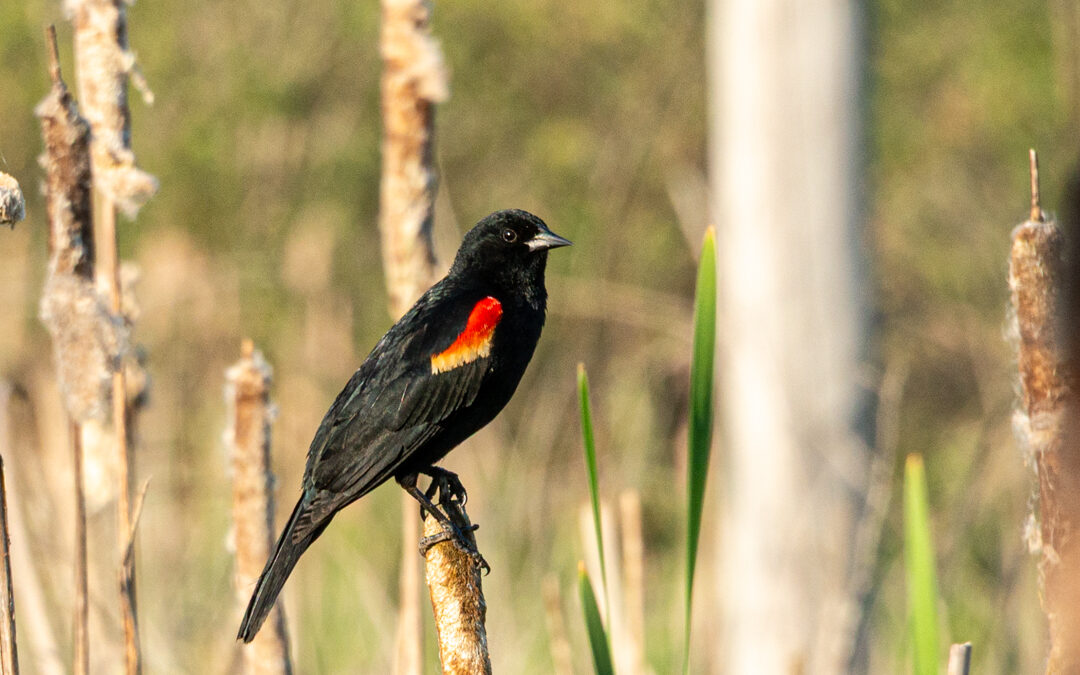
Conk-la-ree! I flipped over the soggy map and marked the location. It was the first day of my field project, and I wondered if I had bitten off more than I could chew.

A pond covered with duckweed, photo by Adelia Ritchie.
4. Duckweed prefers to grow in waters rich in nutrients such as phosphorus and nitrogen, typical components of agricultural runoff. This is good news because duckweed can clean the water by absorbing these chemicals.
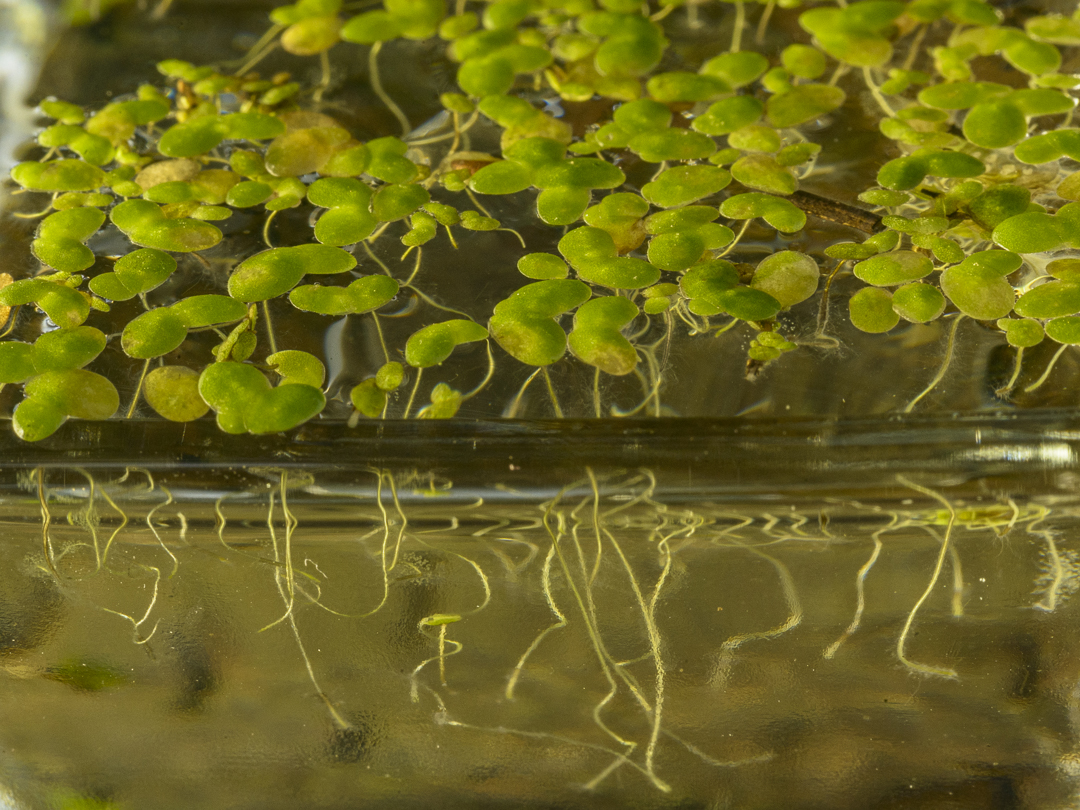
5. Surprisingly, duckweed is a favorite food for some ducks. Some say this is how duckweed got its name. Duckweed is reproductively clever. It wants to be attractive to ducks because ducks help spread it when it sticks to their feathers.

6. A duckweed plant produces a daughter bud about once a day. With ideal growing conditions, the original plant and its daughter buds can produce as many as 17,500 plants in two weeks. Some folks would call this an “invasive” plant.

A pond covered with duckweed, photo by Adelia Ritchie.
7. The problem with duckweed is that it can completely cover the surface of a wetland area, blocking sunlight from reaching plants growing on the bottom.
8. One benefit duckweed provides when it covers a wetland is that it blocks mosquitos from laying eggs. In parts of the world, diseases like malaria, dengue fever and Zika virus are spread by mosquitos.

A pond covered with duckweed, photo by Adelia Ritchie.
9. Live duckweed plants can be purchased on Etsy and Amazon, among many other places. If you have a koi pond, this is a treat for koi and might help prevent them from feasting on each other’s youngsters.
10. Last but not least, NASA believes duckweed, being edible and full of important micronutrients, including inflammation-fighting antioxidants, may be the optimal food for growing onboard spaceships, feeding astronauts maximum nutrients and taking up the least amount of room in compact, extremely productive space farms!

Note from John F. Williams:
Needing to get some duckweed photos for this article, I filmed the process to give readers a look “behind the scenes.”
Don’t laugh (too hard), but since getting together with people is problematic right now, I tried something new: making a video where all the management, cast, and crew is just one person: me.
It’s not perfect, but it’s only three minutes long.
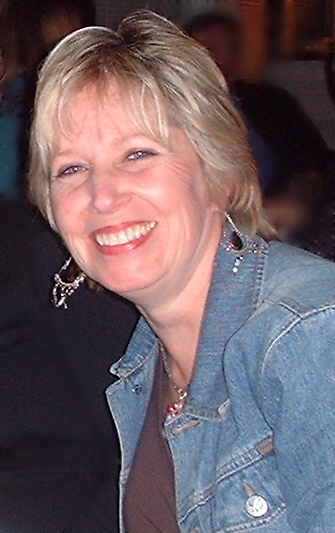
Adelia Ritchie grew up on a northern Virginia farm with horses, cattle, dogs, and her pet pig Porky, who ran the whole show. A long-time resident of the great Pacific Northwest, Adelia is a serial entrepreneur, scientist, educator, and artist, and currently works with educators and legislators to promote a deeper understanding of the science of climate change and its impacts on the complex ecological web of life. Adelia resides in Hansville, WA, with her garden, her dogs, and a flock of very entertaining chickens.
Table of Contents, Issue #9, Autumn 2020
No Results Found
The page you requested could not be found. Try refining your search, or use the navigation above to locate the post.
COPYRIGHT
Copyright SEA-Media
All rights reserved. Reproduction or distribution, in whole or in part. without consent of copyright owner is strictly prohibited — except for brief quotations in critical reviews and other noncommercial uses permitted by copyright laws.
SEA-Media is a 501(c)(3) nonprofit corporation
PLEASE HELP SUPPORT
SALISH MAGAZINE
DONATE
Salish Magazine contains no advertising and is free. Your donation is one big way you can help us inspire people with stories about things that they can see outdoors in our Salish Sea region.
We also don't advertise Salish Magazine, so please spread the word of this online resource to your friends and colleagues.
Thanks so much for your interest and your support.