
Nurturing Life
The Value of a Dead Treeby Sarah Ottino, Autumn 2024
images by Sarah Ottino except as noted
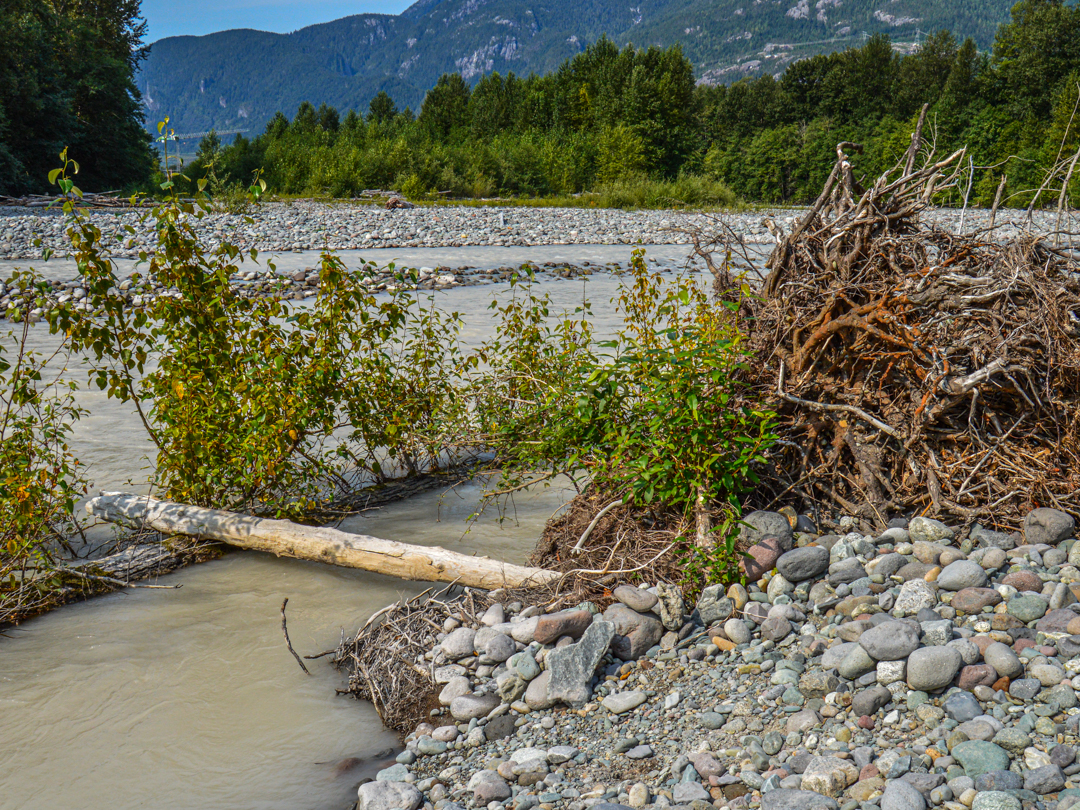
Large woody debris (LWD) is an important part of a healthy river ecosystem.
Nurturing Life
The Value of a Dead Treeby Sarah Ottino, Autumn 2024
images by Sarah Ottino except as noted
When we die, our bodies become the grass, and the antelope eat the grass. And so, we are all connected in the great Circle of Life…
— The Lion King
Despite the savannas of Africa and the forests of the Pacific Northwest (PNW) being different ecosystems, Mufasa’s wisdom holds true. Living things eventually die, but even in death they are part of the circle of life. While living trees are very valuable, so are the deceased ones.
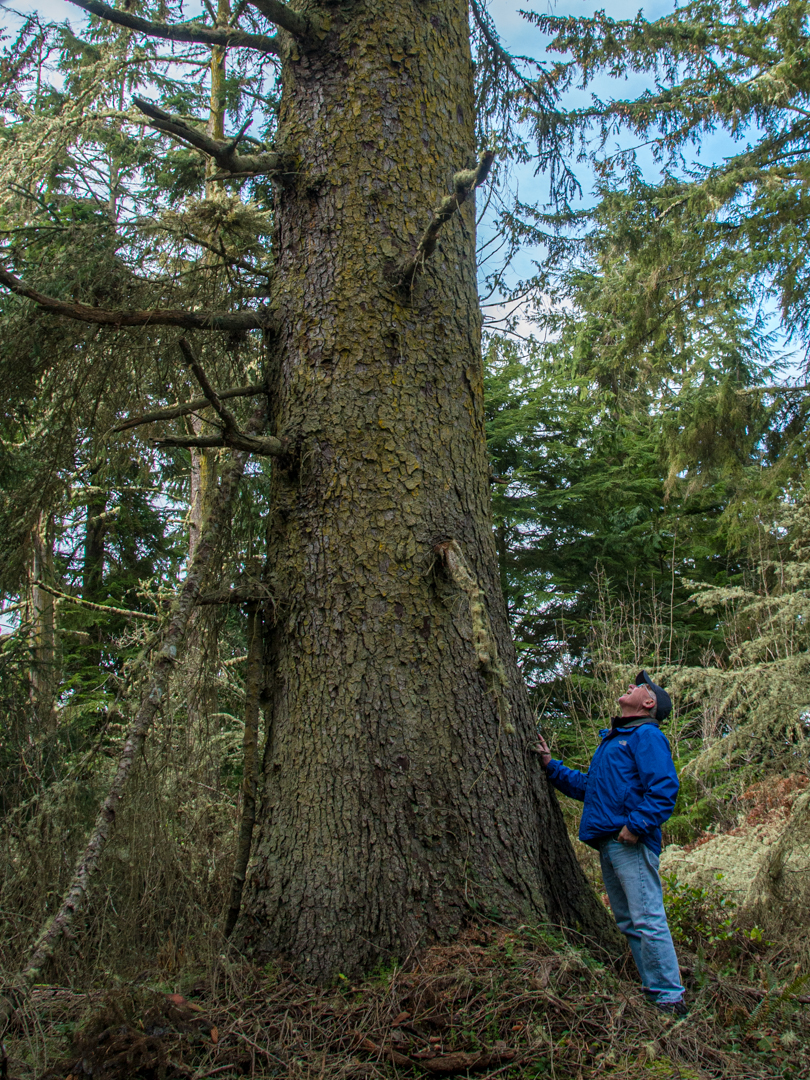
Sitka spruce tree with an admirer for scale. photo by John F. Williams
The PNW is blessed with trees. There are evergreen madronas (Arbutus menziesii) and Sitka spruce (Picea sitchensis); there are deciduous quaking aspen (Populus tremuloides), cascara (Frangula purshiana), and more. Living trees provide oxygen, clean the air, stabilize soil, and provide a habitat for other living things, but despite some trees living for over a thousand years, they all eventually die. It is saddening to see a tree die, but there is a silver lining. When a tree dies, its function in the ecosystem changes, but it continues to be a vital part of the forest ecosystem.
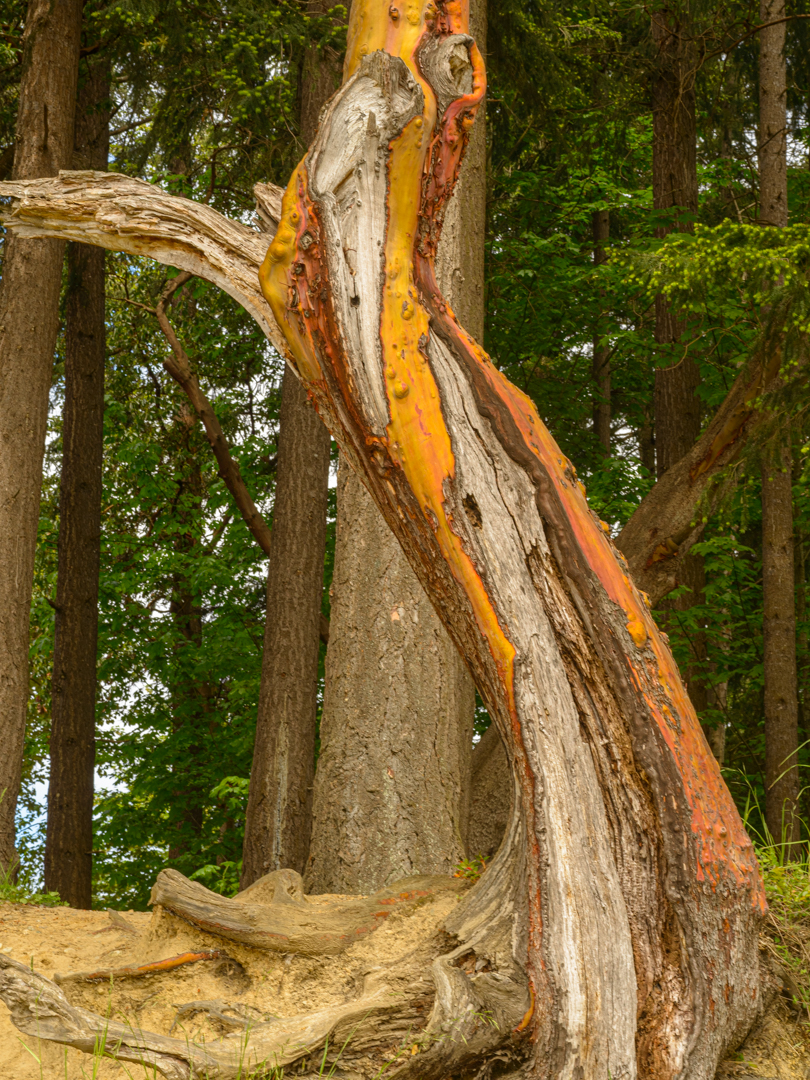
Madrona tree. photo by John F. Williams
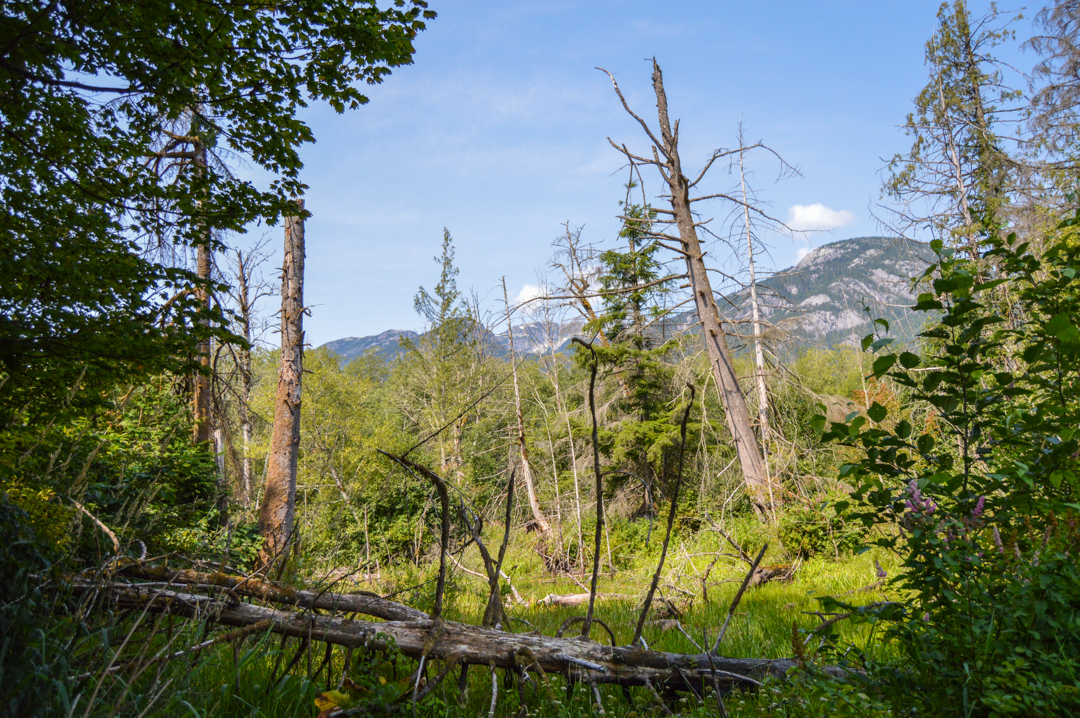
A wetland with snags and downed trees.
What causes a tree to die? Just like animals, trees can get sick. While many tree diseases are caused by pathogenic fungi, there are tree viruses and bacterial diseases too. Several tree diseases in the PNW are:
● anthracnose – fungal
● Phytophthora root rot – fungal
● Verticillium wilt – fungal
● laminated root rot – fungal
● Dothistroma needle blight – fungal
● white pine blister rust – fungal
The death of a tree can also be caused by insect damage or from other plants. The emerald ash borer (Agrilus planipennis) is a beautifully iridescent beetle that is invasive in Washington State. The species’ larvae burrow underneath a tree’s bark and eat the sapwood (a tree’s living tissue). Damage to the sapwood stops transport of water and nutrients throughout the tree, which leads to its death.
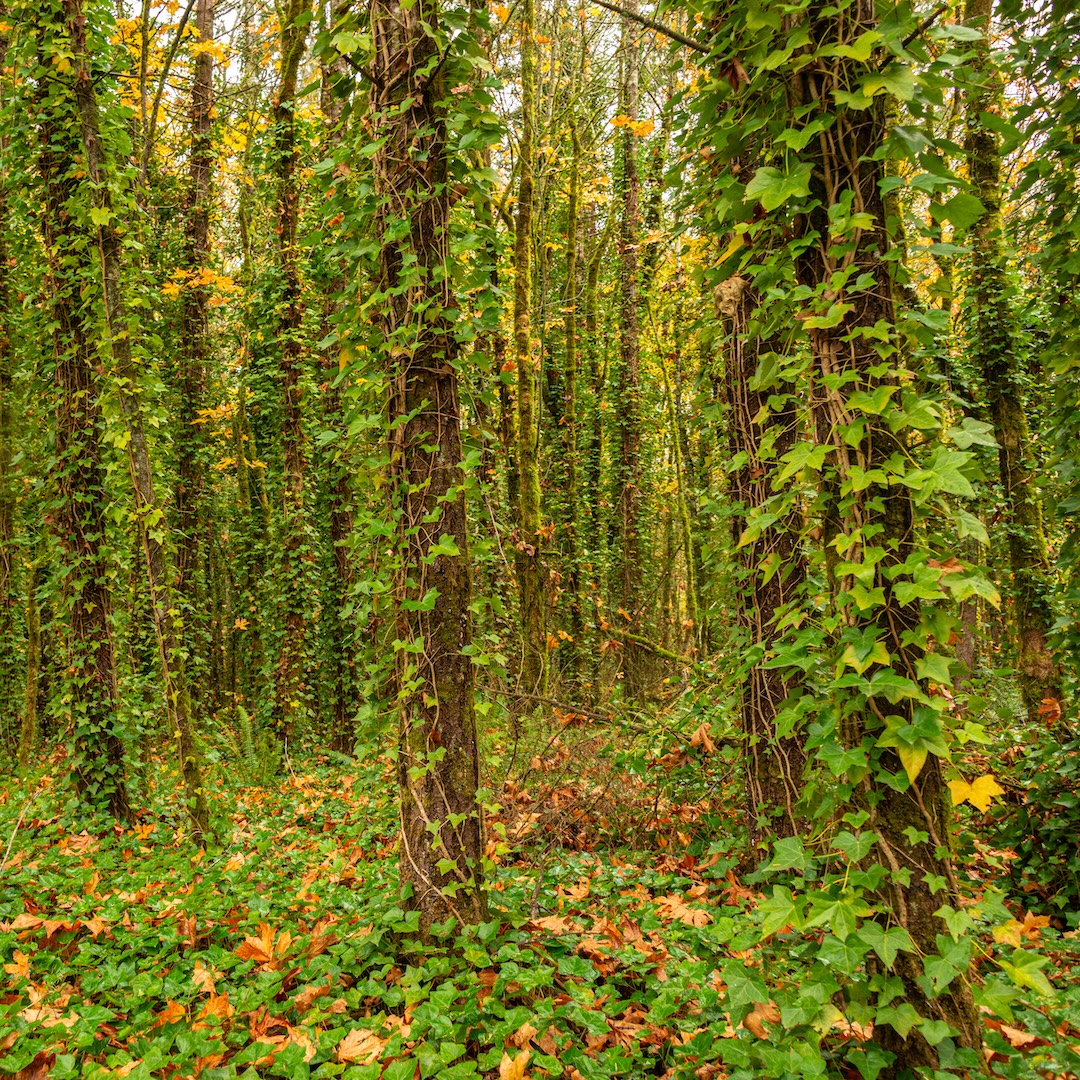
Ivy vines growing up trees. photo by John F. Williams
English ivy (Hedera helix) is a vine that is invasive and a notorious tree-killer in the PNW. The vine is fast growing and climbs up a tree’s trunk into the canopy, which impacts the tree’s ability to photosynthesize and access nutrients. This increases chances of the tree rotting or blowing over in a storm. NOTE: If you have English ivy growing on trees on your property, an easy way to help your trees out is to cut the ivy vines near the base of the tree. This will cause the ivy growing higher up on the tree to die.
Hemlock dwarf mistletoe (Arceuthobium tsugense) is native to Western Washington but is a parasitic plant that can cause the death of its host tree. The mistletoe relies on an endophytic system, which are modified roots that embed in the cambium and sapwood of a tree. A dwarf mistletoe infection disrupts a tree’s growth regulators and leads to odd growth in branches, often referred to as witches’ brooms. Ultimately the mistletoe causes death to the tree by reallocating a tree’s resources to the infected area and making the tree susceptible to diseases and insects.
Another death sentence for trees is girdling. Girdling cuts into the living tissue and prevents water and nutrients from traveling between the roots and the canopy. A tree that has part of the living tissue damaged can survive for a while. But if the tissue is damaged in a complete circle around the circumference of the tree, any part of the tree above the girdle is doomed. Girdling may be done intentionally to kill an unwanted tree or unintentionally. Unintentional girdling can happen when transplanting a root-bound tree from a pot to the ground or when the straps of a tree stake or fencing are not removed as the tree grows.
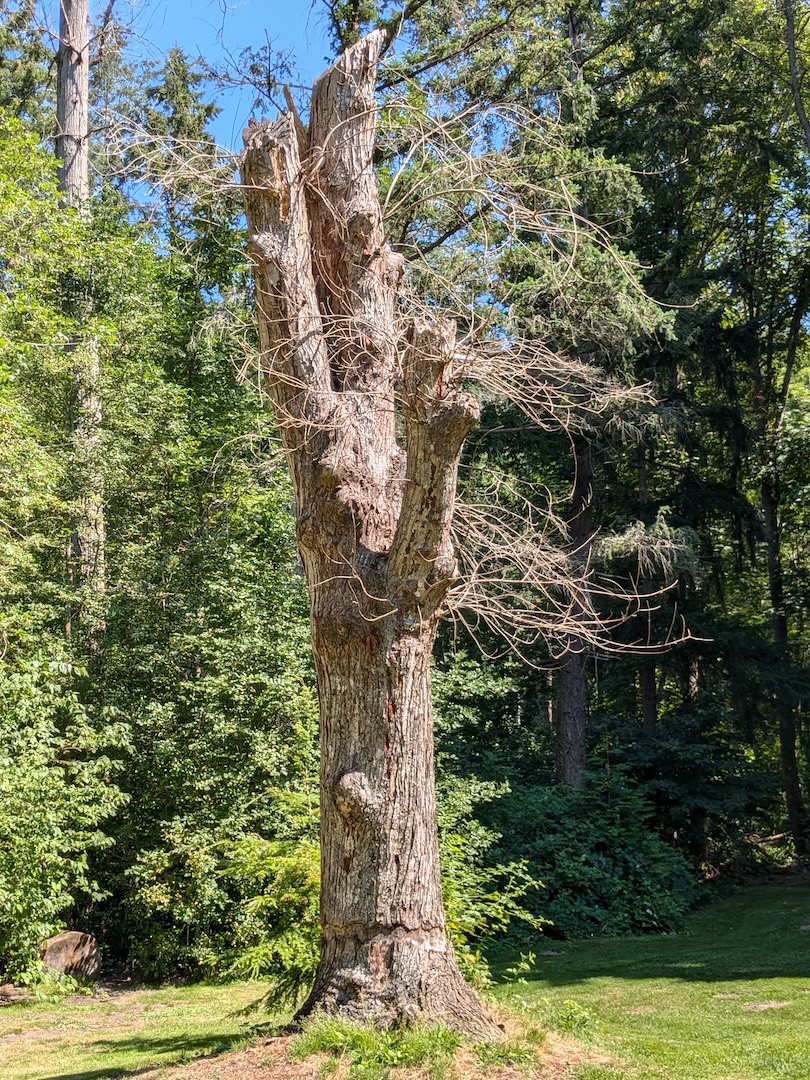
A hard snag that appears to have been girdled and had unsafe branches removed.
Other causes of death are:
● fire
● landslide
● wind
● drought
● too much sun/too little sun
● tree topping (cutting off the top of a tree, often to enhance a view)
● old age
In forest ecology, when a tree dies but remains standing, it is considered a snag. Snags whose wood is still solid are called hard snags. Birds that utilize hard snags for nesting are known as primary cavity excavators (PCE) since they are making their own cavity instead of using an already formed one. Red-breasted nuthatch (Sitta canadensis), chestnut-backed chickadee (Poecita rufescens), northern flickers (Colaptes auratus), and woodpeckers are all PCEs of the PNW.
As time passes, fungi spreading through the snag, birds excavating, and insects burrowing causes the snag to soften and hollow out. At this point, the dead tree is called a soft snag. Soft snags are basically wildlife hotels with an inclusive breakfast buffet.
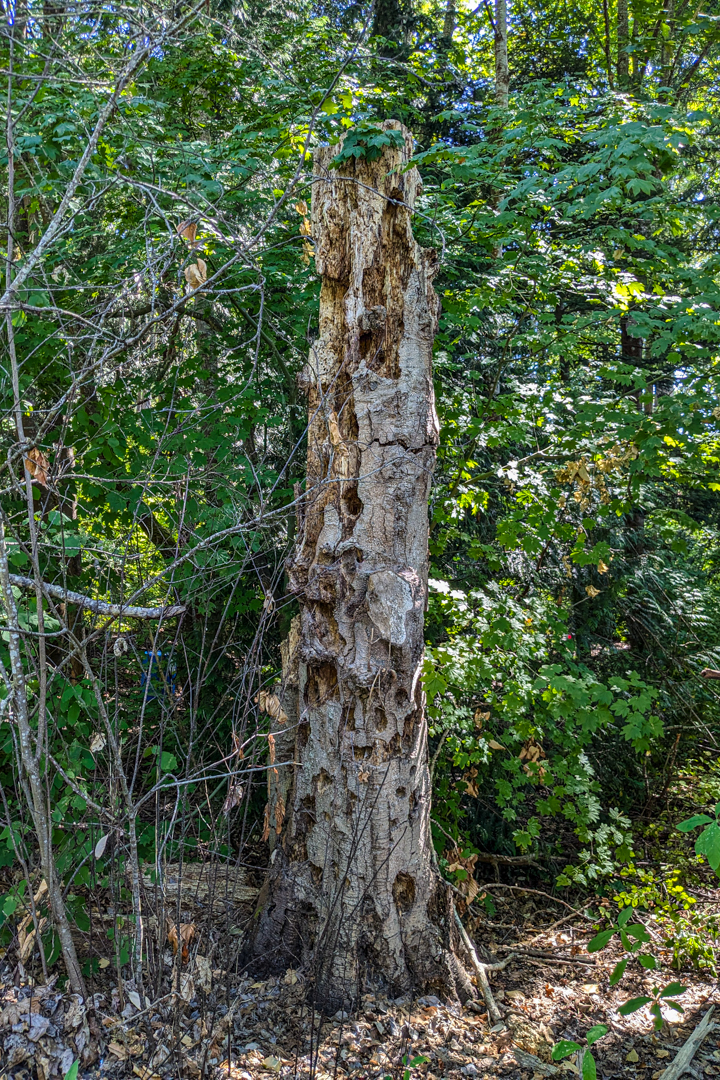
A soft snag filled with many cavities.
Black bears (Ursus americanus) and raccoons (Procyon lotor) will rip off chunks of softened wood and snack on the arthropods hiding within. The hollows of the tree are used as dens for squirrels, the Western spotted skunk (Spilogale gracilis), and other mammals. As the bark loosens on the tree, small animals such as the Pacific tree frog (Pseudacris regilla) and some bat species take shelter under it.
Birds of prey such as the bald eagle (Haliaeetus leucocephalus) and the red-tailed hawk (Buteo jamaicensis) use branches at least fifteen feet high as hunting perches.
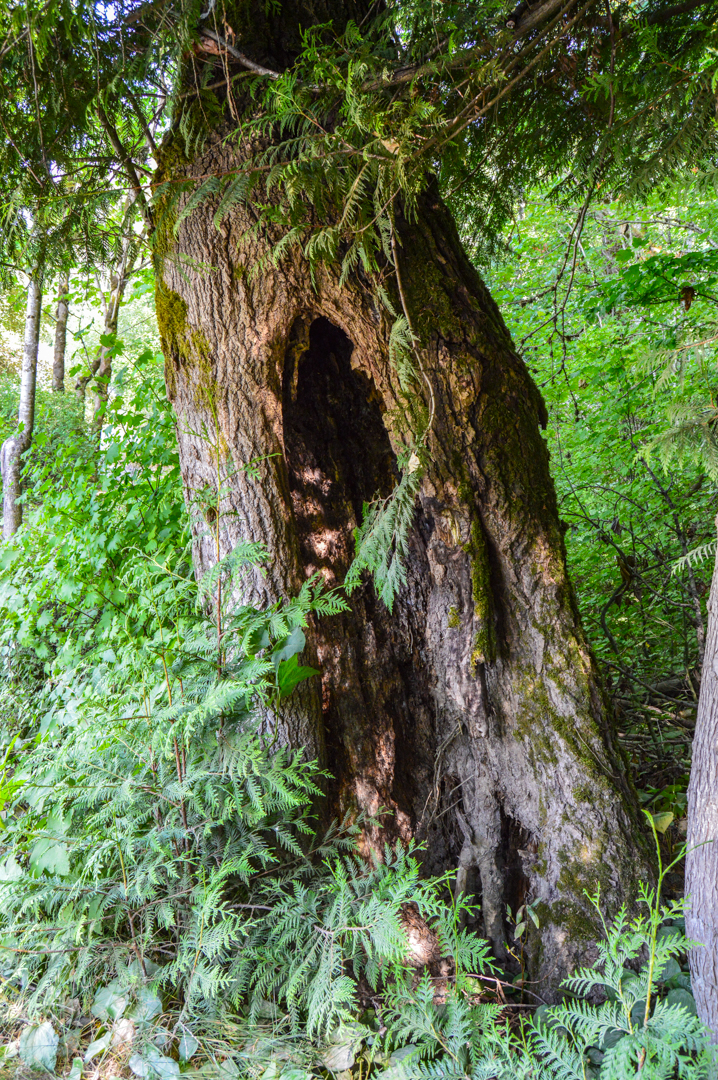
Some trees die slowly and begin hollowing out while still alive.
Small birds such as the black-capped chickadee (Poecile atricapillus) prefer to perch on snag branches about six feet off the ground. Swallows, pigeons, and other medium sized birds rest on branches in the middle of a snag.
Snags are so beneficial to our local ecosystems that the WA Department of Ecology takes the presence of snags into account when rating a wetland. Snags are considered a special habitat feature and increases the wetland’s score.
When a tree is felled or a snag rots away, a stump is left. While stumps are not so important to raptors, they are valuable to many other organisms. Logs and stumps become nurse/nursery logs and are crucial to the survival of other plants.
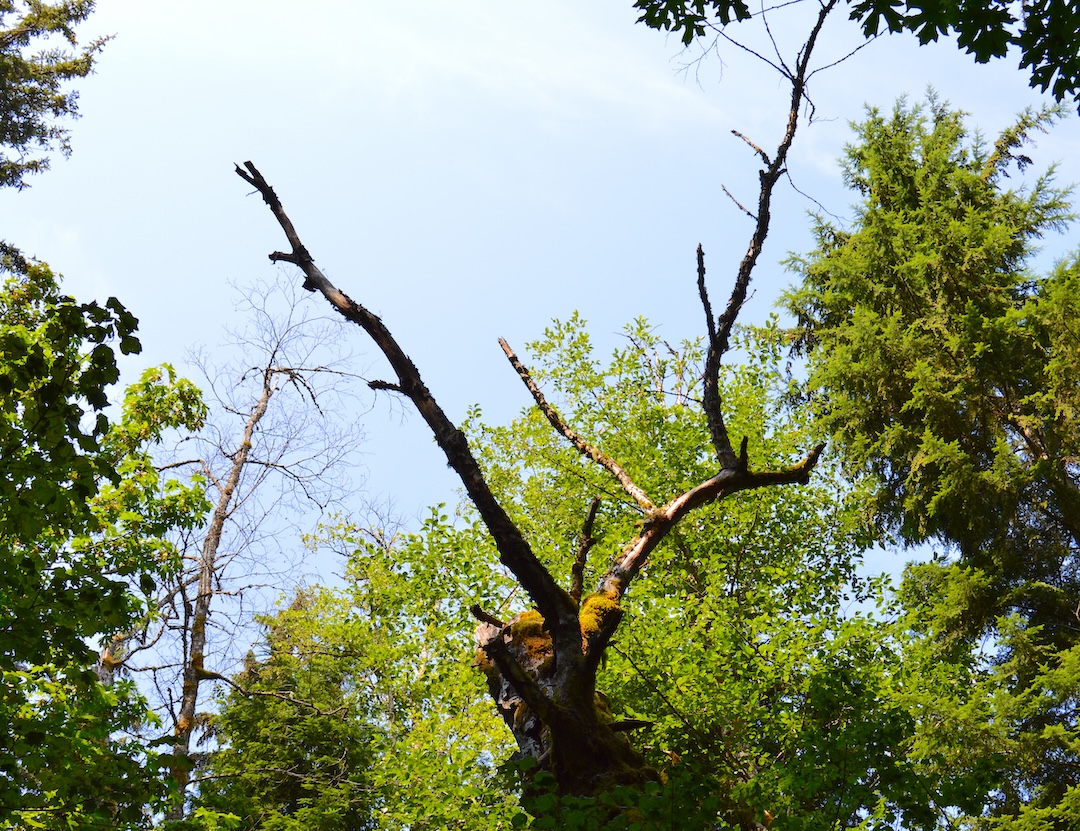
Dead trees open space in the canopy, allowing sunlight to reach the forest floor.
While trees and plants are known to share resources with each other, even across species, there is still competition for things such as sunlight. Western hemlock (Tsuga heterophylla) and Sitka spruce (Picea sitchensis) are more shade-tolerant than many other trees, but they do need sunlight. Growing from a seed into a towering tree is challenging.
 See more about stumps from our Winter 2018 issue.
Nurse logs help these trees, as well as other plants, such as red huckleberry (Vaccinium parvifolium), by giving them a boost up from the start. A nurse log or stump raises seedlings a few inches to several feet off the forest floor and out of the shade of understory plants. As the young trees mature, the nurse logs continue to decompose. This releases nutrients their young charges need to grow. This process is called the nutrient cycle. Nurse logs are so beneficial to the success of these trees that mature trees can be found growing in a straight row as though they had been purposely planted. Nurse logs are also home to a variety of mosses, lichen, fungi, ferns, and animals.
See more about nurse logs from our Winter 2018 issue.
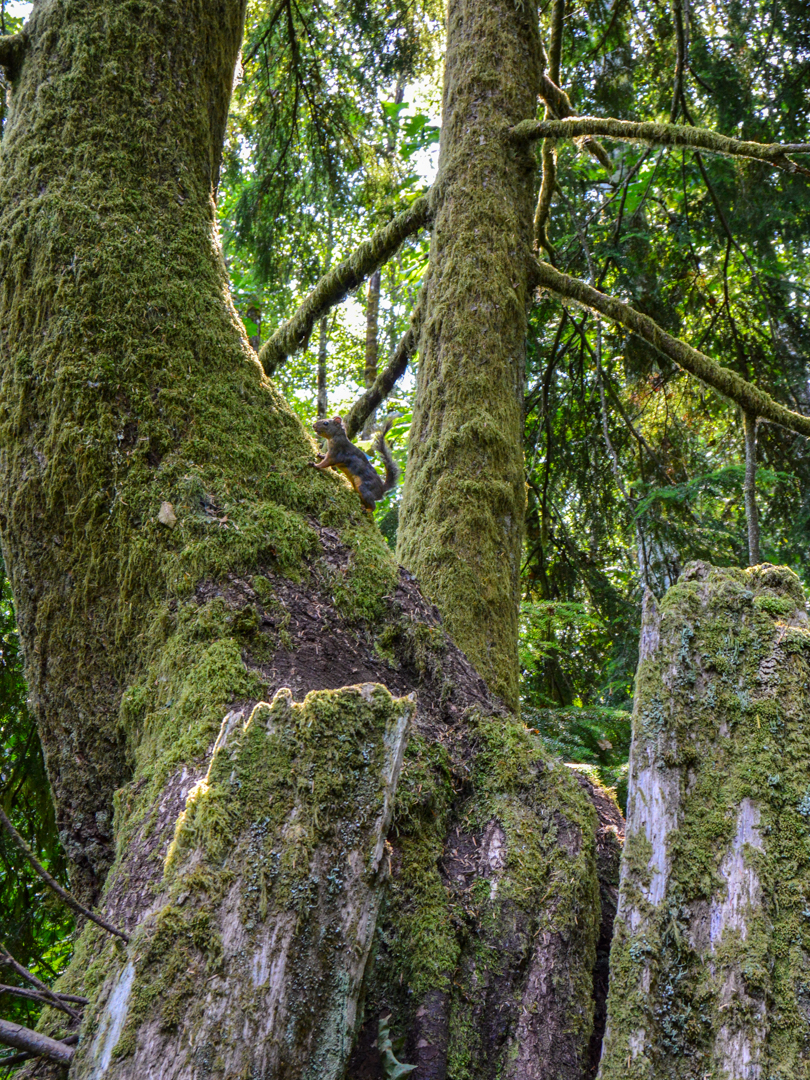
A squirrel making its escape up a tree growing from a nurse stump.
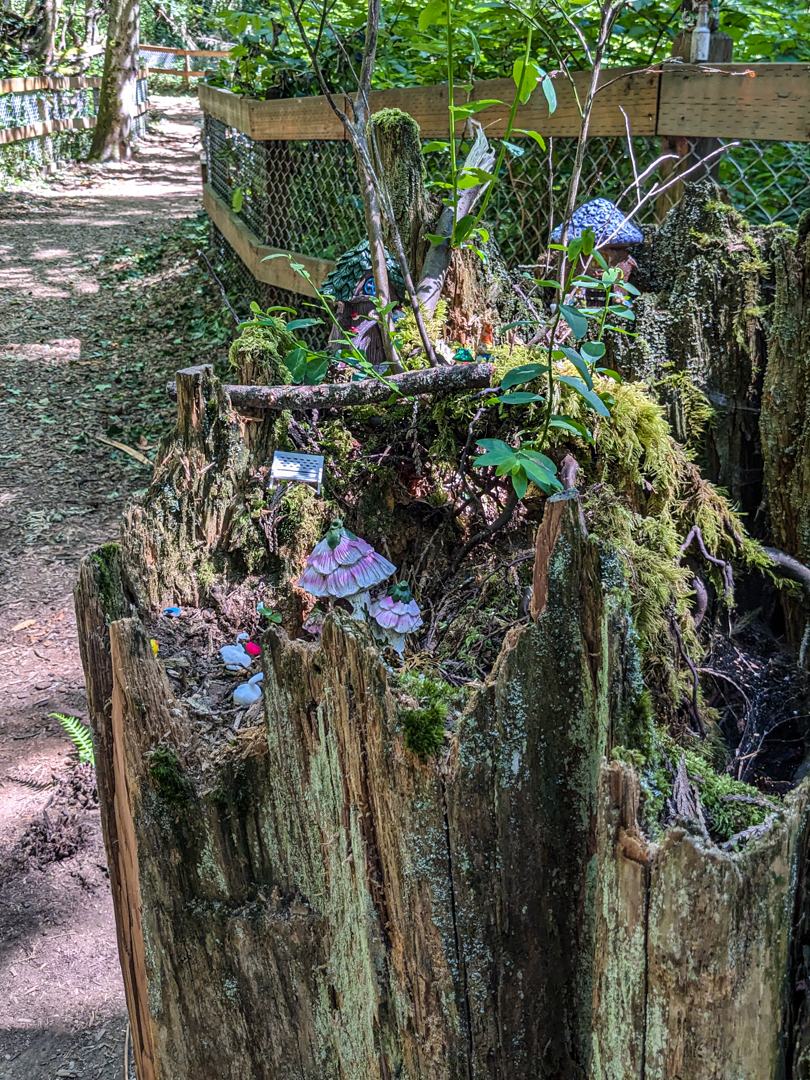
Some nurse stumps even provide a home for fae folk.
While Pacific tree frogs can be found under the bark of standing snags, other amphibians and reptiles prefer to take refuge closer to the ground, in and under decaying logs. The northwestern salamander (Ambystoma gracile), ensatina salamander (Ensatina eschscholtzii), Van Dyke’s salamander (Plethodon vandykei), and western redback salamander (Plethodon vehiculum) breed in water but spend much of their adult life under rotting logs where it is moist, safe, and abundant with food.
Saprotrophic fungi, the largest group of fungi, are instrumental in the decomposition of dead trees and play a vital role in the nutrient cycle. Trees contain lignin, a substance which holds cells, fibers, and vessels of a plant together. The majority of species on Earth cannot break down lignin, but saprotrophic fungi can. Without this group of fungi, dead trees would not fully decompose.
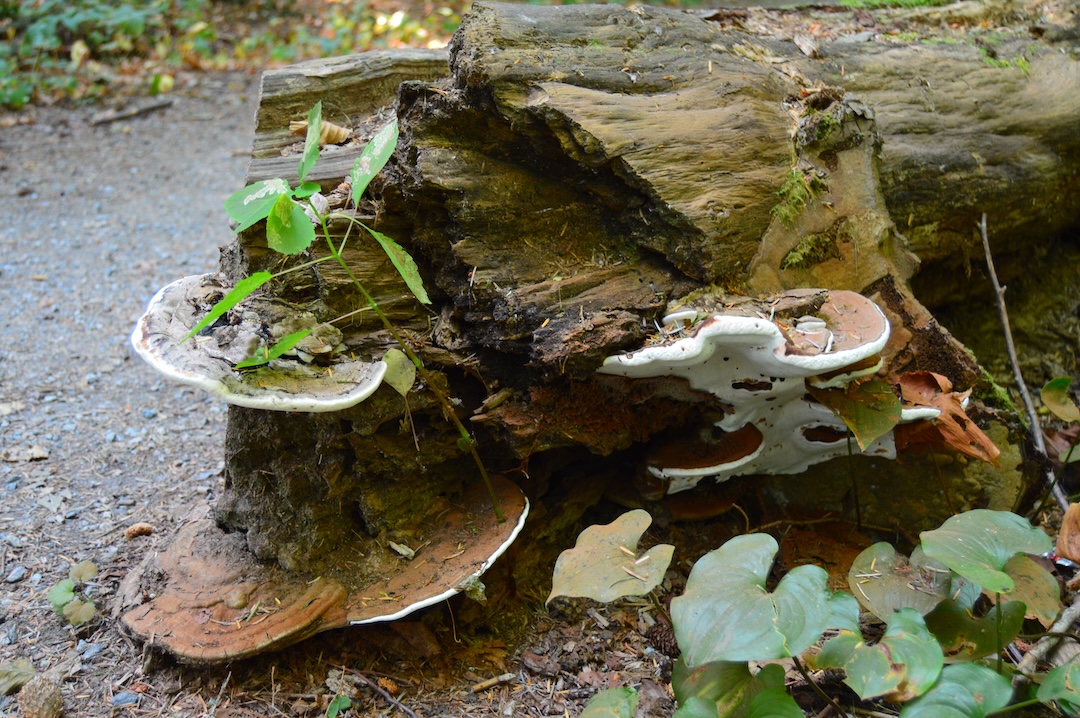
Fallen log providing nutrients and a home for a fungus.
Unfortunately, not everyone understands the importance of dead trees and often considers them an eye sore, opting to remove them. Instead of removing dead trees, consider leaving them as is and allowing them to be a part of the ecosystem. A certified arborist can diagnose diseased trees and help homeowners know if the trees could damage surrounding structures. An alternative to removing a whole tree is to only remove the upper portion and leave a tall stump. If a tree must be fully removed, its pieces can be spread out and allowed to take on the role of nurse log.
As glorious as living trees may be, their importance does not die with them. Dead trees are keystones in a healthy forest ecosystem. Their relationship with other living things may change in death, but it does not go away.
FIND OUT MORE
● Insect and Disease Monitoring: WA DNR
● Snags – The Wildlife Tree: WDFW
● Nurse Logs – WA Native Plant Society
● Decomposing Fungi (Video) – Harvard Museum of Natural History
● The Life of the Forest (Video) – Forest Film Studio 8:30-14:00 is most relevant to this article
● English Ivy Identification and Control – King County
● Nurse Logs: What the Heck Are They Anyways?! (Video) – Nerdy About Nature
● Bears, Beetles, and Root Disease: Forest Health Report at Damage to Trees: Forest Stewardship Notes
● The Secret Life of Fungi (Video) – BC Wildlife Park 6:40-7:40 is most relevant
● Stem Girdling Roots — WSU Chelan-Douglas
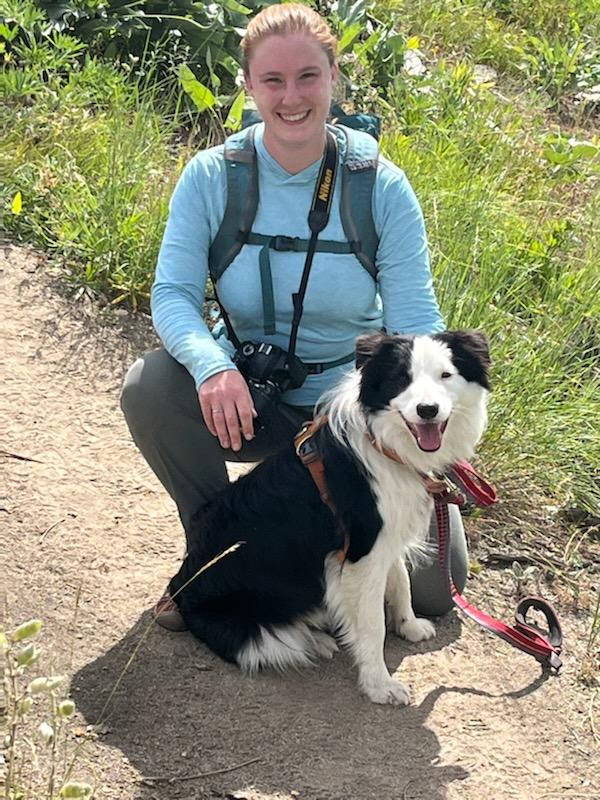
Sarah Ottino — Freelance Writer & Photographer
Sarah loves to write, create, and explore nature. She travels full-time in a 20 ft. Airstream with her husband and her border collie, Nimbus. She uses life’s adventures as inspiration for healthy living, outdoor recreation, and environmental content. She often uses her photography or design graphics to complement her writing. Her website is: www.naturewritten.com
Table of Contents, Issue #25, Autumn 2024
Nurse Stump Clan
by John F. Williams, Autumn 2024 images by John F. WilliamsStumps in foreground and background with new trees growing from them.by John F. Williams, Autumn 2024Images by John F. WilliamsA mushroom growing out of a tree.Taking a stroll through a forested city park the...
Sticky Subjects in the Intertidal
by Celeste Hankins, Autumn 2024Images by Celeste Hankins except as notedby Celeste Hankins, Autumn 2024Images by Celeste Hankins except as notedYou can listen to the text of this article using the Audio version above. narrated by Celeste HankinsI kneel in the mud and...

Shaping the Salish Sea
by Michael Melton, Autumn 2024Beavers and salmon have co-existed and co-evolved over seven million years, and they have a mutually beneficial relationship: beavers provide habitat for salmon and the salmon return nutrients to the rivers and streams. This film explores...
Poetry 25
by multiple poets Autumn 2024Starflowers. photo by Barb Ericksonby multiple poets Autumn 2024Desolation, first by Deborah Poe 1.a buck approaches the campsite (velvet antlers)fireweed spreads like its namethe first plant to grow in forestsafter fires burn back...
COPYRIGHT
Copyright SEA-Media
All rights reserved. Reproduction or distribution, in whole or in part. without consent of copyright owner is strictly prohibited — except for brief quotations in critical reviews and other noncommercial uses permitted by copyright laws.
SEA-Media is a 501(c)(3) nonprofit corporation
PLEASE HELP SUPPORT
SALISH MAGAZINE
DONATE
Salish Magazine contains no advertising and is free. Your donation is one big way you can help us inspire people with stories about things that they can see outdoors in our Salish Sea region.
We also don't advertise Salish Magazine, so please spread the word of this online resource to your friends and colleagues.
Thanks so much for your interest and your support.