
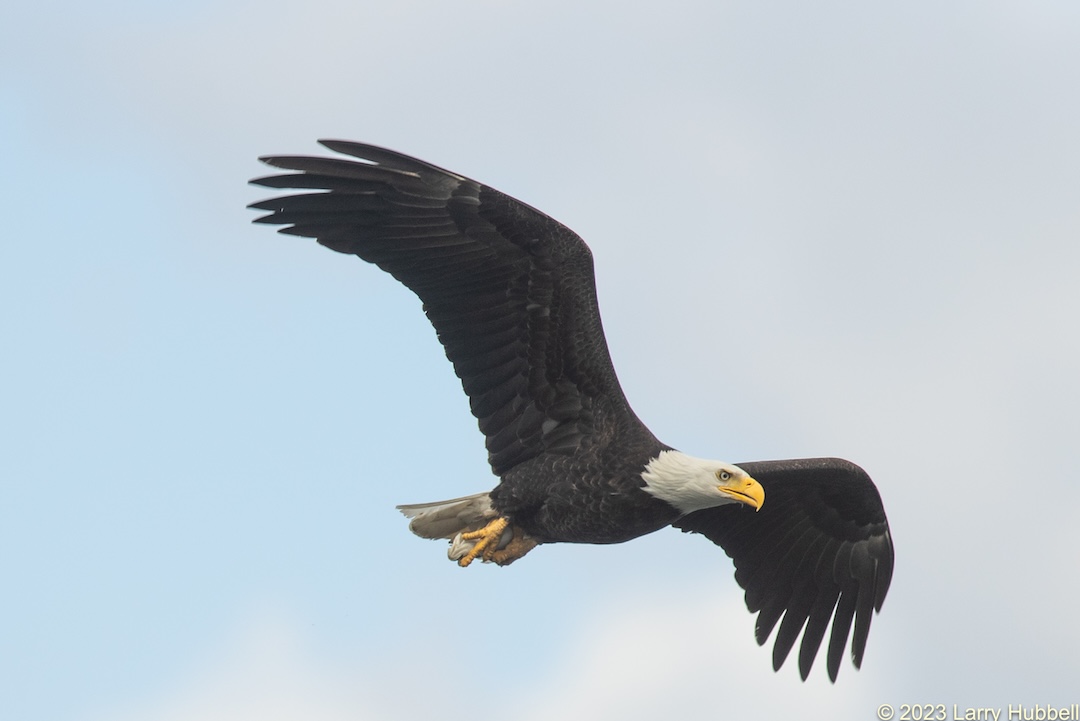
Only mature adult bald eagles have the classic white heads and tails. As they recover from the egg-thinning effects of DDT, they are once again becoming common around the Salish Sea. However, because their lives primarily play out above our heads, we often miss some of the most interesting details, like the fish in this eagle’s talons.
BALD EAGLES, A VISUAL STORY
by Larry Hubbell
Spring 2026
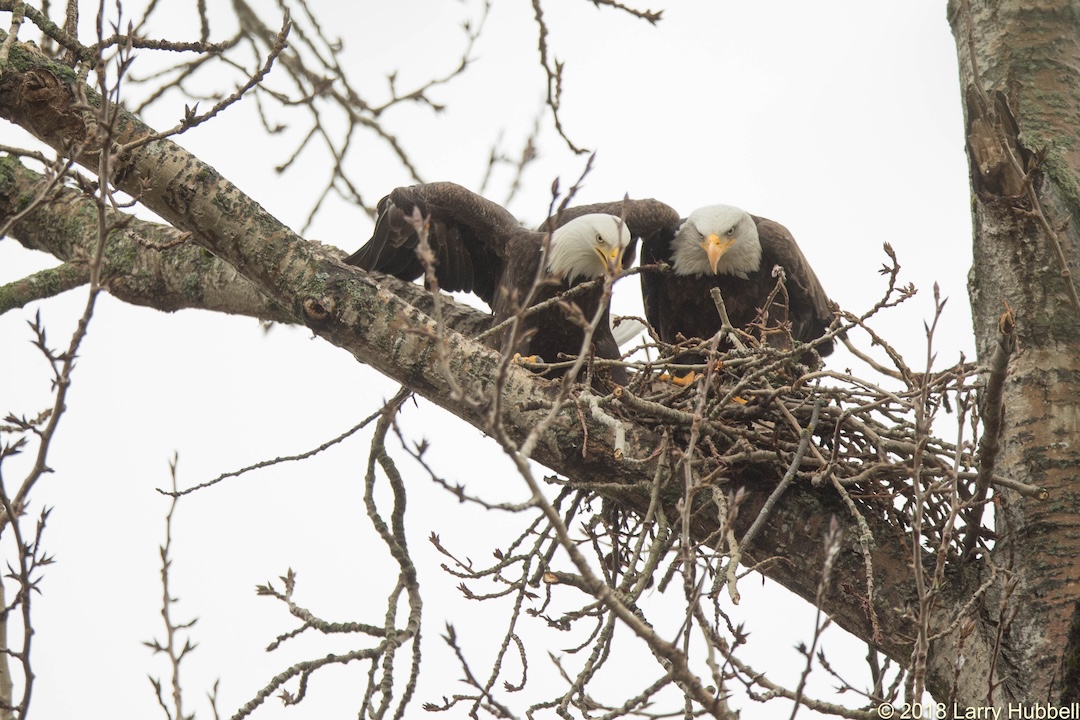
Building their first nest begins after they have reached maturity, selected a mate, and begun defending a territory around the nest site. Female bald eagles are normally about twenty-five percent larger than males and typically have the last say during the construction process.
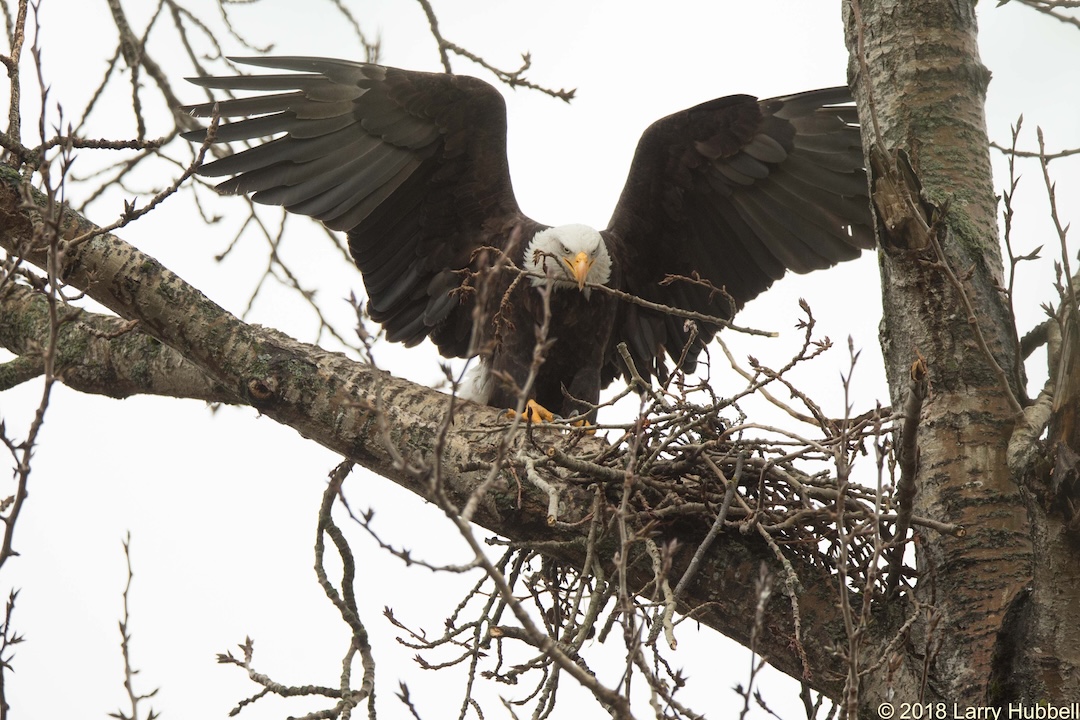
Around the Salish Sea, bald eagles often use cottonwood branches to build their nests, probably because the branches are abundant and easy to detach from the trees. Plus, since the cottonwood trees are usually found near water, where Bald Eagles like to hunt, they will often build their nest in a cottonwood tree.
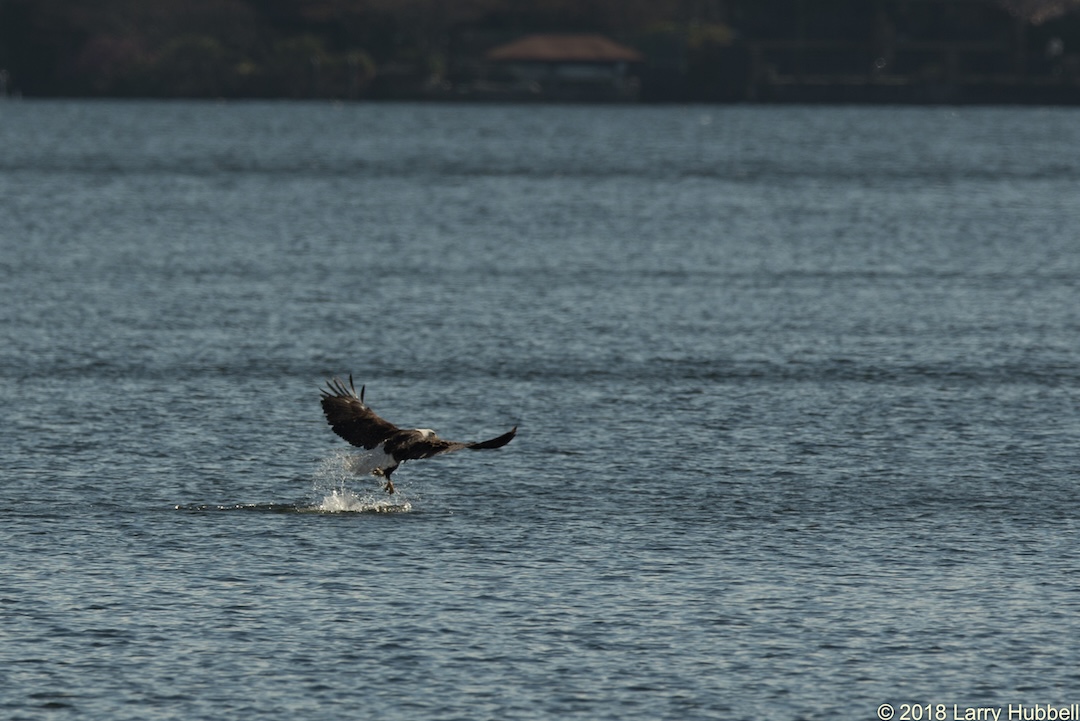
Typically, bald eagles catch fish or waterfowl near the surface of the water.
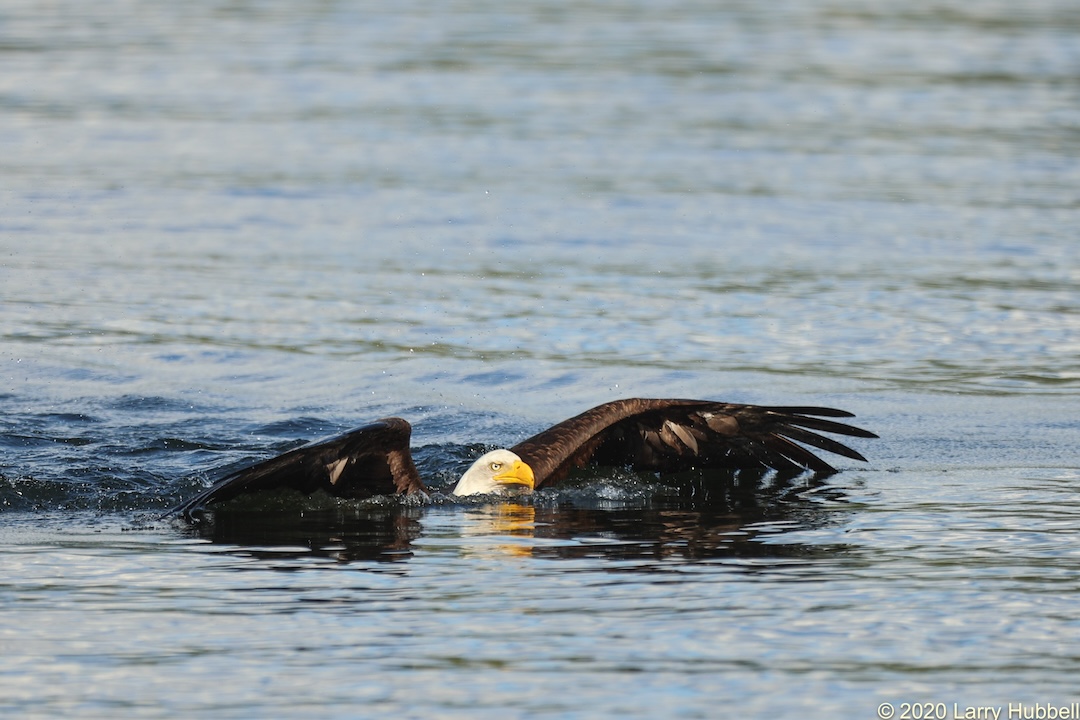
Occasionally, if the prey item is too heavy and enticing to give up, a bald eagle will use their wings to swim to shore without letting go of their catch.
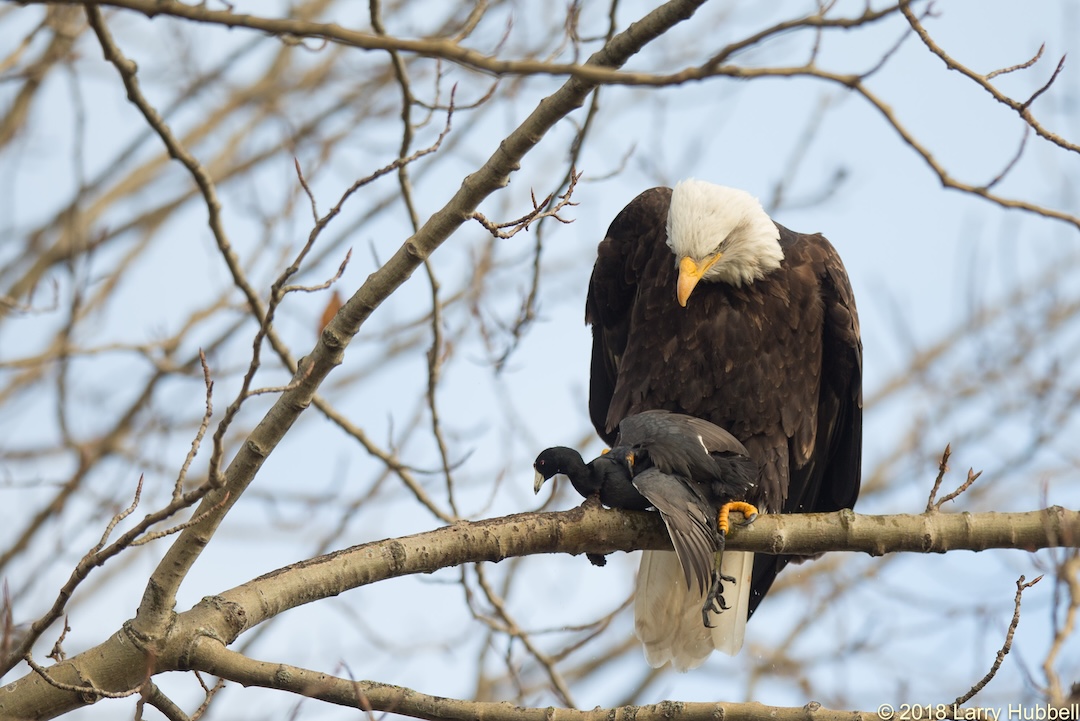
One of a bald eagle’s favorite meals is an American Coot. Large numbers of the coots flock together in the winter, which makes them easy to spot.
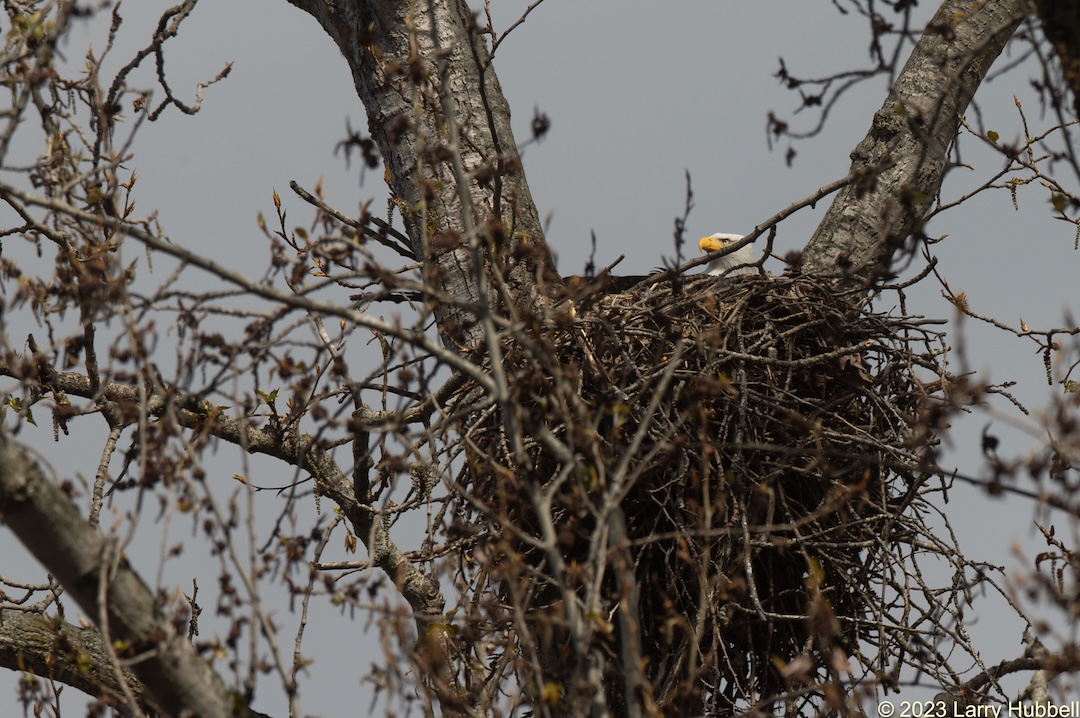
Once the eggs have been laid, incubation usually takes a bit more than a month. After hatching, the young are too small and weak to be seen from the ground.
Incubation period is about 34-36 days according to All About Birds.
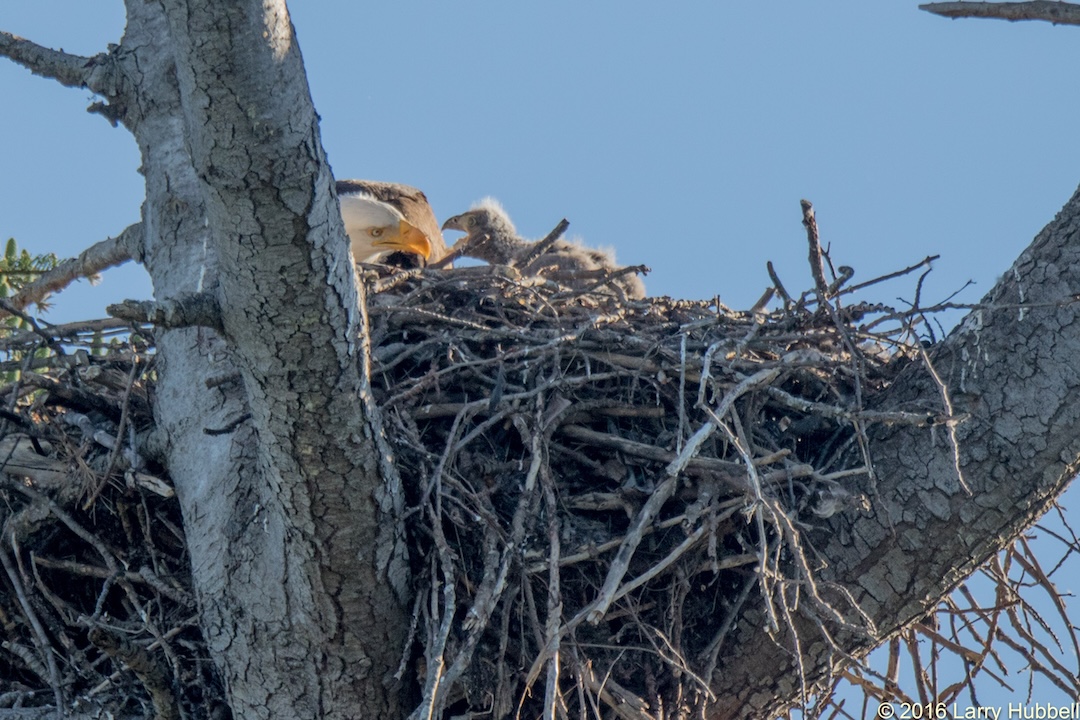
The female tears off tiny scraps to feed her eaglets when they are young. Fairly quickly, they lose their downy white fluff.
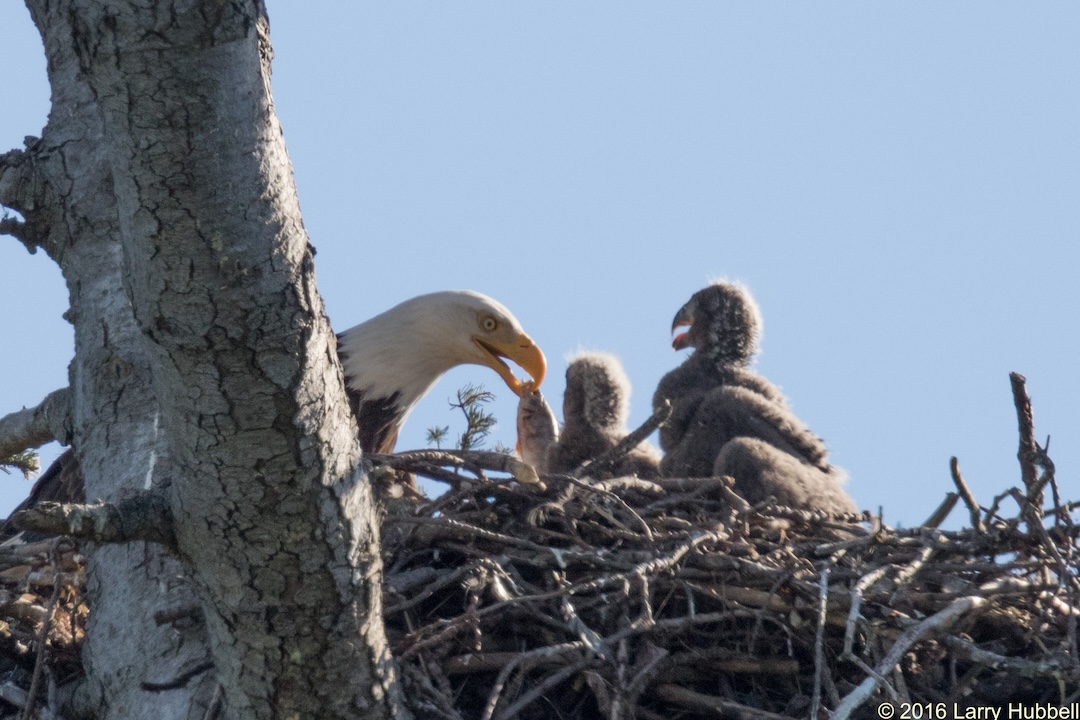
As the eaglets grow, they are given larger pieces of food and expected to feed themselves.
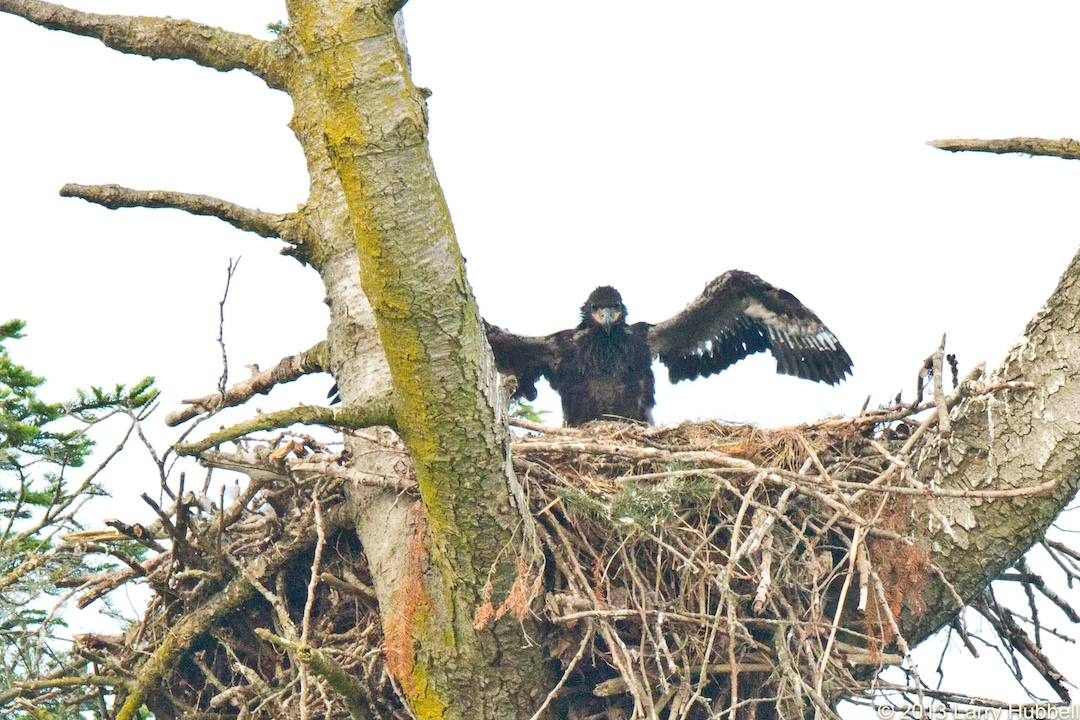
Their flight feathers try to keep up with their growth, but the gaps between the feathers indicate that their wings are still not flight-worthy. Normally, when a young eagle fledges, its feathers will be longer than their parents’ feathers.
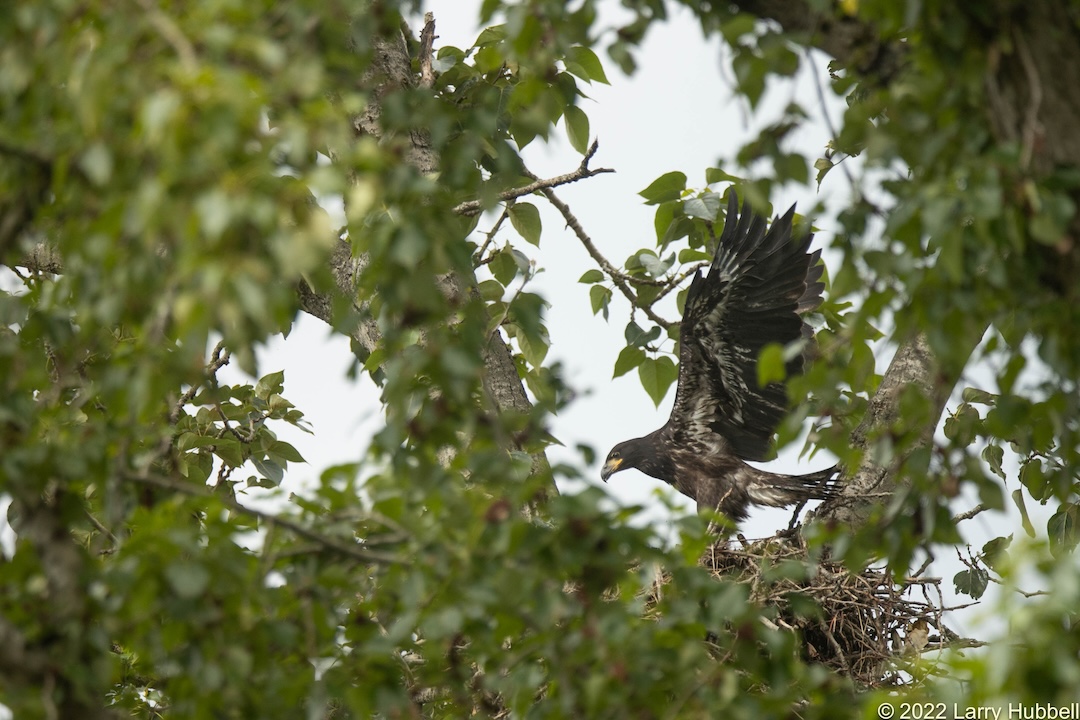
After two to three months, the young eagles will be spending a lot of time flapping their wings, developing their muscles, and preparing for their first flight. After fledging, young eagles typically spend a month or two with their parents. By November, the adults often begin looking to the future by repairing their nest. By the following spring, they are focusing on their next set of offspring.
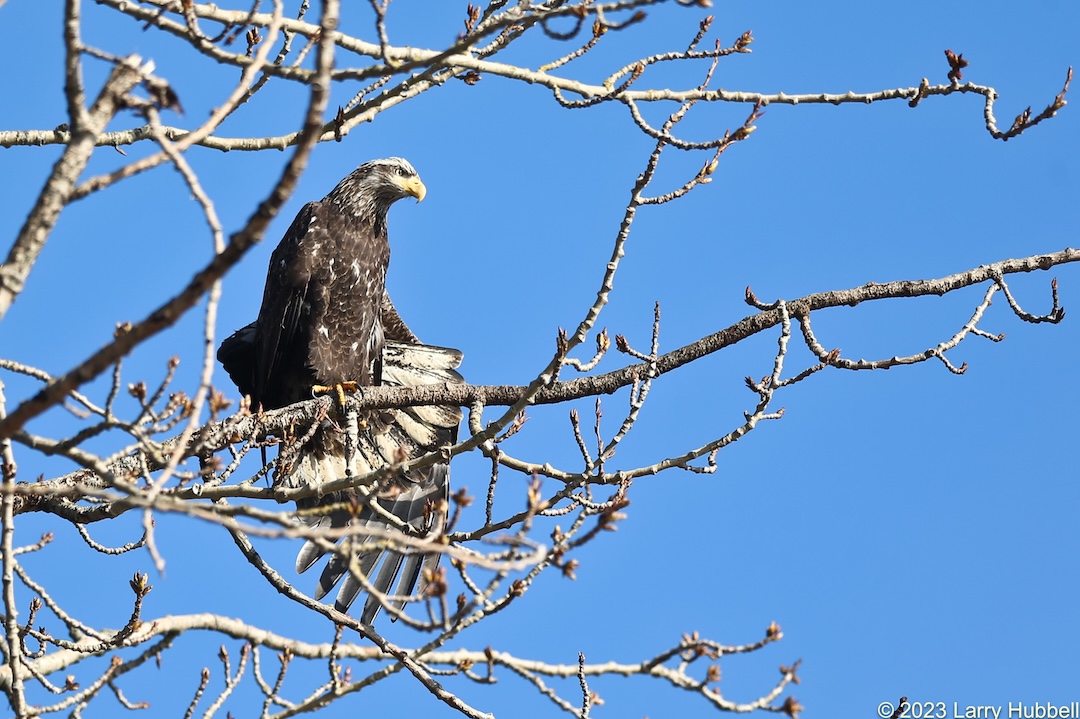
It takes four and a half to five years before a bald eagle fully matures and is ready to settle down, find a mate, and raise young. This eagle is getting closer. Its tail feathers are mostly white, but its head still has a dark eyestripe, which is one of the last major indications of immaturity. For young eagles, independence and maturity are on two different schedules.
One of the most informative documents concerning bald eagles is the “National Bald Eagle Management Guidelines”.
Larry Hubbell: My mission is to promote the appreciation of wildlife and increase harmony between humanity and nature.
Author of www.unionbaywatch.blogspot.com
Co-founder of www.arboretumcreek.org
Issue Page
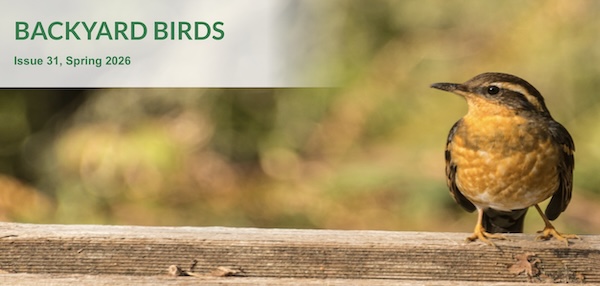
Table of Contents, Issue #31, Spring 2026
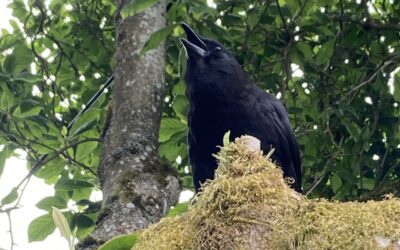
Serious, Playful, Mischievous, Nurturing
SERIOUS, PLAYFUL, MISCHIEVOUS, NURTURING by Gunnison Langley, Spring 2026Crow perched on a tree. photo by Gunnison Langley by Gunnison Langley Spring 2026Last year I joined a Birds Connect Seattle “Neighborhood Bird Outing” at Magnuson Park in North Seattle. About an...
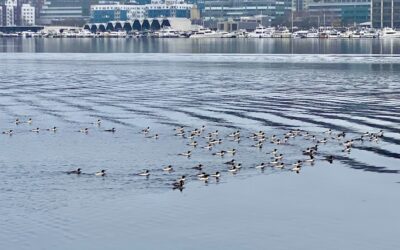
Birds on an Urban Lake
BIRDS ON AN URBAN LAKE by Dave Galvin Spring 2026Mergansers on Lake Union. photo by Dave Galvin by David Galvin Spring 2026The Salish Sea is defined by water: the sea itself, the freshwater lakes and rivers, and the rain that is the hallmark of the region. It is no...
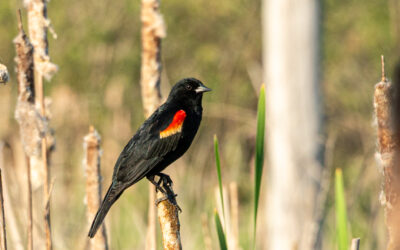
Mapping Red-Winged Blackbird Territories
MAPPING RED-WINGED BLACKBIRD TERRITORIES by Mica Sage Roberts, Spring 2026Male red-winged blackbird on cattail. photo by John F. Williams by Mica Sage Roberts Spring 2026Conk-la-ree! A moment later from the east: conk-la-ree-o! I flipped over the soggy graph paper map...
Poetry 31
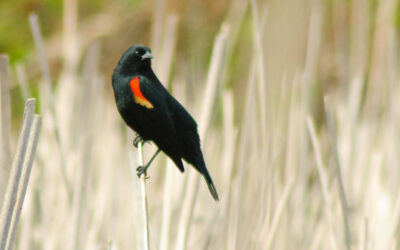
by multiple poets Spring 2026Red-winged blackbird on cattail reed. photo by John F. Williams by multiple poets Spring 2026Red-winged Blackbird Marcia Claire Millican Conspicuous commander, comfortable atop the cattails. Displaying proud patches,resilient red and...
COPYRIGHT
Copyright SEA-Media
All rights reserved. Reproduction or distribution, in whole or in part. without consent of copyright owner is strictly prohibited — except for brief quotations in critical reviews and other noncommercial uses permitted by copyright laws.
SEA-Media is a 501(c)(3) nonprofit corporation
PLEASE HELP SUPPORT
SALISH MAGAZINE
DONATE
Salish Magazine contains no advertising and is free. Your donation is one big way you can help us inspire people with stories about things that they can see outdoors in our Salish Sea region.
We also don't advertise Salish Magazine, so please spread the word of this online resource to your friends and colleagues.
Thanks so much for your interest and your support.