
Gardening with Native evergreen plants
by John Bolivar, Winter 2023
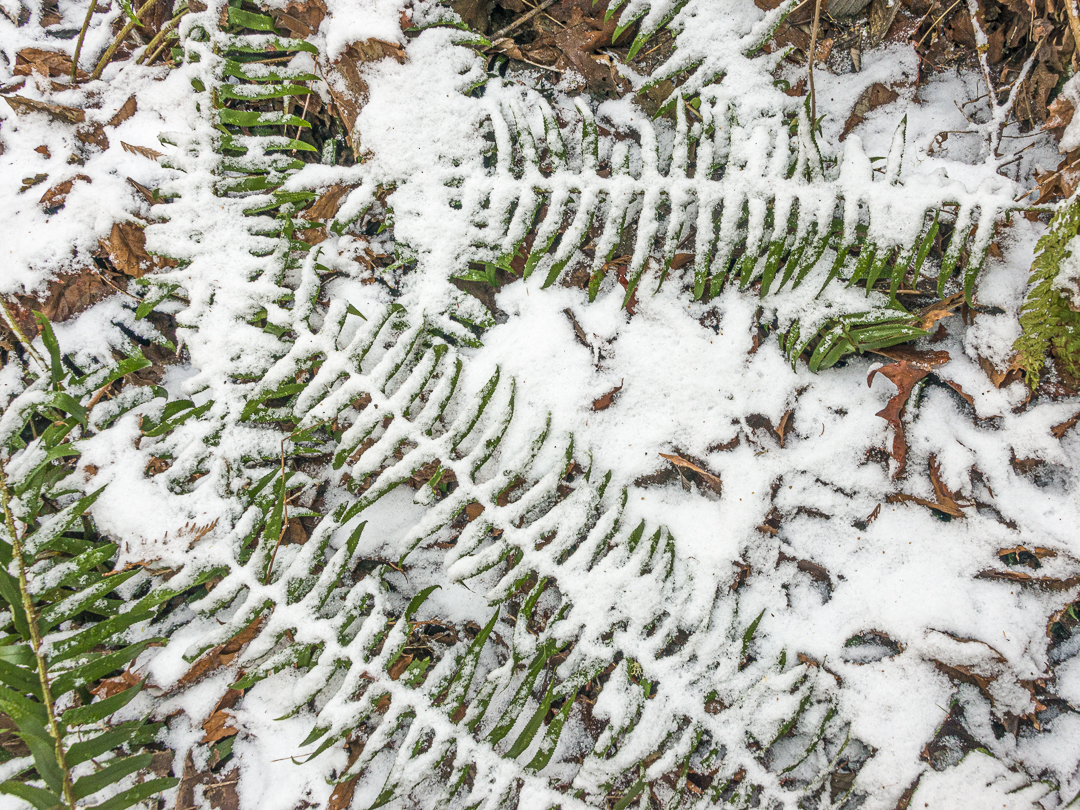
Snow on sword ferns. photo by John F. Williams
Gardening With Native Evergreen Plants
by John Bolivar
Winter 2023
The cold winter months here in the Pacific Northwest can be a lonely time — especially if some of your best friends are flowers. I start to miss my colorful summertime plants and all their friends (birds and bees) when the leaves start to turn color and fall to the ground, and the gloomy rainy skies envelope us. I have found that my botanical sadness can be mitigated: it just takes a little plant therapy provided by the evergreen plants in my garden. Unlike deciduous trees (think maple trees) which typically shed all of their leaves in the fall, evergreens shed just a fraction of their leaves at different times of year, and they are full of leaves all year long. When the days get shorter and sunlight becomes scarce, they give us some green botanical comfort during the winter gloom. They also provide texture, color, privacy, and food and shelter for birds, insects, and many critters. Despite what Kermit the frog says, “being green in the PNW is easy!”
When we say “evergreen” it conjures up images of our vast coniferous forests that carpet our mountains. Douglas-firs and cedars are well known, and there are about 25 more species of evergreen trees native to the PNW. That rich green forest is why Washington was coined the “Evergreen State” in 1890.
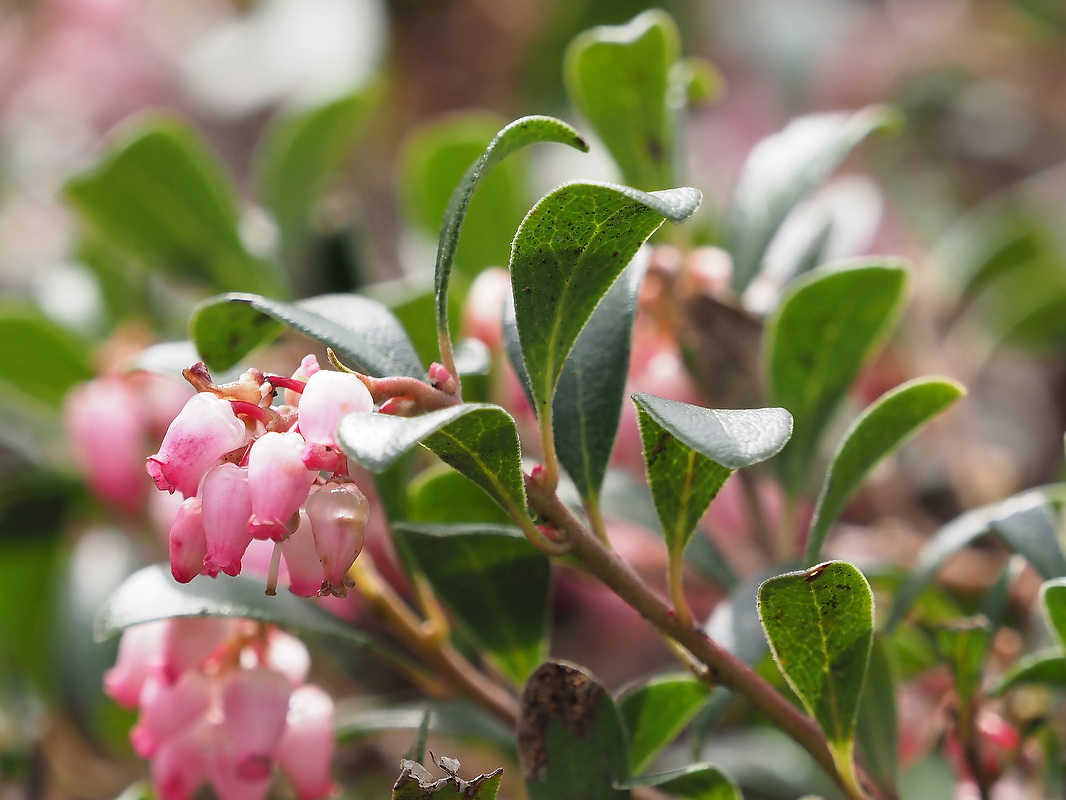
Kinnikinnick flowering. photo by John Bolivar
The good news is that there are many more types of evergreen plants than trees, and many of those plants are perfect for the home gardener. Expand your plant palette and think of planting evergreen perennials (plants smaller than a bush that live for several years as opposed to annuals that live and die in one growing season), groundcovers (plants that grow low to the ground), and other herbaceous evergreen plants that don’t flower (ferns). These plants are perfect for the smaller home garden and take up much less space than giant evergreen trees, plus they are just as beneficial for all the native birds and bugs we love to see. Evergreen leaves poking up through the snow and birds happily searching for bugs in my yard: these sights are instant plant therapy for my tortured winter soul.
The key to landscaping with these year-round natives is the same as with any plant. Plant the right plant into its proper growing site and in favorable conditions (like type of soil). Take into consideration a plant’s projected mature size. Answer questions like, “how big it will get in a few years?” before you plant it in the ground. For example, it’s probably not a good idea to plant a Douglas-fir that grows to over 100 feet tall into a postage stamp sized yard, or a thirsty water-loving plant in a sunny dry parking strip. Choose the correct plant for its optimum growing conditions. Most plant labels list the conditions for a healthy plant on its sale tag.
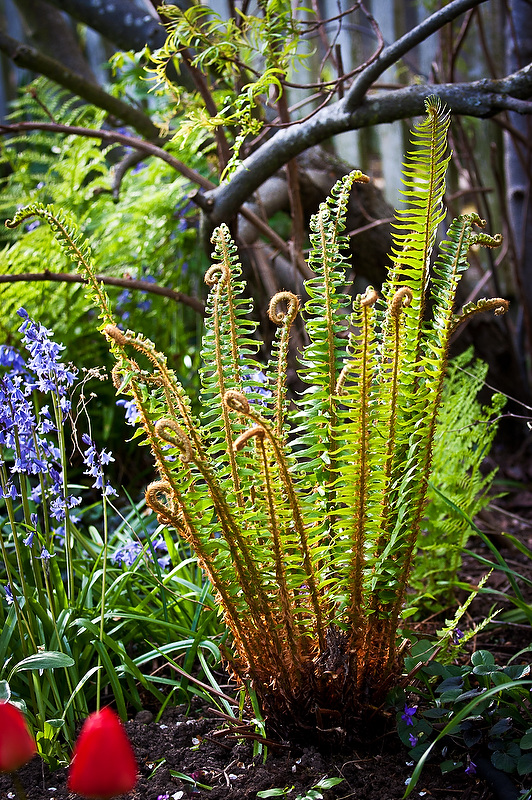
Sword fern. photo by John Bolivar
There are many benefits to planting evergreen native plants in our home gardens. They provide year-round food and shelter for many of our native fauna like birds and bees, and it doesn’t stop there. They are also well adapted to our climate of wet winters and dry summers — even with climate change messing with us. Therefore, they usually require less water overall than non-natives. Remember to pick the right plant for the right place. Choose natives that can thrive in the dry summers we have (like sword ferns and stonecrops) or for shady or sunny yards (see the partial list below).
Native evergreen plants also tend to be more resistant to native pests and diseases than non-native horticultural varieties and require no additional fertilizer or pesticides to grow well.
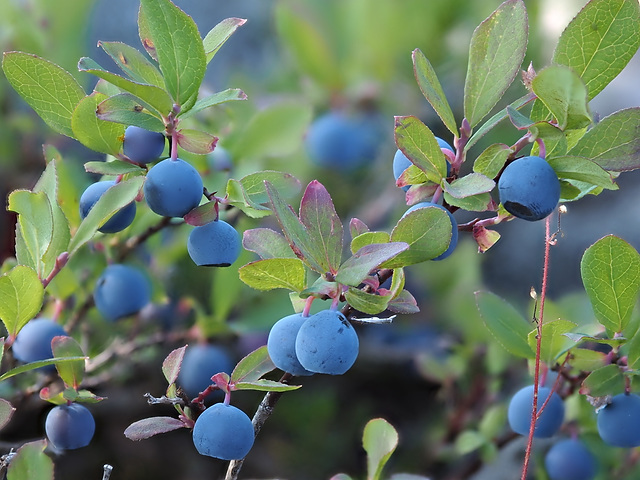
Dwarf bilberry, dwarf blueberry, or dwarf huckleberry. photo by John Bolivar
They also provide a specific food source for native butterflies and birds. For example, milkweed plants, primarily from the genus Asclepias, are the only food source of the monarch butterfly’s distinctively striped larvae (caterpillars). Many native evergreens also thrive in our northwest soils without having to add lots of soil amendments — some of them thrive in clay or gravel. These types of ground covers keep our heavy winter rains from washing away all the soil nutrients, and the soil doesn’t go walkabout down the drain.
In addition, some native evergreens also provide tasty berries for both us and our hungry critter friends. There are so many good reasons to plant them in our yards.
Evergreen native plants also have the ultimate benefit of making our homes look nice and welcoming all year-round. They put a smile our face and chase away a little of the winter blahs.
suggestions for small herbaceous evergreen natives for the home garden
These are all sure to put a smile on your face in the winter.
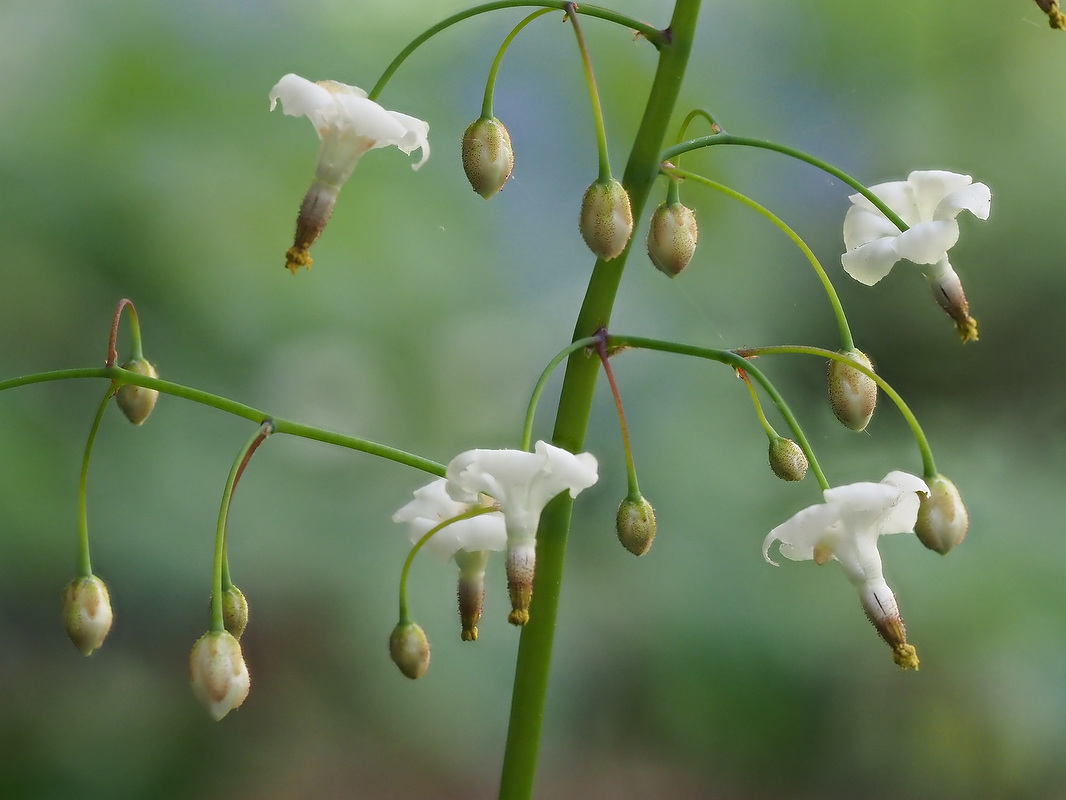
Inside-out flower. photo by John Bolivar
Vancouveria hexandra: Inside-out flower
This plant has so much character. It has gorgeous little white flowers that resemble tiny parachutes, and the leaves look like little duck feet. It can grow in dry dark shady spots under trees, but it thrives in moist partial shade with rich soil. The leaves are not true evergreen – they get a little frazzled looking in the winter, but they mostly persist throughout the cold before sending out new green shoots in the early spring.
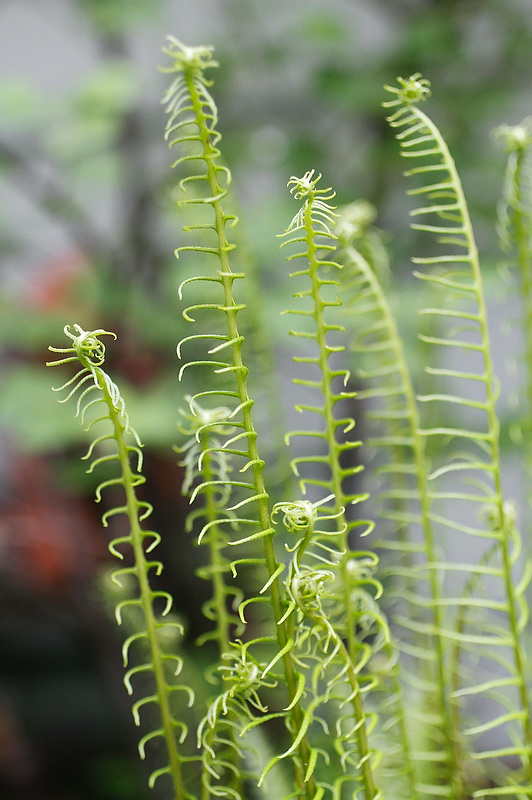
Deer fern. photo by John Bolivar
Blechnum spicant: Deer fern
Dark green fern leaves grow in tufts from short, stout rhizomes (they look like roots and it is how they spread). Take note of the two kinds of fronds (leaves) it has. It has sterile evergreen leaves that are present all winter long and in the spring taller spore-producing fronds pop out from the center of the plant. The taller reproductive fronds mature into dark brown twig looking shoots later in the summer. You sort of get two plants for one with this fern.
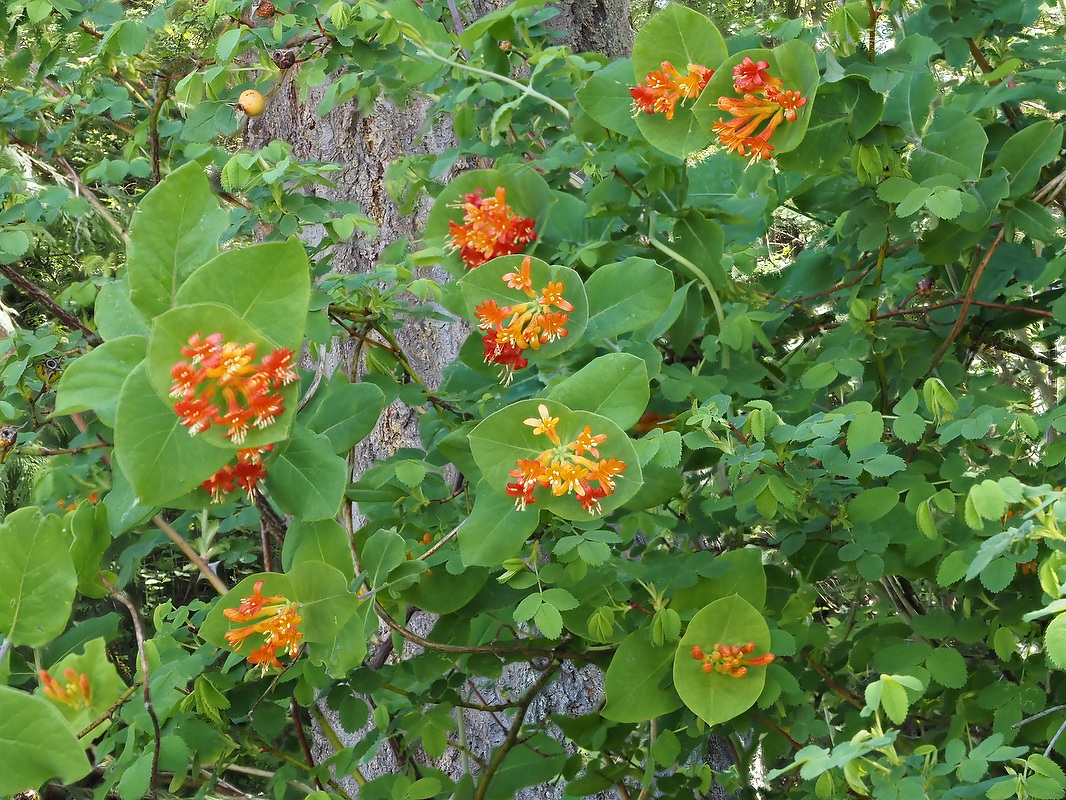
Orange honeysuckle. photo by John Bolivar
Lonicera ciliosa: Orange honeysuckle
This vine likes to climb high into trees or shrubs (up to 20 feet) and has clusters of tubular bright orange flowers that magically turn into bright red berries in the fall. My hummingbirds have voted it ‘best plant ever’ for several years now.
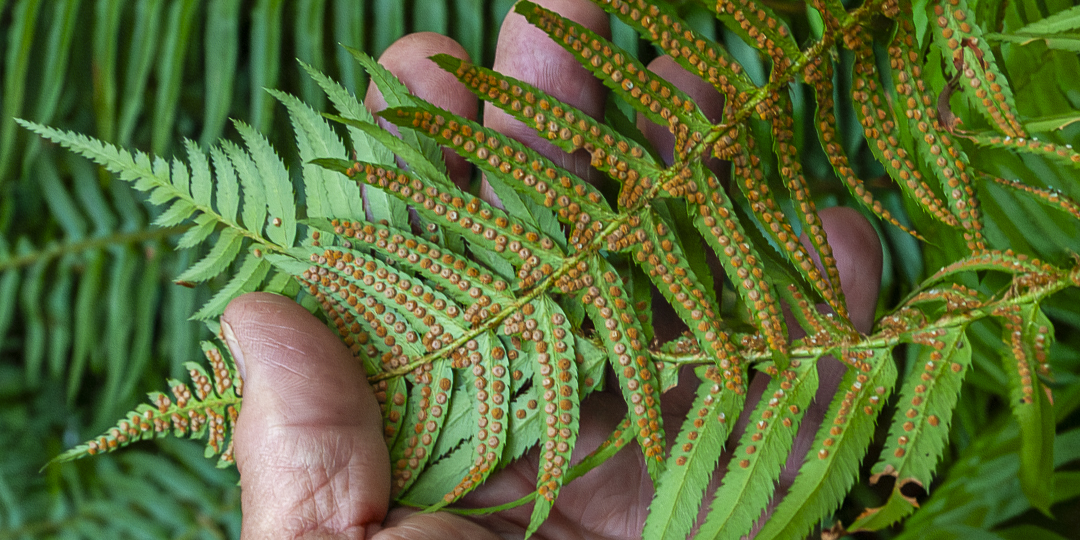
Sword fern showing spores on the underside of the leaves. photo by John F. Williams
Polystichum munitum: Sword fern
This is the quintessential northwest woodland fern that carpets the ground in western Washington forests. It’s a large fern that shelters salamanders and frogs under its old leaves which drape down around the fern creating little amphibian condos.
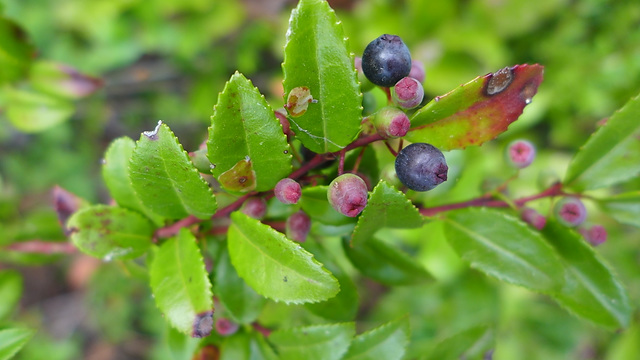
Evergreen huckleberry. photo by John Bolivar
Vaccinium ovatum: Evergreen huckleberry
This one can grow to be a taller shrub around 6–8 feet tall, but it is slow growing and doesn’t spread easily. The berries are yummy — so delicious in granola! It also tolerates dry conditions. If you have room for it, your neighbors will be so envious you might have to lock your gate at night. It has small shiny evergreen leaves and pink bell-shaped flowers, followed by tasty small dark blueberries that are liked equally by hungry birds and children.
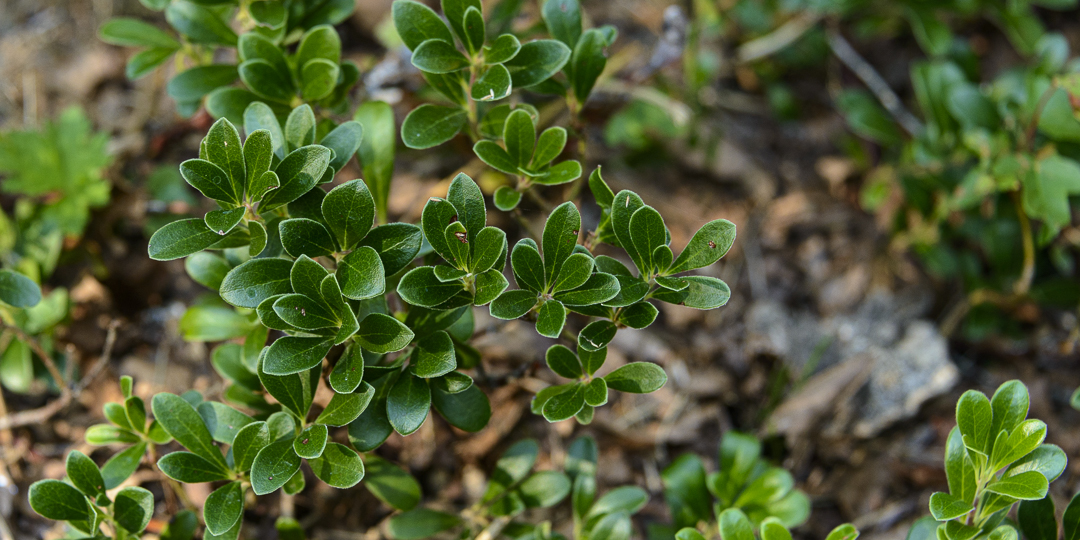
Kinnikinnick plant. photo by John F. Williams
Arctostaphylos uva-ursi: Kinnikinnick, bearberry
Besides having one of the best common names in the plant kingdom, this ground cover forms mats of green carpet interspersed with red berries late in the summer (hence its other common name). It can tolerate being dry all summer (perfect for planting strips or hanging in rock gardens) and the occasional stepping on by hungry bears.
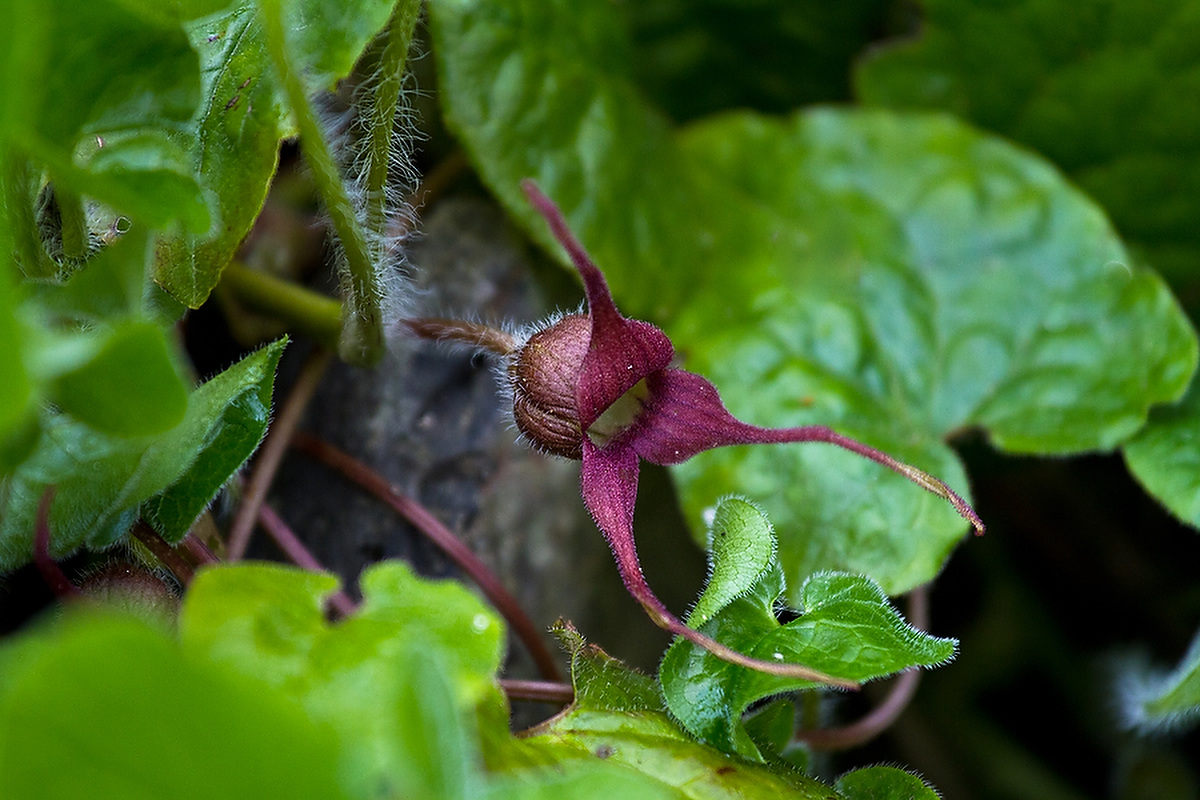
Wild ginger. photo by John Bolivar
Asarum caudatum: Wild ginger
This low-growing evergreen perennial smells strongly of lemon-ginger when crushed. The heart shaped leaves make it a very romantic plant — perfect for Valentine’s Day. It can tolerate dry shady spots in the garden. As a bonus, hiding among its leaves in spring, its amazing magenta flowers resemble a mashup of Texas Longhorns and a fuzzy grape. Really!
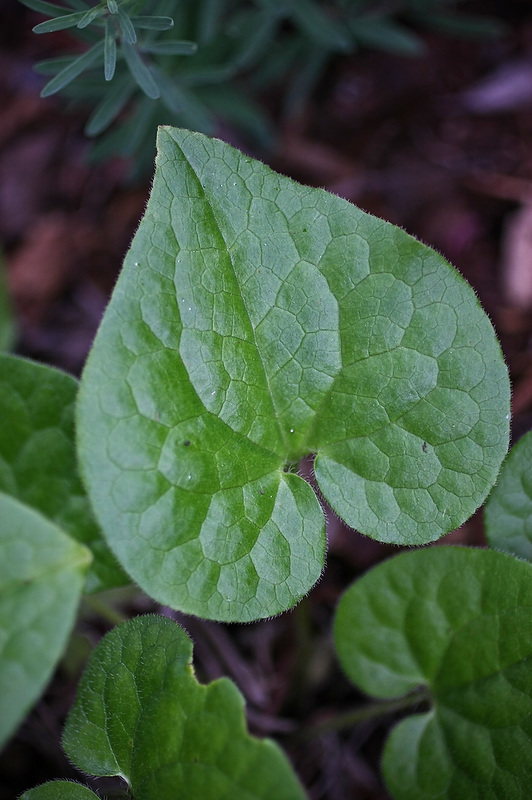
Wild ginger. photo by John Bolivar
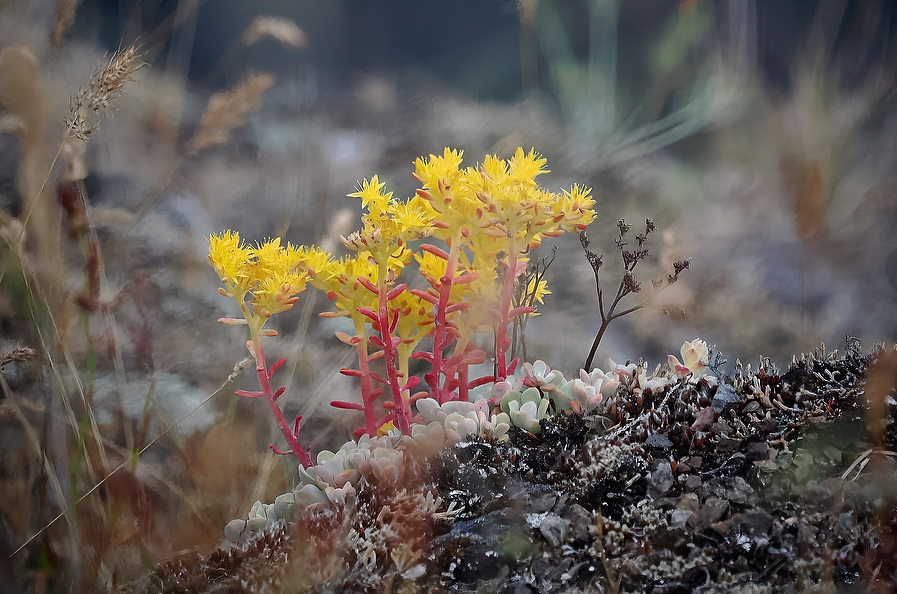
Broad-leaved stonecrop. photo by John Bolivar
Sedum spathulifolium: Broad-leaved stonecrop
The thick round juicy rosettes of leaves have small spikes of yellow flowers in late summer. It’s a great groundcover for hot sunny places in the garden or among the rocks. These are very common on rocky slopes of the San Juan Islands.
landscaping resource
Washington Native Plant Society’s plant lists specific to habitat and soil conditions.

John Bolivar has degrees in Botany and Photography. He has worked as a Wildlife Biologist in Alaska, and a sea kayak and mountain bike guide in Costa Rica, Belize, Baja, Canada and the PNW, and traveled to over 42 countries to date. As an entrepreneur, he started businesses in Seattle – Cuppa Jo On The Go coffee shop and Second Bounce Sporting goods.
His resume includes WebEditor at Canoe & Kayak Magazine and staff Medical Photographer at Virginia Mason Hospital. His photos have appeared in advertisements for REI, Patagonia, OR, Kavu, MSR, Cascade Designs and many top outdoor recreation companies. His freelance writing and photos have appeared in Sierra, Outside, Sea Kayaker, Popular Photography, Fortune and the New York Times.
He resides in Ballard with over 400 of his closest plant friends, AKA his garden, travels the world with his lovely, tolerant wife Jean and his old, blind dog Baxter. Most recently he can be seen wandering the state looking for rare native plants for the UW Rare Plant Monitoring Program and editing the digital newsletter for the Washington Native Plant Society.
Table of Contents, Issue #22, Winter 2023
Magic of Evergreens
by Sarah Ottino, Winter 2023 Landscape showing the contrast between evergreens and colored deciduous leaves. photo by Sarah Ottinoby Sarah Ottino Winter 2023For many, the term “evergreen” invokes images of fir-covered hills veiled in misty clouds or nostalgic...
Seeing Beyond the Trees
by Mary Johnson, Winter 2023 Evergreens in Newberry Hill Heritage Park, Silverdale, WA. photo by John F. Williamsby Mary Johnson Winter 2023Evergreen trees, particularly the Douglas-fir (Pseudotsuga menziesii) tree, dominate the botanical landscape on the western...
Poetry 22
by multiple poets, Winter 2023 Bare deciduous trees and evergreen trees. photo by John F. Williamsby multiple poets Winter 2023Dependable Green by Ælfhild Astrædottir Green is the call sign of summerWhen chlorophyll works overtimeGathering in wavelengths of...
COPYRIGHT
Copyright SEA-Media
All rights reserved. Reproduction or distribution, in whole or in part. without consent of copyright owner is strictly prohibited — except for brief quotations in critical reviews and other noncommercial uses permitted by copyright laws.
SEA-Media is a 501(c)(3) nonprofit corporation
PLEASE HELP SUPPORT
SALISH MAGAZINE
DONATE
Salish Magazine contains no advertising and is free. Your donation is one big way you can help us inspire people with stories about things that they can see outdoors in our Salish Sea region.
We also don't advertise Salish Magazine, so please spread the word of this online resource to your friends and colleagues.
Thanks so much for your interest and your support.