
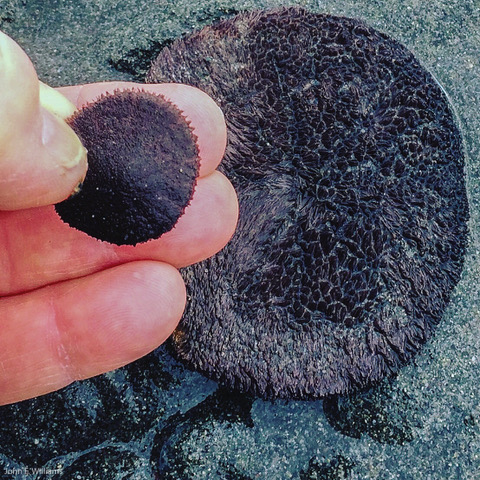
What do Sand Dollars Do?
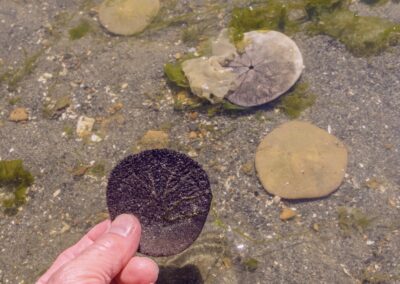
Sand dollars can be seen on sandy beaches at low tide in many places around the Salish Sea. But they’re not known for their entertaining antics.
Here’s a 6 minute, informal video that will tell some of the story of what sand dollars are all about, and what they do. But it’s just a quick overview, there’s plenty left to tell in a second part sometime in the future.
SPECIAL NOTE: I’ve been reading about “slow media” which is a way to let nature tell stories more at its own pace. There is a second video below which is a 15 minute “slow media” rendition of a sand dollar burying itself at normal speed.
Here’s the 6 minute informal overview of Sand Dollars, showing some of their characteristics and behavior.
Brief cameos by Hutch Haney and Becky Bressler, fact checked by Greg Jensen, special thanks to Bruce Claiborne.
 See more about sand dollars and their echinoderm cousins in the article: It’s a Star Eat Star World by Paul Pegany. The article also has pictures of some great sculptures by David Eisenhour and Karen Hackenberg.
Here’s a sand dollar in action, showing the real speed at which it moves. This is my first “slow media” experiment. Try putting this “full screen” on a large TV and letting it run as you do other things…it’ll be almost like having a beachside home 
Since this is a new experiment for us, and since “slow media” seems to be a broad and embryonic category, let us know what you think! Click on “Connect” in the menu above to contact us. Thanks!
And if you want to know even MORE about sand dollars, take a look at this video made by Amy Roszak when she was going through Beach Naturalist training from WSU Extension in Kitsap:
See More virtual tours
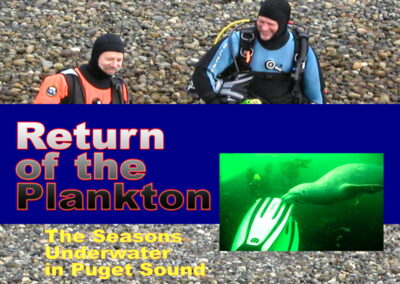
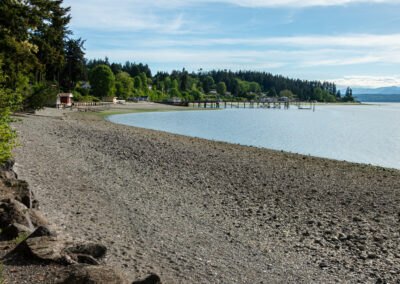
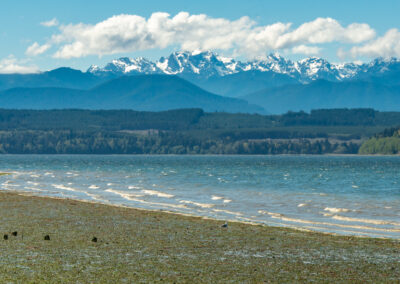
SOME OTHER ESPECIALLY INTERESTING RESOURCES
Low Tide Events 2026
Below are some schedules of when and where you can explore low tide with Beach Naturalists there to help you learn more about what you are seeing.
2026 Kitsap Beach Explorations — Join local naturalists to observe the unique creatures that call the fragile intertidal zone home. These events are FREE and suitable for all ages.
Meet the Beach in South Sound — The Puget Sound Estuarium’s Meet the Beach program sends trained Beach Naturalist volunteers out during summer low-tides to help the community discover intertidal life!
Seattle to Federal Way — The Seattle Aquarium’s seasonal Beach Naturalist Program helps community members learn about and enjoy our vibrant shorelines.
Bainbridge Island Beach Explorations — During low tide events, Bainbridge Beach Naturalists are on the beach looking for the amazing sea life that shares our shores with us.
Snohomish Beach Watchers — Once each month, the Snohomish Beach Watchers invite the public to help with a beach clean-up.
Port Townsend Low Tide Walks — Join us for a guided Low Tide Walk on the beach with PTMSC naturalists. Explore tide pools and learn how marine organisms are adapted for the challenges and daily extremes of living in the intertidal zone.
Science and Nature
This series of short videos, "Human Elements, Science and Nature," is on our local PBS station (KCTS9) as well as online. It features some great local science stories and amazing imagery.
https://www.kcts9.org/show/human-elements/episodes
Future Ecologies
I was thrilled when I discovered the “Future Ecologies” podcast because it has an uncanny resemblance to what we set out to do with Salish Magazine (except that it’s audio rather than visual).
It is one of the few media efforts which really embraces the ecosystem perspective. Use this link to take a look at the review of Future Ecologies on our SEA-Media web site.
The Marine Detective
Jackie Hildering invites you to her blog: "Join me in the cold, dark, life-sustaining NE Pacific Ocean to discover the great beauty, mystery and fragility hidden there." But even before you get to the blog, on her home page there is a slideshow of absolutely stunning photographs.
Street Smart Naturalist
Street Smart Naturalist: Explorations of the Urban Kind is a weekly blog written by David B. Williams to share observations about the human and natural world around Seattle, Puget Sound, and the Pacific Northwest.
Are you in the target audience?
- People who want to know more about Seattle and Puget Sound and the many fascinating stories that can be found by wandering the streets, deep diving newspaper archives, perusing old photos, and taking the time to slow down, be more observant, and ask questions;
- Urban naturalists who delight in noticing fossils in buildings, walruses in terra cotta, and ants bubbling out of sidewalk cracks;
- Flaneurs, historians, optimists, and the just plain nerdy;
- And, those who simply look around and find beauty and amazement in the world around them.
Encyclopedia of Puget Sound
The Encyclopedia of Puget Sound is a comprehensive guide to the science of Salish Sea ecosystem recovery. Articles on this site describe the region's major environmental threats and areas of concern, but also the facts and stories that make the Salish Sea an estuary of international importance. The website is a product of the University of Washington Puget Sound Institute and receives major support from the Environmental Protection Agency's National Estuary Program.
Hakai Magazine
Hakai Magazine explores science, society, and the environment from a coastal perspective. Not only is its content instructive, but it's presentation is visually inspiring.
Living on Earth
Public Radio's Environmental News Magazine. If you're looking for some substance beyond the normal focus of our media on sports, politics, fashion, and economy, listen to this show which does a great job of portraying earth ecosystems as something essential to our lives. The stories it tells are compelling.
IslandWood's Phenology Friday
For 12 weeks in 2020, one of IslandWood’s educators shared a phenological highlight. Watch the videos of their explorations.
Pacific Wonder Tracker
Pacific Wonder Tracker celebrates the delicious sense of wonder we experience when exposed to the natural environment. It is also specific to the natural wonders of the Pacific Northwest. Whether you live here, plan to visit, or just have a curious mental itch, you can enjoy reading about wonders you may encounter in coastal Washington and Oregon.
"Scientists on the Go" from WET Science Center
WET Science Center's "Scientists on the Go" activities integrate science into a child's day while incorporating reading, writing, and math skills! There are a combination of indoor and outdoor activities to keep the learner curious and asking questions. Check back regularly for updated science activities and new printable activity packets. Recommended for elementary age children.
Remote Science Learning
Use this guide to find science resources to supplement remote learning. Thurston County environmental organizations have developed activities for all ages. This resource is provided by the Thurston County ECO Network.
Deep Look
This collection of short videos by PBS shows the unseen at the very edge of our visible world. Get a new perspective on our place in the universe and meet extraordinary new friends. Explore big scientific mysteries by going incredibly small.
COPYRIGHT
Copyright SEA-Media
All rights reserved. Reproduction or distribution, in whole or in part. without consent of copyright owner is strictly prohibited — except for brief quotations in critical reviews and other noncommercial uses permitted by copyright laws.
SEA-Media is a 501(c)(3) nonprofit corporation
PLEASE HELP SUPPORT
SALISH MAGAZINE
DONATE
Salish Magazine contains no advertising and is free. Your donation is one big way you can help us inspire people with stories about things that they can see outdoors in our Salish Sea region.
We also don't advertise Salish Magazine, so please spread the word of this online resource to your friends and colleagues.
Thanks so much for your interest and your support.