
DRIFTWOOD AND SAND
Recycling on the Beachby Gunnison Langley
Winter 2025-26
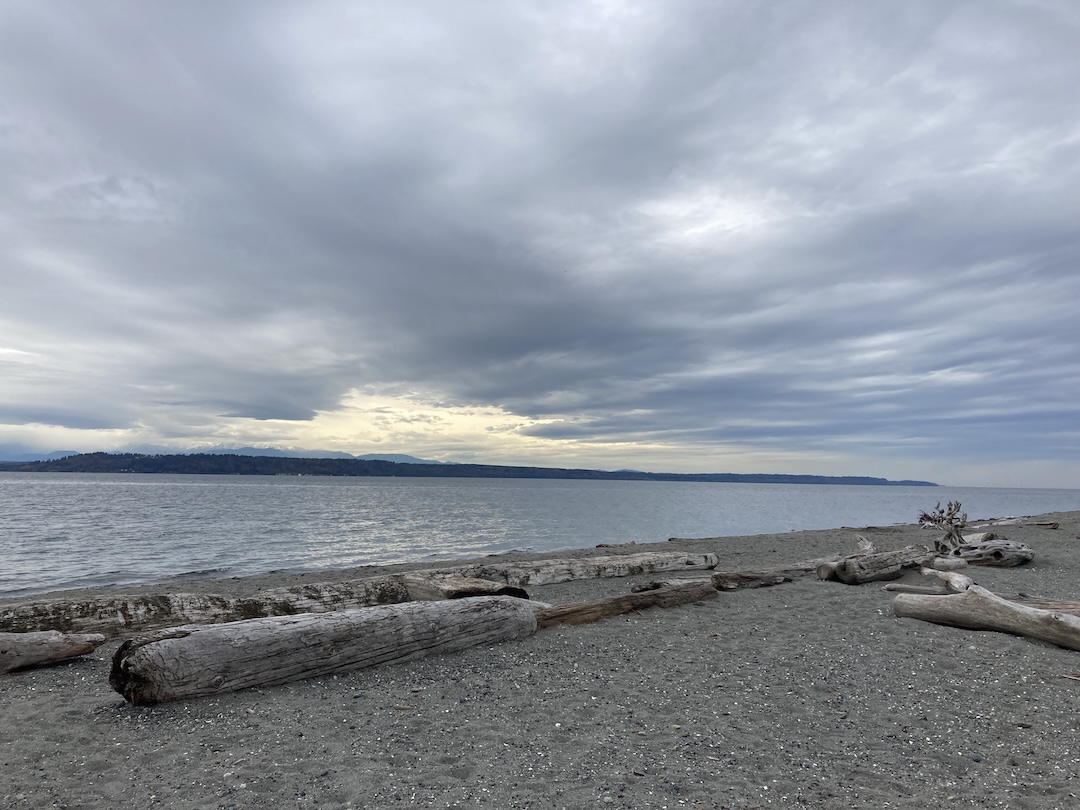
Driftwood logs on a beach. photo by Gunnison Langley
Driftwood and Sand
Recycling on the Beachby Gunnison Langley
Winter 2025-26
A stroll on the beach offers plentiful examples of how nature recycles.
A late fall morning outing last year on the beach at Seattle’s Carkeek Park offered me a splendid array of examples of nature’s recycling at work.
I paused when I first arrived on the beach to take in the beauty that surrounded me. A light mist tickled my cheeks. My nose and mouth were met with the brine from the salt water, and I could both smell and taste it. A few yards away, I watched Piper’s Creek spilling into Puget Sound and spotted numerous salmon carcasses lining its banks, having completed their life cycle where it began.
As I approached the water, it was not long until I had to traverse over and around large pieces of driftwood. I wondered where those logs came from, how did they get there, and what role do they play in nature’s recycling?
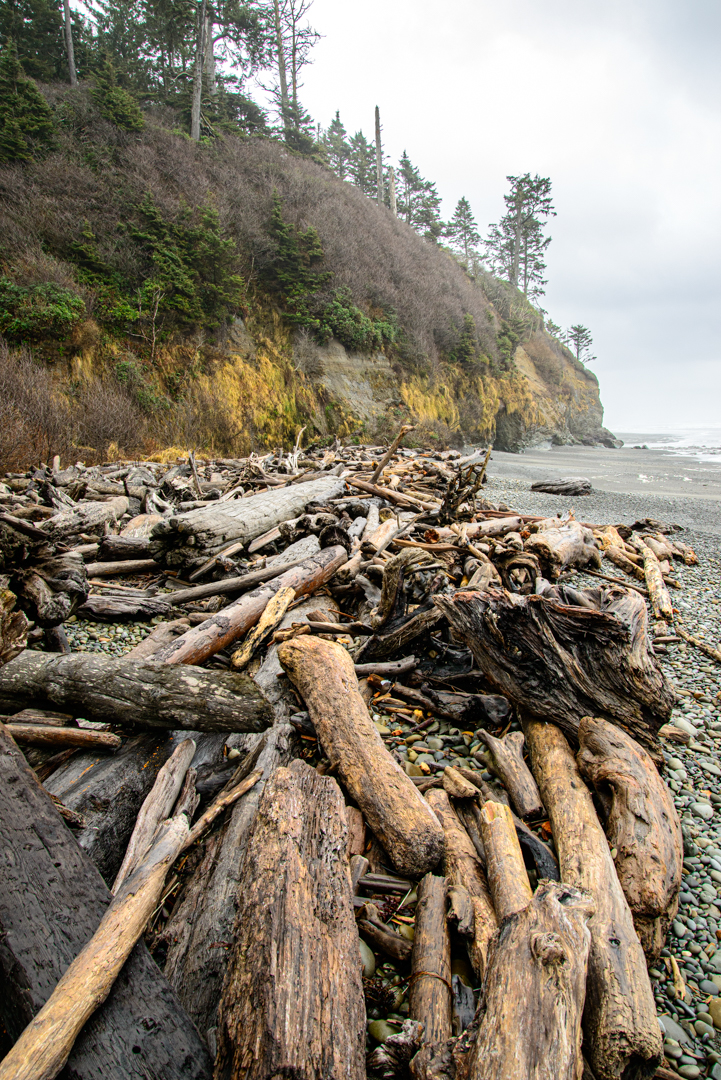
Bluffs, beach, driftwood. photo by John F. Williams
from the forest to the sea and back again
As my eyes scanned across the vast expanse of Puget Sound, I could see towering cliffs lined with trees on the other side interspersed with swaths of exposed brown earth where a landslide had occurred. In these landslides, the trees that lived on the hillside were swept down onto the beach. There some still reside, but others made their way into the water and likely traveled across the Sound to the beach where I was standing.
I noticed that some of the logs had angled chunks missing from them that were carved out by loggers either long ago by axe or handsaw, or in the modern day by chainsaw. While being transported in “rafts” (felled logs bundled together by rope or chain and floated in the water to sawmills) via the Sound, harvested logs sometimes break loose from their rafts and go astray, landing on beaches.
Another avenue that logs find their way to beaches are in the case of natural disasters such as recent floods, when trees from forests many miles inland make their way into the Sound by way of swollen rivers.
In its new role as driftwood on the beach, a log provides habitat for sea creatures, birds, mammals, and plants. Further, it plays a key role in erosion prevention. All the while it breaks down, adding nutrients to the sands and waters. If you have ever seen the lattice-like carvings in a piece of driftwood, this is due to small creatures such as gribbles and shipworms who bore through the wood and return organic materials back into the ecosystem. Tiny recyclers.
Driftwood also provides protection for juvenile fish such as salmon, which truly are a great example of how nature recycles.
Returning to where they were born, once salmon spawn and die, their bodies are immediately recycled. They begin to decompose in the water, enriching the soil and silt. Animals such as birds, coyotes, and bears remove salmon carcasses from the water and take them into the forest to be consumed. Animals and microbes then break down the salmon into the soil, and their nutrients help keep the forest healthy.
Later in the recycling cycle, trees keep streams cool, where young salmon grow, and fallen trees in streams and estuaries offer them protection. And the salmon continue to return to the forest, giving back to the trees that once were their “nursery.”
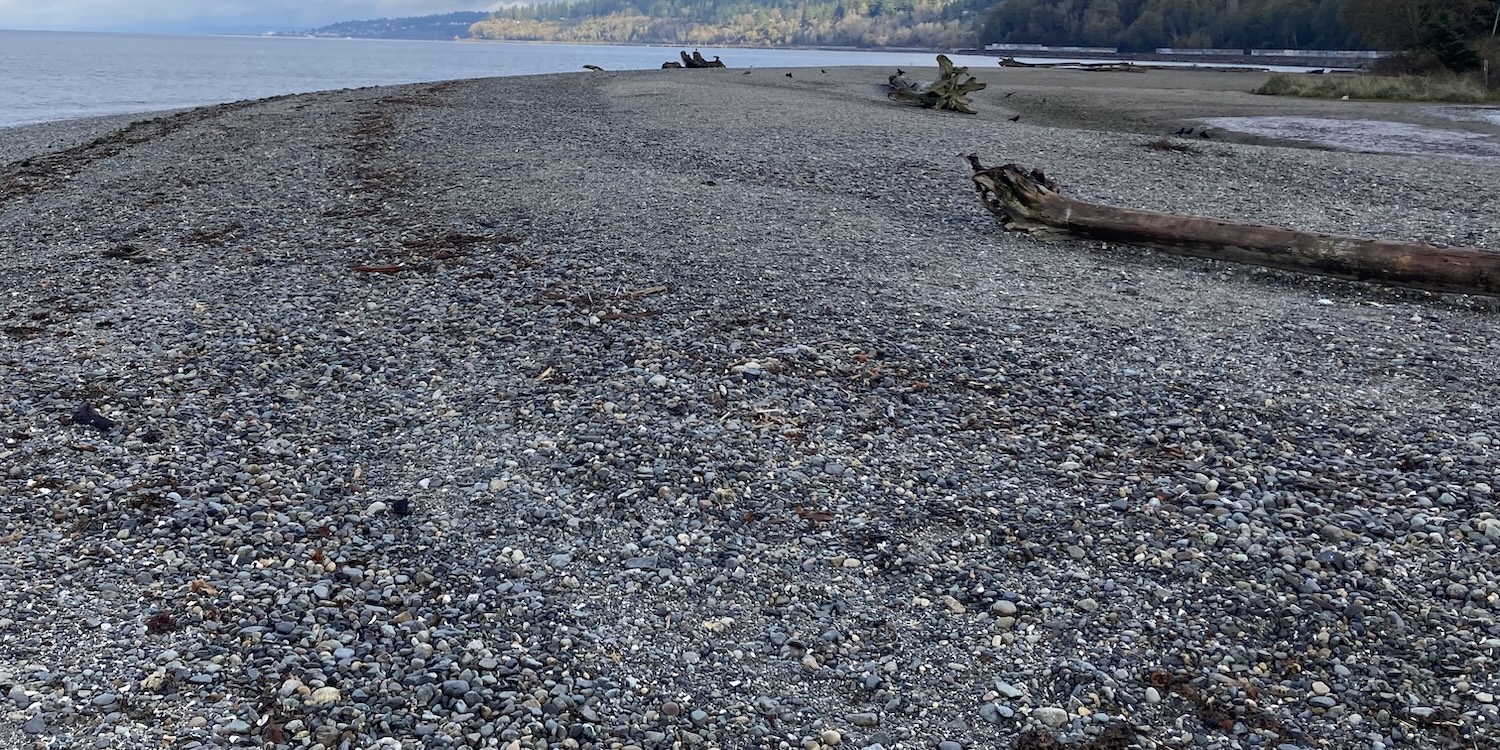
Driftwood on a rocky beach. photo by Gunnison Langey
more than first meets the eye
As I continue to stroll along the rocky shore at Carkeek Park, I scoop up a handful of rocks and sift through it. I first observe the colors. Even though from a distance it may appear otherwise, under my more myopic scrutiny, I found that the rocks are not all gray. From deep dark greens that mirror the evergreen trees on the shores, to creams, whites, pinks, oranges, and reds, the color palate in my hand is infinite.
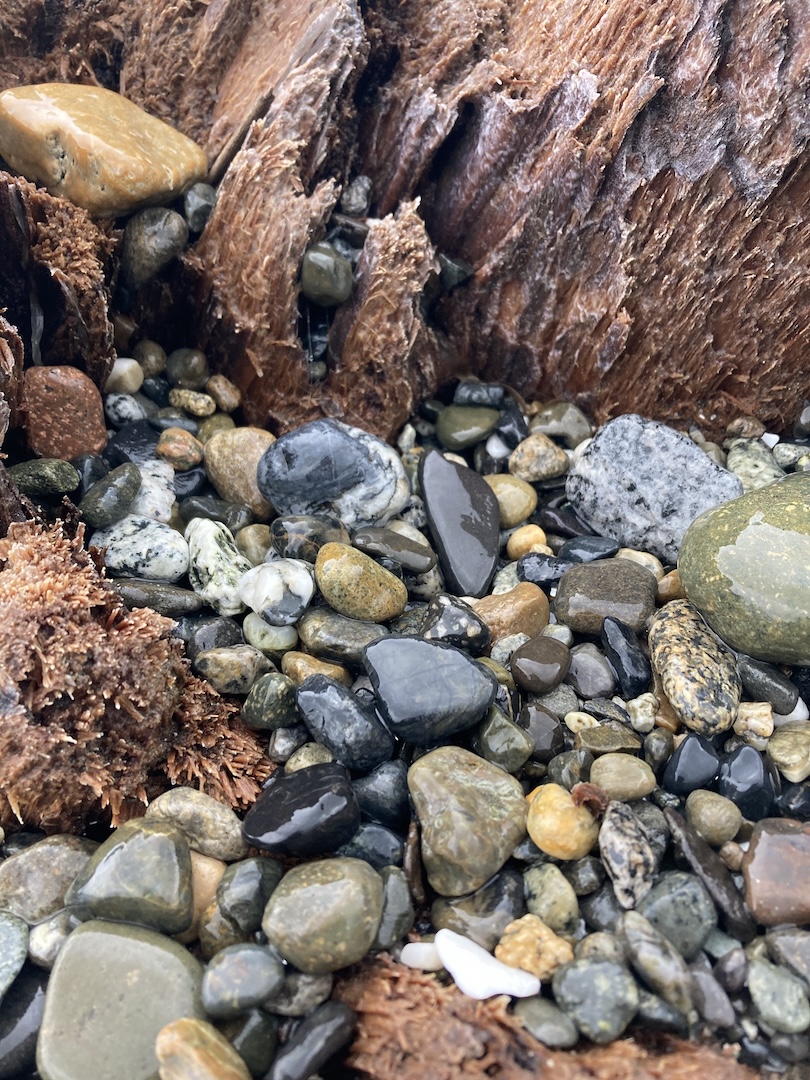
Rocks on the beach. photo by Gunnison Langley
With my fingers I felt that while many of the rocks were smooth, many were not. Some were flat with rounded edges begging to be skipped in the water, some were jagged and would make you emit a yelp if you were so brave as to comb the beaches barefoot, and some were both. I also discovered that not everything in my fistful of rocks were rocks; sea shells, glass, bones, plastics, and bits of wood all compose our “sand.”
Sea shells were once homes of creatures that live in the waters, tide pools, and on the shores. The constant ebb and flow of the tides pushes these discarded domiciles or exoskeletons against the rocks and breaks them down into smaller pieces, until they are nearly unrecognizable as shells.
Treasured and sought after sea glass is worn down and smoothed by this system as well, as are plastics that unfortunately make their way into our waters. Alas, even the plastics are being recycled by nature by the same mechanisms as the natural products. It just takes a lot longer and has more detrimental repercussions as it is occurring.
The rocks themselves (and why some are smooth and others are not) are also a product of recycling.
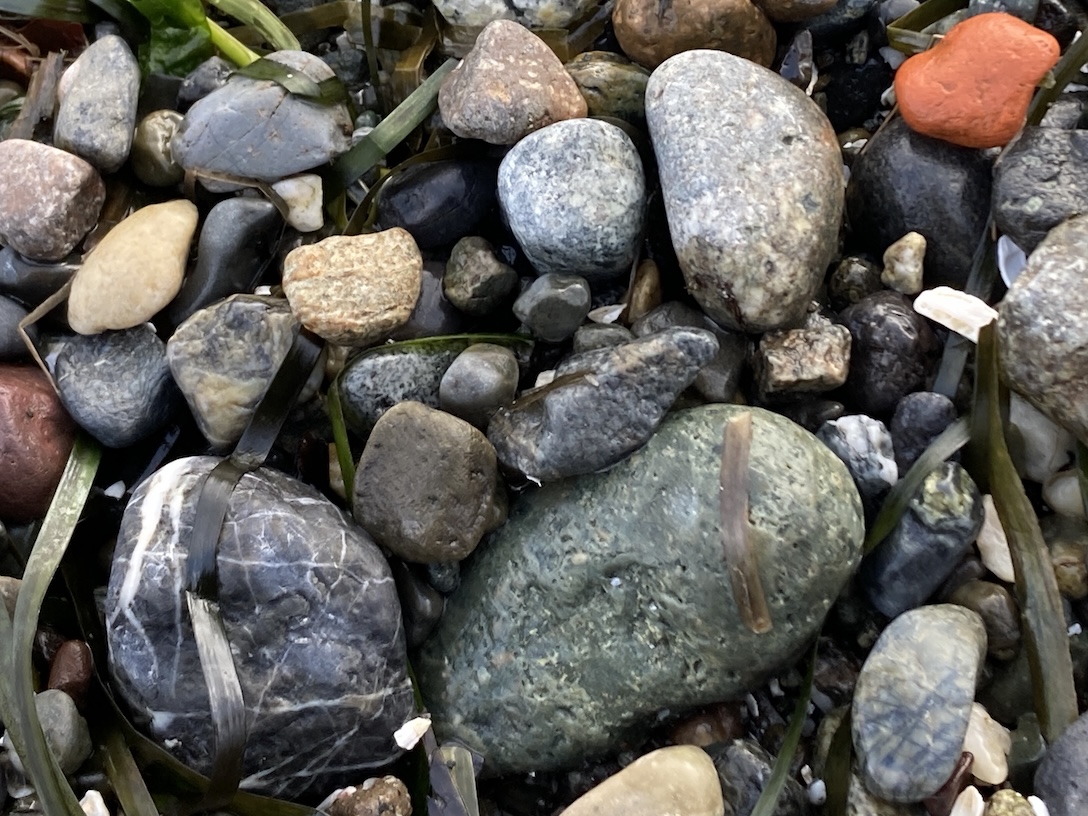
Closeup of rocks on the beach. photo by Gunnison Langley
To access many of our local beaches, one might be required to descend a steep hill or cliff. The winds, rains, and tides constantly chip away at these hillsides, and fragments of them tumble down to the water’s edge where the waves further pare down larger boulders to minuscule pebbles. This is one reason why you find rocks in various sizes and states of smoothness on the beach.
Because energetic waves wash the sand and smaller rocks into deeper water, if obstacles such as bulkheads prevent cliff erosion from “restocking” the beach with sand and small rocks, the beaches become populated mainly by the remaining larger cobblestones. That is a big change to the physical structure of the beach ecosystem. So the erosion process is important to maintain habitat for a variety of creatures who depend on the sandier beaches, from eelgrass to moonsnails, and in some places, even geoducks!
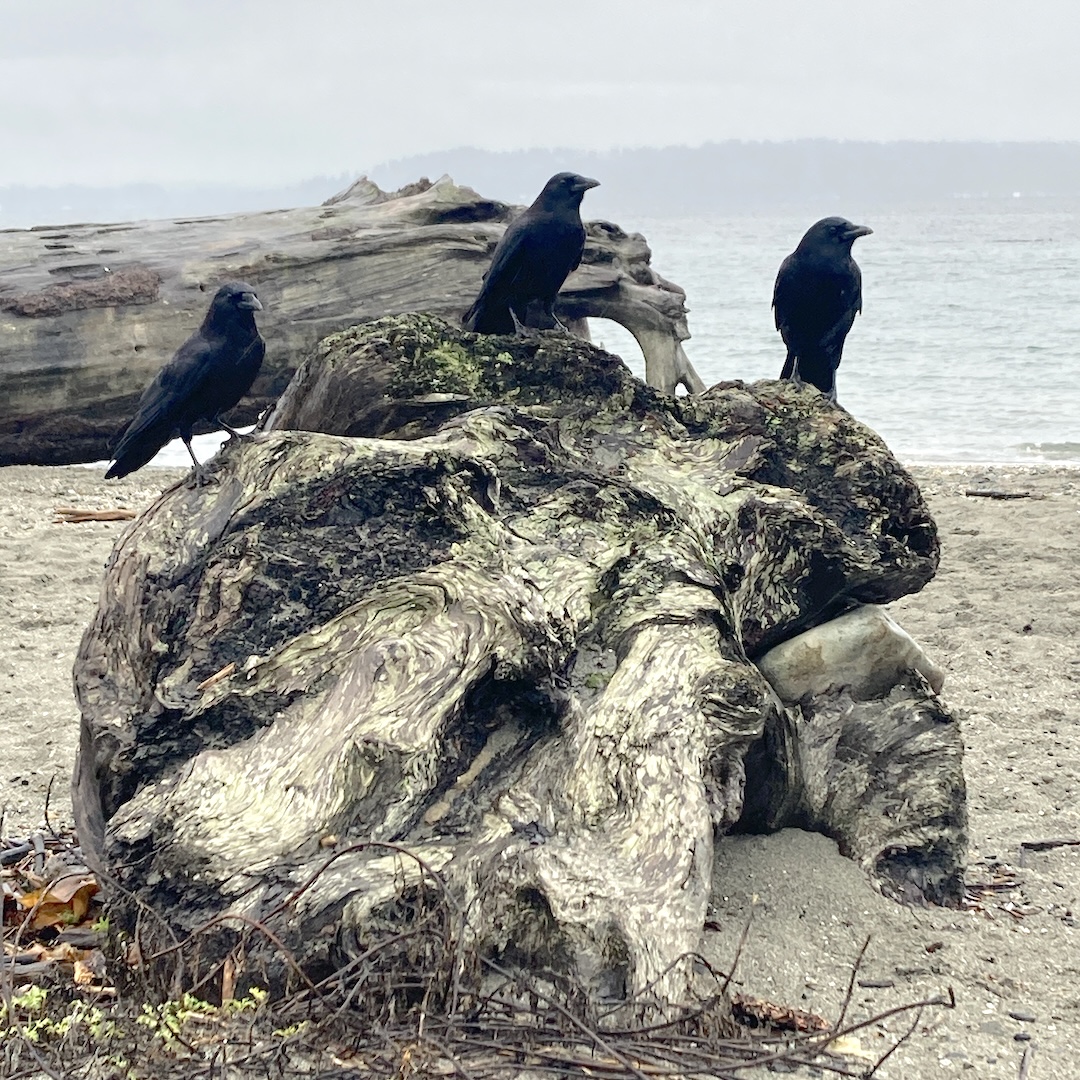
Crows on beach driftwood. photo by Gunnison Langley
a vast recycling system
We pride ourselves in the Northwest as dutiful recyclers. Next time you lug your recycling out to the curb on a very soggy day, take a moment to reflect on how nature is constantly recycling, how it literally has shaped the region that we live in, and continues to do so. Furthermore, next time you stroll along the beach, take a closer look at the change that is taking place all around you, from the log you might picnic on to the rocks you overturn searching for what lies beneath. Nature is always at work recycling.
FIND OUT MORE
 An earlier piece in Salish Magazine about driftwood: DRIFTWOOD BEACH HOUSES: A PHOTO ESSAY
A researcher’s discovery that trees and animals depend on salmon as much as people do, Hakai Magazine
Recycle according to Merriam-Webster
Driftwood that line the beaches of Whidbey, Windermere Whidbey Island
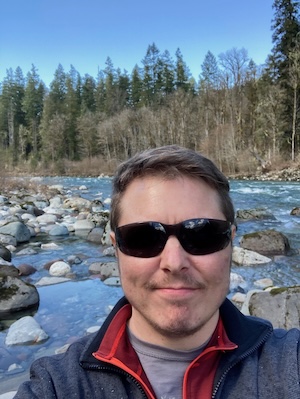
Gunnison Langley lives in Seattle and believes that the Salish Sea region is the most beautiful place on Earth.
He can often be found giving a tree a hug, communing with crows, nibbling on thimbleberries, or chasing after squirrels (be assured, he only wants to be friends with them!)
Gunnison is always looking to meet new folks who enjoy bird watching (especially crows), nature and the PNW as much as he does!
Issue Page
Table of Contents, Issue #30, Winter 2025-26
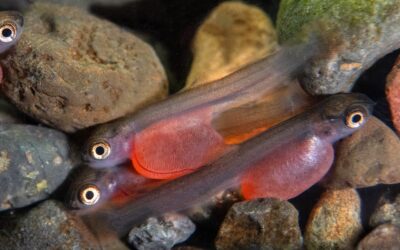
Salmon: Upstream Recyclers
SALMON: UPSTREAM RECYCLERS by Paul Dorn Winter 2025-26Salmon alevins. photo by John Gussman by Paul Dorn Winter 2025-26The salmon life cycle begins with a tiny fertilized egg buried in clean freshwater stream gravel. Years later that egg has grown into an adult who...
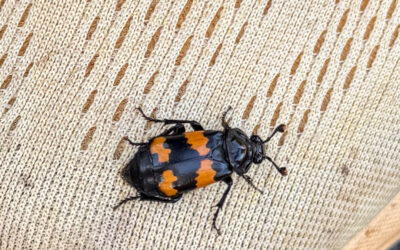
Undertakers of the Forest
UNDERTAKERS OF THE FOREST Boreal Burying Beetles by Thomas Noland Winter 2025-26Boreal burying beetle (Nicrophorus defodiens). photo by Thomas Noland by Thomas Noland Winter 2025-26something rotten, something good I crawled out of the leaf litter this morning, and my...
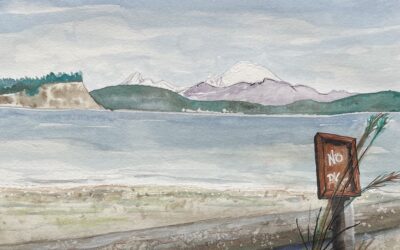
Nature’s Recyclers — Big picture
by Dr. Adelia Ritchie Winter 2025-26View of myriad habitats in which nature recycles, from Norwegian Point, Washington. watercolor by Adelia Ritchie by Dr. Adelia Ritchie Winter 2025-26The Salish Sea, that vast inland waterway stretching between Washington and British...
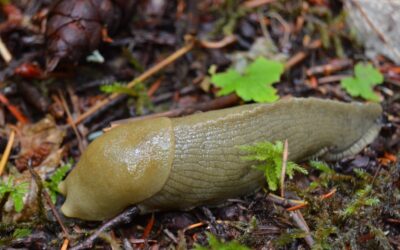
The Slowdown on Slugs
by Sarah Ottino Winter 2025-26A disrupted banana slug has retracted its tentacles. photo by Sarah Ottino by Sarah Ottino Winter 2025-26As the drizzle and mud return, slugs emerge into the open. Moist and damp for much of the year, the Pacific Northwest is a slug...
What the Tide Leaves Behind
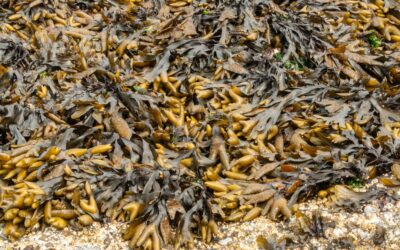
by Celeste Hankins Winter 2025-26Rockweed at home on rocks on the beach. photo by John F. Williams by Celeste Hankins Winter 2025-26Kayaking through San Juan Islands. photo by Celeste HankinsI first noticed Pacific Rockweed shortly after moving from Lake Chelan in...
Poetry 30
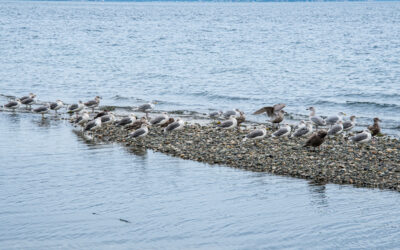
by multiple poets Winter 2025-26Seagulls at the edge of the tide. photo by John F. Williams by multiple poets Winter 2025-26Recycle, a Watercolor by Carl Jensen A she gull lies flattenedthe gray of her barely distinct from sand or sky.Nearby the flock shifts with the...
COPYRIGHT
Copyright SEA-Media
All rights reserved. Reproduction or distribution, in whole or in part. without consent of copyright owner is strictly prohibited — except for brief quotations in critical reviews and other noncommercial uses permitted by copyright laws.
SEA-Media is a 501(c)(3) nonprofit corporation
PLEASE HELP SUPPORT
SALISH MAGAZINE
DONATE
Salish Magazine contains no advertising and is free. Your donation is one big way you can help us inspire people with stories about things that they can see outdoors in our Salish Sea region.
We also don't advertise Salish Magazine, so please spread the word of this online resource to your friends and colleagues.
Thanks so much for your interest and your support.