
SALMON: UPSTREAM RECYCLERS
by Paul Dorn
Winter 2025-26
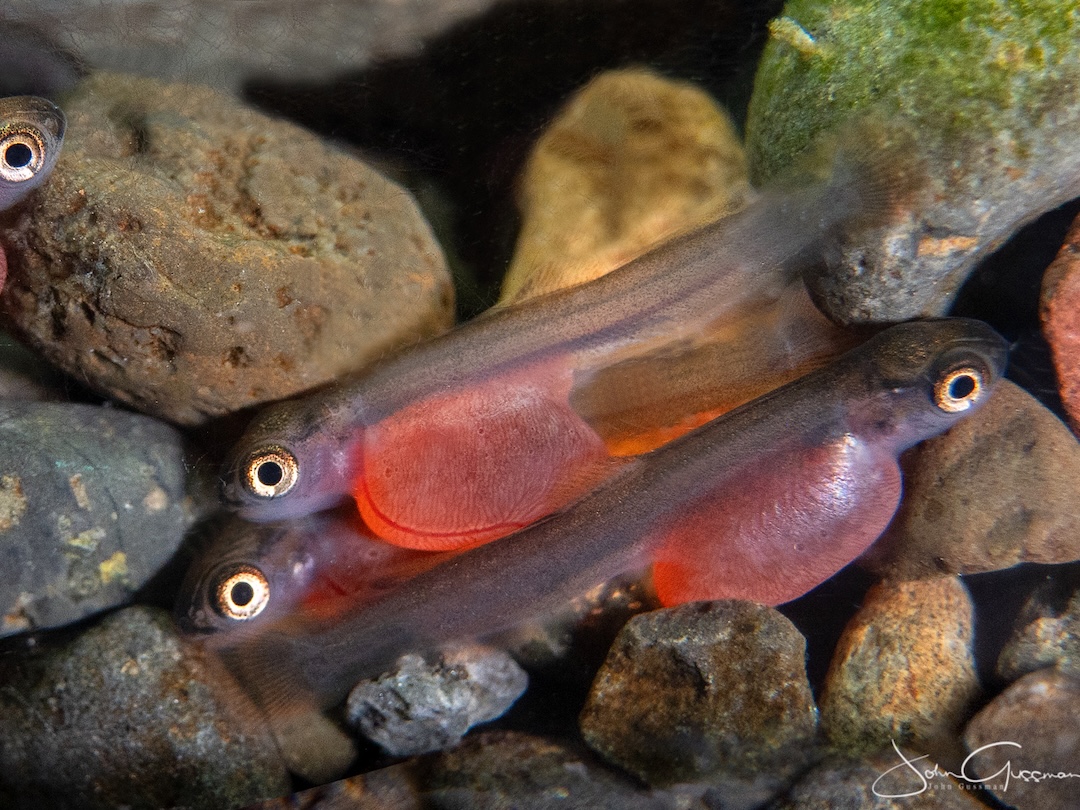
Salmon alevins. photo by John Gussman
UPSTREAM RECYCLERS
by Paul Dorn
Winter 2025-26
The salmon life cycle begins with a tiny fertilized egg buried in clean freshwater stream gravel. Years later that egg has grown into an adult who navigates its way home from the ocean to its birth stream to spawn and die. Adult salmon never meet their offspring, but in death they nourish the ecosystem that sustains their young and perpetuates the species.
Salmon are very active fish from the moment the alevin emerges from its egg. The alevin is a tiny fish with its yolk sack still attached to its belly. Alevins are extremely slippery and mobile, and they immediately wiggle deeper into their gravel nests to avoid scouring floods or to find higher oxygenated water.
Salmon alevins in a stream. video by John Gussman
When their yolk sac is consumed, the fully formed fry emerge from the stream gravel and are ready to begin a life of hunting and avoiding predators.
Every salmon follows inbred genetic instincts — when to leave their stream for the ocean, where to migrate in the ocean, and when to start their journey home from the ocean. Salmon life history is amazingly complex: their bodies adapting from freshwater to salt water, then reversing back again. They thrive in a complex stream environment, then feast in productive estuaries, and then grow up in a vast open ocean.
They may spend from one to eight years in the ocean, depending on the species. The bulk of salmon biomass is gained from what they consume in the ocean. This cumulative body weight is the gift every adult salmon run brings home. It’s analogous to a “biological conveyor belt” – with every salmon run, a weighty abundance of ocean nutrients is transferred to the rivers and streams.
video by John Gussman
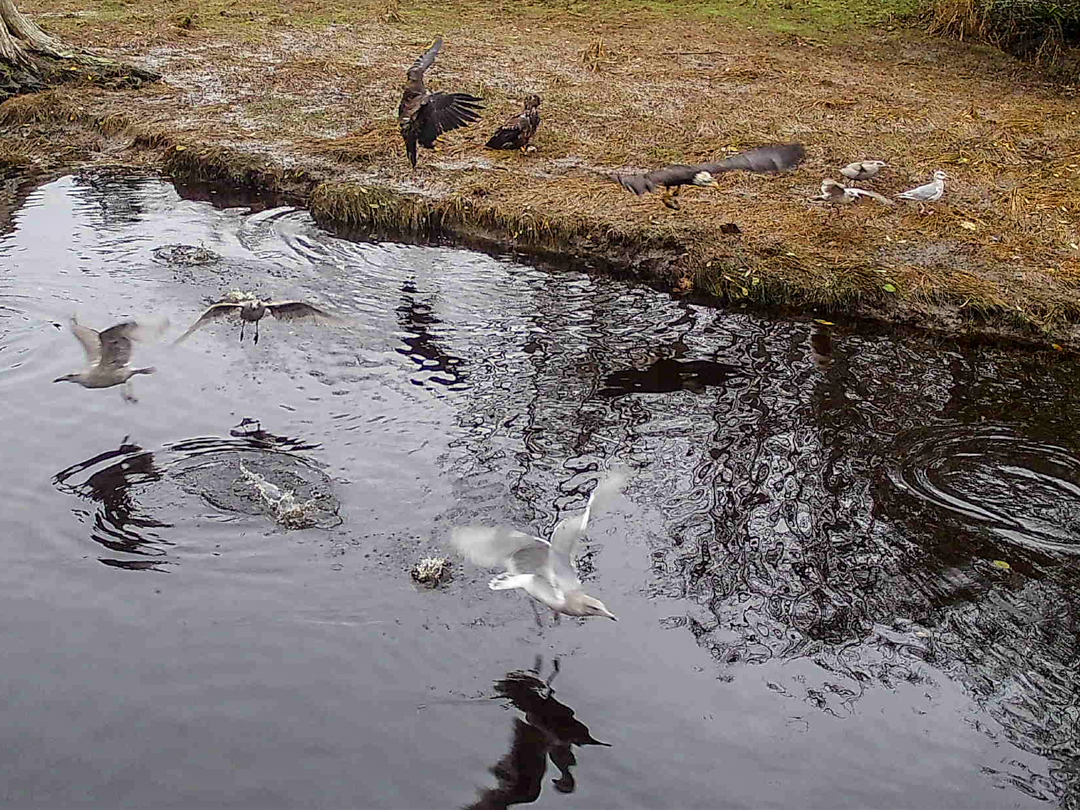
Seagulls & eagles dine on the salmon. photo by Paul Dorn
Coyotes, raccoons, shrews, bobcats, bear, otters, eagles, seagulls, and surprisingly deer, songbirds, and other herbivores all feed on the returning salmon, both live and dead. All these animals spread the salmon’s ocean nutrients further from the stream when they relieve themselves, fertilizing the ecosystem to the benefit of myriad other plants and animals.
We know this nutrient path because marine nutrients have a different “fingerprint,” i.e., isotopic ratio, than the terrestrial plants and wildlife, making it easy to identify marine nitrogen, phosphorous, and other salmon-based nutrients in the terrestrial landscape.
These are valuable nutrients for the Salish Sea because our landscape was carved, scraped, and bulldozed over and over by the continental ice sheets during the past glacial periods. When the glaciers receded, the sands, gravels, clays, and boulders they left behind were generally nutrient poor. Therefore, salmon bringing ocean nutrients into the Salish Sea and up its streams is a big benefit for the surrounding ecosystem.
Dense conifer forests came to dominate the Pacific Northwest when the continental glaciers receded some 10,000 years ago. These forests provide shade to keep stream temperatures cool and contribute structure (trunks, branches, and root wads) that create gravel bars, pools, and riffle habitat for spawning salmon, incubating eggs, and salmon fry to flourish.
Streamside vegetation also snags salmon carcasses that would otherwise be flushed down to the estuary, leaving food along the stream for insects, bacteria, and fungi to consume.
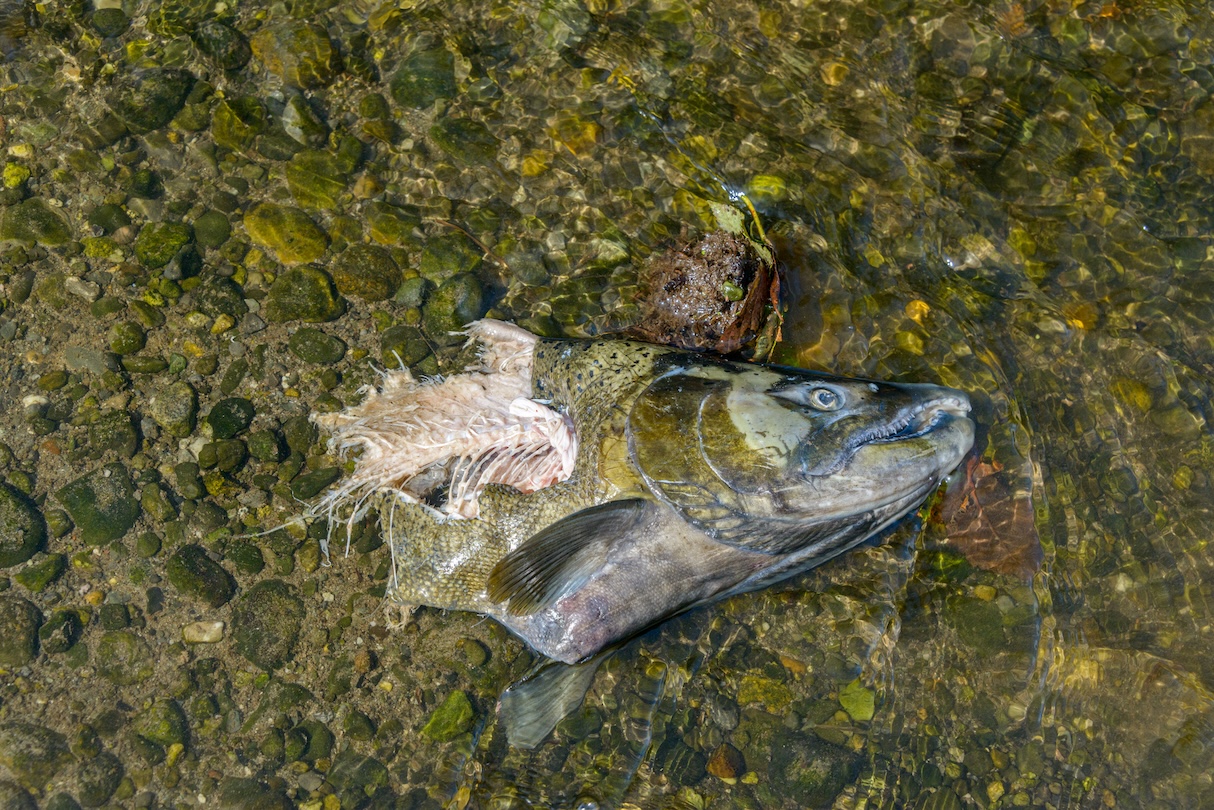
Different animals eat different parts of the salmon. photo by John F. Williams
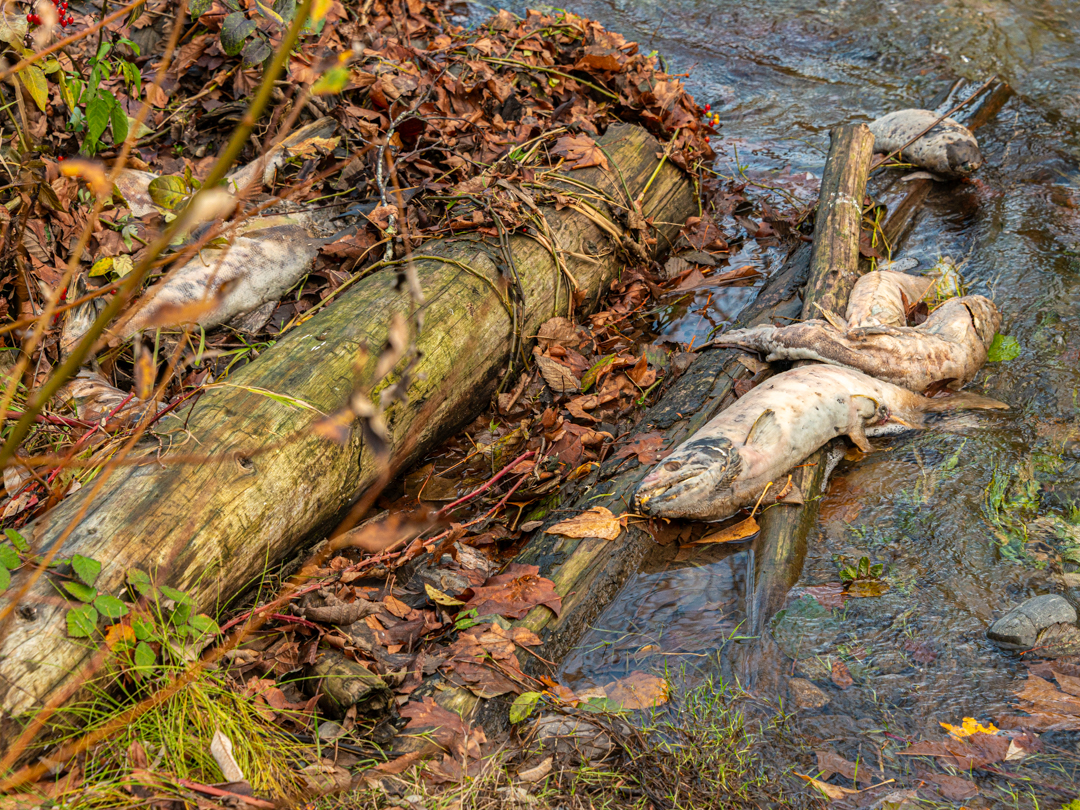
Salmon carcasses awaiting scavengers amid streamside debris. photo by John F. Williams
There are creatures visiting at night, such as these raccoons.
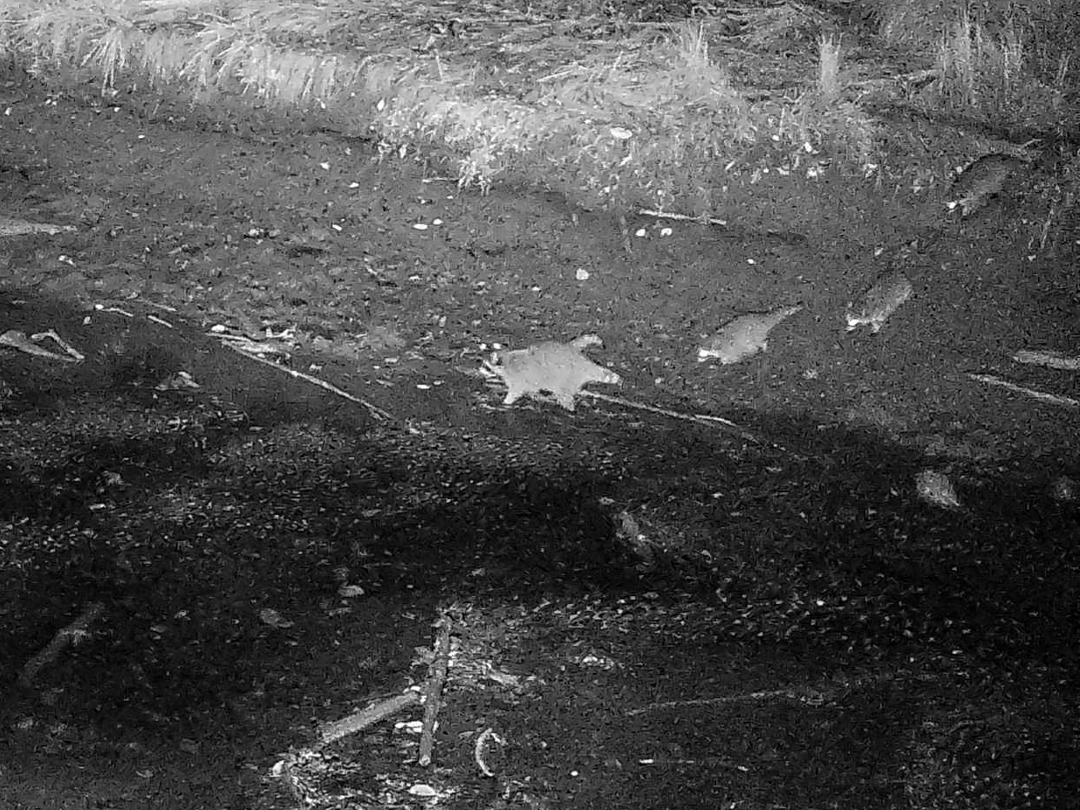
Raccoons headed into a stream. photo by Paul Dorn
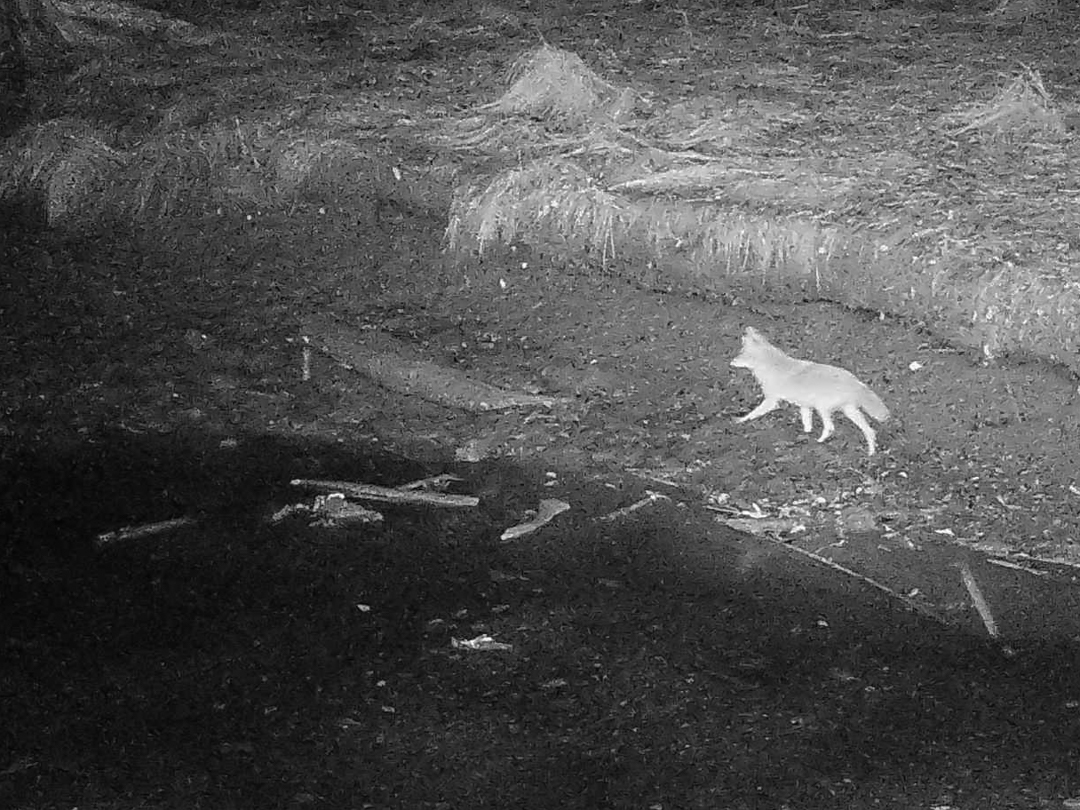
Coyote at the side of the stream. photo by Paul Dorn
And there are bears.
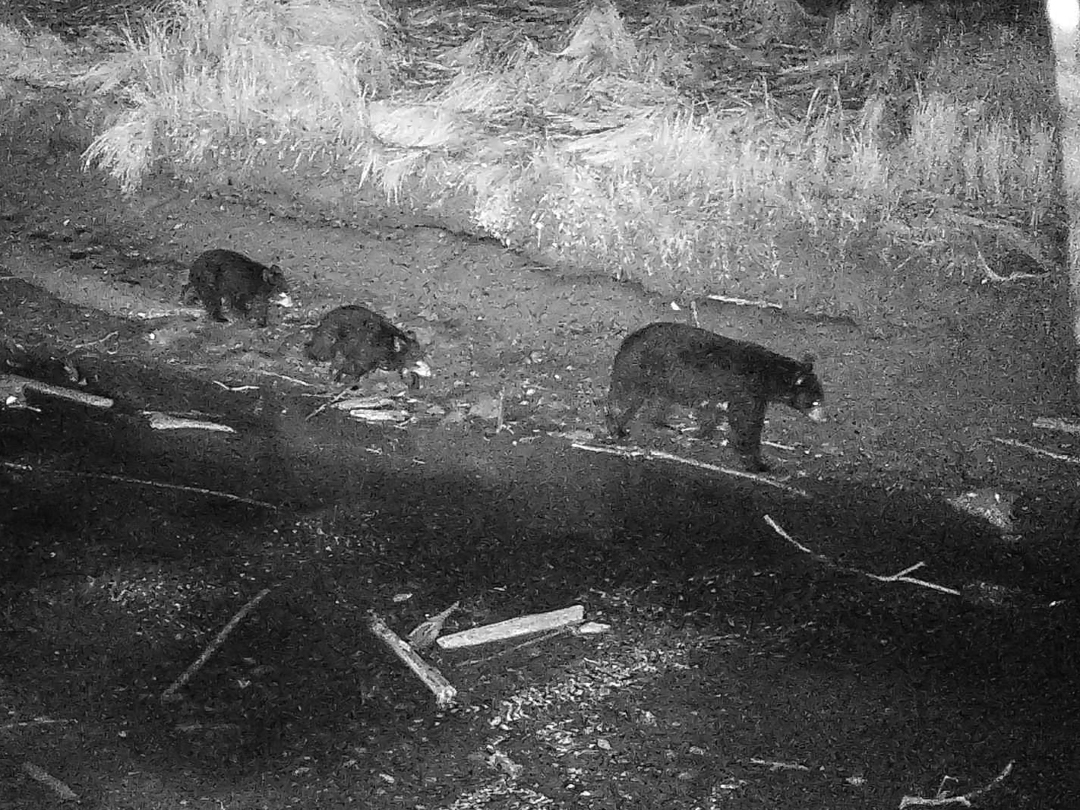
Bears along the side of a stream. photo by Paul Dorn
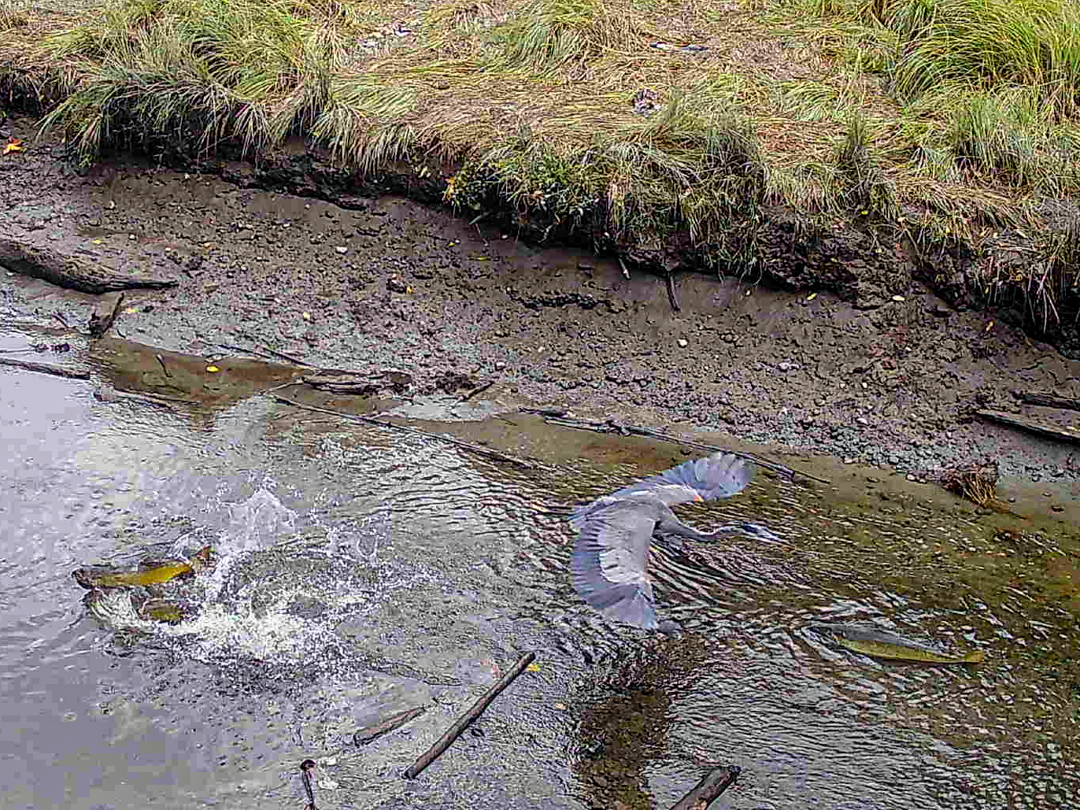
Even great blue heron visit the salmon. photo by Paul Dorn
A river otter feasting on a salmon. video by Paul Dorn
Otters, too, eat the salmon.
A fly lays its eggs on salmon carcasses, and those eggs become maggots who grow into flies. Nearly 100% of those flies’ composition is from the salmon’s marine nutrients. When those flies are eaten by frogs and birds, they in turn recycle those same nutrients up the food chain and into watershed. Over millennia, the number of salmon returning to Salish Sea streams and rivers has been immense, generating hundreds of thousands of tons of marine nutrients transferred upstream into the forests.
And the otters need to be careful of bears. video by Paul Dorn
One life cycle ends with the death of the spawning salmon, and another cycle begins with the fertilized egg. The salmon cycle generates an epic nutrient recycling process.
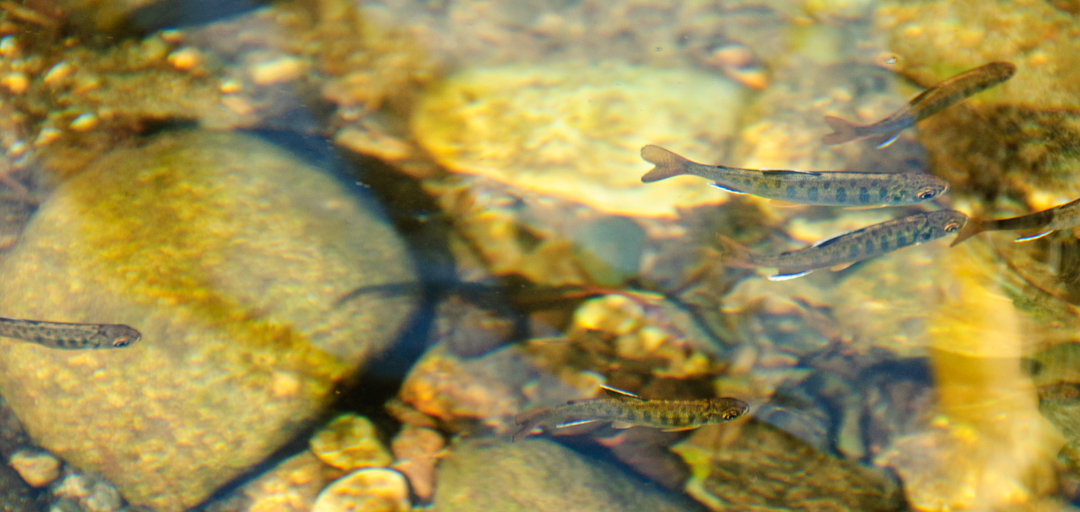
Young coho salmon in a stream, before heading out to the ocean. photo by John F. Williams
FIND OUT MORE
 See a short video about a painting representing this salmon cycle (by Rogest).
See another article about the salmon cycle from a different perspective (by Celeste Hankins).

Paul Dorn spent his 50-year fisheries biology career tagging Bristol Bay sockeye salmon in the North Pacific, monitoring emerging chum salmon at the UW’s Big Beef Creek Research Station on Hood Canal, as an instructional technician in Shoreline Community College’s Biology Program, and as a Suquamish Tribal biologist helping restore local salmon and salmon habitat. Retired, Paul volunteers with the Friends of Miller Bay and Great Peninsula Conservancy to protect and restore habitat critical to salmon and the wildlife that depend upon salmon to survive.
Issue Page
Table of Contents, Issue #30, Winter 2025-26
Undertakers of the Forest
UNDERTAKERS OF THE FOREST Boreal Burying Beetles by Thomas Noland Winter 2025-26Boreal burying beetle (Nicrophorus defodiens). photo by Thomas Noland by Thomas Noland Winter 2025-26something rotten, something good I crawled out of the leaf litter this morning, and my...
Nature’s Recyclers — Big picture
by Dr. Adelia Ritchie Winter 2025-26View of myriad habitats in which nature recycles, from Norwegian Point, Washington. watercolor by Adelia Ritchie by Dr. Adelia Ritchie Winter 2025-26The Salish Sea, that vast inland waterway stretching between Washington and British...
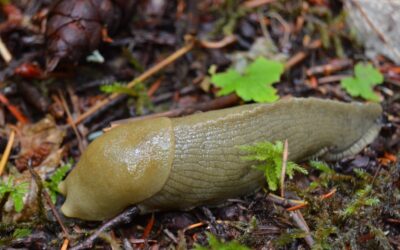
The Slowdown on Slugs
by Sarah Ottino Winter 2025-26A disrupted banana slug has retracted its tentacles. photo by Sarah Ottino by Sarah Ottino Winter 2025-26As the drizzle and mud return, slugs emerge into the open. Moist and damp for much of the year, the Pacific Northwest is a slug...
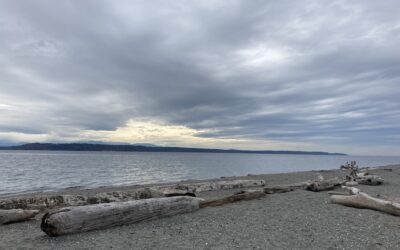
Driftwood and Sand
by Gunnison Langley Winter 2025-26Driftwood logs on a beach. photo by Gunnison Langley by Gunnison Langley Winter 2025-26A stroll on the beach offers plentiful examples of how nature recycles. A late fall morning outing last year on the beach at Seattle’s Carkeek Park...
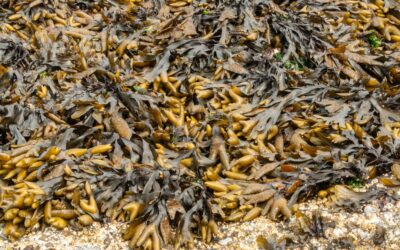
What the Tide Leaves Behind
by Celeste Hankins Winter 2025-26Rockweed at home on rocks on the beach. photo by John F. Williams by Celeste Hankins Winter 2025-26Kayaking through San Juan Islands. photo by Celeste HankinsI first noticed Pacific Rockweed shortly after moving from Lake Chelan in...
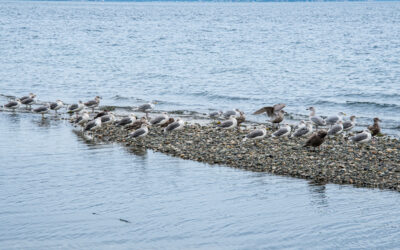
Poetry 30
by multiple poets Winter 2025-26Seagulls at the edge of the tide. photo by John F. Williams by multiple poets Winter 2025-26Recycle, a Watercolor by Carl Jensen A she gull lies flattenedthe gray of her barely distinct from sand or sky.Nearby the flock shifts with the...
COPYRIGHT
Copyright SEA-Media
All rights reserved. Reproduction or distribution, in whole or in part. without consent of copyright owner is strictly prohibited — except for brief quotations in critical reviews and other noncommercial uses permitted by copyright laws.
SEA-Media is a 501(c)(3) nonprofit corporation
PLEASE HELP SUPPORT
SALISH MAGAZINE
DONATE
Salish Magazine contains no advertising and is free. Your donation is one big way you can help us inspire people with stories about things that they can see outdoors in our Salish Sea region.
We also don't advertise Salish Magazine, so please spread the word of this online resource to your friends and colleagues.
Thanks so much for your interest and your support.