
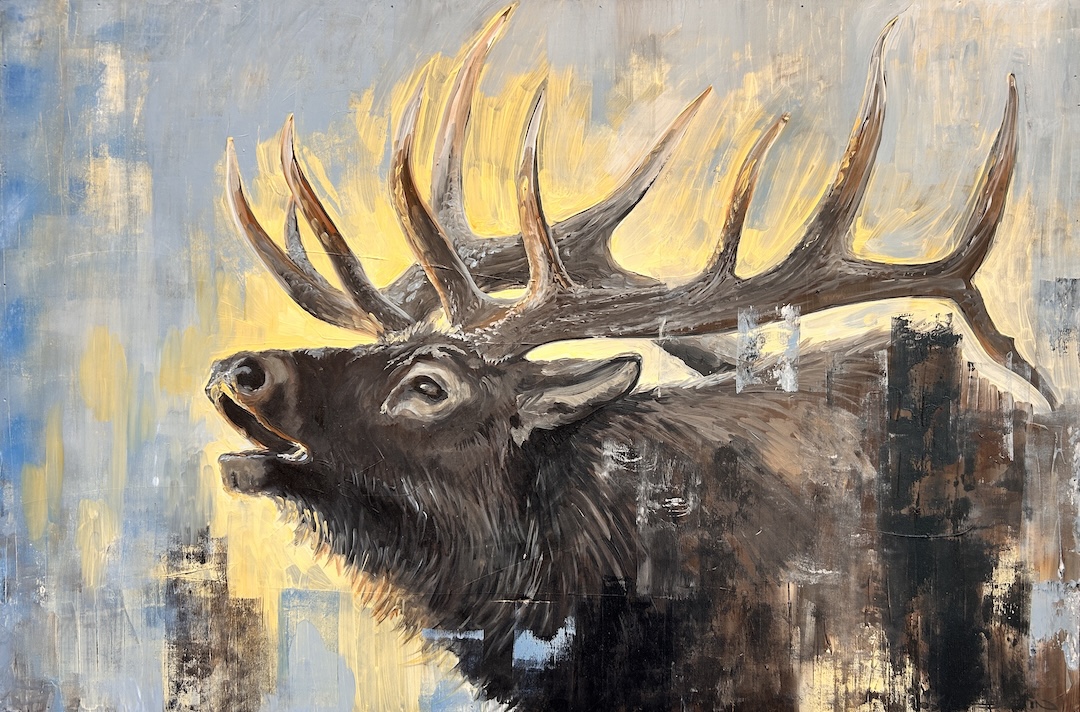
Roosevelt elk. oil painting by Justin Johnson
FROM MICRO TO MACRO:
A BROADER LOOK AT THE COMPLEX RELATIONSHIPS BETWEEN ELK AND INSECTS IN THE PACIFIC NORTHWEST
by Justin Johnson, Autumn 2025
Here in North Bend, Washington, we’re lucky to live alongside one of the state’s resident elk herds. If you’ve ever driven through the Snoqualmie Valley at dawn or dusk, you’ve likely seen them — tawny shapes moving in the mist, lounging or grazing in open meadows, or slipping silently back into the trees.
We often think of elk (Roosevelt elk in western Washington and Rocky Mountain elk in eastern parts) as iconic big game animals, keystone grazers, or prey for our large carnivores. But beyond the obvious predator-prey drama, there’s a quieter story unfolding — one that involves the smallest players in our ecosystems: insects.
Much like the Greater Yellowstone Ecosystem (GYE), our forests, river valleys, and mountain slopes here in the Pacific Northwest are shaped by the movements and habits of these animals. Elk interact with insects at multiple levels — from tiny, almost invisible exchanges to landscape-scale effects — forming a complex, largely positive network of relationships that ripple through the entire ecosystem.
micro-level interactions: small-scale relationships with big effects
parasitism as an ecological service
At first glance, parasites like ticks and lice seem like a purely negative burden for elk. But in nature, nothing exists in isolation. These ectoparasites are food for other species. Tiny parasitic wasps, predatory mites, and insectivorous birds such as magpies (Pica hudsonia) and starlings (Sturnus vulgaris) take advantage of these hitchhikers.
This makes elk, quite literally, walking ecosystems. Their bodies become mobile microhabitats, transporting parasite populations across the Snoqualmie Valley and into the foothills, where other species can feed on them or use them to complete their life cycles.
Even biting flies and mosquitoes, which may seem only like pests, have roles in pollination and as food sources for dragonflies, bats, and swallows. In this way, elk indirectly support a variety of organisms through their relationships with insects that live on or around them.
decomposition and nutrient cycling
When an elk dies — whether taken by a mountain lion, struck by a vehicle, or simply reaching the end of its natural life — it sets off a cascade of ecological processes. The body becomes a hub for carrion insects such as blowflies (Calliphoridae), dermestid beetles (Dermestidae), and burying beetles (Nicrophorus spp.).
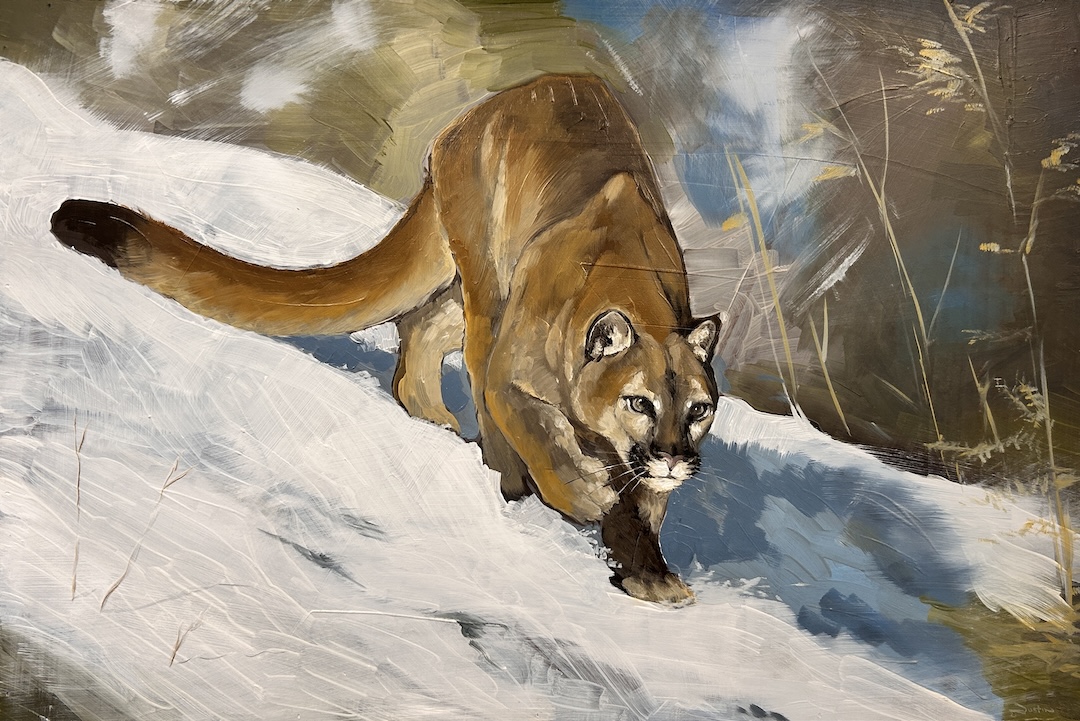
Cougar. oil painting by Justin Johnson
These insects not only break down tissues but also feed birds (ravens, crows, jays), mammals (bears, coyotes, raccoons), and even amphibians. Nutrients from the carcass seep into the soil, enriching plant growth and indirectly supporting pollinators and other insects down the line.
In this way, even in death, an elk becomes an engine of biodiversity — from maggots to microbes — fertilizing the land that supports the next cycle of life.
macro-level interactions: shaping ecosystems through behavior
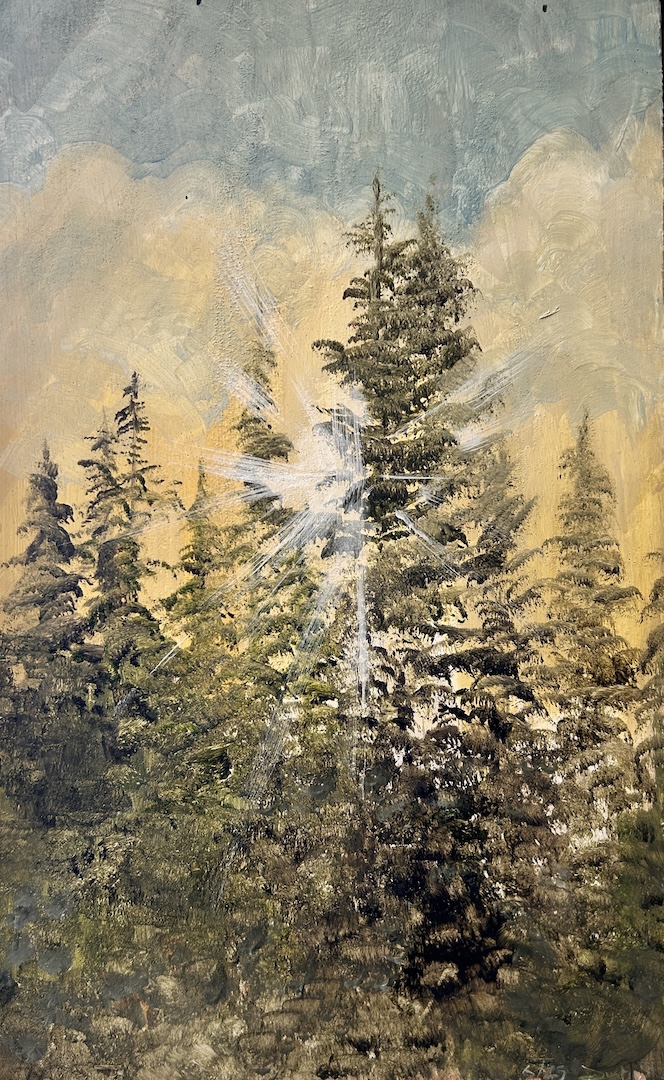
Tree. oil painting by Justin Johnson
grazing pressure and vegetation dynamics
Roosevelt elk in western Washington are not migratory in the same way as Rocky Mountain elk are in eastern Washington or the GYE, but they still move between seasonal ranges and habitats. In doing so, they shape plant communities.
Heavy browsing in riparian areas can reduce shrubs like willow, salmonberry, and vine maple, which might initially sound negative. Yet this can also create space for sun-loving plants and early successional species, increasing plant variety in certain areas. And because each plant species hosts its own set of insect associates — from specialist butterflies to bees and beetles — elk indirectly determine which insect guilds thrive.
Predator populations, such as cougars and black bears, help keep elk herds moving, preventing overbrowsing in any one location. This predator-prey dynamic ensures that vegetation and insect communities remain in balance — a self-regulating ecosystem.
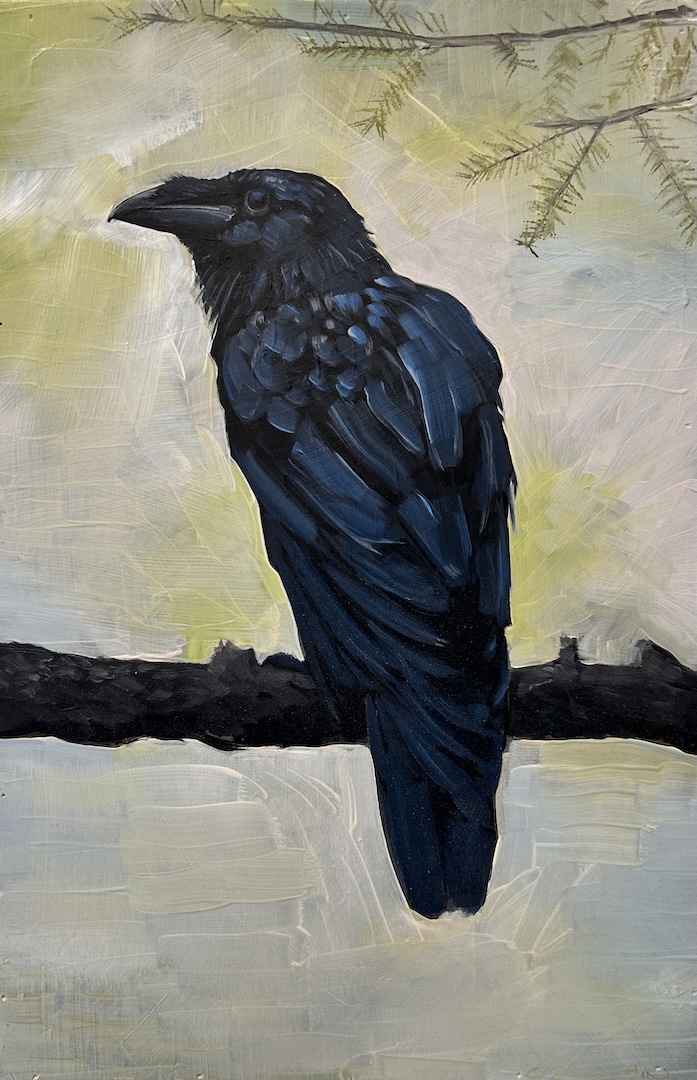
Raven. oil painting by Justin Johnson
movement and insect dispersal
While Washington’s elk don’t always make hundred-mile migrations, they still travel across valleys, foothills, and mountains, carrying seeds, pollen, and insect hitchhikers with them.
Dung beetles are a perfect example. These beetles rely on large herbivore scat to complete their life cycles. Each elk dropping left behind is a miniature ecosystem, providing a habitat for beetles, flies, and their larvae. These insects, in turn, aerate the soil, disperse seeds, and feed other wildlife such as birds and small mammals.
cohabitation: cooperation in action
One of the most visible examples of mutual benefit between elk and insects comes through their relationship with birds like magpies and starlings. These birds pick ticks directly off elk, gaining a protein-rich meal while the elk are relieved of parasites.
Ravens (Corvus corax), abundant in the Cascades, also trail elk herds, feeding on insects disturbed by the animals’ passage or scavenging from kills and carcasses. Ravens’ omnivorous diets often include insects, making them another link in the elk-insect web.
death as catalyst: the insect boom
When an elk dies — especially in remote forested areas — the event sparks an insect population boom. Blowflies arrive within hours, laying eggs in soft tissues. As decay progresses, beetles, ants, and moth larvae move in, each taking advantage of a specific stage of decomposition.
If a cougar caches an elk kill under vegetation, the rate of consumption by large scavengers slows, giving insects more time to colonize the carcass. This “extended window” can allow for greater insect diversity at a single site, creating microhotspots of invertebrate activity in the forest.
the pacific northwest as a living laboratory
While Yellowstone often gets the spotlight for intact predator-prey systems, Washington’s mountain valleys, coastal rainforests, and Cascade foothills are equally fascinating in their complexity. Our elk herds are central players in a vast, interconnected web, shaping plant communities, transporting nutrients, and sustaining insect populations in ways we often overlook.
From the Snoqualmie River floodplains to the mossy understories of the Cascades, these relationships weave together pollination, soil health, decomposition, and nutrient cycling.
toward a holistic view of wildlife ecology
We tend to think of wildlife in isolated categories — elk here, insects there, predators somewhere else — but the truth is much more interconnected. Protecting elk habitat in Washington isn’t just about preserving a charismatic mammal — it’s about safeguarding the whole ecosystem, all the way down to dung beetles, scavenger flies, parasitic wasps, and pollinators that depend on the elk.
As habitat loss, fragmentation, and shifting climate patterns reshape our landscapes, understanding these intricate connections becomes essential. For every elk that steps through the forest or wades through a river, there are countless insects relying on its presence. In turn, those insects feed birds, fertilize plants, and continue the work of life.
It’s all connected. And, as residents of the Pacific Northwest, we’re not just observers — we’re part of this web. Our role is not to stand apart, but to act as stewards and guardians, ensuring these ancient relationships endure for generations to come.

Justin Johnson is a self-taught, North Bend, Washington-based artist. A longtime Northwest outdoorsman, he is an avid backpacker, camper, trail runner, and general enjoyer of the wild outdoors. He found a passion for oil painting in his 20s, and he is now refining his skill to tell stories through the animal experience. His work is a celebration of the wild places and animals visited in wanderings over the years. Each piece aims to tell a story of the animals in a specific moment or inspiration. Each oil painting begins long before the brush touches canvas, as each wood panel and frame set are handcrafted by the artist — a skill learned working side jobs in trades as a younger man.
The move to capture wild moments is sparked by a formative family trip that opened my eyes to the beauty and importance of our wild spaces. Through paint, I hope to honor these animals and the lands that complete their ecosystems and all the participants of our greater story together.
A Northwesterner, a worker, a maker, and a participant in nature, Justin is always creating something new — stay tuned!
Instagram: @justinkandoil
Email contact: justin@seattleinkandoil.com
Issue Page
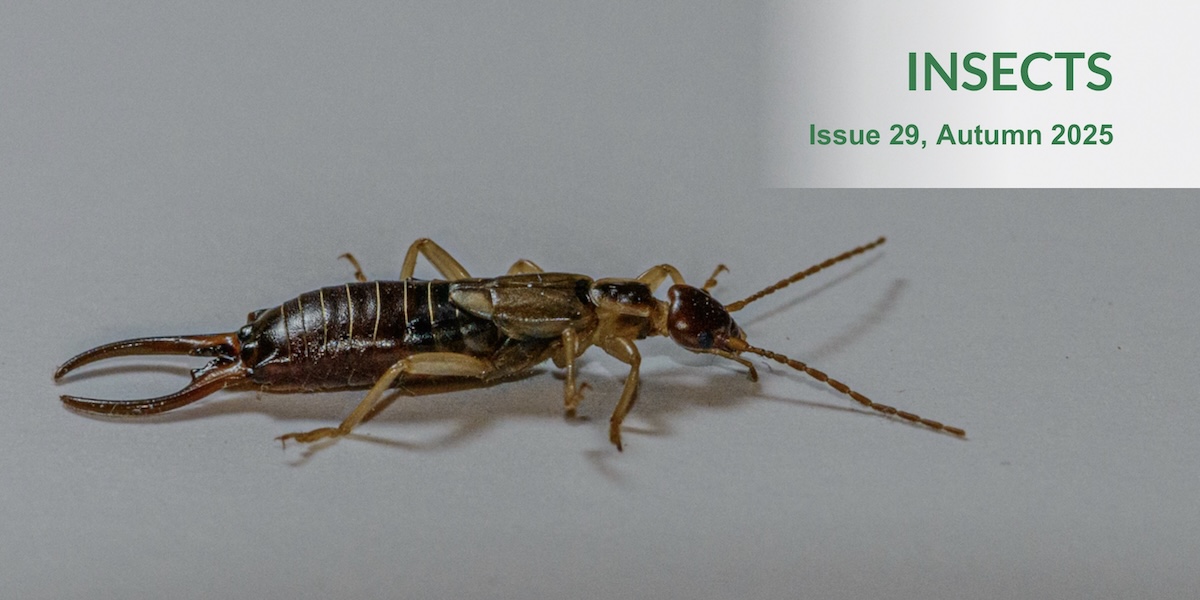
Table of Contents, Issue #29, Autumn 2025
Stream Bugs
by Mercedes Garcia Autumn 2025Dogfish Creek in Fish Park in Poulsbo, WA. photo by John F. Williams by Mercedes Garcia Autumn 2025Streams are teaming with life of all shapes and sizes. Salmon and sculpin swim along the rocks, dodging the branches and leaves. Within the...
Tiny Hunger
by Lucienne Miodonski Autumn 2025Shore pine. photo by John F. Williams by Lucienne Miodonski Autumn 2025On the southwestern corner of my waterfront property — high on a bluff above the Saratoga Passage, where the land begins to lose its grip on the sea, a single...
Beneath the Bark
by Celeste Hankins photos by John F. Williams Autumn 2025A cedar tree growing from a nurse log that provides nutrients as it decays. by Celeste Hankins photos by John F. Williams Autumn 2025A fallen cedar isn’t the end of the story. Not here. Along the misty trails...
Poetry 29 B
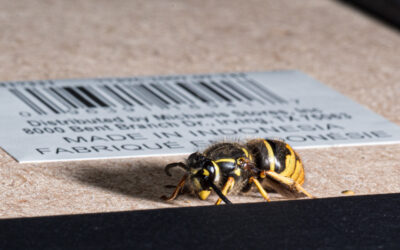
Poetry 29 B by multiple poets Autumn 2025A wasp in the house! photo by John F. Williamsby multiple poets Autumn 2025Dinner on the Web Judy Shimek Drechsler The spider with a round back endcreates a dinner table of diaphanousstrings capable of holding a cornucopiaof...
Insect Garden
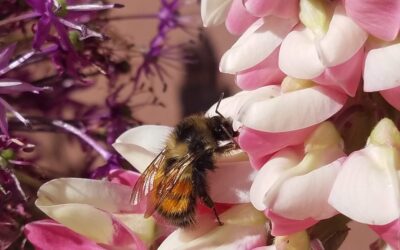
Insect Garden by Sarah Ottino, Autumn 2025A bee helping to pollinate a lupine plant. photo by Sarah Ottinoby Sarah Ottino Autumn 2025A garden is more than flowers and vegetables. It’s an ecosystem — a collaboration of sunlight, soil, water, plants, animals, fungi, and...
A Leaf Miner’s Journey
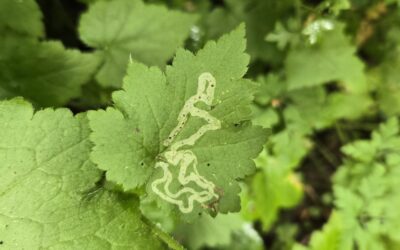
Under Cover — A Leaf Miner's Journey by Mary Johnson, Autumn 2025Leaf mine of Phytomyza tiarellae (a fly) on youth-on-age (Tolmiea menziesii). photo by Mary Johnsonby Mary Johnson Autumn 2025Within the confines of the darkened space, the organism tunnels its way...
Poetry 29 A
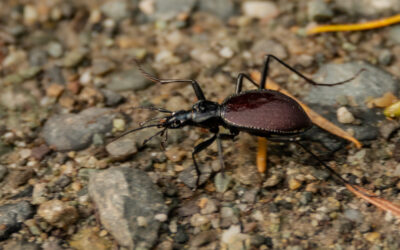
Poetry 29 A by multiple poets Autumn 2025Narrow-collared snail-eating beetle — it eats spiders too! photo by John F. Williamsby multiple poets Autumn 2025A Bug's Life by Diane Moser He scurries across the walltiny legs more nimblethan size seven Keds.Miniscule feelers...
COPYRIGHT
Copyright SEA-Media
All rights reserved. Reproduction or distribution, in whole or in part. without consent of copyright owner is strictly prohibited — except for brief quotations in critical reviews and other noncommercial uses permitted by copyright laws.
SEA-Media is a 501(c)(3) nonprofit corporation
PLEASE HELP SUPPORT
SALISH MAGAZINE
DONATE
Salish Magazine contains no advertising and is free. Your donation is one big way you can help us inspire people with stories about things that they can see outdoors in our Salish Sea region.
We also don't advertise Salish Magazine, so please spread the word of this online resource to your friends and colleagues.
Thanks so much for your interest and your support.