
STREAM BUGS
by Mercedes Garcia
Autumn 2025
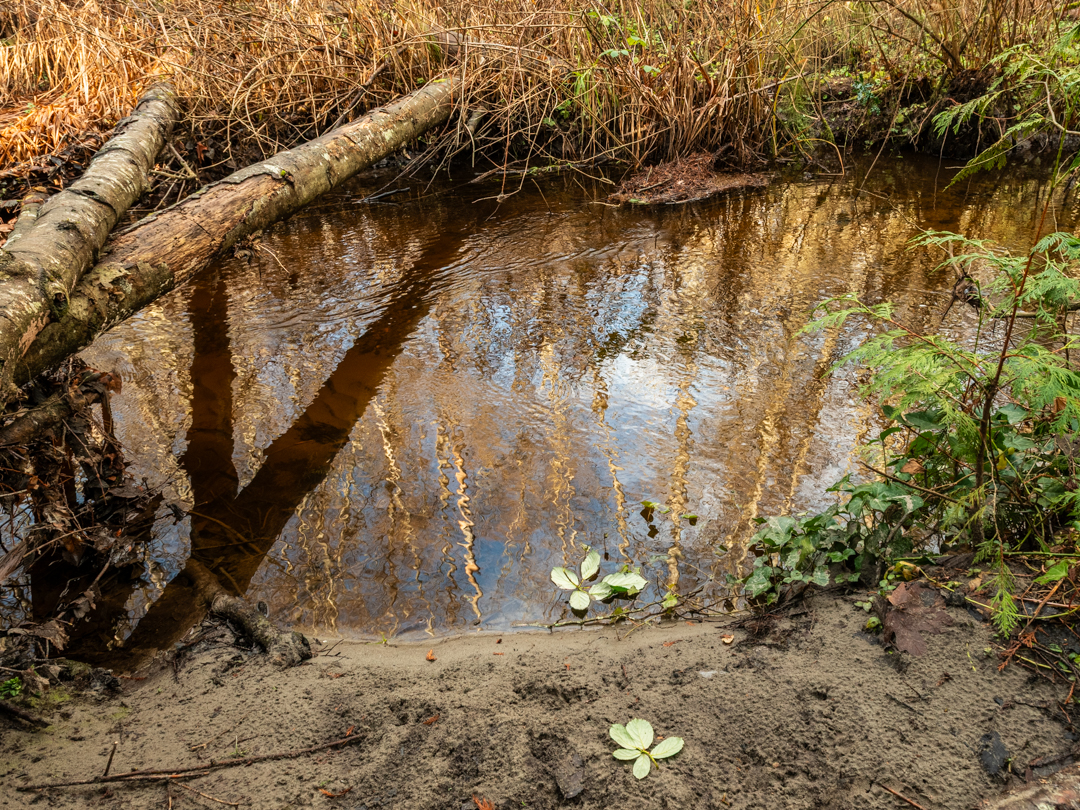
Dogfish Creek in Fish Park in Poulsbo, WA. photo by John F. Williams
STREAM BUGS
by Mercedes Garcia
Autumn 2025
Streams are teaming with life of all shapes and sizes. Salmon and sculpin swim along the rocks, dodging the branches and leaves. Within the shadows between rocks and branches live critters too small to be seen from stream banks. These small invertebrates, often called stream bugs, in populations of hundreds of thousands, play an important role in the health of the aquatic ecosystem.
These tiny insects are called benthic macroinvertebrates, and they live within the sediment at the bottom of streams or underneath rocks. They may be hard to see, but they play an outsized role in their environment. Macroinvertebrates are biological indicators, which means their presence in the water can give hints about the health of the stream. When assessing stream health, scientists break macroinvertebrates into three different classes: sensitive to pollution, somewhat pollution-tolerant, and highly tolerant.
The presence or absence of certain macroinvertebrates can be used to measure the pollution tolerance index (PTI). This index divides macroinvertebrates into different categories, measures their numbers, and then produces a numeric and qualitative rating for the stream. To measure the PTI, one samples the number of macroinvertebrate species found within a particular area. The ratings range from bad to excellent (or tolerant to intolerant). Higher PTI scores indicate a larger population of highly sensitive bugs and thus hint at a healthier stream, while a lower PTI score demonstrates the presence of highly tolerant bugs and points to a stream with possibly higher levels of pollution.
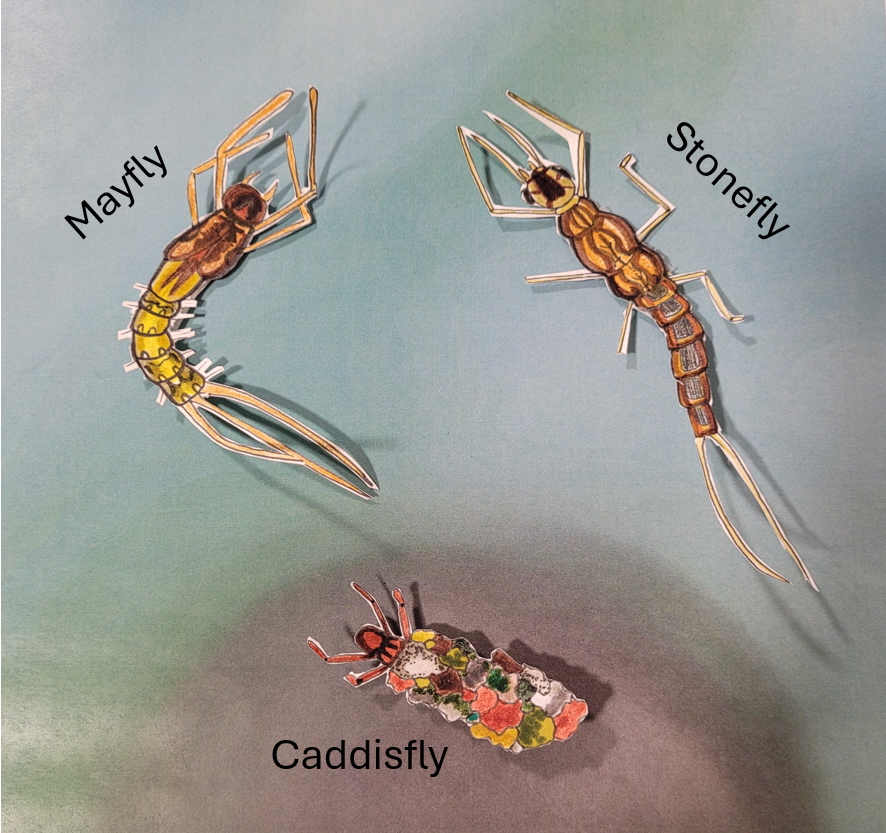
Art renditions of Mayfly, Stonefly, and Caddisfly. artwork by Mercedes Garcia
Among those with a high sensitivity toward pollutants exists a group of stream bugs known by ecologists as the “Big Three” — stonefly, mayfly, and caddisfly. Once the PTI test identifies these species, a clear indication of water quality can be determined. Other macroinvertebrates that are often found range from insects in the somewhat sensitive zone (dragonfly and cranefly larvae) to zero sensitivity (midge fly larvae and water boatman). These findings indicate, but don’t confirm, pollutants in the water. As biological indicators, many of the stream’s bugs can reveal water quality and steer future stewardship needs.
The most important role that many of these species play is providing nourishment to the ecosystem, in and around the stream. Specifically, our Big Three serve as an important food source to one of the Pacific Northwest’s most important species, the salmon. Salmon are highly sensitive to pollution and require healthy streams to thrive. Streams with little to no pollutants allow salmon eggs, embryos, and fry to survive and grow, and eventually feed on the stream’s bugs before their journey to the ocean.
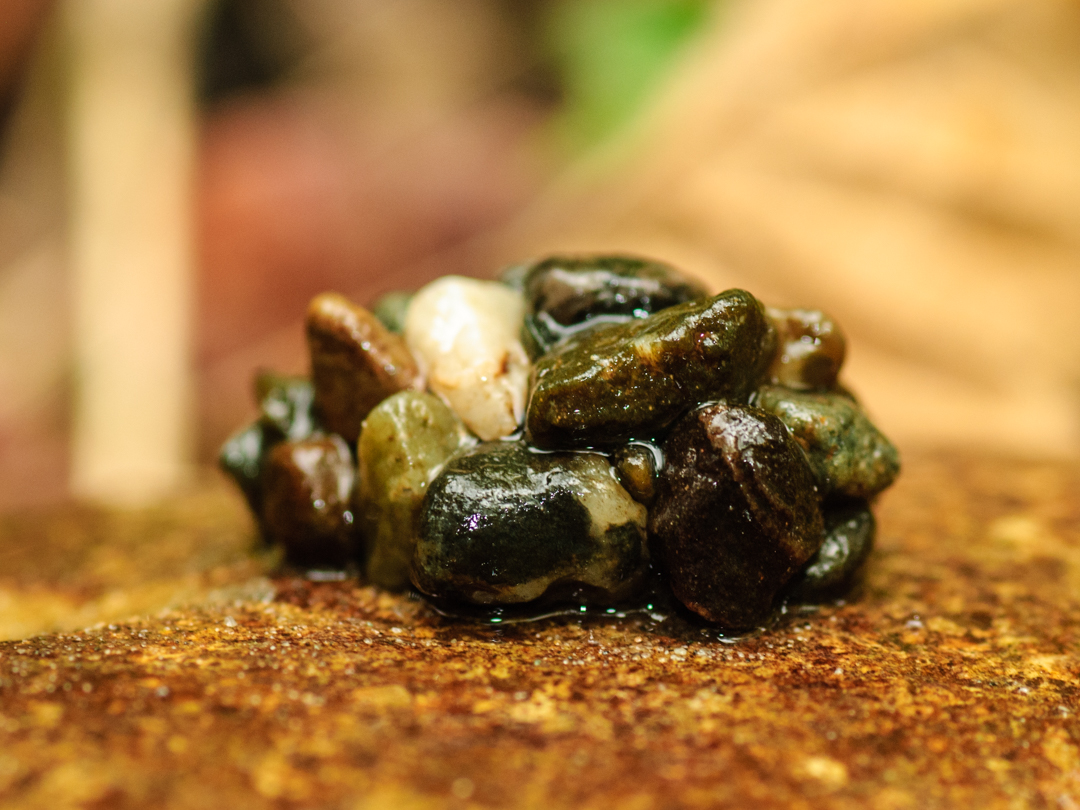
Caddis fly’s protective case made of pebbles. photo by John F. Williams
Salmon are not the only species to benefit from macroinvertebrates. A fish known as the sculpin can also be found in those same streams, enjoying the abundance of macroinvertebrates (especially caddisflies) to fuel themselves. Also found within these streams is the American Dipper, the most common bird in the Pacific Northwest riparian zones. They fly close to the water, landing to rhythmically dip under the surface to eat bugs off the rocks. The Dipper depends on clean streams and their bounty of insects to flourish. By ensuring the safety and cleanliness of our streams, we can support a rich diversity of species found within.
While it is important for scientists to study macroinvertebrate populations, anyone can explore their own nearby riparian zone. Now that we understand the significance of the Big Three, you too can learn how to identify them correctly. Each of these bugs has unique characteristics that distinguish them from other similar-looking species. As you will find, key identifying features include the number of tails, the shape of the body, and their habitat preferences.
caddisfly
The caddisfly is the most distinct of the Big Three bioindicator species that scientists use to monitor stream health. While in their aquatic larval stage, caddisflies spend most of their time on rocks within their protective cases. Their cases are made with small pieces of their living environment, which is mostly pebbles, but they have been seen to utilize leaves, grasses, and sand. This makes them easy to spot!
stonefly
The stonefly is easily identified by the two tails protruding from its abdomen. Additionally, the longer body shape with six legs and two easily seen antennae are characteristics to look for when categorizing the stonefly. To find the stonefly, one can often look at the bottom of a streambed rock, find it mixed into the substrate, or hidden under submerged logs. They prefer calm spaces, often nestling under objects that shelter them from streamflow.
mayfly
The mayfly is recognized by the number of tails. The mayfly has three tails that resemble the letter “M.” The mayfly has a slender body and also likes to hide in the substrate under rocks and logs. Observers must rely on proper identification to differentiate these species from the stonefly.
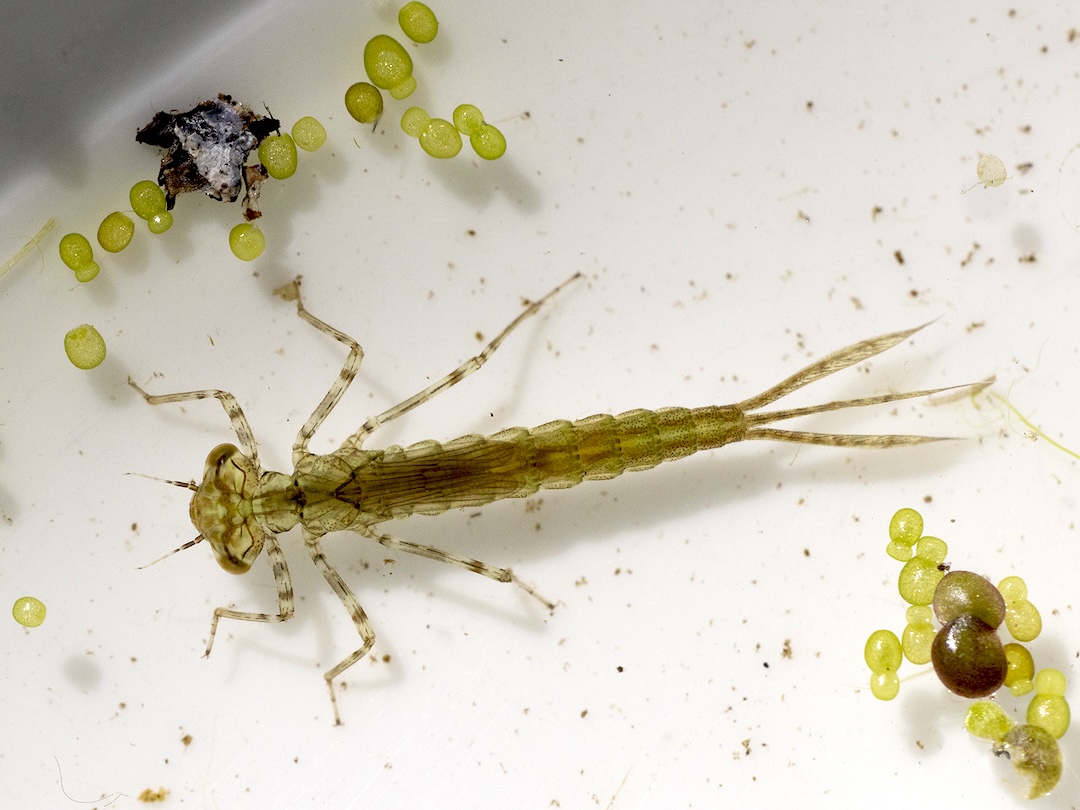
Damselfly nymph in North Kitsap Heritage Park. photo by Sue DeArman
In Kitsap County, the Great Peninsula Conservancy (GPC), an accredited land trust that works to conserve and protect valuable ecosystems in our region, offers free conservation education to all ages. Adults and families can join monthly Walk & Talks to learn about such diverse topics as stream bugs, beavers, bumble bees, or farm conservation! GPC also hosts Land Labs, a hands-on science-based program that fosters a deep connection between youth and nature, in which students explore nature preserves and learn about different wildlife habitats. To learn more, visit GPC’s website at greatpeninsula.org.

Mercedes Garcia has fallen in love with the PNW. She has spent the past year exploring all that the Kitsap Peninsula has to offer from the shorelines, beautiful forest, and the creeks full of life. She is passionate about marine life, especially nudibranchs. She earned her bachelors in marine and conservation biology from
Seattle University. She is eager to continue learning what else there is to see.
Issue Page
Table of Contents, Issue #29, Autumn 2025
Tiny Hunger
by Lucienne Miodonski Autumn 2025Shore pine. photo by John F. Williams by Lucienne Miodonski Autumn 2025On the southwestern corner of my waterfront property — high on a bluff above the Saratoga Passage, where the land begins to lose its grip on the sea, a single...
Beneath the Bark
by Celeste Hankins photos by John F. Williams Autumn 2025A cedar tree growing from a nurse log that provides nutrients as it decays. by Celeste Hankins photos by John F. Williams Autumn 2025A fallen cedar isn’t the end of the story. Not here. Along the misty trails...
Poetry 29 B
Poetry 29 B by multiple poets Autumn 2025A wasp in the house! photo by John F. Williamsby multiple poets Autumn 2025Dinner on the Web Judy Shimek Drechsler The spider with a round back endcreates a dinner table of diaphanousstrings capable of holding a cornucopiaof...
Insect Garden
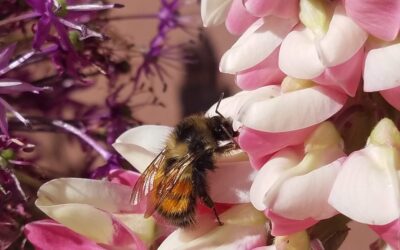
Insect Garden by Sarah Ottino, Autumn 2025A bee helping to pollinate a lupine plant. photo by Sarah Ottinoby Sarah Ottino Autumn 2025A garden is more than flowers and vegetables. It’s an ecosystem — a collaboration of sunlight, soil, water, plants, animals, fungi, and...
Elk and Insects
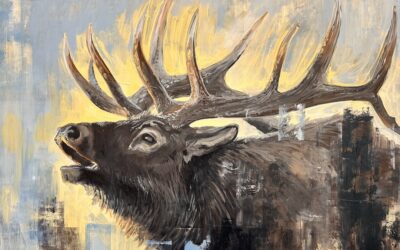
Roosevelt elk. oil painting by Justin JohnsonA BROADER LOOK AT THE COMPLEX RELATIONSHIPS BETWEEN ELK AND INSECTS IN THE PACIFIC NORTHWEST by Justin Johnson, Autumn 2025Here in North Bend, Washington, we're lucky to live alongside one of the state's resident elk herds....
A Leaf Miner’s Journey
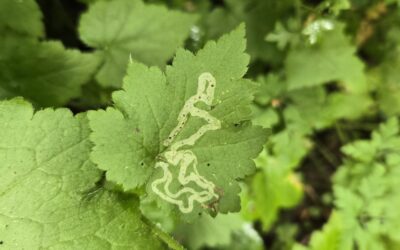
Under Cover — A Leaf Miner's Journey by Mary Johnson, Autumn 2025Leaf mine of Phytomyza tiarellae (a fly) on youth-on-age (Tolmiea menziesii). photo by Mary Johnsonby Mary Johnson Autumn 2025Within the confines of the darkened space, the organism tunnels its way...
Poetry 29 A
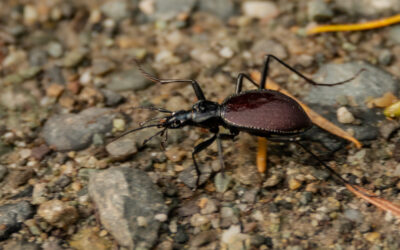
Poetry 29 A by multiple poets Autumn 2025Narrow-collared snail-eating beetle — it eats spiders too! photo by John F. Williamsby multiple poets Autumn 2025A Bug's Life by Diane Moser He scurries across the walltiny legs more nimblethan size seven Keds.Miniscule feelers...
COPYRIGHT
Copyright SEA-Media
All rights reserved. Reproduction or distribution, in whole or in part. without consent of copyright owner is strictly prohibited — except for brief quotations in critical reviews and other noncommercial uses permitted by copyright laws.
SEA-Media is a 501(c)(3) nonprofit corporation
PLEASE HELP SUPPORT
SALISH MAGAZINE
DONATE
Salish Magazine contains no advertising and is free. Your donation is one big way you can help us inspire people with stories about things that they can see outdoors in our Salish Sea region.
We also don't advertise Salish Magazine, so please spread the word of this online resource to your friends and colleagues.
Thanks so much for your interest and your support.