
Our Rowan Tree
by Thomas & Sara Noland, Summer 2025
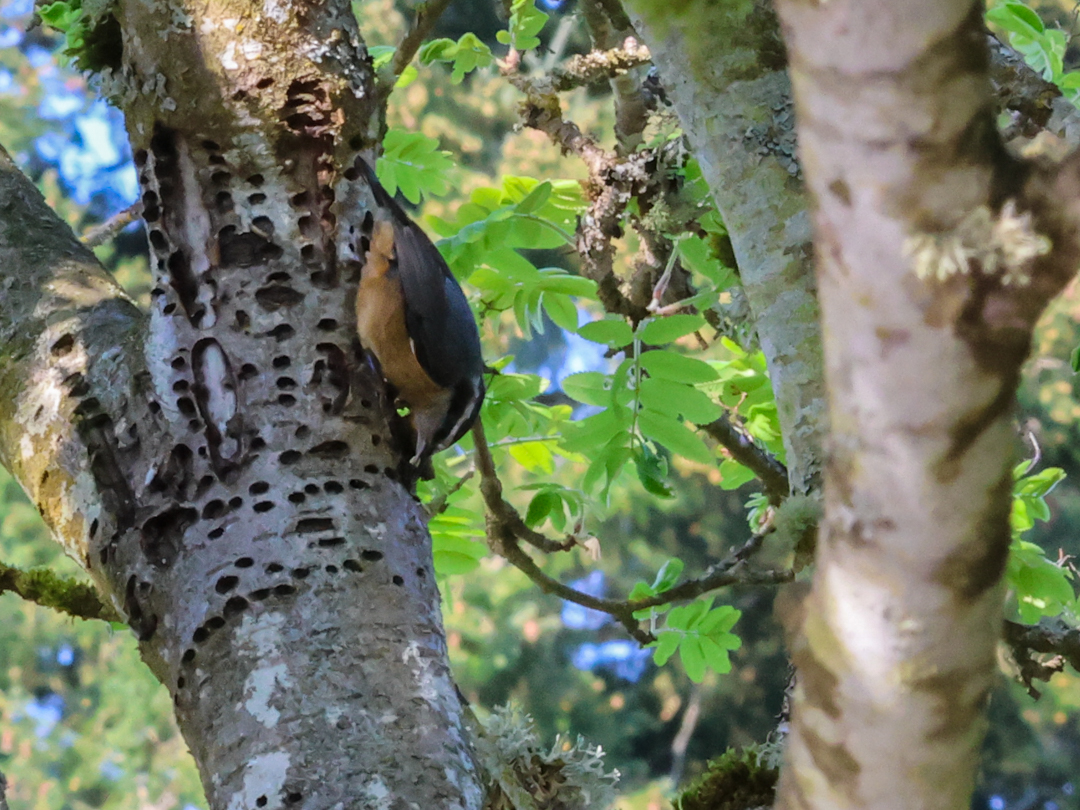
Red-breasted nuthatch caching a berry in mountain ash tree. photo by Thomas Noland
Our Rowan Tree
by Thomas & Sara Noland
Summer 2025
In our front yard is a year-round grocery store and rest stop for wild travelers. It started twenty-plus years ago, when a bird flying overhead made a berry-laden fecal deposit in the flowerbed. A seed sprouted from the poo-enriched soil, sending up a woody twig with bright green, lacy leaves. Within a few more seasons, a sturdy European mountain ash sapling was well established. After two decades, it is a mature tree, with multiple trunks and many branches reaching up into the power lines and spreading a shady canopy over lawn and driveway. Mosses and lichens encrust the tree’s branches, harboring invertebrates. Tidy rows of holes around the trunks provide evidence of woodpeckers at work.
By spring each year, clusters of frothy white flowers appear, like fairy umbrellas, all over the tree. By late summer, the mountain ash is laden with dark-orange berry clusters, many branches bent toward the ground under the weight of so much fruit. Through fall and winter, the berries wrinkle and darken, and crowds of robins descend on the overripe bounty.
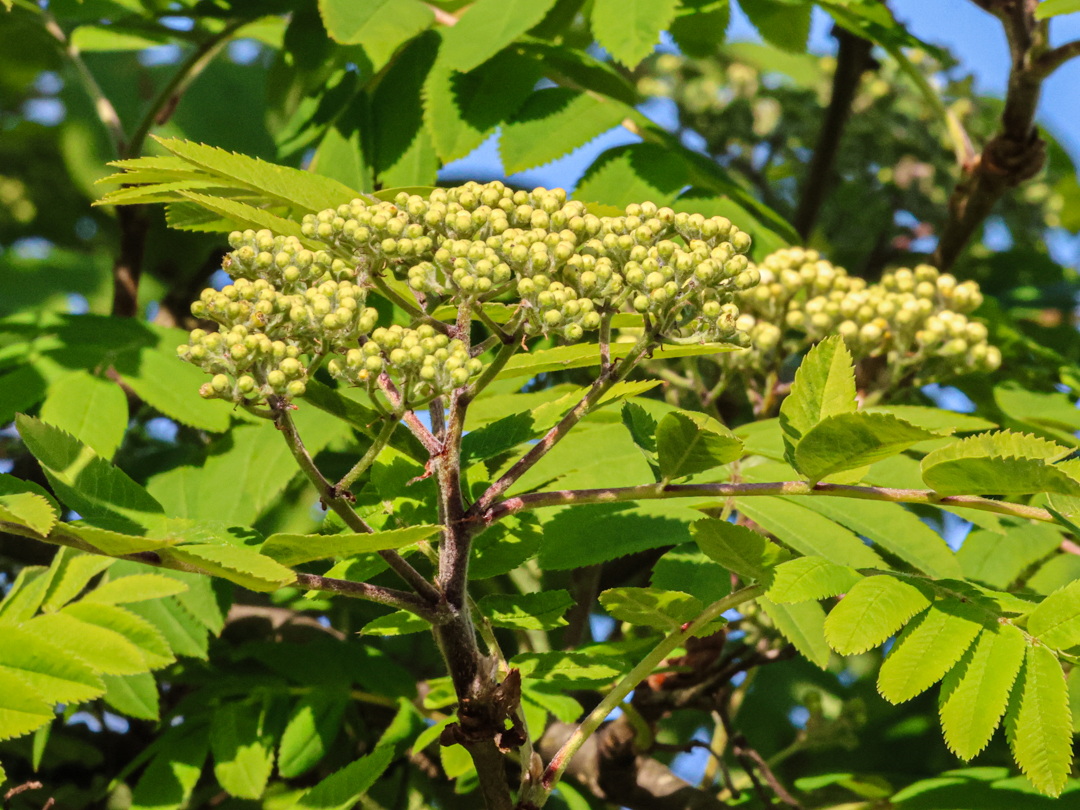
Mountain ash flower buds
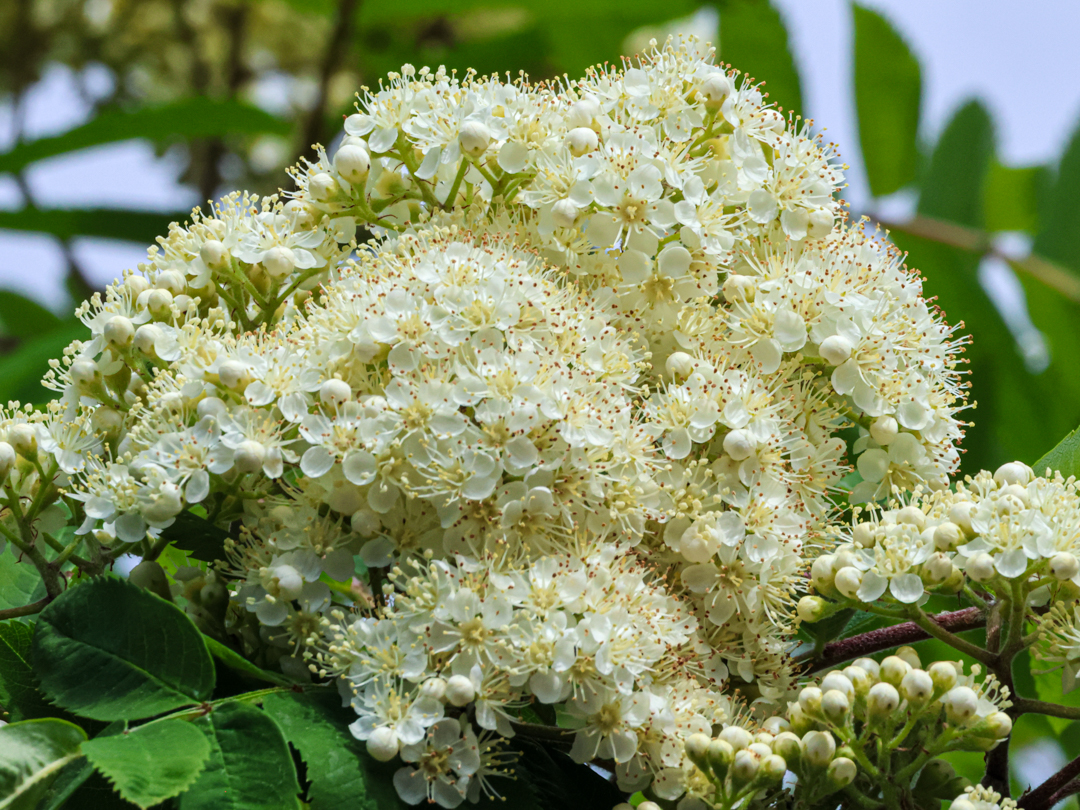
Mountain ash flowers
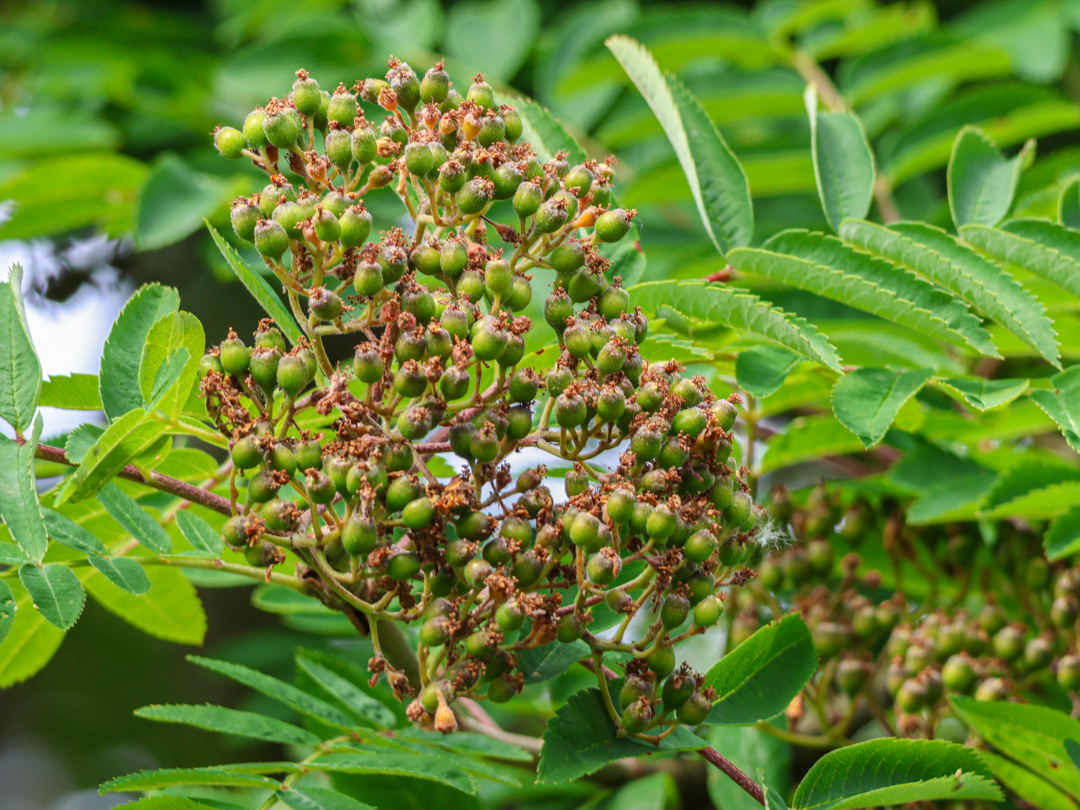
Mountain ash green berries
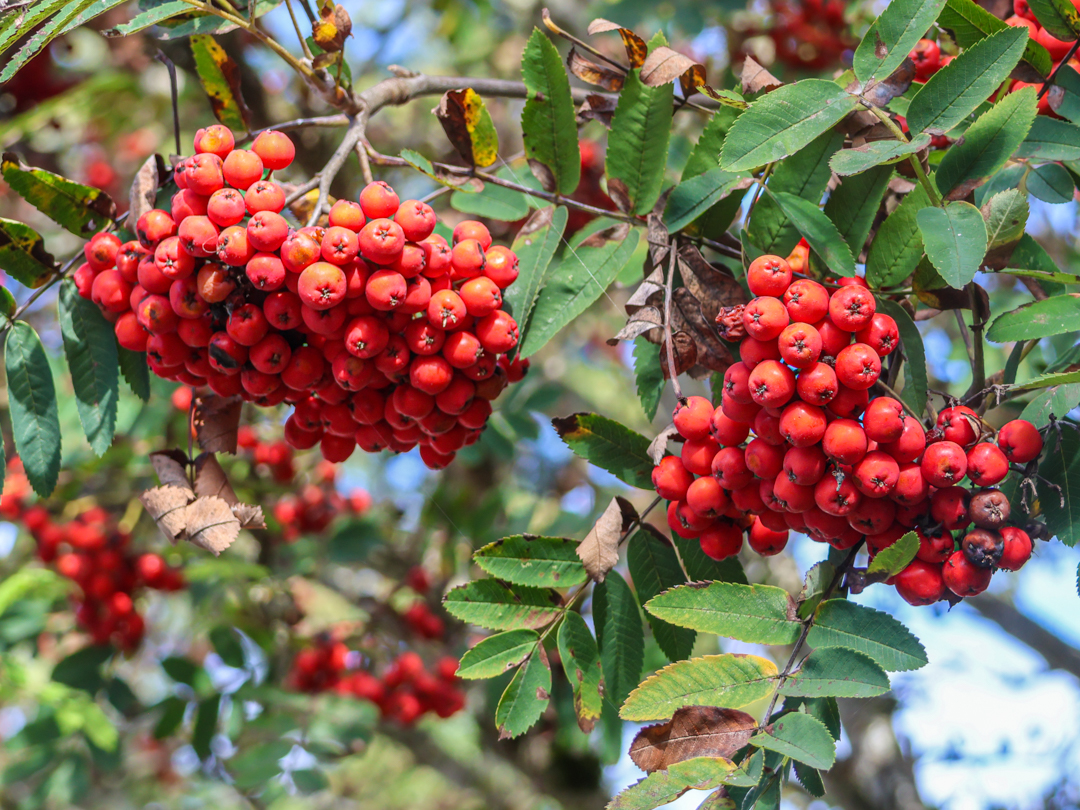
Mountain ash ripe berries
photos by Thomas Noland
an ash by any other name
Mountain ash is also known as the rowan tree. The European mountain ash (Sorbus aucuparia) is native to Europe and Asia. It was introduced to North America as an ornamental garden species and is now widespread around the Salish Sea region, particularly in sunny spots with well-drained soils.
There are several other mountain ash (Sorbus) species that are native to North America, but they haven’t been as heavily marketed for landscape plantings as S. aucuparia. All of these species are members of the rose family (Roseaceae). “True” ash species, such as the native Oregon ash (Fraxinus latifolia), are in the olive family (Oleaceae). Both mountain ash and true ash species have pinnately compound leaves, with two rows of leaflets attached along a central stem.
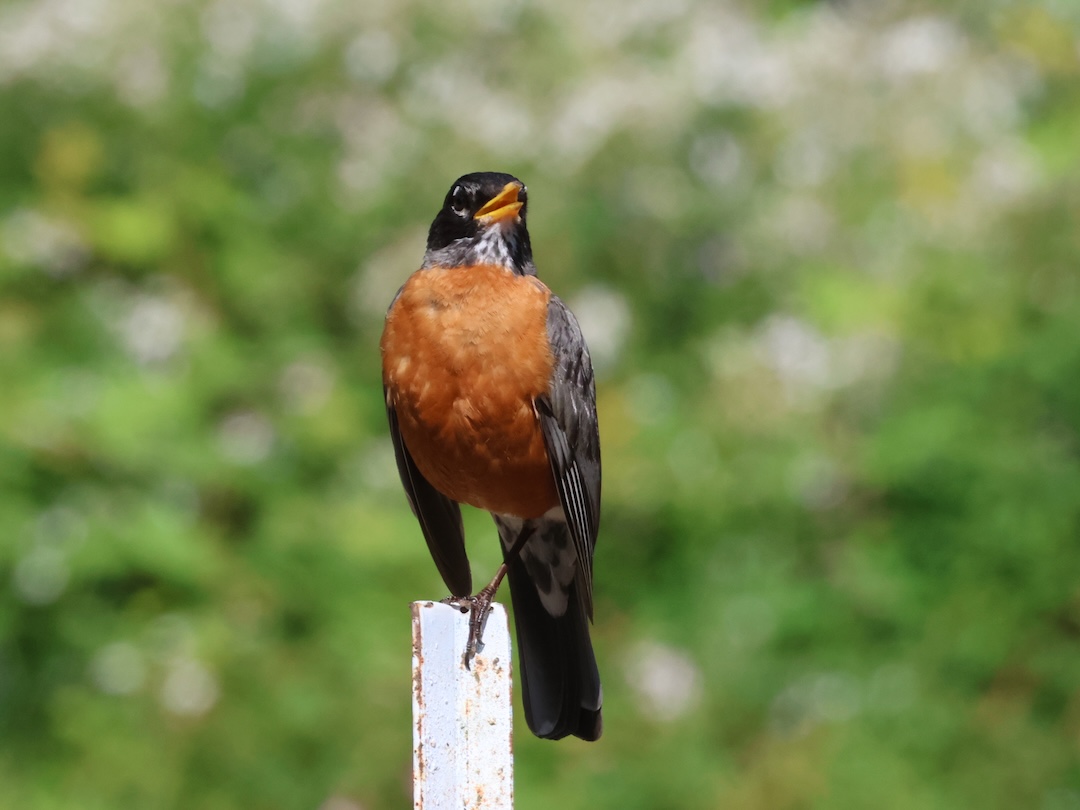
American robin
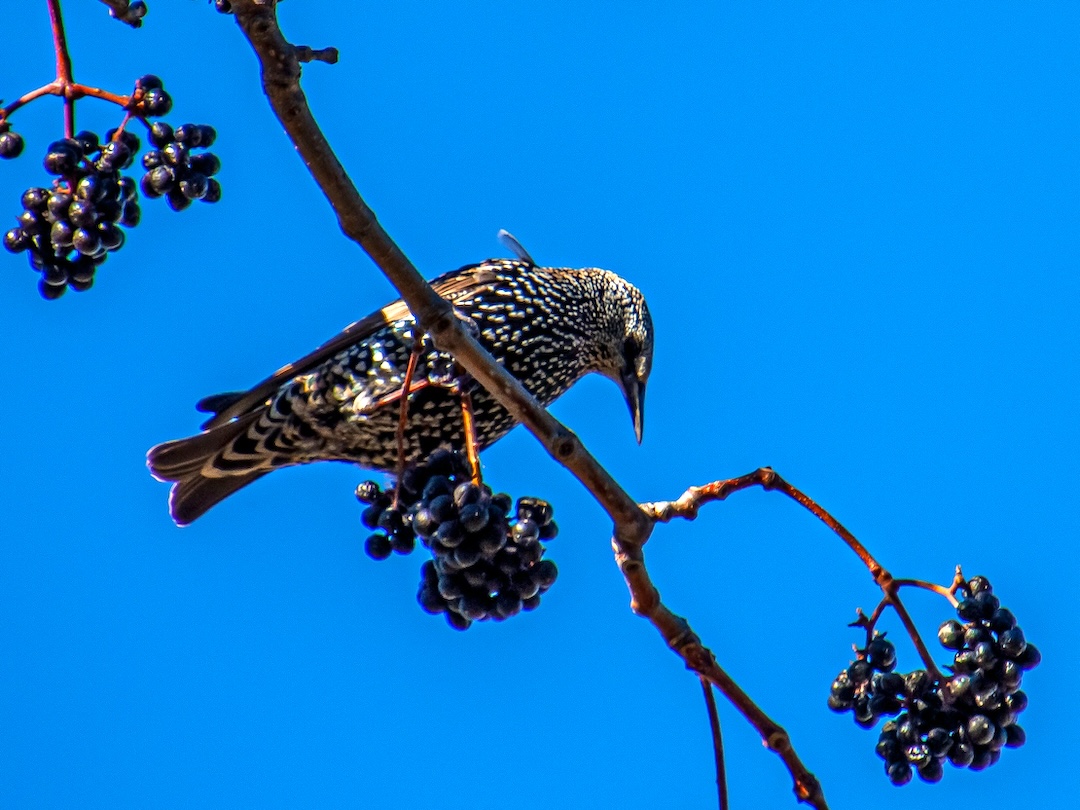
Starling and berries
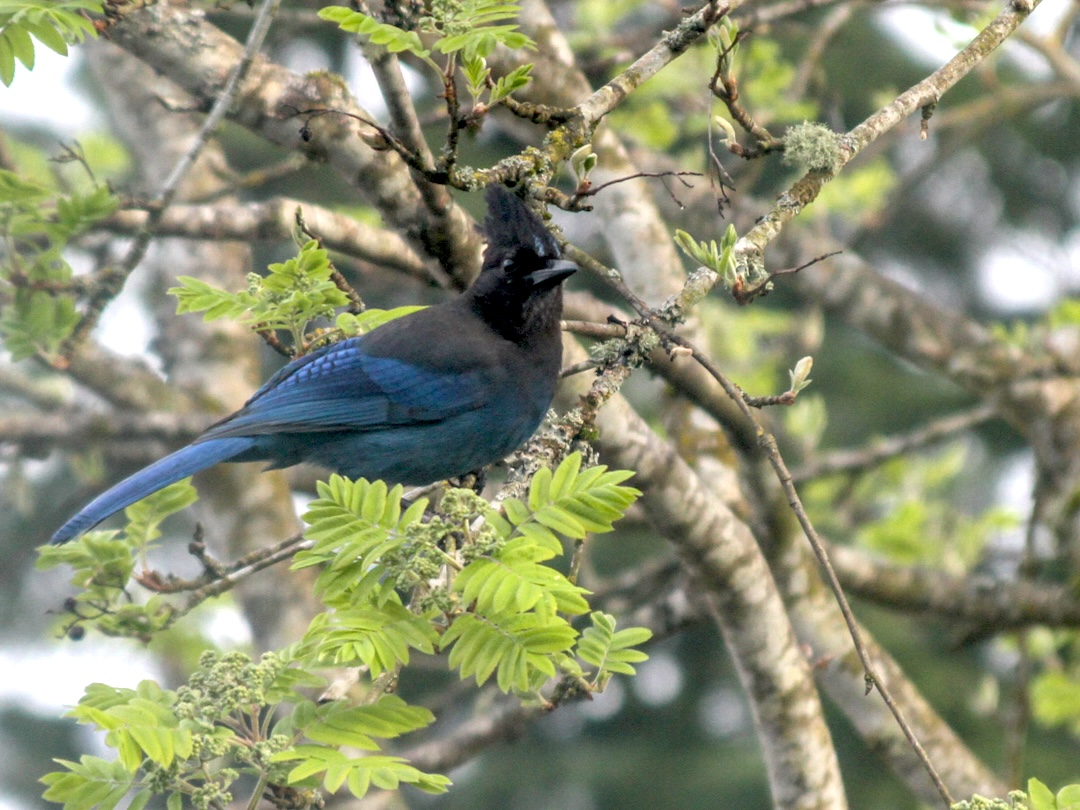
Steller’s jay
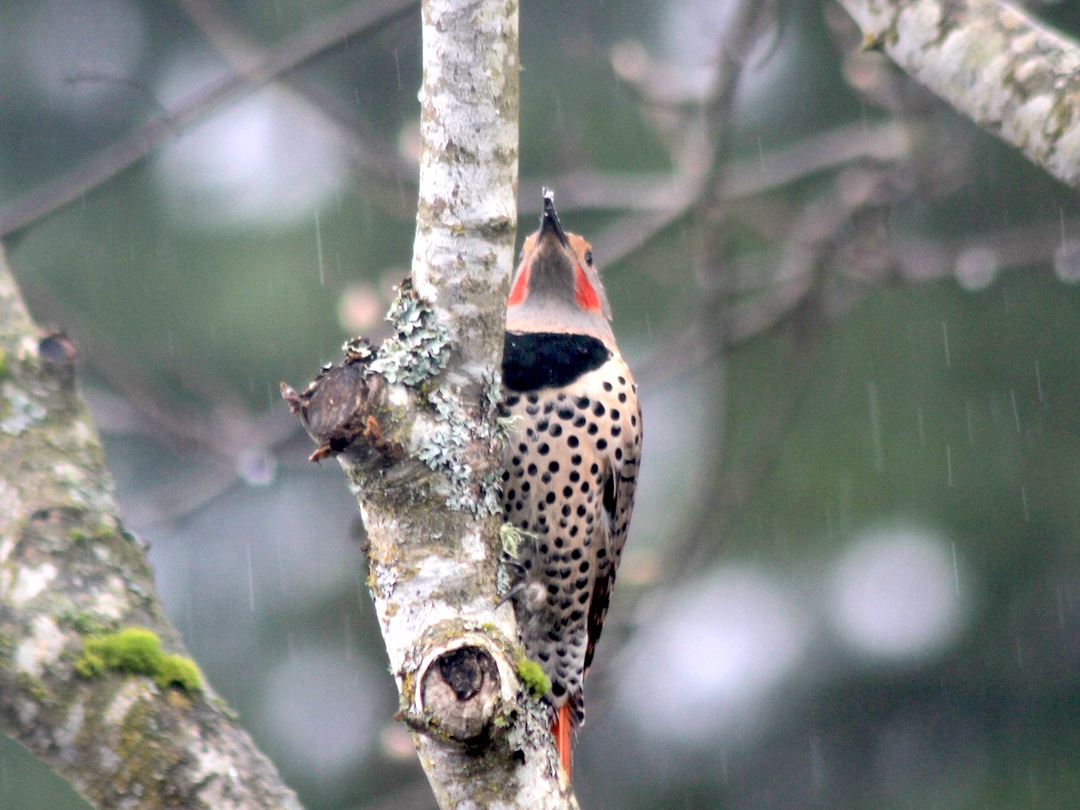
Northern flicker
American robin, Steller’s jay, Northern flicker photos by Thomas Noland. Starling photo by Anthony Aird via Unsplash
the berry gulpers
Winter is time for us to enjoy watching the berry gulpers — birds with mouths large enough to swallow mountain ash berries whole. Sometimes a dozen or more American robins descend on the bare branches to devour the wrinkled fruit — whether the birds are sustaining themselves through the winter here or fueling up for migration, only the robins know. Varied thrushes are a sure sign of winter when they move down from the mountains to hang out in neighborhood parks, gardens, and backyards. Other berry gulpers that sometimes join the feast include European starlings, Steller’s jays, and northern flickers.
the sap eaters
Red-breasted sapsuckers are frequent visitors to our rowan tree. Even when we don’t see the birds themselves, the rows of holes (sap wells) they drill around the trunks assure us they are active in the neighborhood. Drilling these sap wells facilitates the flow of tree sap, which the sapsuckers consume with their specialized brush-tipped tongues. Along with sap these birds eat insects, fruit, and seeds.
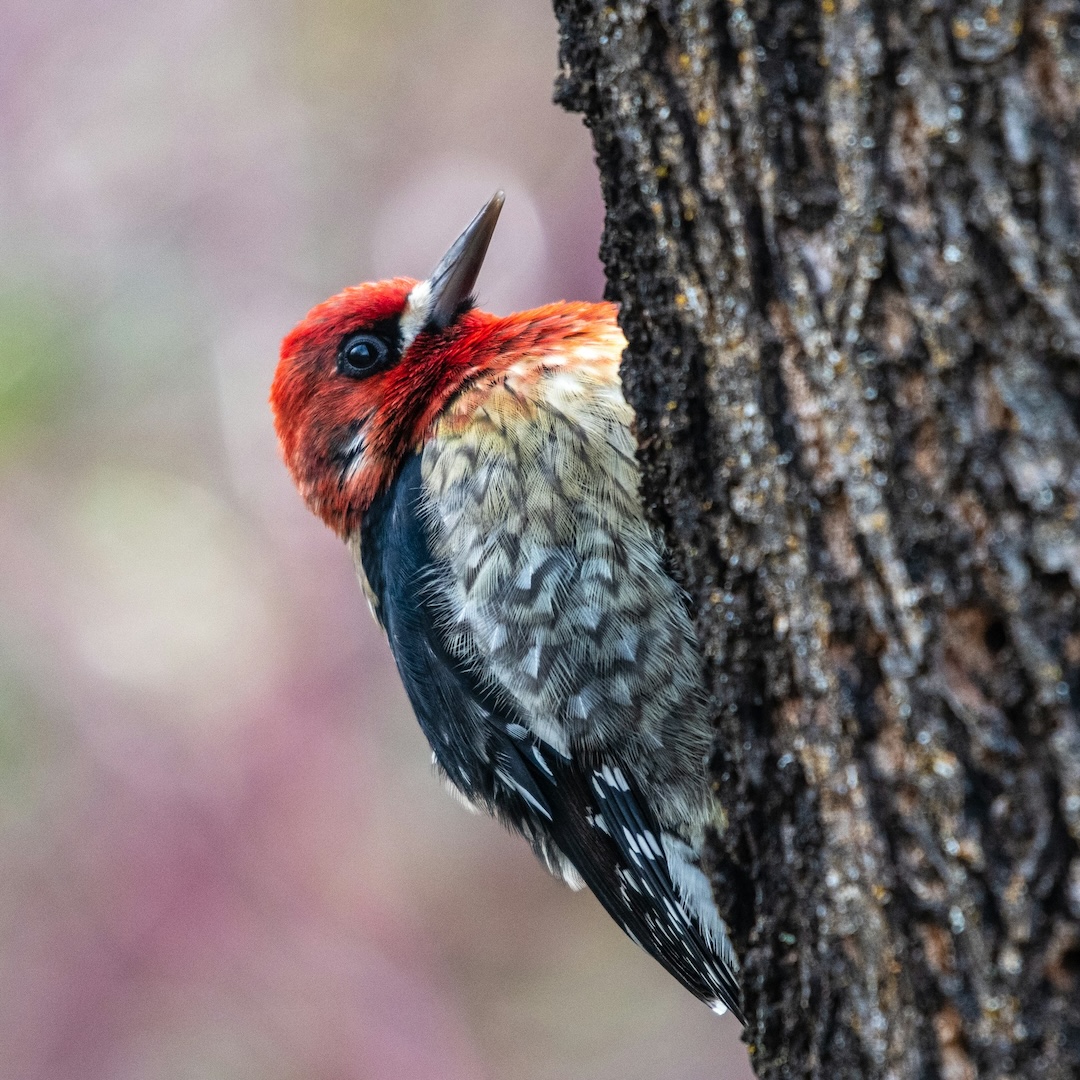
Red-breasted sapsucker. photo by John Yunker via Unsplash
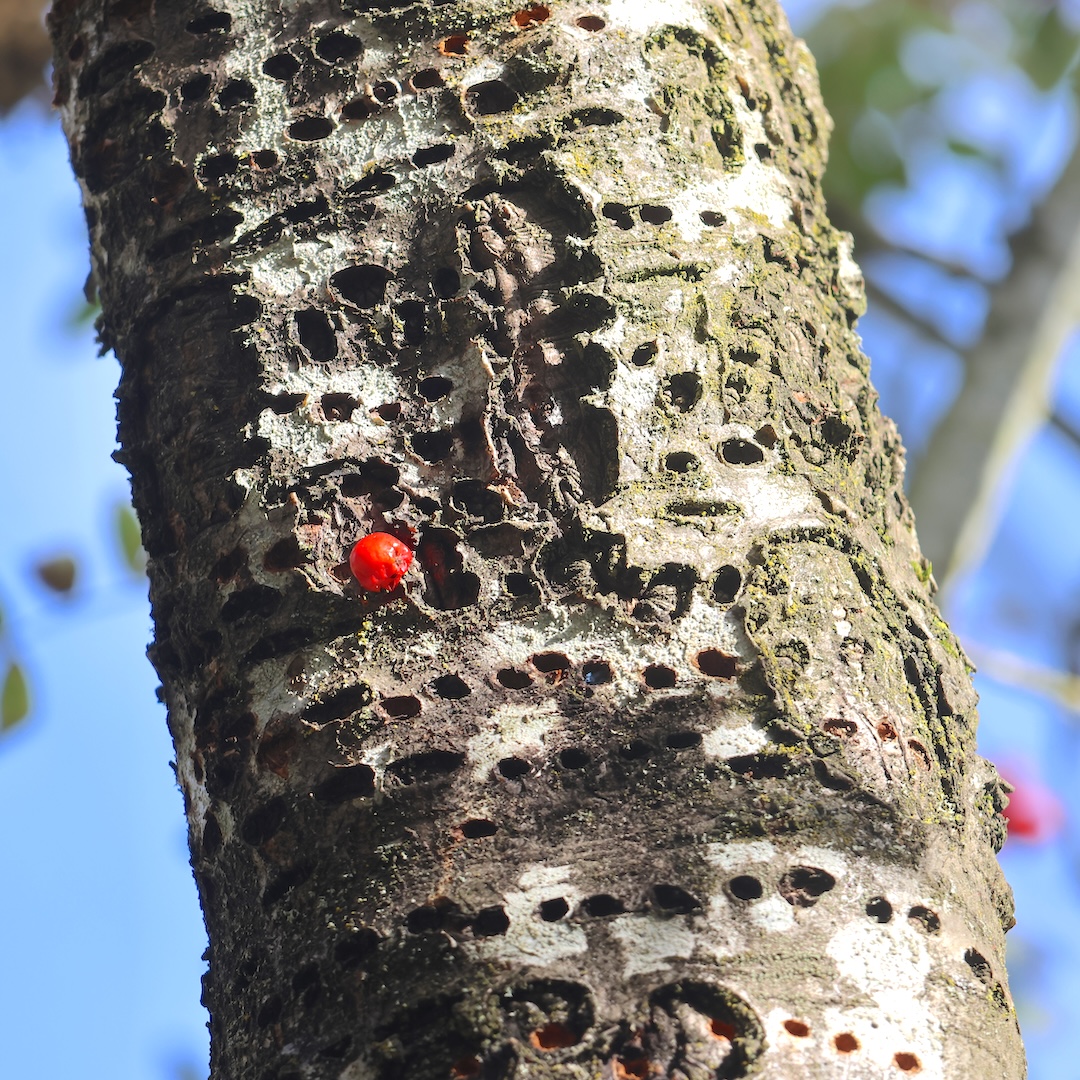
Berry cached in sap well in tree. photo by Thomas Noland
In recent years we’ve noted an ecological connection between red-breasted sapsuckers and a similarly named bird, the red-breasted nuthatch. Nuthatches have a varied diet of flower nectar, fruit, seeds, and insects. They also consume tree sap, which provides an important source of sugar and carbohydrates. We have noted these birds stuffing seeds and mountain ash berries into the sap wells, presumably as a cache for later consumption.
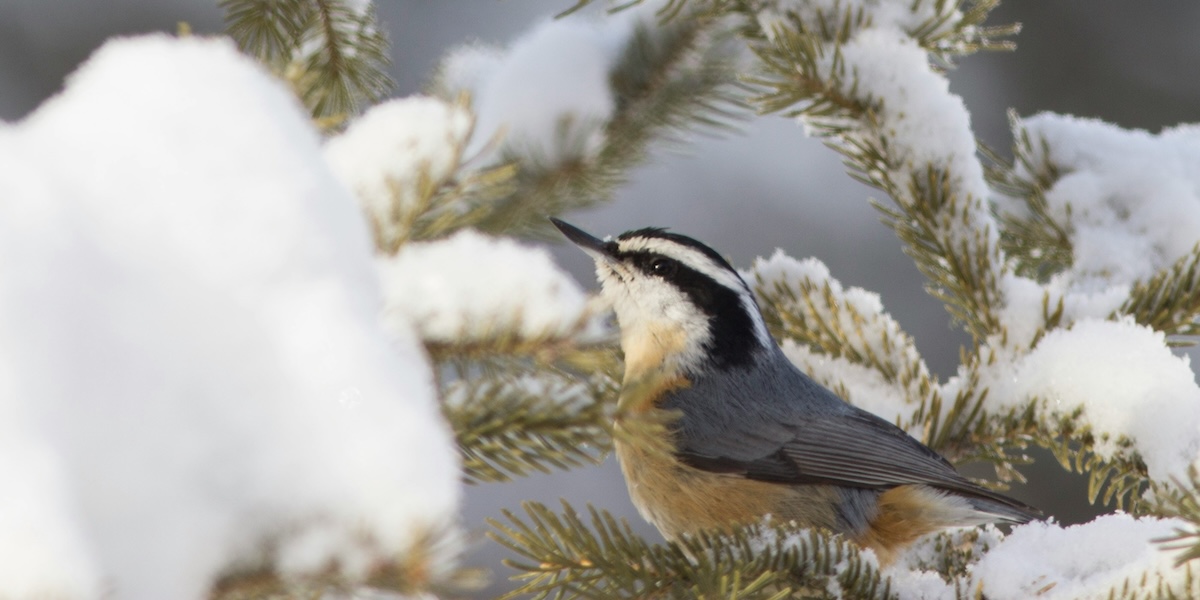
Red-breasted nuthatch on a spruce bough. photo by Gary Fultz on Unsplash
the gleaners
Along with nuthatches, chestnut-backed chickadees are the acrobats of the rowan tree — often hanging upside down to pick insects from twigs and leaves. With its many crevices, knobs, and beards of moss and lichen, the tree is a rich habitat for invertebrates and the birds that eat them.
 Hear some red-breasted nuthatch sounds.
Hear some chestnut-backed chickadee sounds.
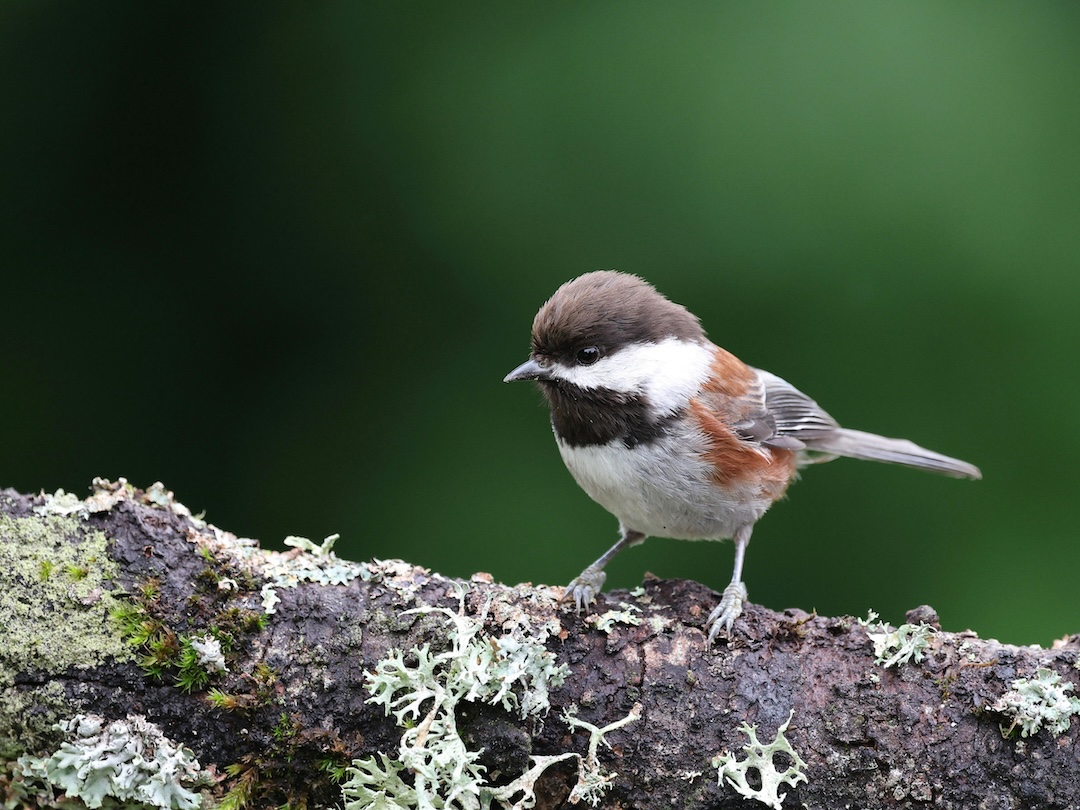
Chestnut-backed chickadee on a lichen-covered branch. photo by Veronika Andrews via Pexels
FIND OUT MORE
Here are some resources about native and European mountain ash species:
Landscape Plants: Sorbus aucuparia | Oregon State University
Western Mountain Ash, Sorbus scopulina | Native Plants PNW
Sitka Mountain Ash, Sorbus sitchensis | Native Plants PNW
Some more relevant bird sounds:
Hear some varied thrush sounds
Hear some American robin sounds
Hear some Northern flicker sounds.

Thomas Noland is a naturalist and photographer living in Everett. In addition to his interests in paleobiology, he is a dedicated entomologist and caretaker of numerous rescued cats.

Sara Noland grew up in the wilds outside Renton, attended UW and Western, and has lived in Everett for the past quarter century. She was fortunate to spend a quarter of her undergraduate life at UW Friday Harbor Laboratories. She shares a tiny house with her husband and a herd of cats and dogs. Sara works and volunteers as a biologist and writer; her favorite topics are Washington beaches and lowland forests.
Issue Page
Table of Contents, Issue #28, Summer 2025
A Rainbow of Berries
A Rainbow of Berries by Gunnison Langley, Summer 2025An artistic rainbow of berries. photos by Thomas Noland, composition by Susan Merrillby Gunnison Langley Summer 2025Often in the pursuit of filling our bellies with delectable berries, we overlook that berry plants...
Nature Walk in Berry-land
Nature walk in berry-land by Lindsey Davidge and Meilani Lanier-Kamaha’o, Summer 2025Child (age 6): Did you hear the FROG?by Lindsey Davidge and Meilani Lanier-Kamaha’o Summer 2025We document three families plus some classmates at play, focusing on children's...
Blackberries of the Salish Sea
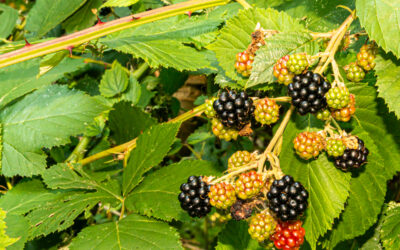
Blackberries of the Salish Sea by Sarah Ottino, Summer 2025Himalayan blackberries at various stages of ripeness. photo by John F. Williamsby Sarah Ottino Summer 2025Editor’s note: Summer is time for blackberries ripening along trails, roadsides, and streams around the...
Blush Before the Salmon
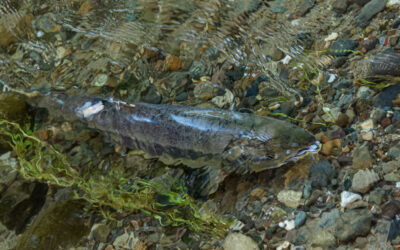
Blush before the salmon by Celeste Hankins, Summer 2025Adult female chum salmon in Chico Creek, Kitsap. photo by John F. Williamsby Celeste Hankins Summer 2025Along the edges of the Salish Sea, where cedar shadows stretch long over moss and fern, the salmonberries...
Poetry 28 A
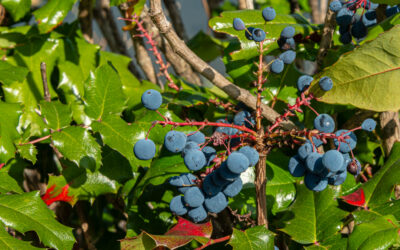
Poetry 28 A by multiple poets Summer 2025Berries of oregon grape (mahonia). photo by John F. Williamsby multiple poets Summer 2025Blueberry by Nancy Taylor bigger than a pea had been a flower suckled by a bee color of a new bruise but doesn’t hold the pain...
Poetry 28 B
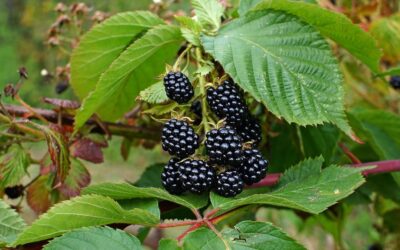
Poetry 28 B by multiple poets Summer 2025Blackberries on the bush. Image by Marevo via Pixabayby multiple poets Summer 2025sun pierced by Carl Jensen The element of fear picking blackberries (you really do get snagged by vines) is balanced against an everyday...
COPYRIGHT
Copyright SEA-Media
All rights reserved. Reproduction or distribution, in whole or in part. without consent of copyright owner is strictly prohibited — except for brief quotations in critical reviews and other noncommercial uses permitted by copyright laws.
SEA-Media is a 501(c)(3) nonprofit corporation
PLEASE HELP SUPPORT
SALISH MAGAZINE
DONATE
Salish Magazine contains no advertising and is free. Your donation is one big way you can help us inspire people with stories about things that they can see outdoors in our Salish Sea region.
We also don't advertise Salish Magazine, so please spread the word of this online resource to your friends and colleagues.
Thanks so much for your interest and your support.