
Poetry 28 A
by multiple poets
Summer 2025

Berries of oregon grape (mahonia). photo by John F. Williams
POETRY 28 A
by multiple poets
Summer 2025
Blueberry
by Nancy Taylor
bigger than a pea
had been a flower
suckled by a bee
color of a new bruise
but doesn’t
hold the pain
bottom bound
by drawstring
cinching in skin
brittle noose
hangs the fruit
till destined to fall
fruit dark as
sweet ink
ruptures juice
on bird’s tethered tongue
gut digests and
turns it into dung
bird excretes seeds
for blooming in spring
–bees await
Huckleberry
by Annie Fanning
Hop across the creek
and pick up the trail
next to the little spring
seeping out of the hill
virid with lady fern
and dank with skunk cabbage
turn away from the wetland
and follow the fringecup
out of the clay and into the duff
this is the way past trillium
and foam flower
between creek and forest
follow the bleeding heart
to the old stump
the last of the hemlock
crowned with red huckleberry
in flower
the promise of berries inconspicous
nodding pink and green
from the leaf axils
this is the way to remember midsummer
the foam flower melted away
before the forest feels dusty
and pecked to particulate
before sun rays articulate
between dead fall and decay –
wing to the stump for the fruiting
each bright berry a bird away
from a new beginning.
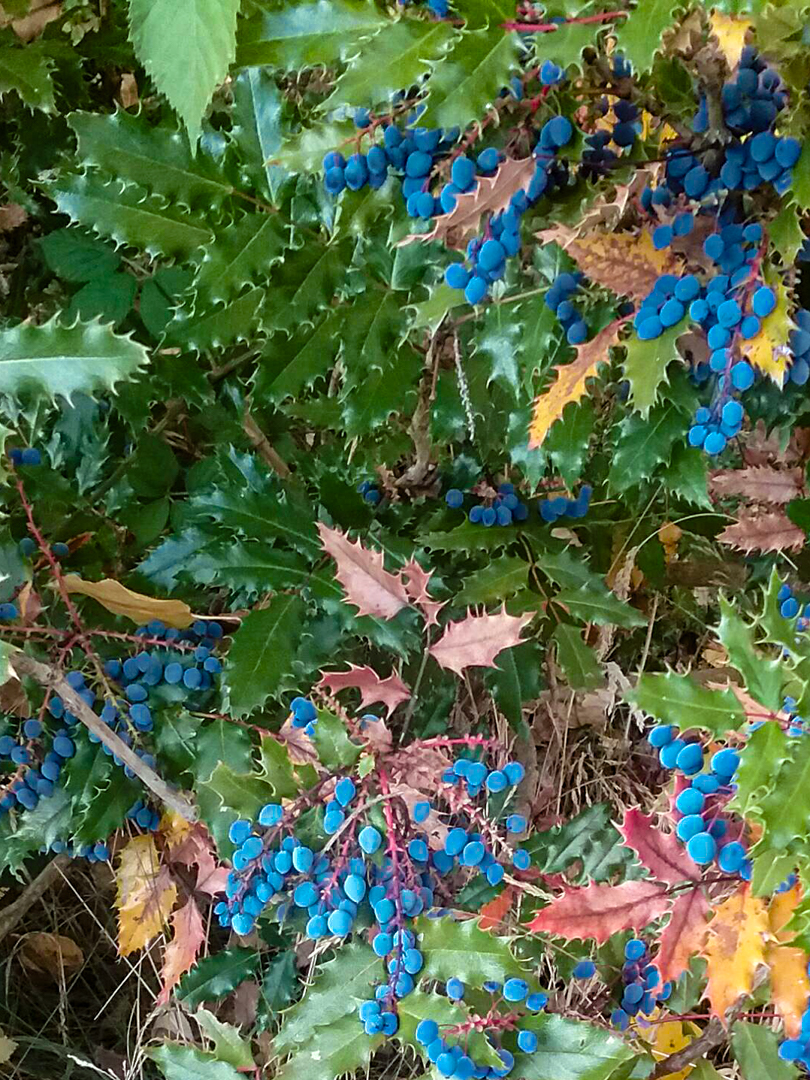
Oregon grape (mahonia) leaves & berries. photo by Thomas Noland
Mahonia
by Annie Fanning
Rooting around
under the mahonia
I nick a rhizome
with my spade
a startling yellow
against dark soil
Striking in early spring
mahonia in flower
heavy clusters of buds
astringent yellow tinged with pink
the same shocking newness
yellow against dark
leaves bronzed by age
By late summer
berries hang heavy
on the mahonia
the dark, glaucous fruit
a silvery blue
like mist against a night sky
the acidic yellow
no longer a color
but there in taste
a sharp, tart surprise
mulberries
by Amanda Williamsen
there is a dirt road — a steep hill — rainwater ruts crisscrossing
the road and rolling to a mossy canal — there are three steel culverts,
an earthen berm for a bridge — and a girl on a blue bicycle, flying
downhill — through the woods, over the canal, out from shade
into blinding sun — whipping down the farmer’s lane — her eyes shut
— this lane lined with wild mulberry trees — her long black hair
snapping behind her like a torn flag — arms shaking — knees bent, thighs
bunched — hunched and hovering like a jockey who never touches the saddle —
gravel scatters — and the wind drags tears over her temples and into her hair
in the floodplain now, the road a straight shot to the river — acres of corn
flapping past— their green applause—and the mulberry trees sparkle
with jewels, gleaming fruit in every shade of ripeness — a hard, unready
white — a pink like the inside of a clamshell — bitter crimson — feral
purple — and a black so rich it falls in the road — in ruts dug deep
by the heavy combine — puddles after thunderstorms — the bicycle tires
spray mud onto her legs — she can stand, can rake a hand
through the branches — snatch some chattering leaves and a berry or two —
she can peel out before she hits the abandoned white cottage on the bank
this is June — is July — is August — is the summer she is fourteen —
sharing the bike and the mud — picking mulberries with her sister
— and their neighbor with a pretty blond ponytail — and the boy with the boat —
this quartet in the kitchen when she — ta da! — pulls a mulberry cream pie
from the freezer — she made it herself — have some? — and only the boy
shrugs and gives it a try — it’s terrible — truly awful — but he smiles —
and now what, all these mulberries — what else are they good for —
tie-dyeing, of course — and it’s back to the riverbank with T-shirts and twine —
a soup kettle carried through the corn — a little fire — sticks from the stick pile —
the fire too small to boil the berries bobbing in river water — and the shirts won’t
sink — they must be weighted down with rocks — after an hour the girl
who made mulberry cream pie puts out the fire with mulberry stew and stones
they untie the shirts — but there’s no purple sunburst — just a sloppy
lavender swirl — and four sighs — and later, after their mothers
wash the shirts, all that’s left is a feathery smudge — like a wing print
made of smoke — shadow of a shadow at noon — a girlhood, a ghost too soon
Raspberry Morning
by Sue Hylen
You are alive
with your Tulameen Raspberries
roots buried deep
beneath mulching leaves—
no fertilizers, no spray, no water.
Just let the vines be
to grow as they will!
I hear them now
calling you back—
their ruby bellies, thornless vines—
white bucket between your thighs
both hands free
to pick with that rhythm
you knew as a child
when vines were full of thorns
when you wore long socks with finger holes
to pick quickly without scratches
between berry fights and farmer’s orders—
No leaven’ til those vines are clean!
Riding that rickety mustard bus
home each night
you clutched the bills inside your pocket,
enough to pay for school clothes.
Late morning sky now thick with thunder—
dry soil laps up singing rains,
laughing through backyard grasses
as I begin to sort
old jam jars,
find lids,
measure too much sugar.
Time to put the water on to boil
then save what I can
in a photograph
in a poem
in a jar.

Evergreen huckleberry. photo by John F. Williams
Thunderclouds
by Joy Sprague
Under the coniferous canopy
Roots drive down and
Out into loamy soil
Hard fast and sturdy leaves
A huckleberry sweetness fills the air
Pink tipped white bells cluster
Providing sweet nectar for bees
Flower pollination for huckleberries
Thunderclouds symbolize resilience
Growing in shade and sun alike
A sign of abundance and prosperity
A nesting habitat for feathered friends
Delicate deep red and black purple morsels
Deepen and ripen in late summer sun
Untamed and wild, they thrive
An invitation for bears and bees
Forest gardens of the Coast Salish
For hundreds of years
Foraged for berry cakes and jam
For traditional medicine healing
Giving back to the earth
A rumble that came from the sky

Amanda Williamsen lives, writes, and teaches on Bainbridge Island. Her poetry has appeared in Baltimore Review, New Ohio Review, Valparaiso Poetry Review, Midwestern Gothic, and other journals. A native Ohioan and nature lover, she is also a past poet laureate of Cupertino, California and a Pushcart Prize nominee. She is a graduate of Wittenberg University and The Writing Seminars at Johns Hopkins University.
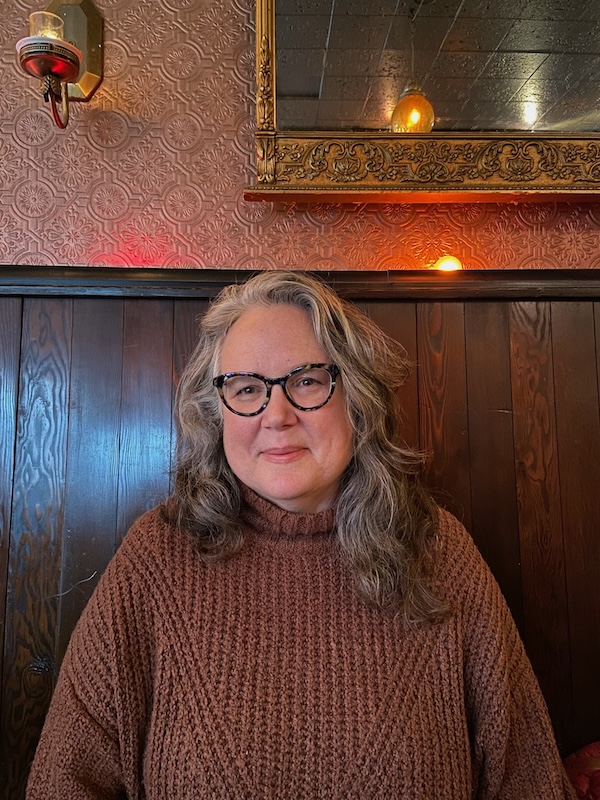
Annie Fanning loves the maritime climate and enjoys the far-reaching effects of both the Pacific Ocean and Salish Sea on her local North Seattle weather. From her home among sword fern and Doug fir, Annie talks to the wind and occasionally writes a few things down. In the past, Annie has been a Seattle Tree Ambassador, a Green Seattle Partnership Forest Steward and a board member of Thornton Creek Alliance. Today, she is a published nature poet.
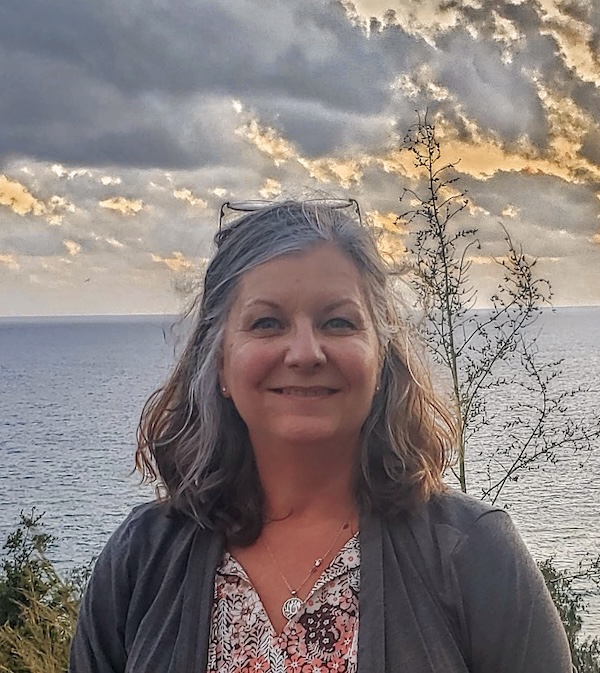
Joy Sprague lives on beautiful Bainbridge Island surrounded by the Salish Sea. Her love of nature inspires her writing. Joy is mesmerized by bird song and abundant wildlife as she strolls beaches and woods near her home with her husband and their dog, Cooper. She enjoys hiking, pickleball, and kayaking.
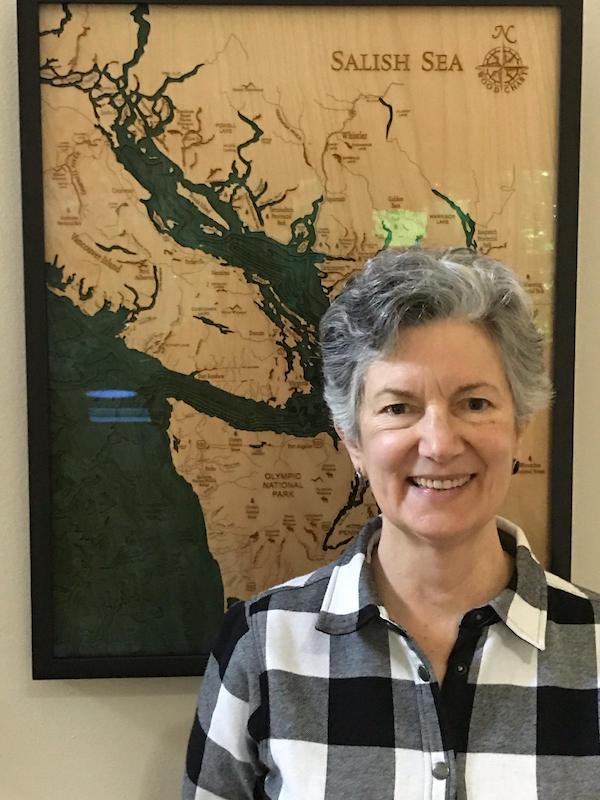
Nancy Taylor is a retired nurse practitioner who has dabbled in poetry for the past decade. Her interests are gardening, walking through forests and petting her two fluffy, mostly white Havanese dogs. She loves dogs so much she wrote a poetry book, Can We Keep Him, to benefit Kitsap Animal Rescue & Education (KARE).
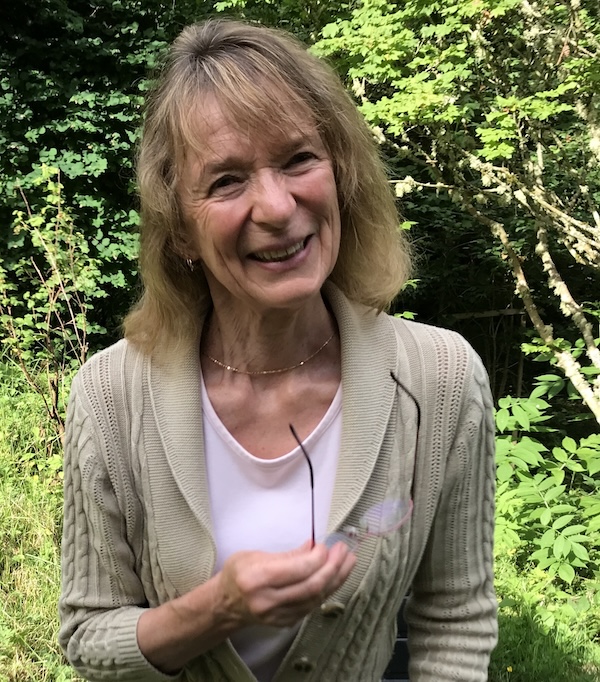
Sue Hylen, a poet and photographer, finds her images with her pen and lens in those unexpected, juxtaposed moments with her six grandchildren or while cycling around Bainbridge Island.
Sue served with the Bainbridge Island Park District office for 30 years as the Cultural Arts and Events Manager, organizing a variety of arts and cultural workshops and other community events for 30 years.
For more than 25 years, Sue participated in the Bainbridge Island Writers Workshop facilitated by Nancy Rekow, where she began to find her muse. Published in 2001, Sue’s first chapbook, “Double Exposure”, features 23 poems with 15 black and white photographs. In 2020 Sue published “Lines from My Notebooks,” a collection of 34 poems old and new. Her most recent work, “Unravelling My Life Lines,” is a full-length book of 66 poems, with new poems and favorites from her first two books.
Issue Page
Table of Contents, Issue #28, Summer 2025
A Rainbow of Berries
A Rainbow of Berries by Gunnison Langley, Summer 2025An artistic rainbow of berries. photos by Thomas Noland, composition by Susan Merrillby Gunnison Langley Summer 2025Often in the pursuit of filling our bellies with delectable berries, we overlook that berry plants...
Nature Walk in Berry-land
Nature walk in berry-land by Lindsey Davidge and Meilani Lanier-Kamaha’o, Summer 2025Child (age 6): Did you hear the FROG?by Lindsey Davidge and Meilani Lanier-Kamaha’o Summer 2025We document three families plus some classmates at play, focusing on children's...
Blackberries of the Salish Sea
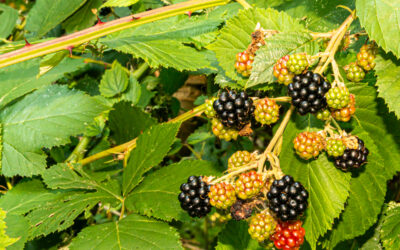
Blackberries of the Salish Sea by Sarah Ottino, Summer 2025Himalayan blackberries at various stages of ripeness. photo by John F. Williamsby Sarah Ottino Summer 2025Editor’s note: Summer is time for blackberries ripening along trails, roadsides, and streams around the...
Our Rowan Tree
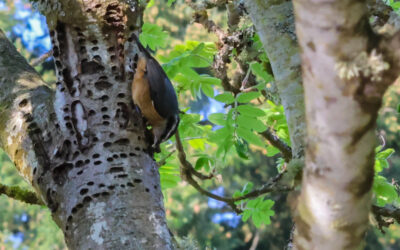
Our Rowan Tree by Thomas & Sara Noland, Summer 2025Red-breasted nuthatch caching a berry in mountain ash tree. photo by Thomas Nolandby Thomas & Sara Noland Summer 2025In our front yard is a year-round grocery store and rest stop for wild travelers. It started...
Blush Before the Salmon
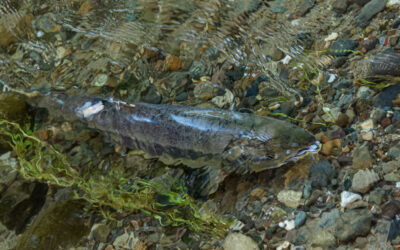
Blush before the salmon by Celeste Hankins, Summer 2025Adult female chum salmon in Chico Creek, Kitsap. photo by John F. Williamsby Celeste Hankins Summer 2025Along the edges of the Salish Sea, where cedar shadows stretch long over moss and fern, the salmonberries...
Poetry 28 B
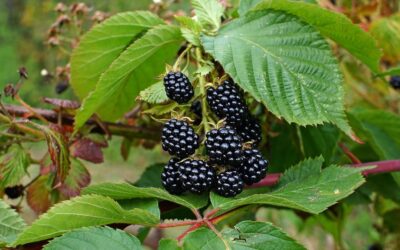
Poetry 28 B by multiple poets Summer 2025Blackberries on the bush. Image by Marevo via Pixabayby multiple poets Summer 2025sun pierced by Carl Jensen The element of fear picking blackberries (you really do get snagged by vines) is balanced against an everyday...
COPYRIGHT
Copyright SEA-Media
All rights reserved. Reproduction or distribution, in whole or in part. without consent of copyright owner is strictly prohibited — except for brief quotations in critical reviews and other noncommercial uses permitted by copyright laws.
SEA-Media is a 501(c)(3) nonprofit corporation
PLEASE HELP SUPPORT
SALISH MAGAZINE
DONATE
Salish Magazine contains no advertising and is free. Your donation is one big way you can help us inspire people with stories about things that they can see outdoors in our Salish Sea region.
We also don't advertise Salish Magazine, so please spread the word of this online resource to your friends and colleagues.
Thanks so much for your interest and your support.