
SERIOUS, PLAYFUL, MISCHIEVOUS, NURTURING
by Gunnison Langley, Spring 2026
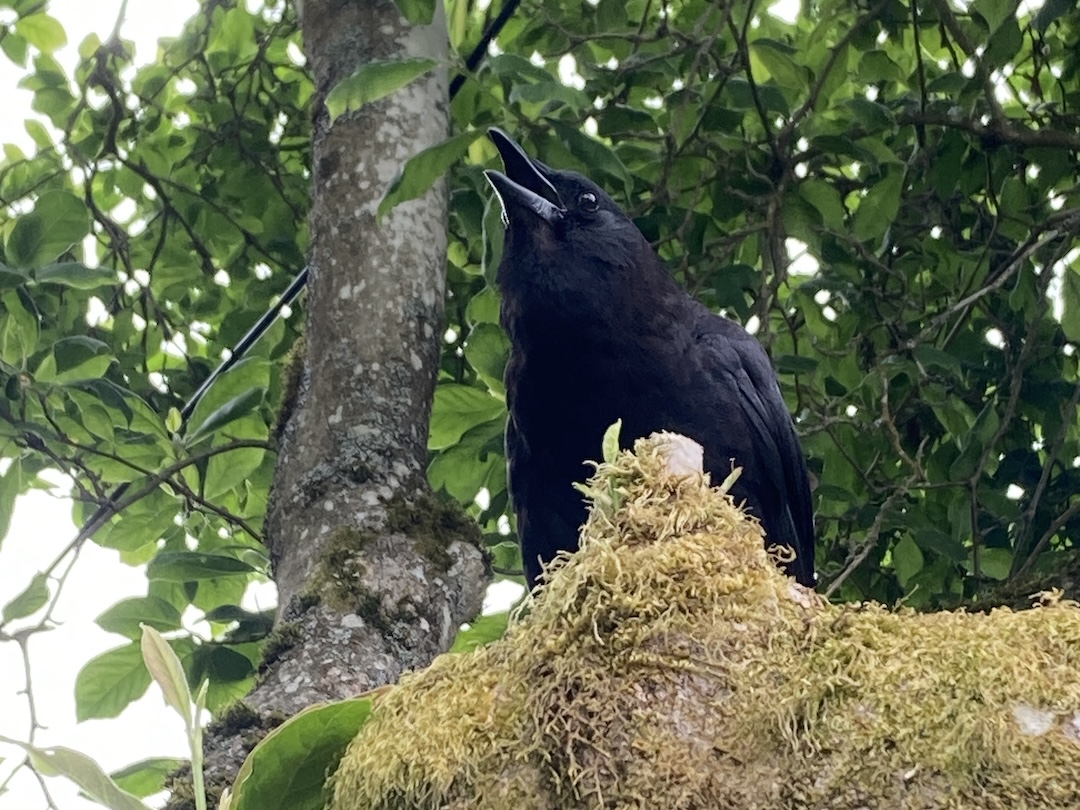
Crow perched on a tree. photo by Gunnison Langley
Serious, Playful, Mischievous, Nurturing
by Gunnison Langley
Spring 2026
Last year I joined a Birds Connect Seattle “Neighborhood Bird Outing” at Magnuson Park in North Seattle. About an hour into our walk, we emerged from the wetlands into a more open area, and someone exclaimed with rapt excitement, “Pine Siskins!” Much like the gregarious Siskins themselves, attendees of the outing flocked to get a better view. Everyone was elated to see them and the group leader commented that people come from all over the country to our area in the winter to see our Pine Siskins. These were clearly special birds.
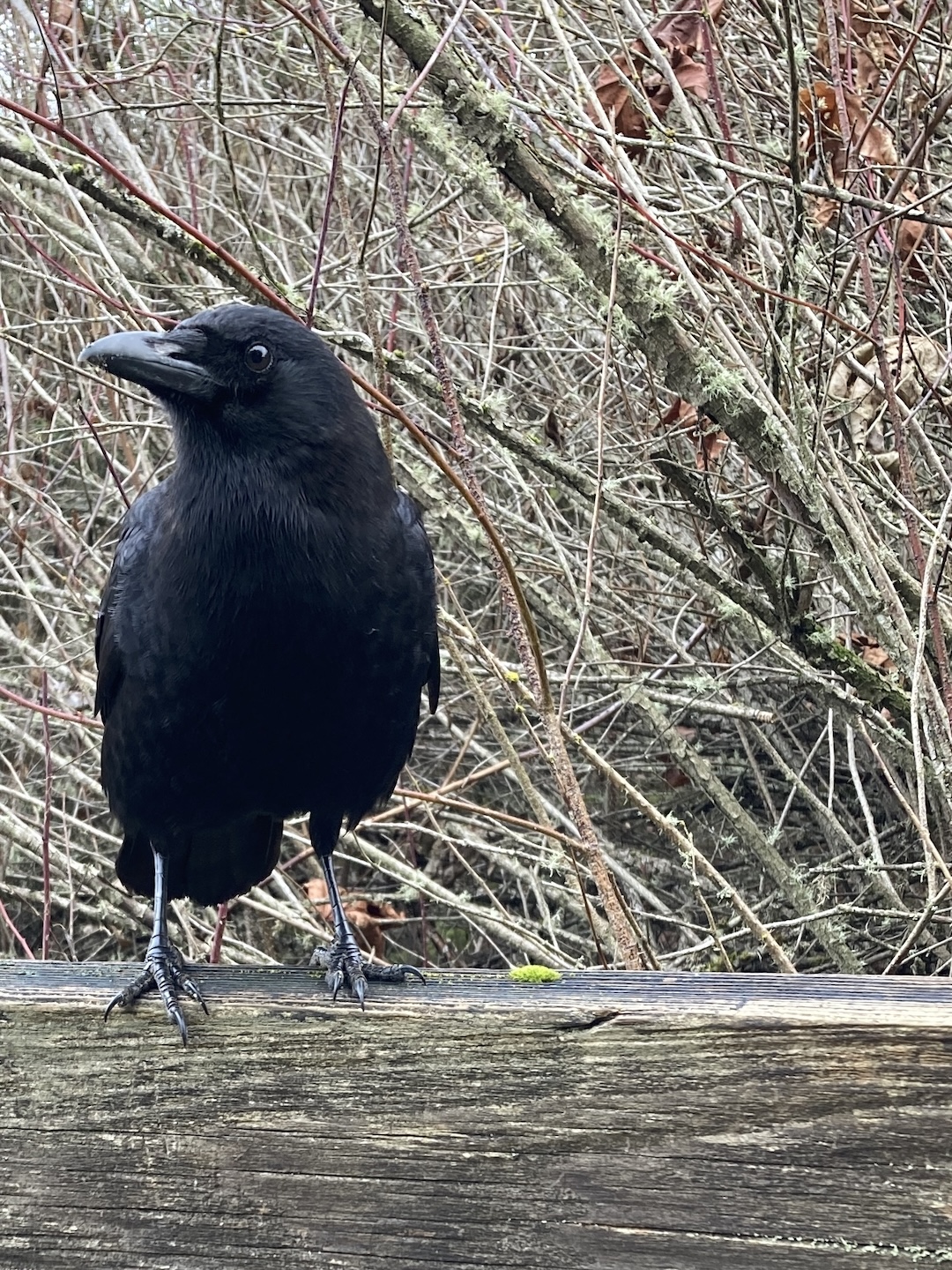
Crow on a fence next to a native plant area . photo by Gunnison Langley
While the rest of the group was “awwwing” over these entertaining members of the finch family, I had caught sight of a bird roughly one hundred yards away in the grass busily and repeatedly inserting its beak into the earth extracting a bit of sod then unceremoniously tossing it to the side and devouring whatever it found within the hole it had just created. I had seen this behavior with this type of bird many times before, and yet I still found it an extremely entertaining activity to witness.
While I had my binoculars to my eyes, one of the other group members approached and gently informed me that, “the Pine Siskins are this way,” pointing behind me.
“Thank you, I know,” I replied as I extended her a polite smile.
She then stepped in front of me, wondering what could have possibly held my attention if not the Siskins. Scanning the area in which my gaze was fixed she asked, “Do you see something else? A hawk, an eagle, a heron?”
“Much better,” I rejoiced, “a crow!”
“Some people love them, some people hate them,” was all she remarked as she returned to the Pine Siskin watch party.
No matter your feelings about them, we must co-exist with crows in the Salish Sea region as they are here to stay. As it turns out, many behaviors that crows would use in the wild are well suited towards urban living. As natural hunters, foragers, and opportunists, crows thrive and play many roles in the urban ecosystem that surrounds us.
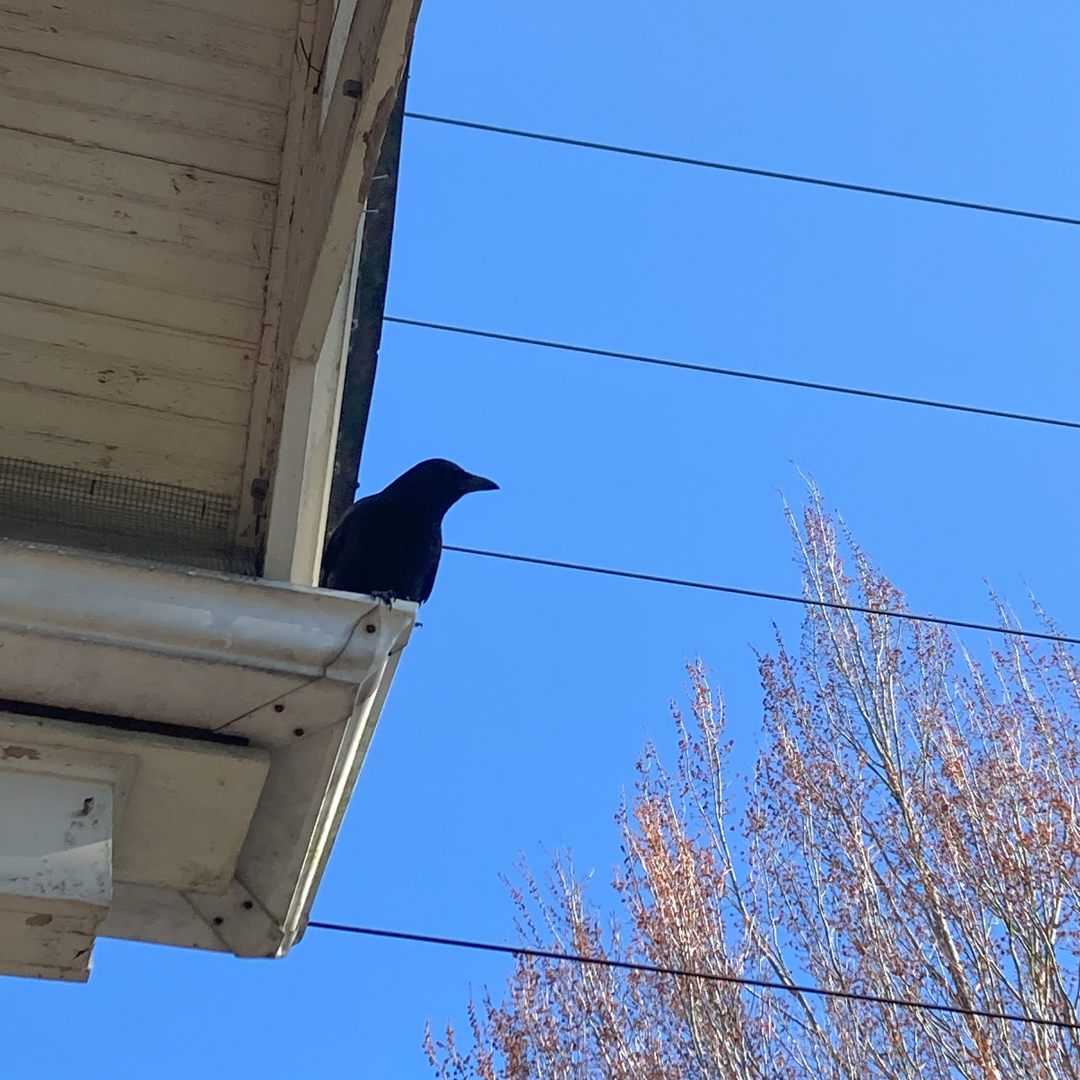
Crow visiting someone’s home. photo by Gunnison Langley
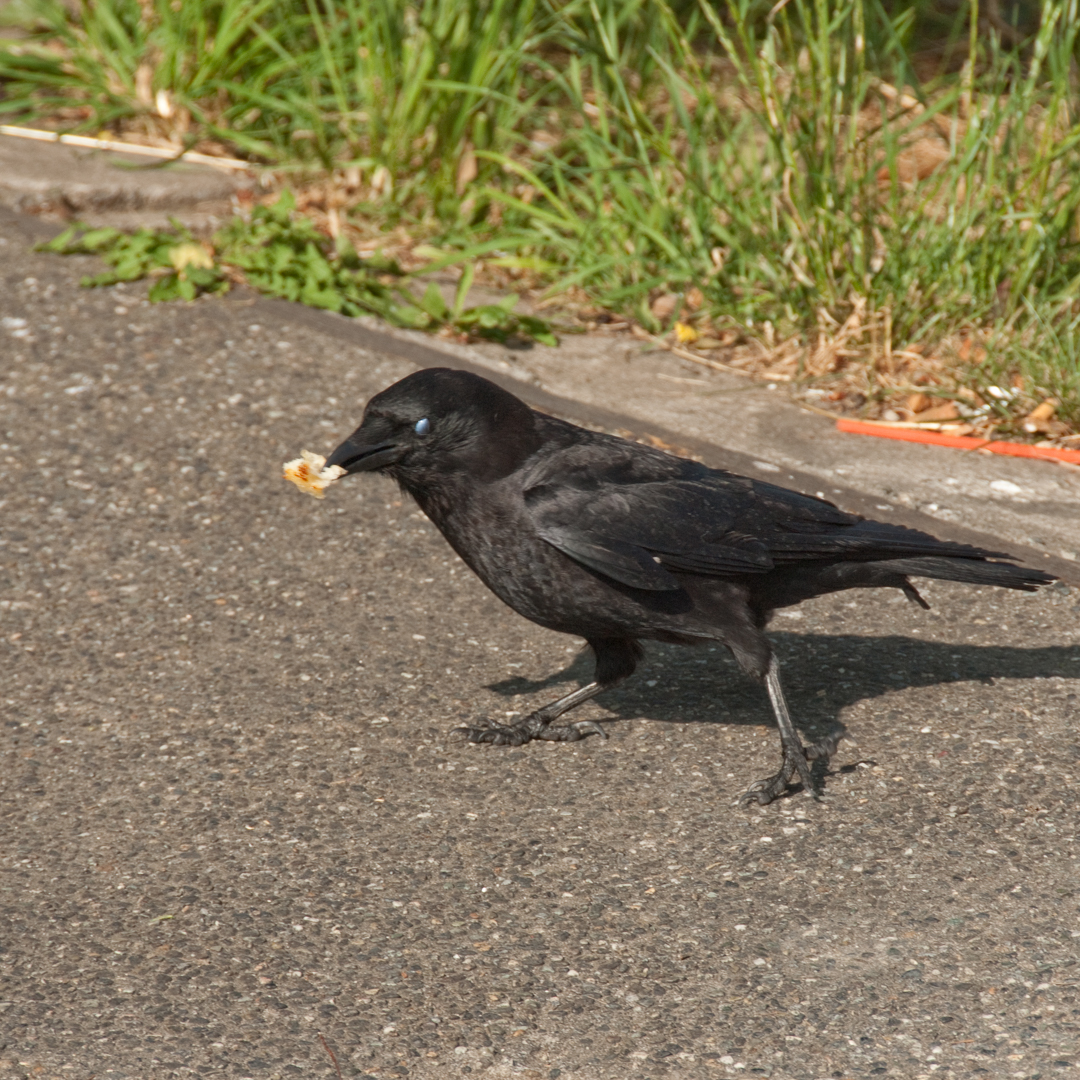
Crow finding a scrap to eat. photo by John F. Williams
the human and crow population correlation
We have experienced considerable population growth and urban sprawl in the Puget Sound region over the last several decades. This growth has led to widespread wildlife habitat loss which has subsequently resulted in drastic population declines in many animal species, especially those of birds such as Purple Finches, Red-winged Blackbirds, and Cliff and Barn Swallows. Despite this, crow populations have remained steady or have increased. Why is this, and what benefits does having crows living in such close proximity to humans have?
nature’s cleanup crew
One of the main reasons for the steady or augmented crow populations in our region likely has to do with access to an abundance of food.
Being opportunistic foragers, crows take advantage of the mass amounts of waste created by humans. Forty percent of a Seattle crow’s diet is that of garbage, and humans present crows with a veritable smorgasbord of delicacies each week when trash bins are put out to the curb.
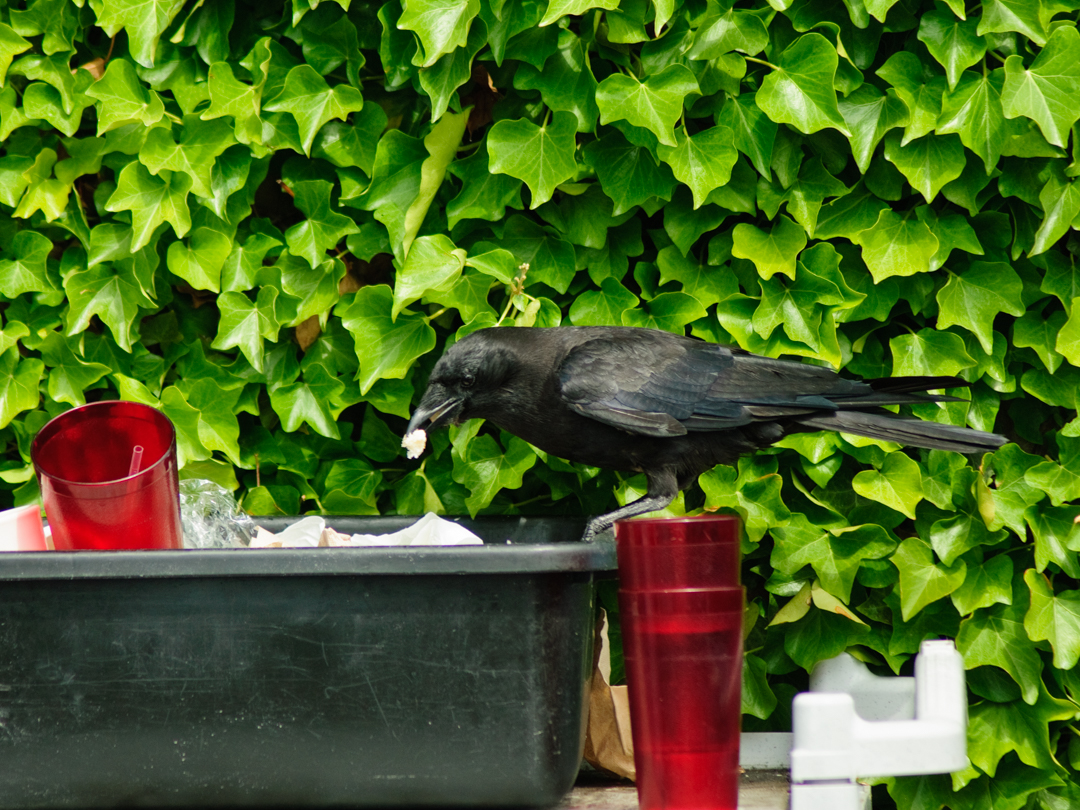
Crow finding food in a bucket of dirty dishes. photo by John F. Williams
Additionally, our bustling cities and suburbs furnish crows with another food that they would consume in the wild: carrion. Cars, buses, trucks, and sometimes bicycles supply plenty of roadkill “delights” for crows.
Local municipalities often do not have adequate staffing to tend to the task of removing roadkill, however a crow’s instinctive feeding habits are well suited to the city where they step (fly) in and take on this role.
Another culinary crow favorite are insects. Crows feed on a wide variety of insects and bugs including grasshoppers, moths, spiders, grubs, and — the bane of every northwest gardener — snails and slugs.
Crows are incredibly adept hunters and will catch creatures such as snakes, frogs and small rodents such as mice, rats, voles, and sometimes even squirrels.
Most human-deployed pest control methods utilize poisons (rodenticides and pesticides.) These poisons can seep into the earth, pollute our waters, circulate into the food chain, and contribute to small bird deaths. Not only do crows render their pest control services for free, they supply insect and critter control that is more environmentally conscious than conventional approaches.
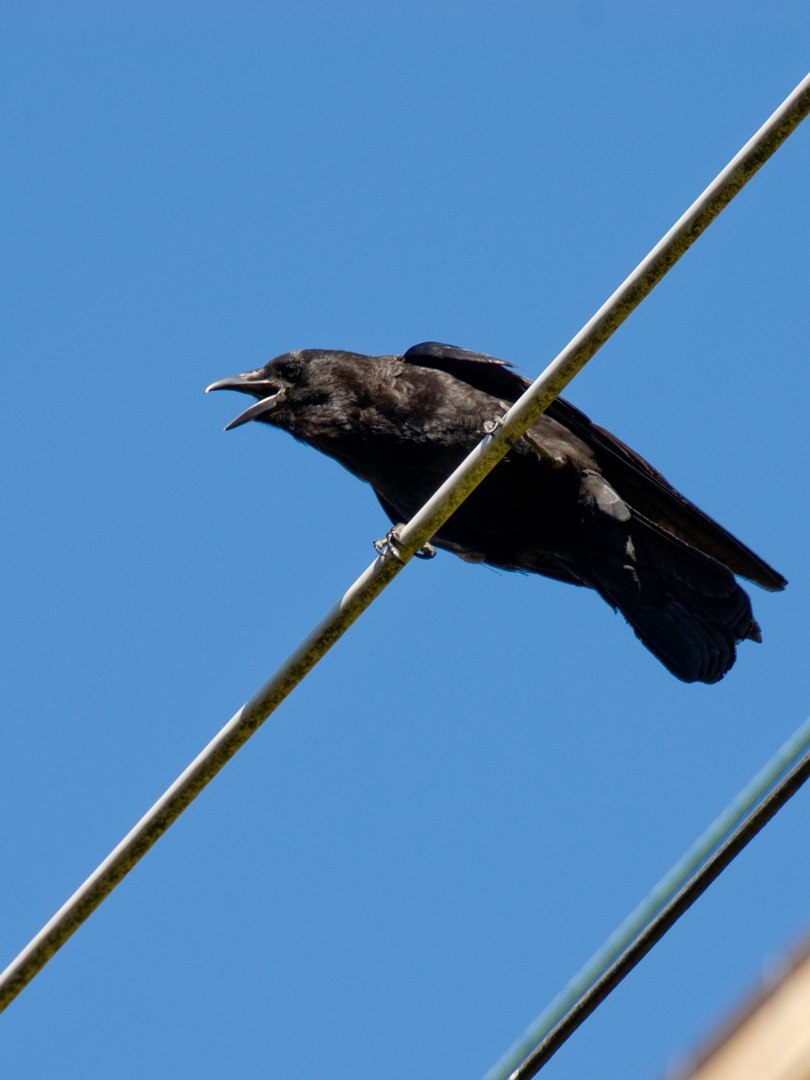
Crow on overhead wires. photo by John F. Williams
crows: nature’s Johnny Appleseed
If you have ever walked through Seattle in the fall, you may have seen fruit trees surrounded by their fallen and unclaimed crops.
When crows eat fruit, the act of pecking at an apple or a pear breaks down the larger fruit into smaller pieces that then will decompose into the earth more readily.
By consuming fruits and berries, crows assist plants by dispersing seeds further than the plant itself could do. A crow who ingests a seed may fly off to the next block or many miles away and deposit the seed through their feces. In turn, their feces then supply phosphorus and nitrogen to the soil which are essential for plant growth.
Crows have many functions within our urban environments, from natural pest control and keeping our roads clear of deceased animals, to assisting in plant propagation.
Yet there is something else that crows can gift us, and that is enriching our lives by observing their behaviors and personalities while learning about them.
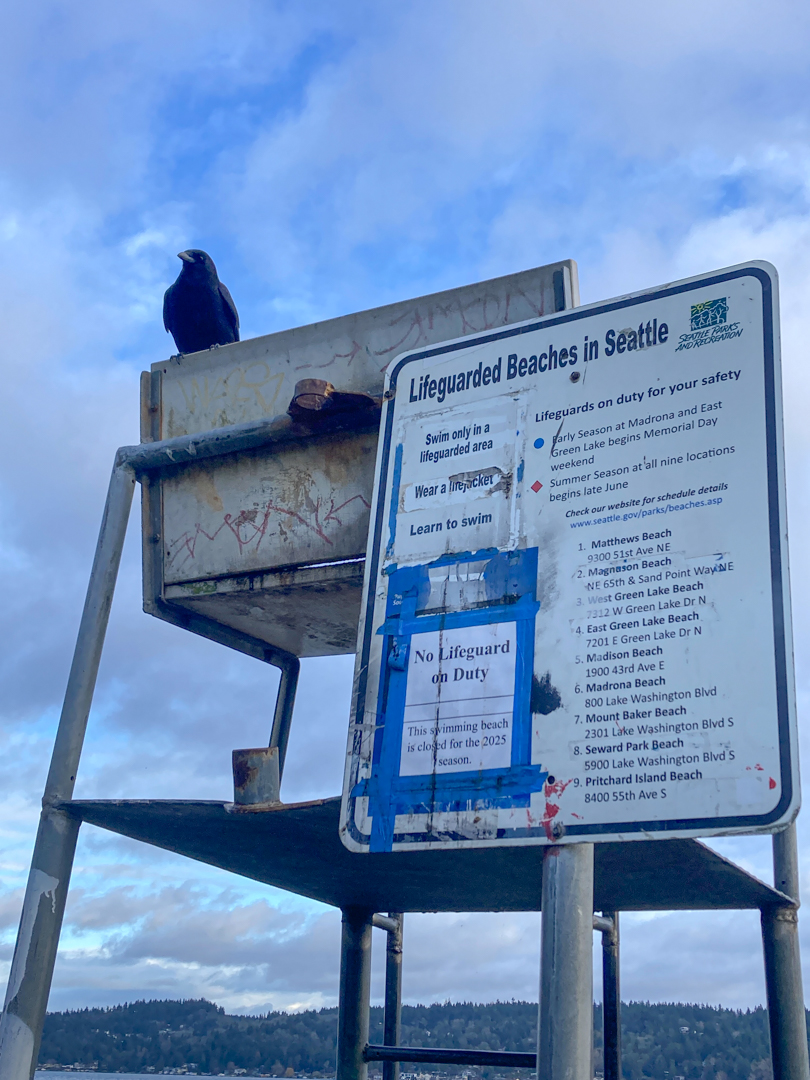
Crow at the beach. photo by Gunnison Langley
noisey neighbors
There are so many reasons that crows are worthwhile to watch and learn about, but probably most notable is how smart crows are. When I meet people on both sides of the “love them or hate them” crow divide, nearly everyone will remark on crow smarts.
Crows are incredibly intelligent animals. In fact, a crow’s intelligence rivals that of chimpanzees and the great apes.
They are capable of memorizing faces and passing down knowledge such as where to eat and which humans have “wronged” them to the next generations of crows. University of Washington Professor Emeritus, John Marzluff led a ground-breaking study about crows and facial recognition that PBS Nature made a documentary about.
One of the most often cited reasons why those who sit squarely in the “hate crows camp” is that crows are noisy. However, this noise is a demonstration of their notable vocalization talents.
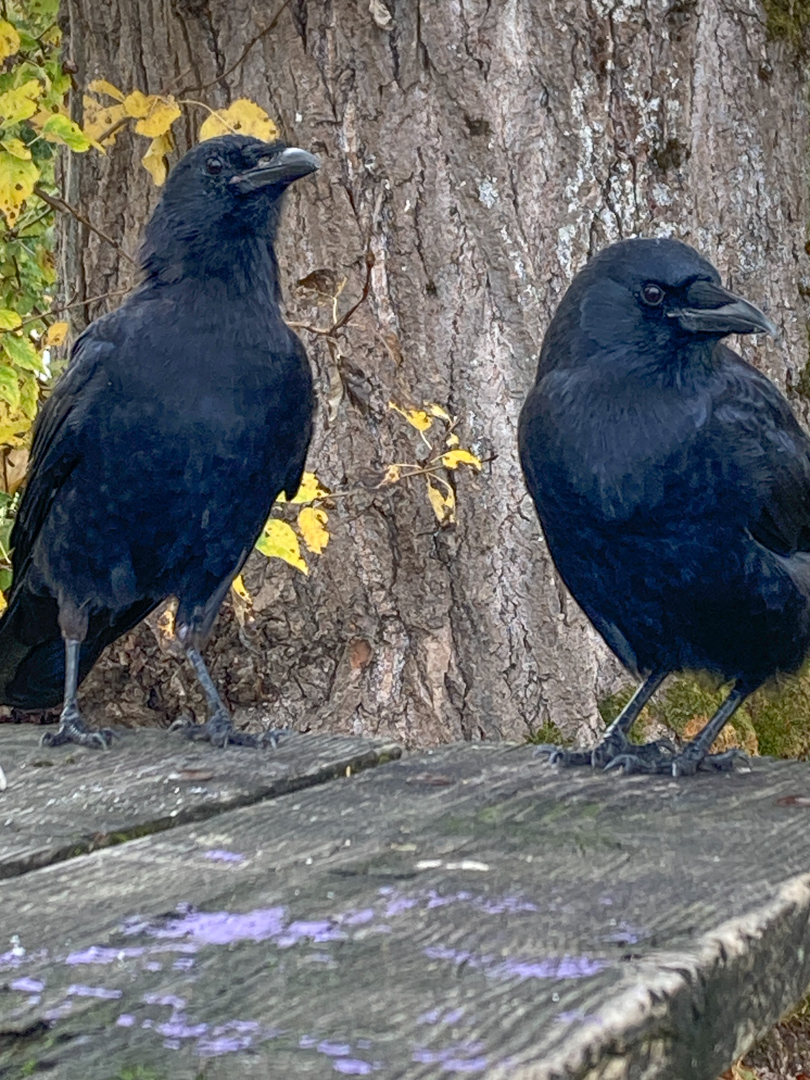
Crows on a boardwalk in the woods. photo by Gunnison Langley
While not known for producing sweet and melodic songs like other songbirds (yes, crows are classified as songbirds), crows are capable of making over twenty calls, each with different meanings ranging from “Danger!” to “I just found a Dick’s hamburger wrapper, come eat!” They have also been known to mimic sounds like car and smoke alarm chirps.
If you are searching for ways in which crows have similarities to humans, an excellent example is that crows maintain tight-knit family bonds and are extremely attentive and protective parents.
Every year in Seattle, unsuspecting humans and pets are met with aggressive swoops and scoldings from crows when said humans or pets unintentionally get too close to a young crow who has fledged from the nest.
For the most part, male and female crow couples mate for life, and previous years’ offsprings often will help raise the new year’s offspring.
Family life is a huge component of crow life.
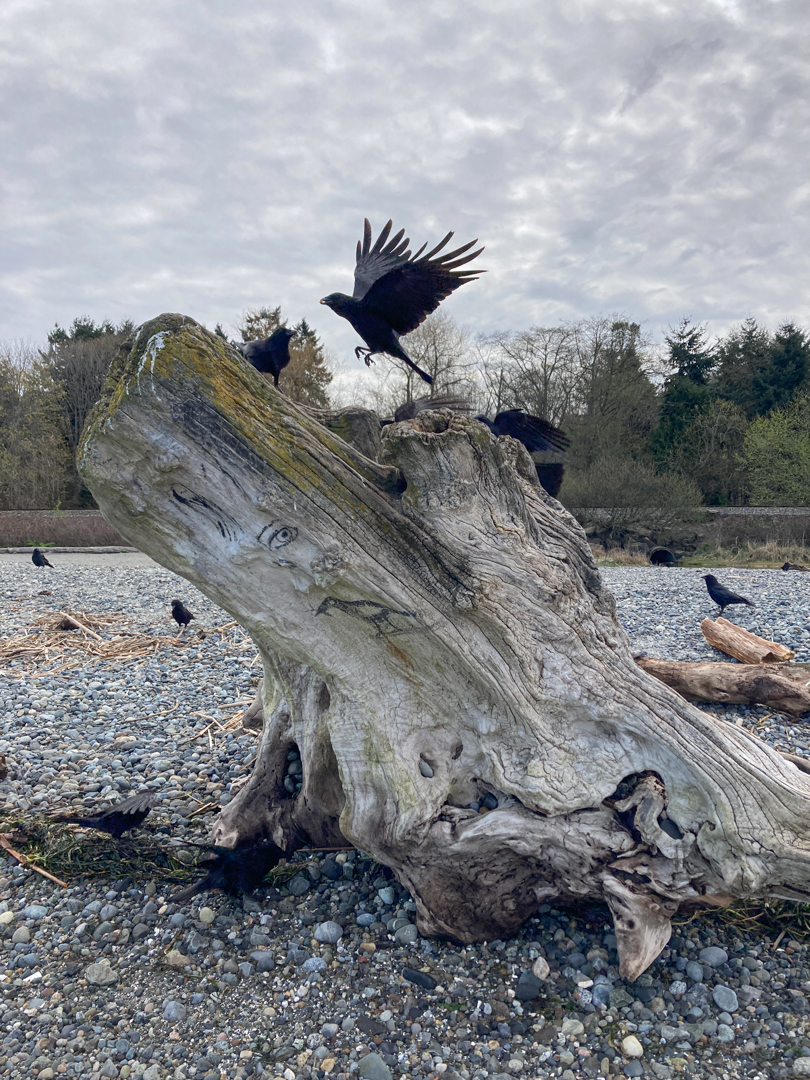
More crows at the beach. photo by Gunnison Langley
In general, crows are fun to watch. They can be serious, playful, mischievous, emotional, caring, and nurturing, and you are likely to observe all of these qualities in a short amount of time while watching them.
Aside from the natural roles they play in the urban environment, crows can also provide us with wonderment, fascination, and a good laugh. The next time you see a crow ripping apart your lawn in search of a tasty grub, just think of all the money they are saving you on pest control and having your lawn aerated.
FIND OUT MORE
Causes and consequences of expanding American Crow populations, John M. Marzluff, Kevin J. McGowan, Roarke Donnelly, and Richard L. Knight, 2001
Conservation of Forest Songbirds in the Puget Sound Area, College of Forest Resources, University of Washington
Nature | A Murder of Crows: As the Crow Flies, Nature, Think Wednesday for Science Teachers
American Crow Sounds, Cornell Lab, All About Birds
Neighborhood Bird Project: Data Suggest More than Half of Local Bird Species Could Be Declining, Joshua Morris, Birds Connect Seattle
American Crow, Birds Connect Seattle
Something to Crow About: The Amazing Diet and Eating Habits of American Crows, American Bird Conservancy

Gunnison Langley lives in Seattle and believes that the Salish Sea region is the most beautiful place on Earth.
He can often be found giving a tree a hug, communing with crows, nibbling on thimbleberries, or chasing after squirrels (be assured, he only wants to be friends with them!)
Gunnison is always looking to meet new folks who enjoy bird watching (especially crows), nature and the PNW as much as he does!
Issue Page
Table of Contents, Issue #31, Spring 2026
Bald Eagles, A Visual Story
Only mature adult bald eagles have the classic white heads and tails. As they recover from the egg-thinning effects of DDT, they are once again becoming common around the Salish Sea. However, because their lives primarily play out above our heads, we often miss some...
Birds on an Urban Lake
BIRDS ON AN URBAN LAKE by Dave Galvin Spring 2026Mergansers on Lake Union. photo by Dave Galvin by David Galvin Spring 2026The Salish Sea is defined by water: the sea itself, the freshwater lakes and rivers, and the rain that is the hallmark of the region. It is no...
Mapping Red-Winged Blackbird Territories
MAPPING RED-WINGED BLACKBIRD TERRITORIES by Mica Sage Roberts, Spring 2026Male red-winged blackbird on cattail. photo by John F. Williams by Mica Sage Roberts Spring 2026Conk-la-ree! A moment later from the east: conk-la-ree-o! I flipped over the soggy graph paper map...
Poetry 31
by multiple poets Spring 2026Red-winged blackbird on cattail reed. photo by John F. Williams by multiple poets Spring 2026Red-winged Blackbird Marcia Claire Millican Conspicuous commander, comfortable atop the cattails. Displaying proud patches,resilient red and...
COPYRIGHT
Copyright SEA-Media
All rights reserved. Reproduction or distribution, in whole or in part. without consent of copyright owner is strictly prohibited — except for brief quotations in critical reviews and other noncommercial uses permitted by copyright laws.
SEA-Media is a 501(c)(3) nonprofit corporation
PLEASE HELP SUPPORT
SALISH MAGAZINE
DONATE
Salish Magazine contains no advertising and is free. Your donation is one big way you can help us inspire people with stories about things that they can see outdoors in our Salish Sea region.
We also don't advertise Salish Magazine, so please spread the word of this online resource to your friends and colleagues.
Thanks so much for your interest and your support.