
Blush before
the salmon
by Celeste Hankins, Summer 2025

Adult female chum salmon in Chico Creek, Kitsap. photo by John F. Williams
Blush before the salmon
by Celeste Hankins
Summer 2025
Along the edges of the Salish Sea, where cedar shadows stretch long over moss and fern, the salmonberries blush first. I see them every spring. The rose-pink blossoms give way to amber and ruby fruit as the Coho, Chum, and Chinook salmon begin their long journeys home. As a nature guide, I’ve learned to watch for this rhythm along Hood Canal’s salmon-bearing streams. Each year, the berries and fish return in a harmony that reflects a deeper relationship between the land and sea.
The salmonberry (Rubus spectabilis) is a thicket-forming shrub native to the moist coastal environments along the Salish Sea. Its bright, golden orange to deep red berries are mildly sweet, tart, and watery. They are an early summer treat for birds, bears, small mammals, and the guests I guide along the trails near my home. The salmonberries bloom in early spring, typically from March to April. Their vibrant pink flowers attract pollinators like bees and hummingbirds. By late spring to early summer, usually May through June, the berries ripen, playing a vital role in the seasonal food web.
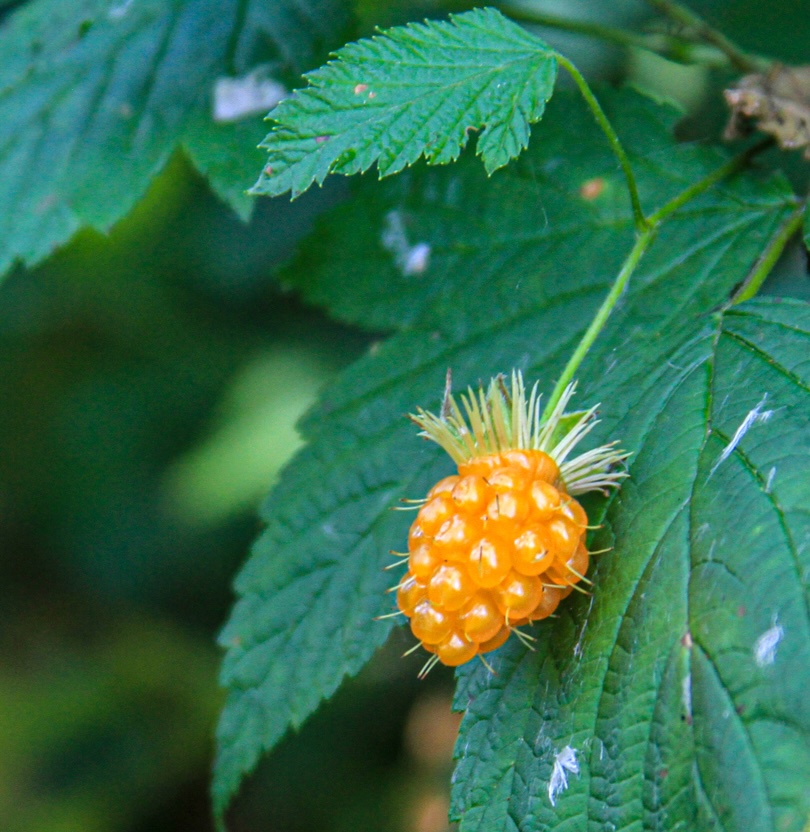
Ripening salmonberry. photo by Thomas Noland
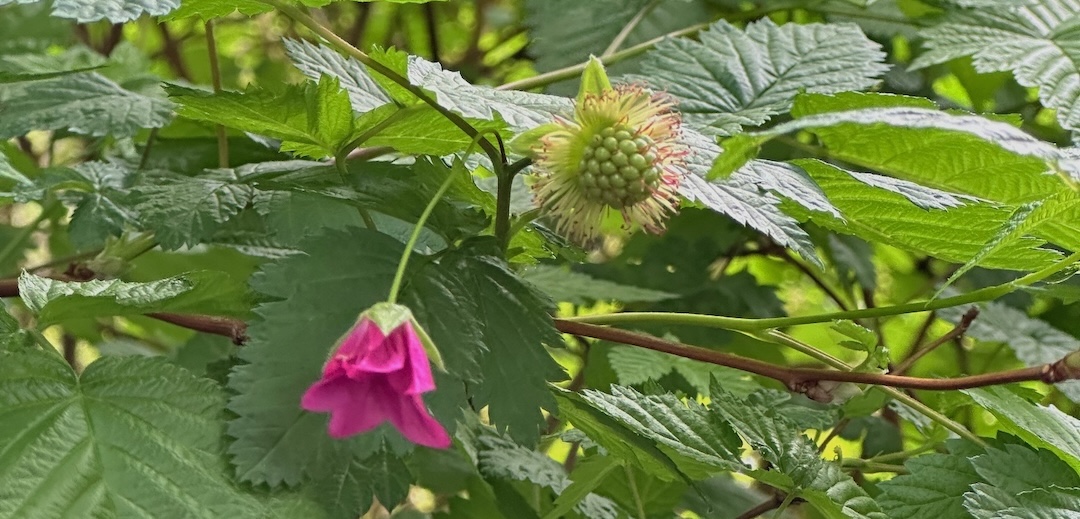
Salmonberry flower and a green fruit. photo by Celeste Hankins
It’s a quiet overlap. While the salmonberries ripen in the forest, salmon make their long journey home. Each year, Pacific salmon return from the ocean to the freshwater streams where they were born. They return with remarkable precision, often arriving within a few feet from where they hatched. This salmon odyssey remains one of nature’s great marvels. Juvenile salmon imprint on the unique chemical signature of their home stream and then use smell to guide them back as adults. Also, far out in the open ocean, salmon may rely on the earth’s magnetic field, celestial cues, and even ocean currents to navigate their way home, across thousands of miles, back to the exact place their story began.
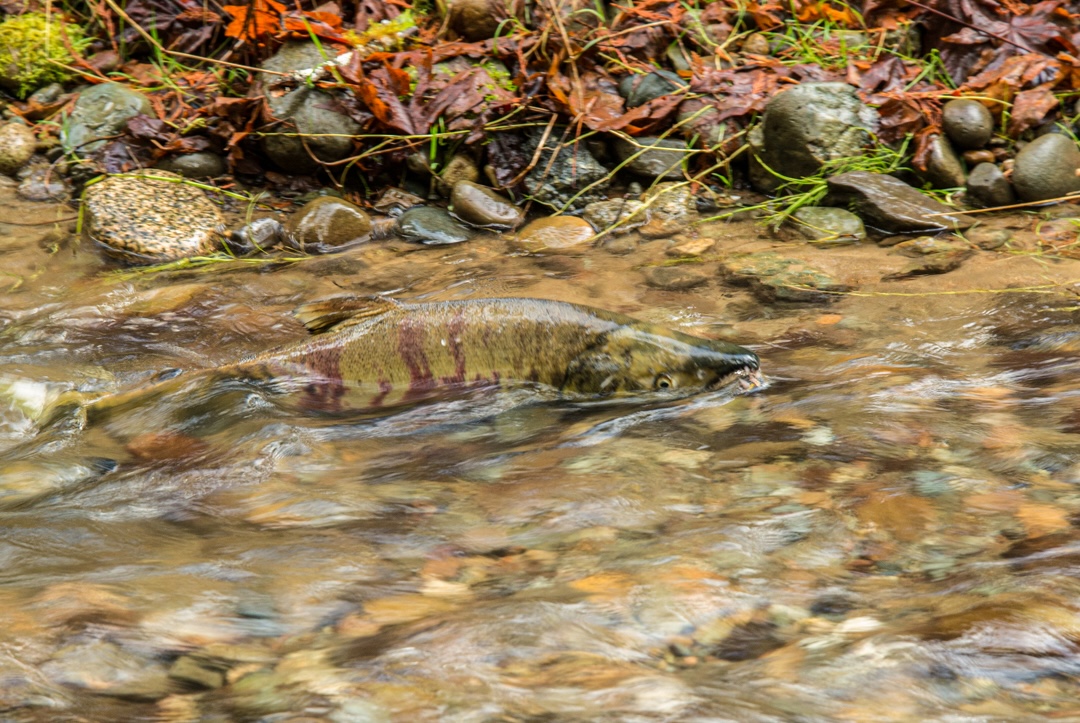
Adult male salmon returning to spawn in Lost Creek near Big Tree Trail, Rhododendron Preserve, Bremerton. photo by John F. Williams
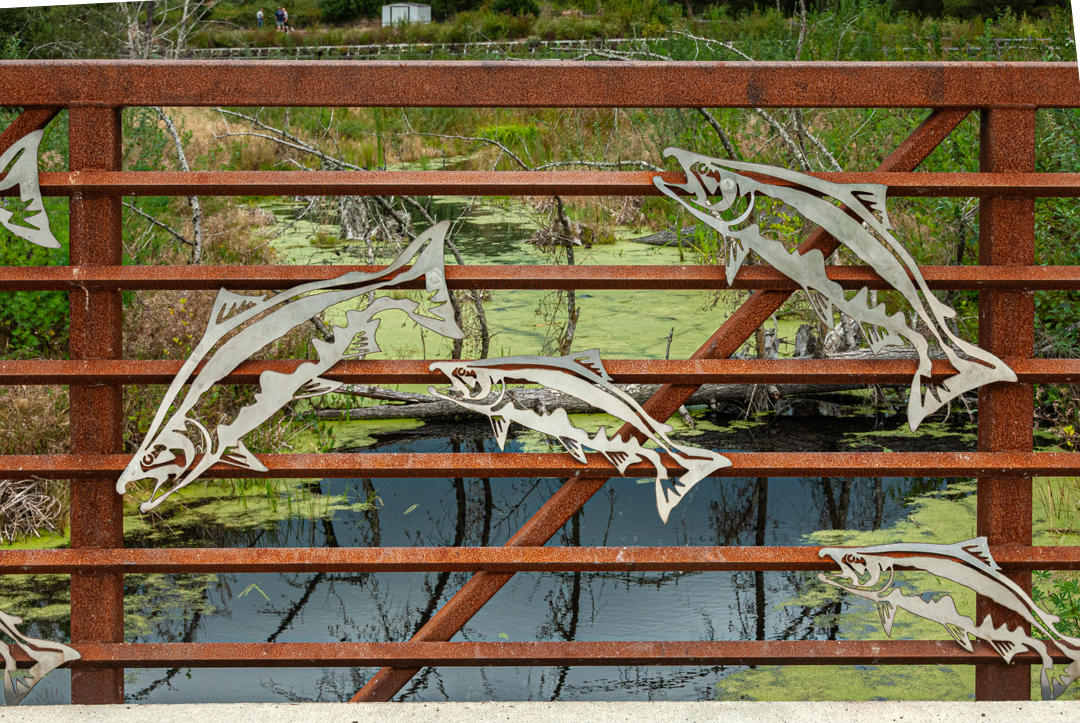
Salmon on railing of a bridge crossing Clear Creek, Gateway Park, Silverdale. photo by John F. Williams
This homecoming is more than a dramatic finale to their life cycle. It is a gift to the land. As the salmon die after spawning, their bodies release rich marine nutrients into the soil, feeding trees, shrubs, and the forest floor. In turn, these nutrients nourish plants like the salmonberry, whose fruit ripens in tandem with the salmon’s return.

Male chum salmon carcass gifting ocean-derived nutrients to Lost Creek in Rhododendron Preserve, Bremerton. photo by John F. Williams
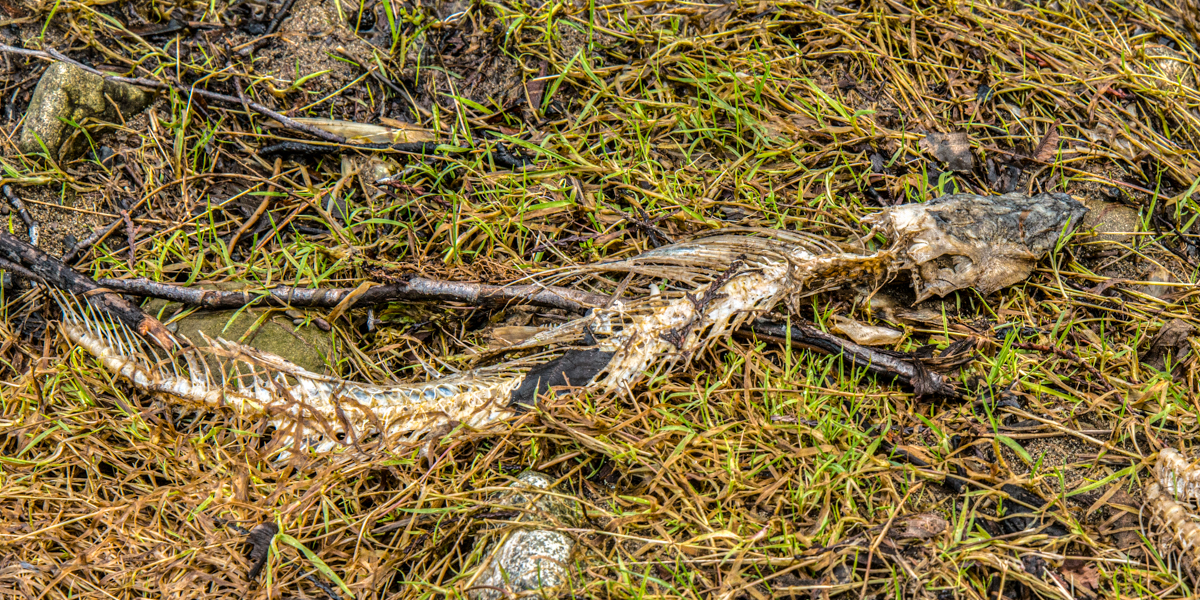
Salmon bones lying near a stream at Chico Salmon Viewing Park. photo by John F. Williams
Research shows that spawning salmon have a substantial impact on their freshwater and streamside ecosystems. In British Columbia, near the Salish Sea, biologists from the Earth to Ocean Research Group at Simon Fraser University monitored 14 salmon-bearing streams. Their findings, published in Ecosphere in 2020, revealed a clear connection: the greater the density of spawning salmon, specifically chum, the more fruit the salmonberry shrubs produced. In short, more salmon returning home means a more abundant berry crop.
It’s spring, and along the Hood Canal, I’ve already begun to gather this season’s salmonberries. The plump fruit glows like tiny sunsets against the shrub’s lush green leaves. A nearby steam burbles, and I pop a soft, watery berry into my mouth. I imagine the flash of salmon far out at sea. Even now, the fish are making their way toward this coastline. In a few months, they’ll leave the salty canal behind and ascend this very stream to spawn and die. The last hint of salmonberry lingers on my tongue, and I realize the sweetness of this moment lies not just in watching the seasons change, but in knowing they return. Berry. Fish. Forest. Stream. Woven together in quiet, enduring resonance.
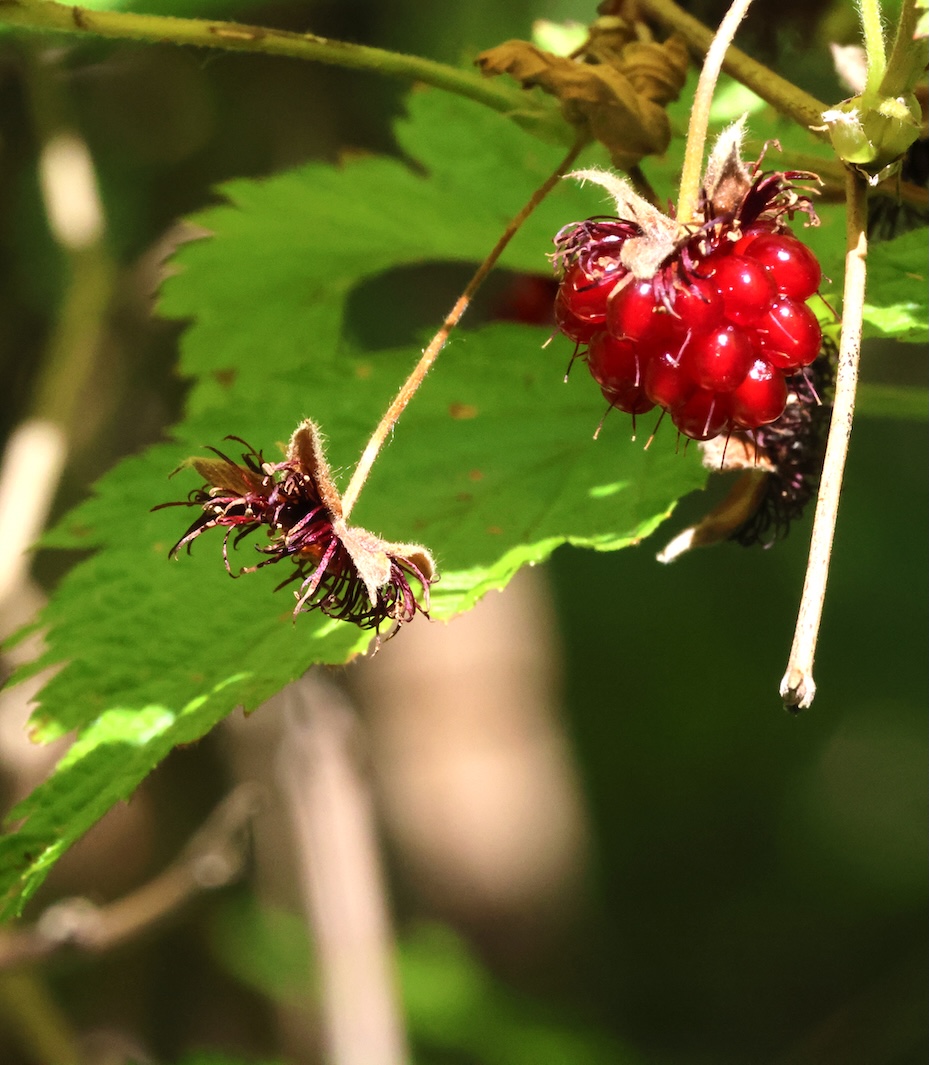
Ripe salmonberry. photo by Thomas Noland

Celeste Hankins is a freelance writer and nature guide living in the Pacific Northwest, just a short hike from the Salish Sea. She has an MA in Science Writing from Johns Hopkins University and is a certified marine naturalist from the San Juan Whale Museum. Celeste also volunteers as a habitat interpreter at the Seattle Aquarium and as a citizen scientist monitoring sea birds and harbor porpoises. Come rain or shine, you can find Celeste narrating scenic cruises on the fjord, swimming with seals, or leading family beach walks.
Issue Page
Table of Contents, Issue #28, Summer 2025
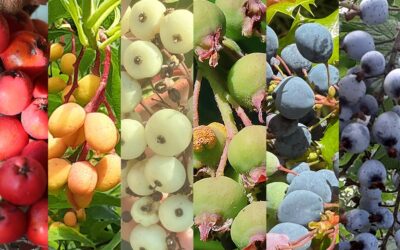
A Rainbow of Berries
A Rainbow of Berries by Gunnison Langley, Summer 2025An artistic rainbow of berries. photos by Thomas Noland, composition by Susan Merrillby Gunnison Langley Summer 2025Often in the pursuit of filling our bellies with delectable berries, we overlook that berry plants...
Nature Walk in Berry-land
Nature walk in berry-land by Lindsey Davidge and Meilani Lanier-Kamaha’o, Summer 2025Child (age 6): Did you hear the FROG?by Lindsey Davidge and Meilani Lanier-Kamaha’o Summer 2025We document three families plus some classmates at play, focusing on children's...
Blackberries of the Salish Sea
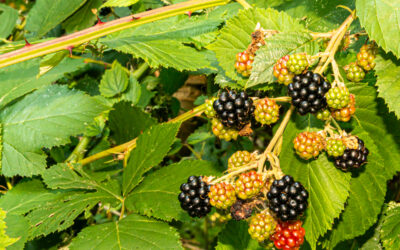
Blackberries of the Salish Sea by Sarah Ottino, Summer 2025Himalayan blackberries at various stages of ripeness. photo by John F. Williamsby Sarah Ottino Summer 2025Editor’s note: Summer is time for blackberries ripening along trails, roadsides, and streams around the...
Our Rowan Tree
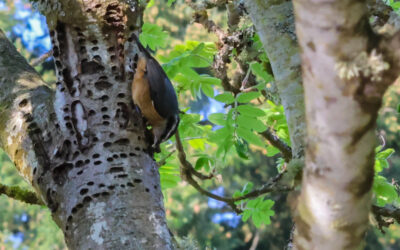
Our Rowan Tree by Thomas & Sara Noland, Summer 2025Red-breasted nuthatch caching a berry in mountain ash tree. photo by Thomas Nolandby Thomas & Sara Noland Summer 2025In our front yard is a year-round grocery store and rest stop for wild travelers. It started...
Poetry 28 A
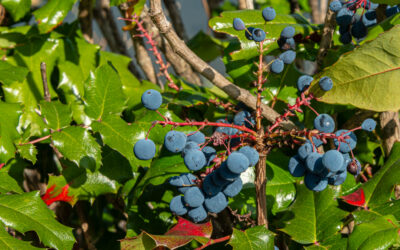
Poetry 28 A by multiple poets Summer 2025Berries of oregon grape (mahonia). photo by John F. Williamsby multiple poets Summer 2025Blueberry by Nancy Taylor bigger than a pea had been a flower suckled by a bee color of a new bruise but doesn’t hold the pain...
Poetry 28 B
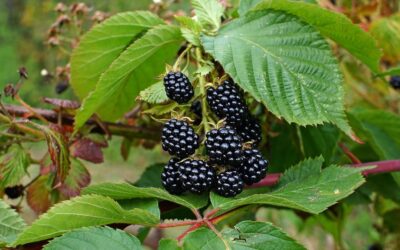
Poetry 28 B by multiple poets Summer 2025Blackberries on the bush. Image by Marevo via Pixabayby multiple poets Summer 2025sun pierced by Carl Jensen The element of fear picking blackberries (you really do get snagged by vines) is balanced against an everyday...
COPYRIGHT
Copyright SEA-Media
All rights reserved. Reproduction or distribution, in whole or in part. without consent of copyright owner is strictly prohibited — except for brief quotations in critical reviews and other noncommercial uses permitted by copyright laws.
SEA-Media is a 501(c)(3) nonprofit corporation
PLEASE HELP SUPPORT
SALISH MAGAZINE
DONATE
Salish Magazine contains no advertising and is free. Your donation is one big way you can help us inspire people with stories about things that they can see outdoors in our Salish Sea region.
We also don't advertise Salish Magazine, so please spread the word of this online resource to your friends and colleagues.
Thanks so much for your interest and your support.