
INSECTS
Issue 29, Autumn 2025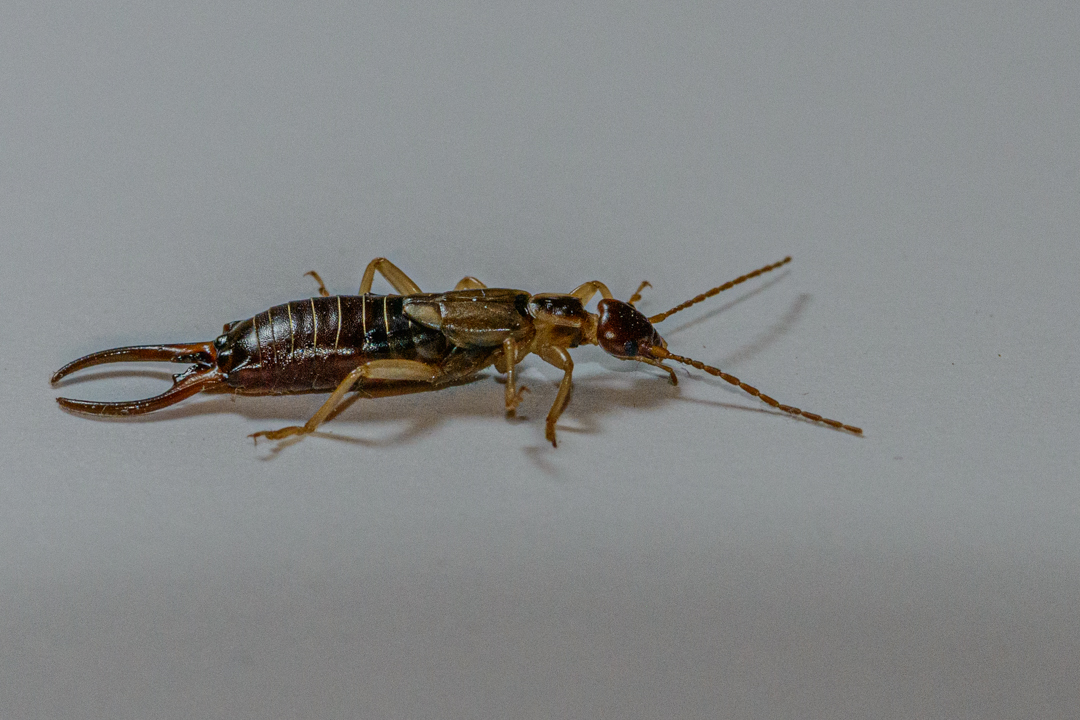
Earwig. photo by John F. Williams
INSECTS
Issue 29, Autumn 2025
Managing Editor: Adelia Ritchie
(Table of Contents is below this intro)
Welcome to the Fall 2025 issue, where we focus on insects, “the little things that run the world” (E.O. Wilson, 1987). Insects are virtually impossible to avoid in daily life — some we like, some we don’t! But before we dive into this issue about these fascinating creatures, I want to say a few words about some of the catch-all terms we use in common speech to describe so-called “bugs” and “creepy-crawlies.” The word “insect” is often used as a blanket term, with many people including spiders, centipedes, or even slugs under it — even though those are not technically insects. And in this issue about insects, we will include poems about spiders.
some common terms
- Bugs — Probably the most widespread generic word. Technically, it refers only to “true bugs” (order Hemiptera), but in everyday speech it means any little crawling or flying creature.
- Creepy-crawlies — A playful or slightly squeamish way to lump insects, spiders, worms, and anything small and wriggly together.
- Critters — Folksy, broad term that can include insects, spiders, lizards, rodents, etc.
- Pests — Usually used when insects are seen as bothersome (flies, mosquitoes, ants, roaches).
- Bities/biters — Informal terms people use for mosquitoes, midges, or anything that bites.
- Gnats — Commonly used for any small flying insect, whether or not it’s actually a gnat.
- Flies — Used broadly (“fruit fly,” “mayfly,” “dragonfly”) even though most of those aren’t true flies.
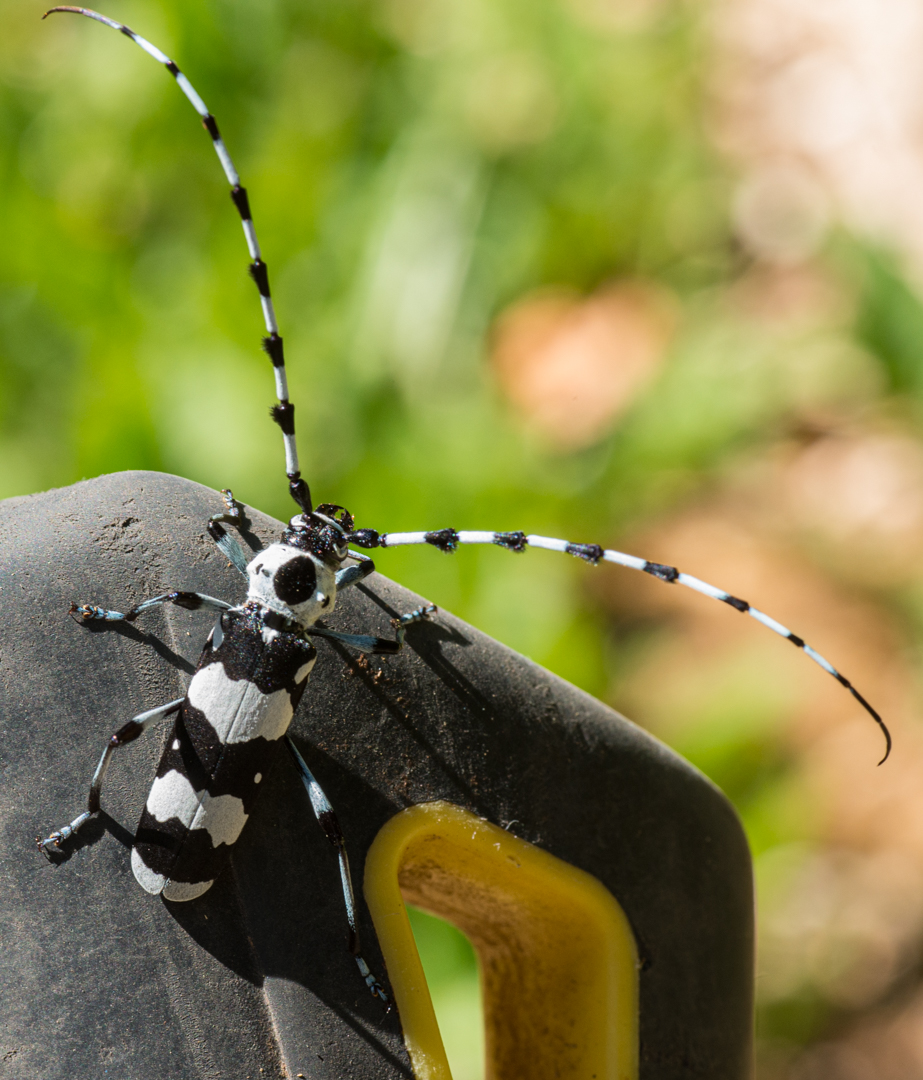
Banded Alder Borer. photo by John F. Williams
 See more about the order Hemiptera
creepy, crawly, and misunderstood: insects, arachnids, and true bugs
Walk into any garden or peek under a rock, and you’ll likely spot something skittering. Most people would call it a “bug,” whether it’s a beetle, a spider, or even a tick. But here’s the twist: in biology, not all bugs are bugs, and some bugs aren’t insects at all! Let’s untangle the mystery.
Insects rule the animal kingdom. Scientists estimate there are 10 quintillion of them alive at any moment — that’s a 10 followed by 18 zeros. Compare this number to those of other animals on our planet:
- reptiles: 1 billion
- amphibians: 2 billion
- humans: 8 billion
- birds: 50 billion
- mammals (excluding humans): 130 billion
- fish: 1 trillion
Nevertheless, insects rule! There are over 8 million insects for every one of those 1 trillion and 191 billion creatures listed above!
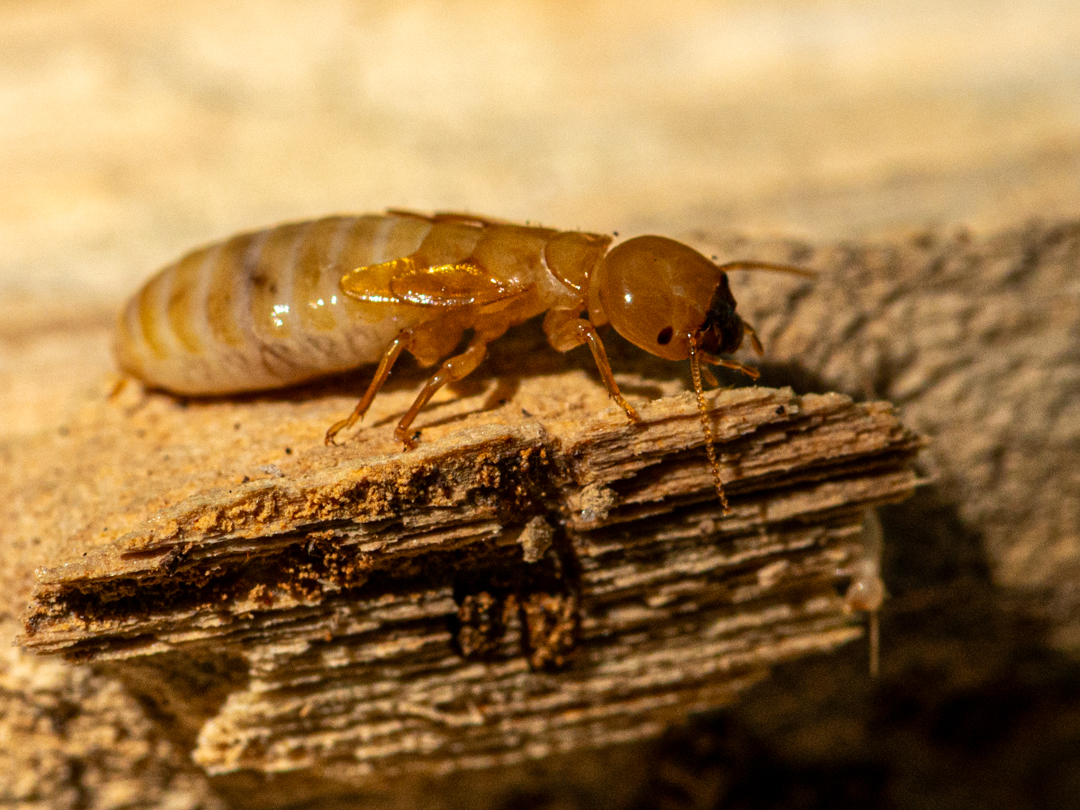
Notice the tiny wings on this termite. photo by John F. Williams
Although appearing in a variety of sizes, shapes, and behaviors, all insects have shared characteristics:
- three body parts: head, thorax, abdomen
- six legs, always attached to the thorax
- hard exoskeleton
- two antennae for sensing the world
- wings: many have one or two pairs, though some are wingless
A grasshopper, for example, is a textbook insect. It has two antennae that sense the world, a thorax that powers its jumping legs, and a pair of wings folded neatly along its back. Beetles, flies, butterflies, ants — thousands of species, all of which are insects.
True Bugs: Within insects, there’s a special category called “true bugs.” In entomology — the scientific study of insects, focusing on their behavior, classification, life cycles, and ecological impact — that term is reserved for members of the order Hemiptera, which have piercing-sucking mouthparts for tapping plant juices or, in some cases, animal fluids. True bugs include stink bugs, aphids, cicadas, and water striders. They differ from beetles, flies, or grasshoppers in how they feed and in their distinctive “half-wings,” leathery at the base and membranous at the tips. While we might label any small insect a bug, only a select group earns this official title.
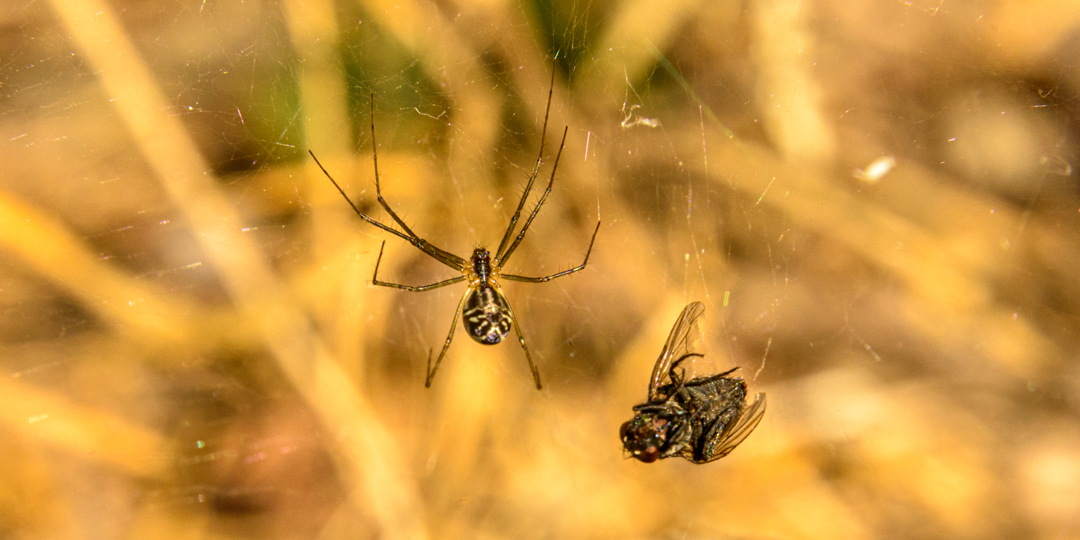
Spider with prey. photo by John F. Williams
What about spiders? Now compare insects to a spider. Right away, the leg count gives it away: eight legs, not six. Spiders also have only two body segments: a fused head-thorax (called a cephalothorax) and an abdomen. They don’t have antennae at all. Instead, they use fine hairs on their legs to detect vibrations. While insects may sport wings and flit about, spiders stick to silk and stealth. These traits place spiders in the arachnid group, along with scorpions, harvestmen (“daddy longlegs”), ticks, and mites.
Beyond insects and arachnids, there’s a whole suite of non-insect arthropods people encounter. Millipedes and centipedes, for instance, are not insects. Millipedes have long, segmented bodies with two pairs of legs per segment and are slow-moving recyclers of dead plant matter. Centipedes are flatter, faster, and have one pair of legs per segment — plus venom-tipped fangs for catching prey. Neither has wings, and their body plans are entirely different from those of insects.
And then there are crustaceans — the group that includes crabs and lobsters. In northwest Washington, you might bump into their land-dwelling relatives: woodlice, often called “pillbugs” or “roly-polies.” These little armored crawlers aren’t insects either. They’re more closely related to shrimp than to beetles.
Next time you see a tiny creature, pause and look closely: count legs, note body shape and sections, check for wings or antennae. These simple clues unlock the hidden identities of the creatures that scurry, crawl, and fly around us. Even the smallest visitor is part of the garden’s invisible workforce, carrying millions of years of evolutionary history in its tiny frame. Observing them can reveal a thriving ecosystem hiding in plain sight.
See even more about insects…
Issue 29 — Insects: Table of Contents
You can subscribe using the SUBSCRIBE menu above. It’s free, and we will send you newsletters when new articles and new issues are posted online.
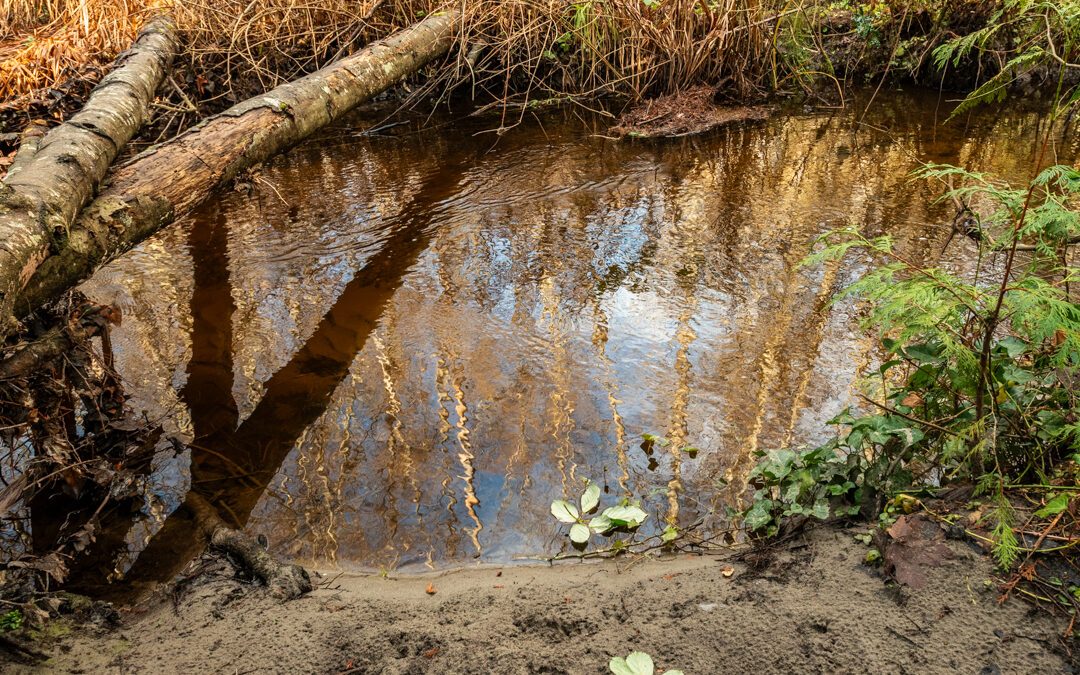
Stream Bugs
by Mercedes Garcia
Autumn 2025
The “Big Three”, stonefly, mayfly, and caddisfly, are biological indicators — they give hints about the health of the stream. They play important roles in the ecosystem as well.
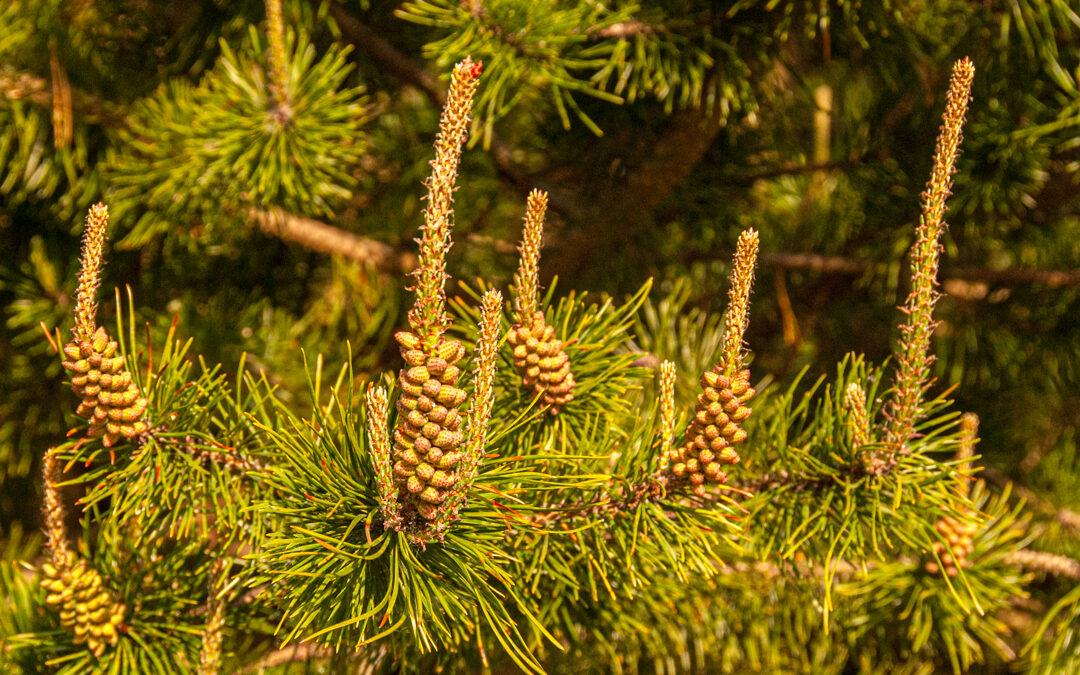
Tiny Hunger
by Lucienne Miodonski
Autumn 2025
A shore pine’s needles have burnished to copper, and the bark peels orange and gray. It leans into its last breath, a skeleton of its former self. The pine beetle has arrived.
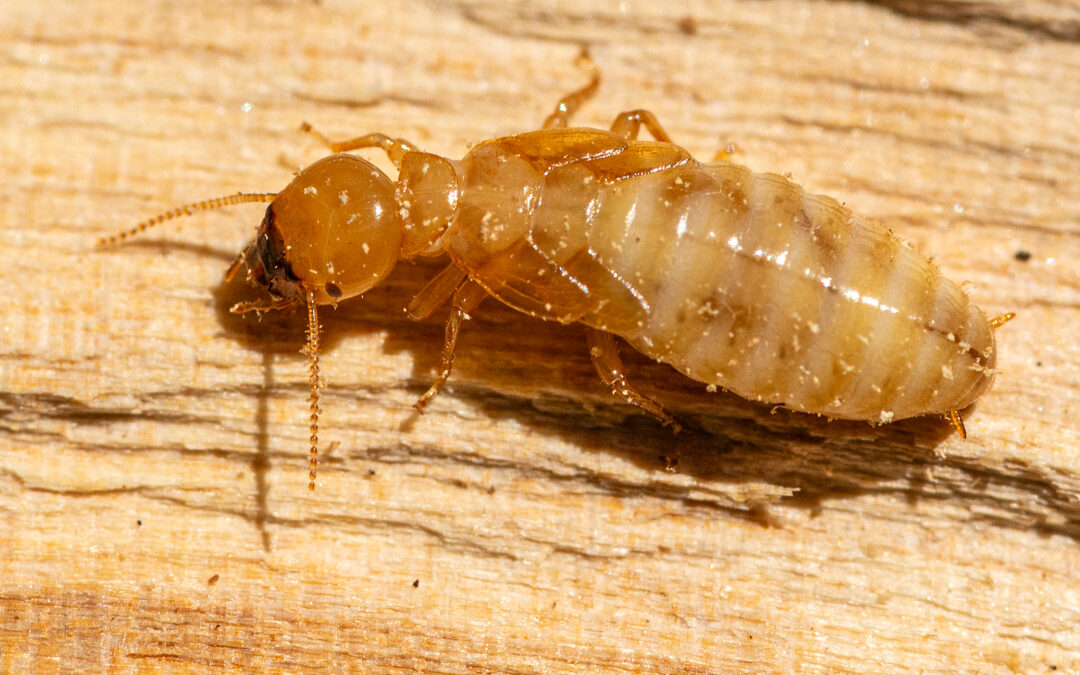
Beneath the Bark
by Celeste Hankins
Autumn 2025
After a tree dies, Pacific dampwood termites get to work tunneling through the log and breaking it down from the inside out. In its place, the forest will grow again.
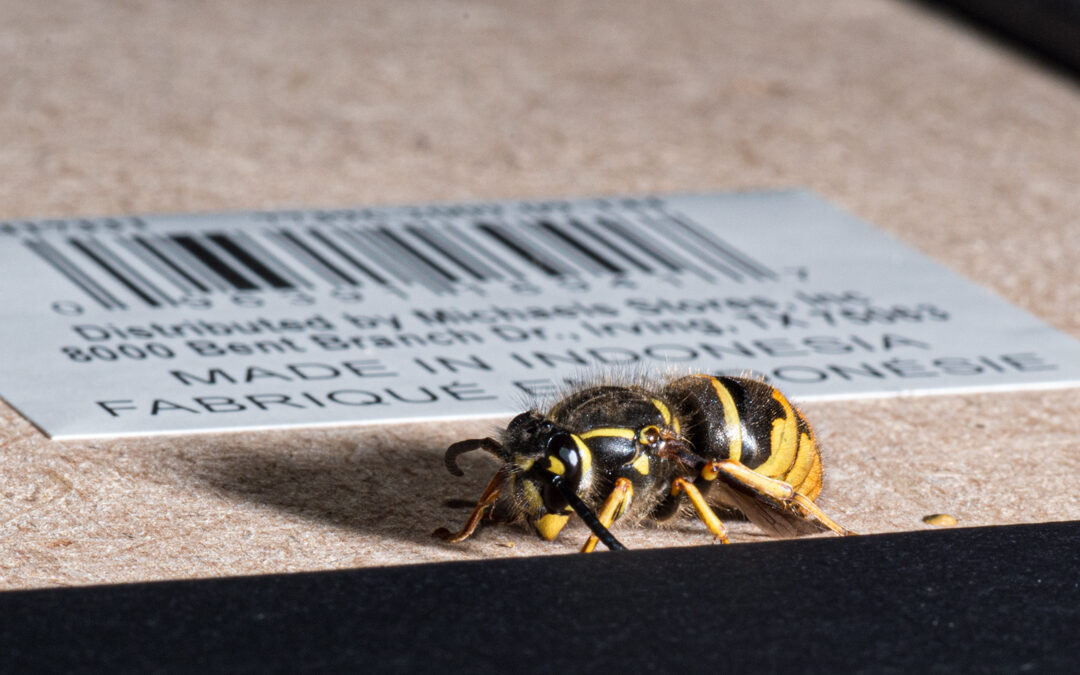
Poetry 29 B
by assorted poets
Autumn 2025
Do insects have personalities? Thanks to the poets who contributed to our insect issue. We received so many poems that we split them across two pages. Here are six more poems.
Insect Garden
by Sarah Ottino
Autumn 2025
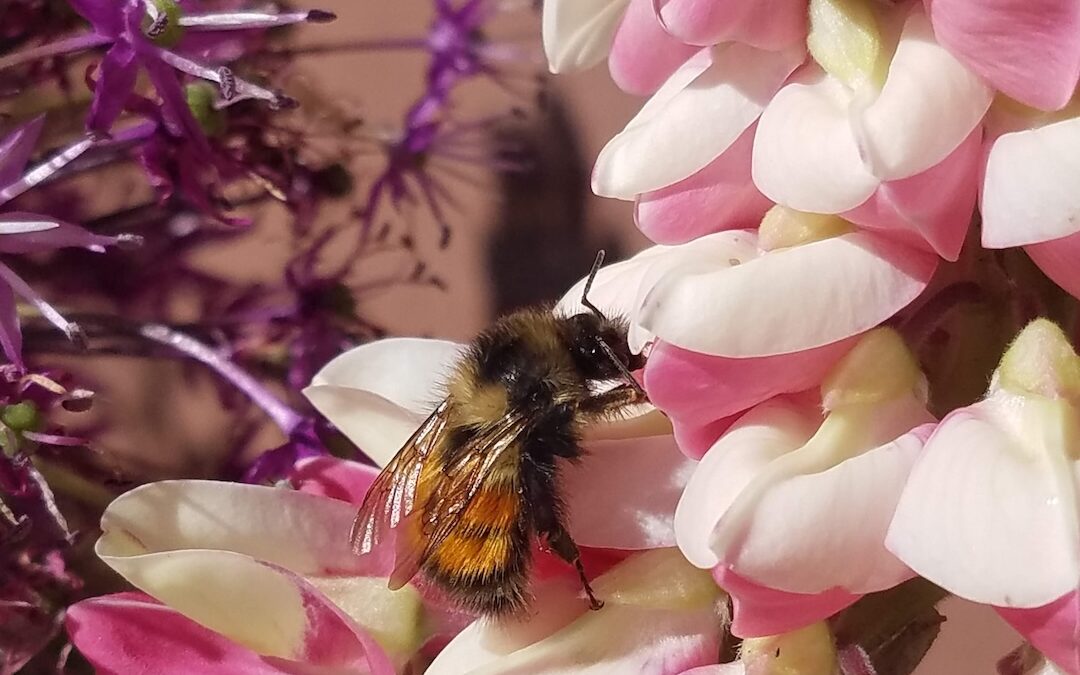
A garden is more than flowers and vegetables. It’s an ecosystem — sunlight, soil, water, plants, animals, fungi, and microbes, with insects among the most vital parts.
Elk and Insects
by Justin Johnson
Autumn 2025
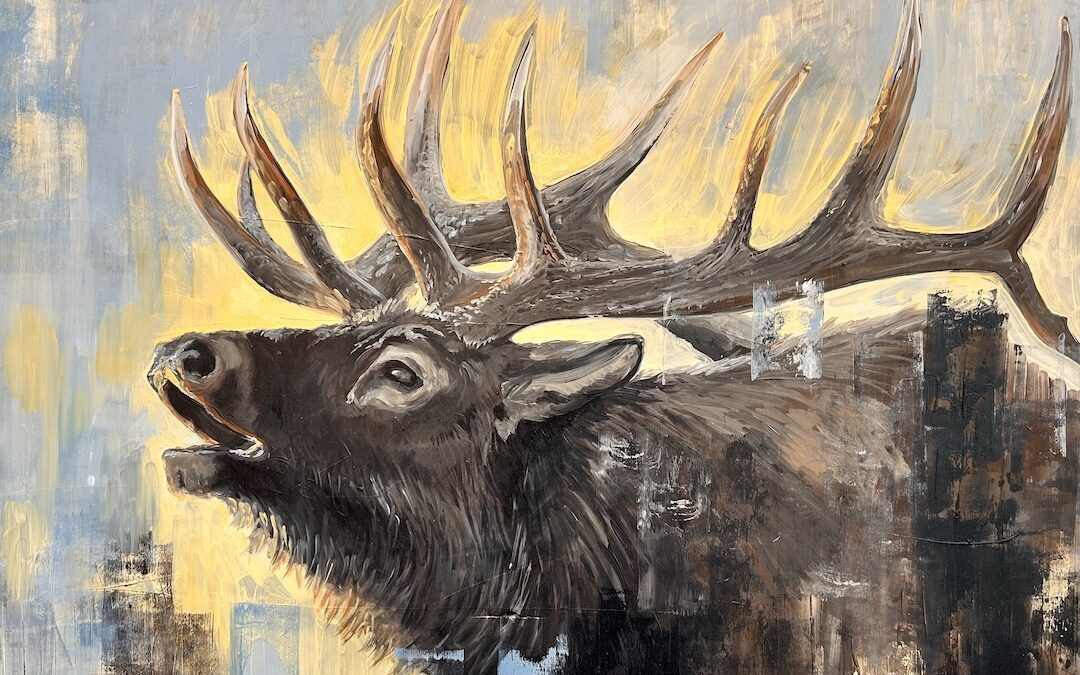
We often think of elk as iconic big game animals. But beyond the obvious predator-prey drama, there’s a quieter story — one that involves the smallest players in our ecosystem
A Leaf Miner’s Journey
by Mary Johnson
Autumn 2025
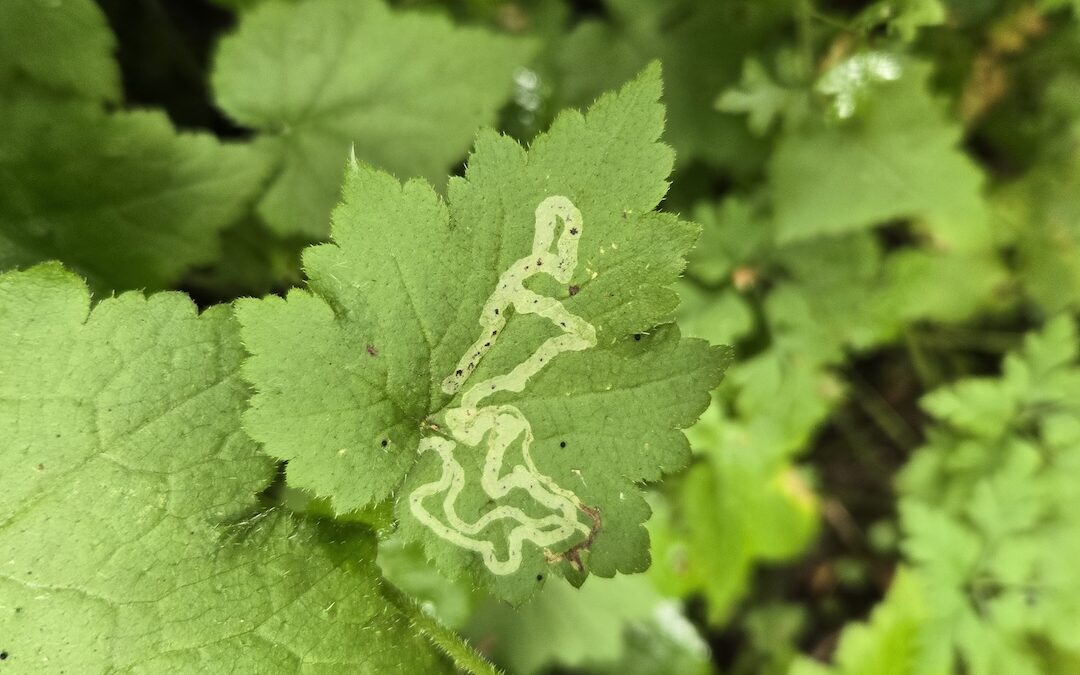
The organism tunnels its way forward, like a miner working deep in the earth. It excavates at a pace imperceptible to the human eye, though its journey may last just weeks.
Poetry 29 A
by various poets
Autumn 2025
In this first of two sections of poetry, six poets share their insect insights and experiences. These include some of the roles insects play in the ecosystem.

Salish Magazine
Publisher: John F. Williams
Managing Editor: Adelia Ritchie
This magazine is a nonprofit project of:
SEA-Media
P.O. Box 1407 Suquamish WA 98392
www.salishmagazine.org
Copyright 2025, SEA-Media
All rights reserved. Reproduction or distribution, in whole or in part. without consent of copyright owner is strictly prohibited — except for brief quotations in critical reviews and other noncommercial uses permitted by copyright laws.
SEA-Media is a 501(c)(3) nonprofit corporation
Extra special thanks to:
Sara & Tom Noland, Grant Blackinton, Nancy Taylor, Ren Alea, Kathy Haskin, Andrea Benson, Brianna Clark, Heather Hesslink, Allison Richard, Katrina Simmons, Michele LaMaistre, Susan Merrill, Mary Johnson, and all of the credited authors and image contributors.
Sincere thanks also to our Patreon patrons:
Amy Lawrence
April Ryan
Beverly Parsons
Brooke Thompson
Bruce Wade
Carolyn E Hart
Catherine Whalen
Clare
Doug
Dr. Bob Johnston
Jeffrey Duda
Jeffrey Thompson
Jennifer
John A. Wiles
Jordon Griffith
Joyce & Steve Nishimura
Marie Magrath
Marion Allen
Mark Hoffman
Michele LaMaistre
Patricia Thompson
Patricia Weagant
Ray, Charlotte Garrido
Robyn Jackson
Tena and Earl Doan
Terry Jackson
Wendy McClure
And sincere thanks to our all of our other donors, especially these recent ones:
Trevor Baylis
Sharon Bouscher
J. Frisbee Campbell
Elaine Chuang
Ken Clason
Jeremy Cole
Sherry & Russell Cordiner
John Davis
Karen deMeurisse
Lisa Eastep
Clarissa Felling
Melissa Fleming
Manda Galbraith
Maradel Gale
Kathryn Grannis
Hutch/Mary Anne Haney
Florence Hansen
Diane Harding
Greg Hiatt
Karen Johnston
Jeff, Deanna Kingery
Joe Lubischer
Sallie Maron
Julia Masura
Patrick Marshall
Mandi May
Julia Miller
Susan McDonald
GeorgeDiane Moser
Thomas, Sara Noland
Mary Kay Oliveri
Tania Opland
Paul, Sharon Pegany
Micaela Petrini
Gary, Barbara Reul
Adelia Ritchie
Alexander Shor
Karren Smith
Marie Sprandel
Regina/Dale Spoor
David, Kathleen Thorne
Wayde Watters
Judy Willott
COPYRIGHT
Copyright SEA-Media
All rights reserved. Reproduction or distribution, in whole or in part. without consent of copyright owner is strictly prohibited — except for brief quotations in critical reviews and other noncommercial uses permitted by copyright laws.
SEA-Media is a 501(c)(3) nonprofit corporation
PLEASE HELP SUPPORT
SALISH MAGAZINE
DONATE
Salish Magazine contains no advertising and is free. Your donation is one big way you can help us inspire people with stories about things that they can see outdoors in our Salish Sea region.
We also don't advertise Salish Magazine, so please spread the word of this online resource to your friends and colleagues.
Thanks so much for your interest and your support.