
Insect Garden
by Sarah Ottino, Autumn 2025
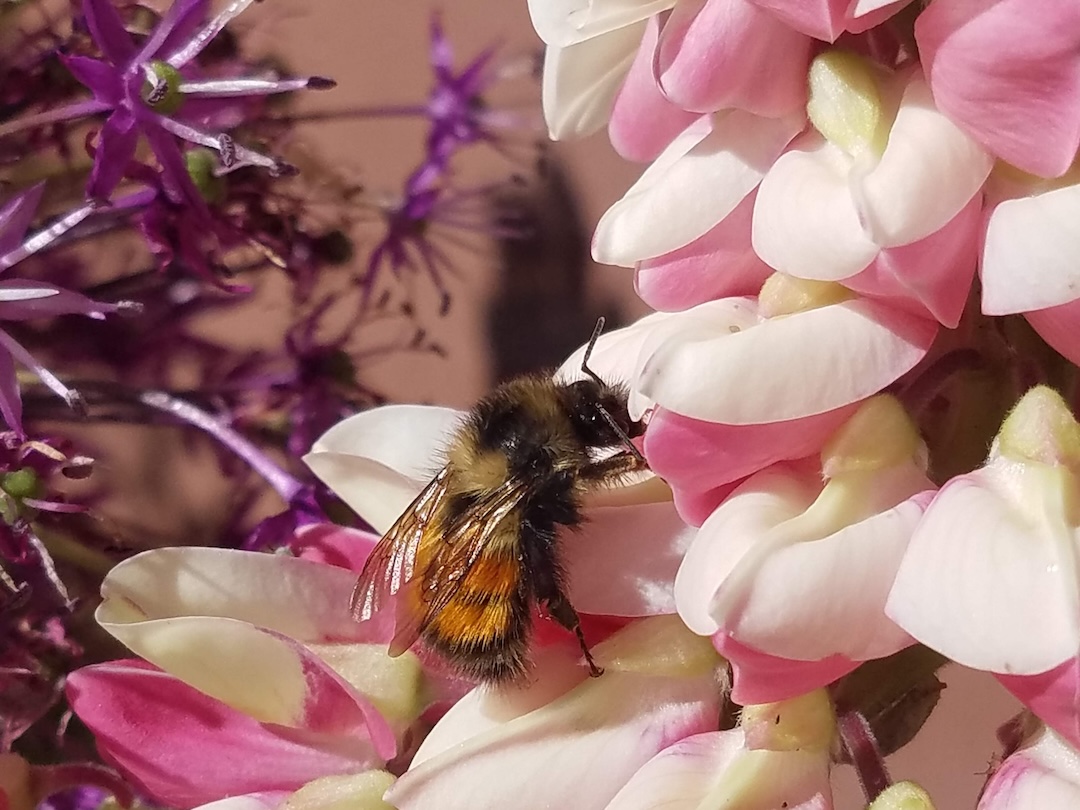
A bee helping to pollinate a lupine plant. photo by Sarah Ottino
Insect Garden
by Sarah Ottino
Autumn 2025
A garden is more than flowers and vegetables. It’s an ecosystem — a collaboration of sunlight, soil, water, plants, animals, fungi, and microbes. Every piece has its role, and insects are among the most vital.
When we think of insects in the garden, it’s often as pests: caterpillars chewing cabbage leaves, aphids clustering on roses, or tents of webworms dangling from apple trees. But insects are far more than nuisances. They’re pollinators, decomposers, and food for birds and other wildlife. Without them, a garden cannot thrive.
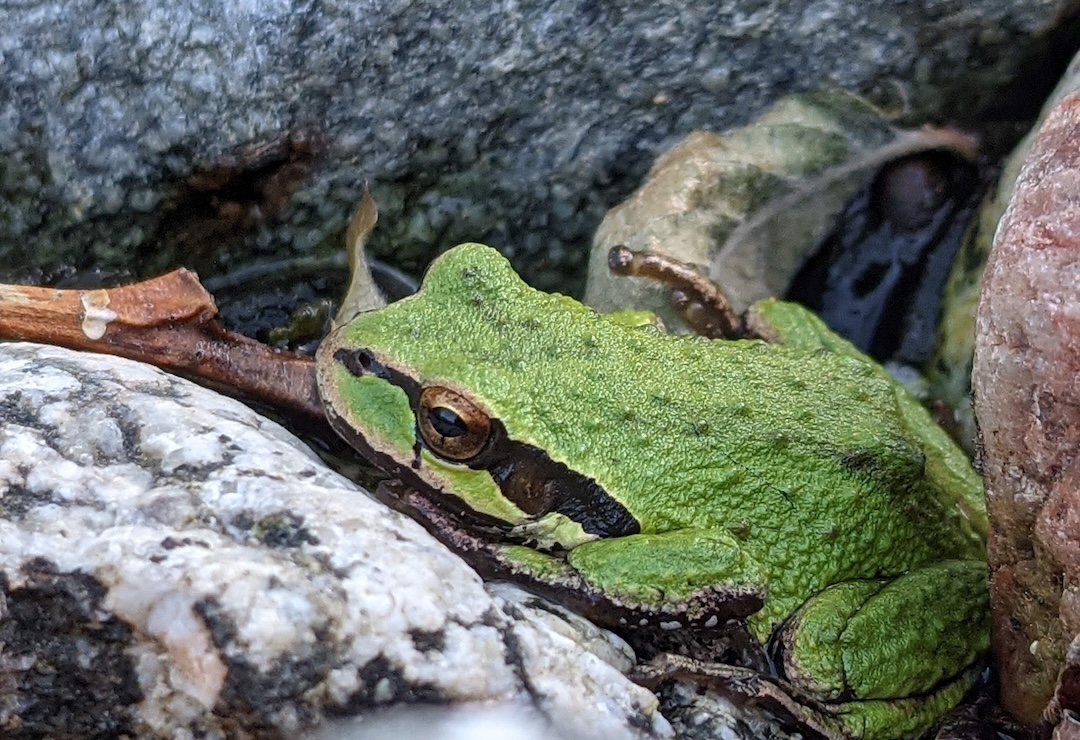
A Pacific tree frog (Pseudacris regilla) that took up residence in a garden pond.
photo by Sarah Ottino
insects and plants: a long partnership
Insects have been around for half a billion years, evolving alongside plants from the very beginning. In the Pacific Northwest alone, more than 30,000 insect species can be found. Many of these insects are generalists, visiting a wide variety of plants, while others have formed tight, specialized bonds. Together, plants and insects weave the living fabric of every garden.
the roles insects play
If you pause to watch your garden, you’ll see insects at work everywhere:
- Pollinators — Bees, flies, beetles, butterflies, and moths visit flowers for nectar or pollen, unknowingly ensuring the next generation of seeds and fruits.
- Decomposers — Beetles, ants, and flies break down dead plants and animals, recycling nutrients back into the soil.
- Prey — Hummingbirds, swallows, dragonflies, and frogs all depend on insects for food, linking your garden to the larger web of life.
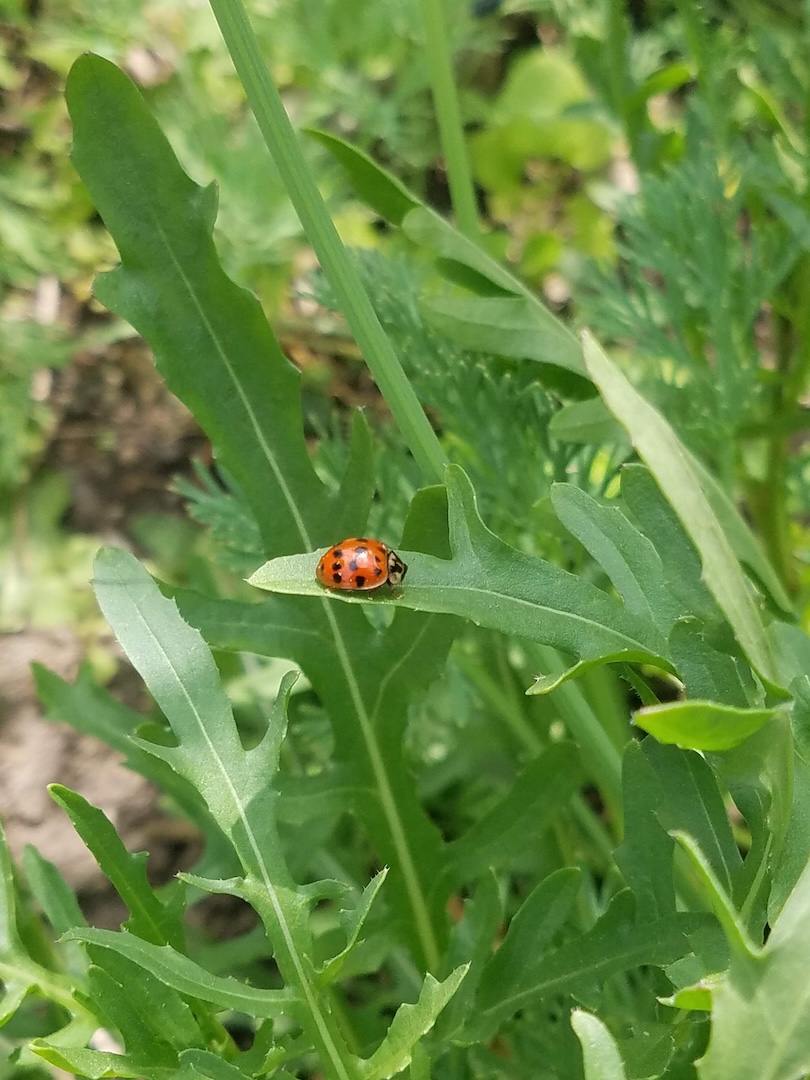
The introduced multicolored Asian lady beetle (Harmonia axyridis) is a predator of garden pests such as aphids and scales. photo by Sarah Ottino
Even mosquitoes, often despised, have their place. Mosquitoes consume nectar and act as minor pollinators. The females only feed on mammal blood to develop their eggs. More importantly, mosquitoes are food for bats, swallows, purple martins (Progne subis arboricola), dragonflies, fish, amphibians, and spiders. In the Pacific Northwest, 67 species of mosquito live quietly alongside us, and, as annoying as they can be, their disappearance would ripple through the food chain.
Herbivory — the consumption of plant material by animals — is part of the balance. A hole in a leaf is a sign that your plants are feeding someone else — often in a way that keeps the ecosystem healthy. Where insects are missing, invasive plants like purple loosestrife (Lythrum salicaria) can run unchecked. Insects help maintain equilibrium.
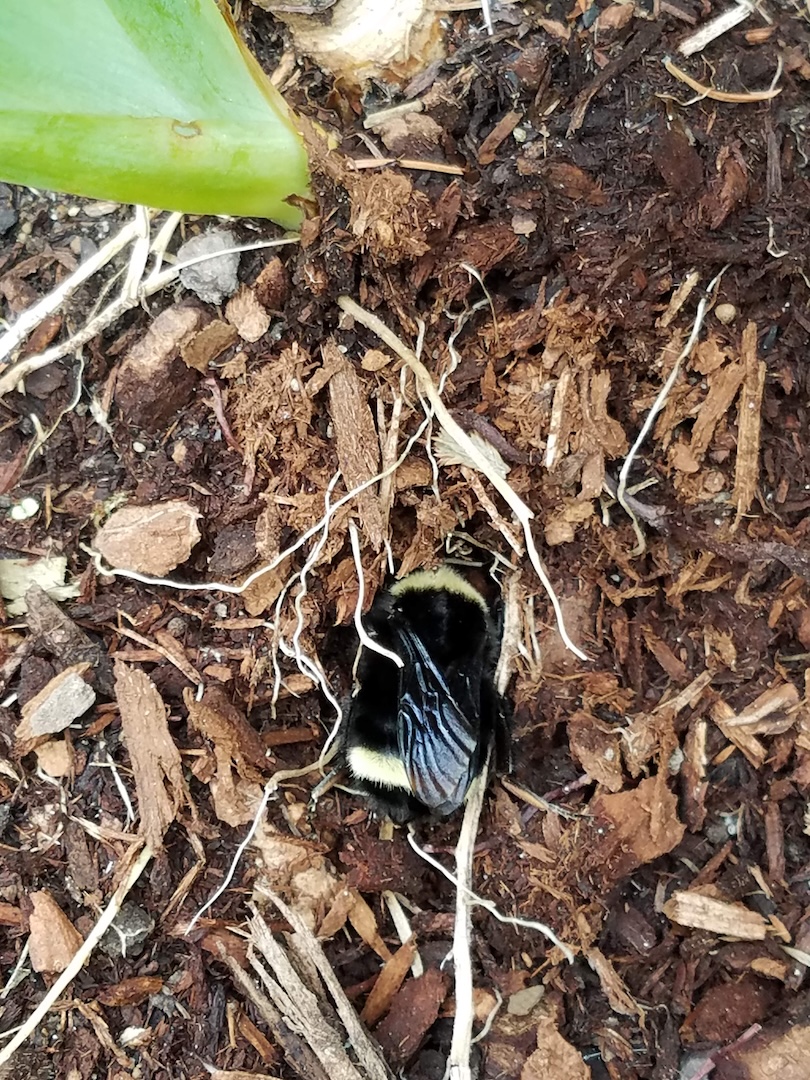
A bumblebee at the entrance to its underground nest. photo by Sarah Ottino
balance in the garden
A healthy garden is diverse. A single crop, like apples, can be wiped out by apple maggots (Rhagoletis pomonella). But a variety of plants attracts a variety of insects, which helps the whole system resist disease and pests. Think of your garden not as a battle between you and insects, but as a partnership where balance is the goal.
Permaculture — short for “permanent agriculture” — is an approach to gardening and farming that mimics natural ecosystems. It’s about growing food in ways that sustain soil, water, and wildlife while feeding people.
insect conservation starts at home
Across the world, insects face threats from habitat loss, pesticides, introduced species, and climate change. Old-growth forests and wetlands that once housed countless species are disappearing. Even in cities, green spaces often function as isolated “islands,” limiting insect populations.
Gardeners can help. A yard rich in native plants, water sources, logs, rocks, and leaf litter creates refuge for pollinators and beneficial insects. As insect diversity increases, birds, reptiles, and mammals follow — and the entire garden becomes more resilient.
Companion planting is another tool. Pairing certain plants together makes them stronger and less susceptible to pests. Nasturtiums, for example, lure aphids away from your favorite blooms. The traditional “Three Sisters” planting — corn, beans, and squash — shows how plants can support one another.
The Three Sisters
Corn, beans, and squash are known as the “Three Sisters,” a planting tradition of the Haudenosaunee (Iroquois) and other Native peoples. Corn stalks provide support for beans, beans enrich the soil with nitrogen, and squash shades the ground to retain moisture and suppress weeds.
earwigs: friends in the shadows
Earwigs often have a bad reputation. In fact, the five species found in the Pacific Northwest — all introduced — play a useful role. They prey on other insects and only nibble plants when no other food is available. In a balanced garden, earwigs are allies, not enemies.
If you notice an overwhelming number, it usually means their natural predators — such as birds, toads, or reptiles — are missing. Adding features like birdbaths, brush piles, or native shrubs can invite those predators in, naturally reducing earwig numbers.
living with insects
A garden without insects is no garden at all. By observing and encouraging insect life, we help the whole system flourish. Yes, there will be nibbled leaves and the occasional nuisance, but these are signs of a working ecosystem.
As gardeners, we’re not separate from this balance — we’re part of it. By offering diversity, shelter, and care, we strengthen not just our own gardens but the larger landscape around us.
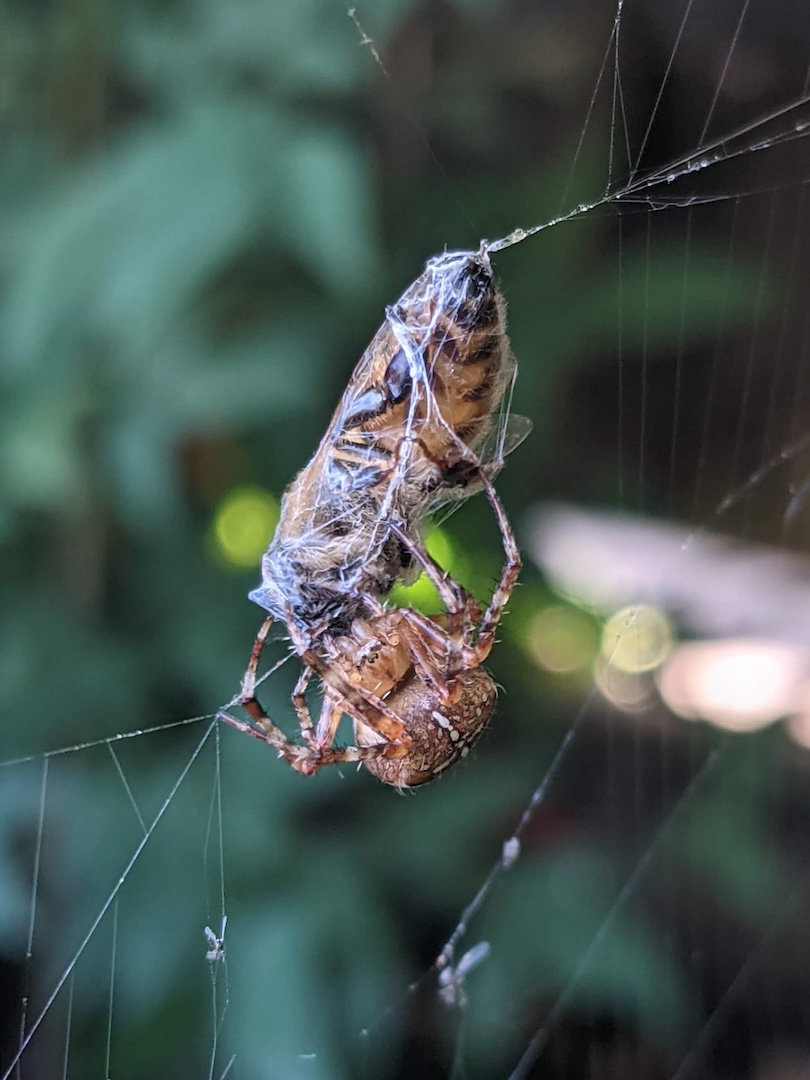
A bee becomes lunch for a European garden spider (Araneus diadematus). photo by Sarah Ottino
FIND OUT MORE
- Pacific Northwest Insects, A Regional Insect Field Guide by Merrill A. Peterson
- Practical Permaculture for Home Landscapes, Your Community, and the Whole Earth by Jessi Bloom
- The Olfactory Basis of Orchid Pollination by Mosquitoes, Lahondère, Vinauger, Okubo, and Riffell
- Salish Magazine: Springtime Bees
- WSU Extension: Gardening with Companion Plants (Home Garden Series)
- Xerces Society: Understanding Pesticides & Their Risks
- National Wildlife Federation: Native Plant Habitats
- Burke Museum: Arachnology & Entomology
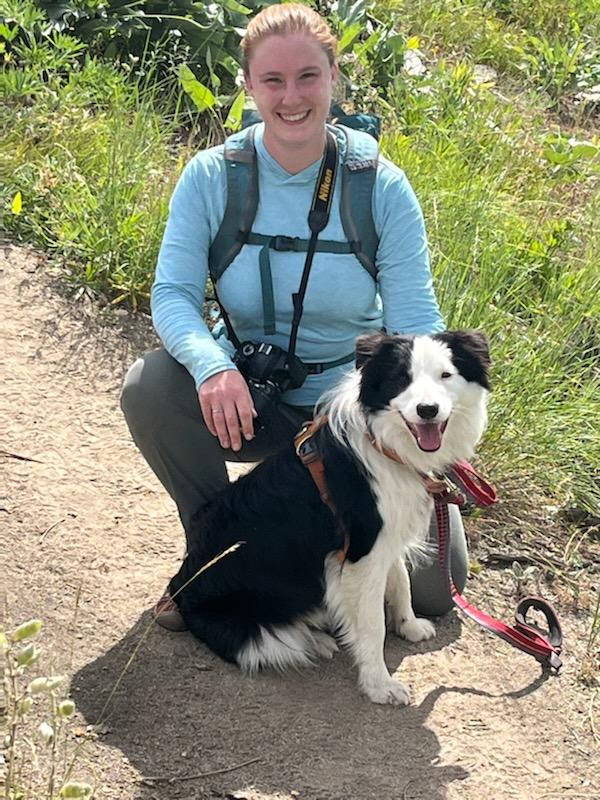
Sarah Ottino — Freelance Writer & Photographer
Sarah loves to write, create, and explore nature. She travels full-time in a 20 ft. Airstream with her husband and her border collie, Nimbus. She uses life’s adventures as inspiration for healthy living, outdoor recreation, and environmental content. She often uses her photography or design graphics to complement her writing. Her website is: www.naturewritten.com
Issue Page
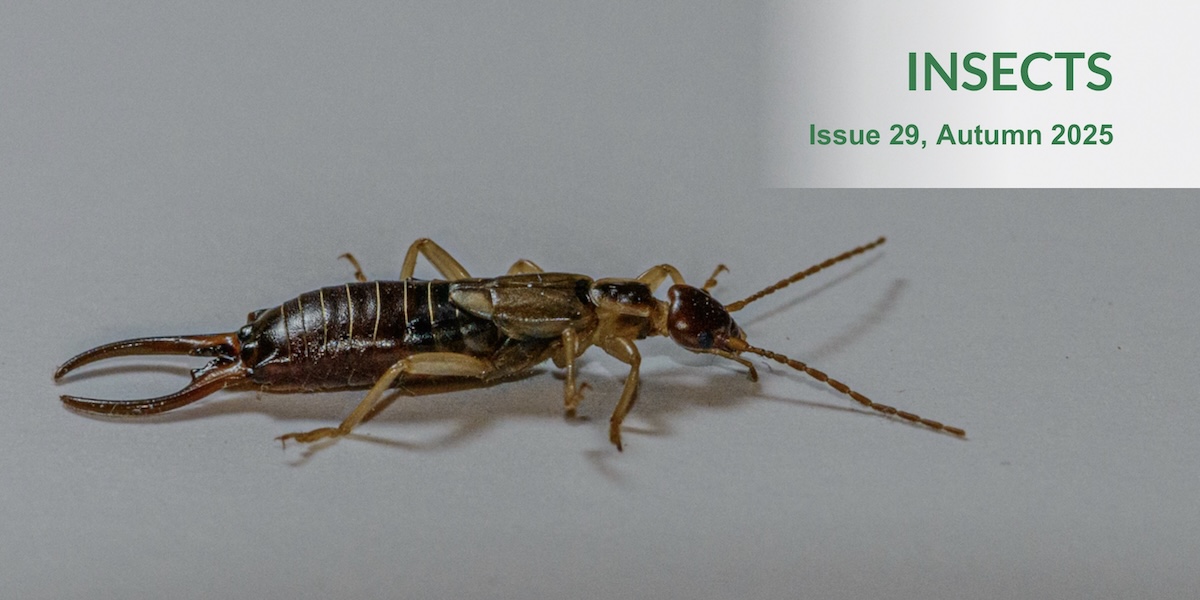
Table of Contents, Issue #29, Autumn 2025
Stream Bugs
by Mercedes Garcia Autumn 2025Dogfish Creek in Fish Park in Poulsbo, WA. photo by John F. Williams by Mercedes Garcia Autumn 2025Streams are teaming with life of all shapes and sizes. Salmon and sculpin swim along the rocks, dodging the branches and leaves. Within the...
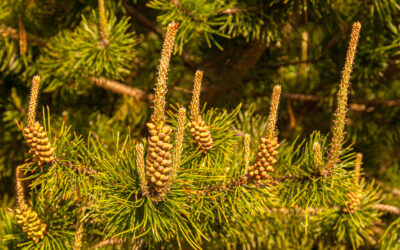
Tiny Hunger
by Lucienne Miodonski Autumn 2025Shore pine. photo by John F. Williams by Lucienne Miodonski Autumn 2025On the southwestern corner of my waterfront property — high on a bluff above the Saratoga Passage, where the land begins to lose its grip on the sea, a single...
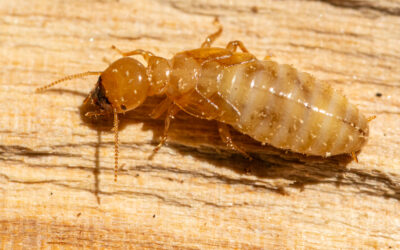
Beneath the Bark
by Celeste Hankins photos by John F. Williams Autumn 2025A cedar tree growing from a nurse log that provides nutrients as it decays. by Celeste Hankins photos by John F. Williams Autumn 2025A fallen cedar isn’t the end of the story. Not here. Along the misty trails...
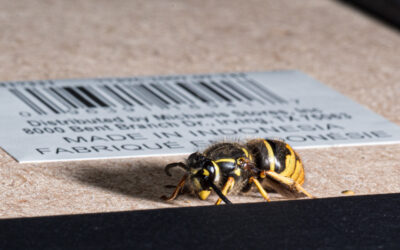
Poetry 29 B
Poetry 29 B by multiple poets Autumn 2025A wasp in the house! photo by John F. Williamsby multiple poets Autumn 2025Dinner on the Web Judy Shimek Drechsler The spider with a round back endcreates a dinner table of diaphanousstrings capable of holding a cornucopiaof...
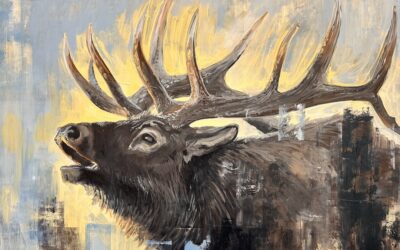
Elk and Insects
Roosevelt elk. oil painting by Justin JohnsonA BROADER LOOK AT THE COMPLEX RELATIONSHIPS BETWEEN ELK AND INSECTS IN THE PACIFIC NORTHWEST by Justin Johnson, Autumn 2025Here in North Bend, Washington, we're lucky to live alongside one of the state's resident elk herds....
A Leaf Miner’s Journey
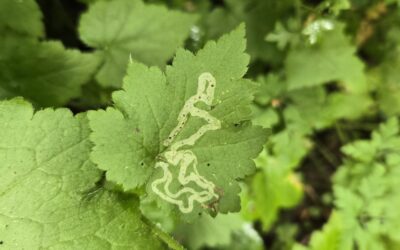
Under Cover — A Leaf Miner's Journey by Mary Johnson, Autumn 2025Leaf mine of Phytomyza tiarellae (a fly) on youth-on-age (Tolmiea menziesii). photo by Mary Johnsonby Mary Johnson Autumn 2025Within the confines of the darkened space, the organism tunnels its way...
Poetry 29 A
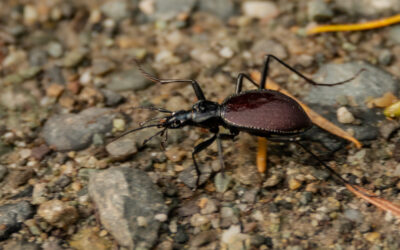
Poetry 29 A by multiple poets Autumn 2025Narrow-collared snail-eating beetle — it eats spiders too! photo by John F. Williamsby multiple poets Autumn 2025A Bug's Life by Diane Moser He scurries across the walltiny legs more nimblethan size seven Keds.Miniscule feelers...
COPYRIGHT
Copyright SEA-Media
All rights reserved. Reproduction or distribution, in whole or in part. without consent of copyright owner is strictly prohibited — except for brief quotations in critical reviews and other noncommercial uses permitted by copyright laws.
SEA-Media is a 501(c)(3) nonprofit corporation
PLEASE HELP SUPPORT
SALISH MAGAZINE
DONATE
Salish Magazine contains no advertising and is free. Your donation is one big way you can help us inspire people with stories about things that they can see outdoors in our Salish Sea region.
We also don't advertise Salish Magazine, so please spread the word of this online resource to your friends and colleagues.
Thanks so much for your interest and your support.