
BENEATH THE BARK
How Termites Help the Forest Growby Celeste Hankins
photos by John F. Williams
Autumn 2025
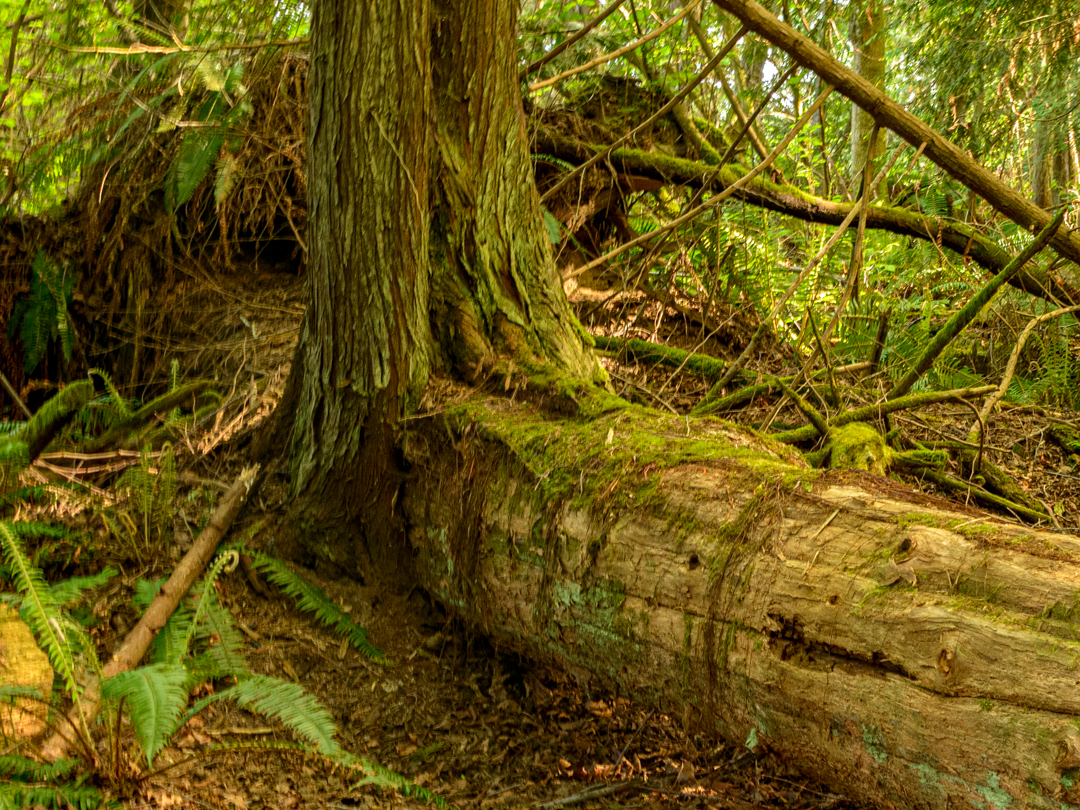
A cedar tree growing from a nurse log that provides nutrients as it decays.
BENEATH THE BARK
How Termites Help the Forest Growby Celeste Hankins
photos by John F. Williams
Autumn 2025
A fallen cedar isn’t the end of the story. Not here. Along the misty trails near the Salish Sea, the tree feeds the forest even as it fades. The bark softens, the wood turns spongy, and, as quiet and slow as a passing slug, transformation begins.
For just beneath the surface, Pacific dampwood termites (Zootermopsis angusticollis) get to work. These tiny forest engineers tunnel through the log and break it down from the inside out. I tell guests on my nature hikes that what looks like rot is actually the forest remaking itself, one mouthful at a time.
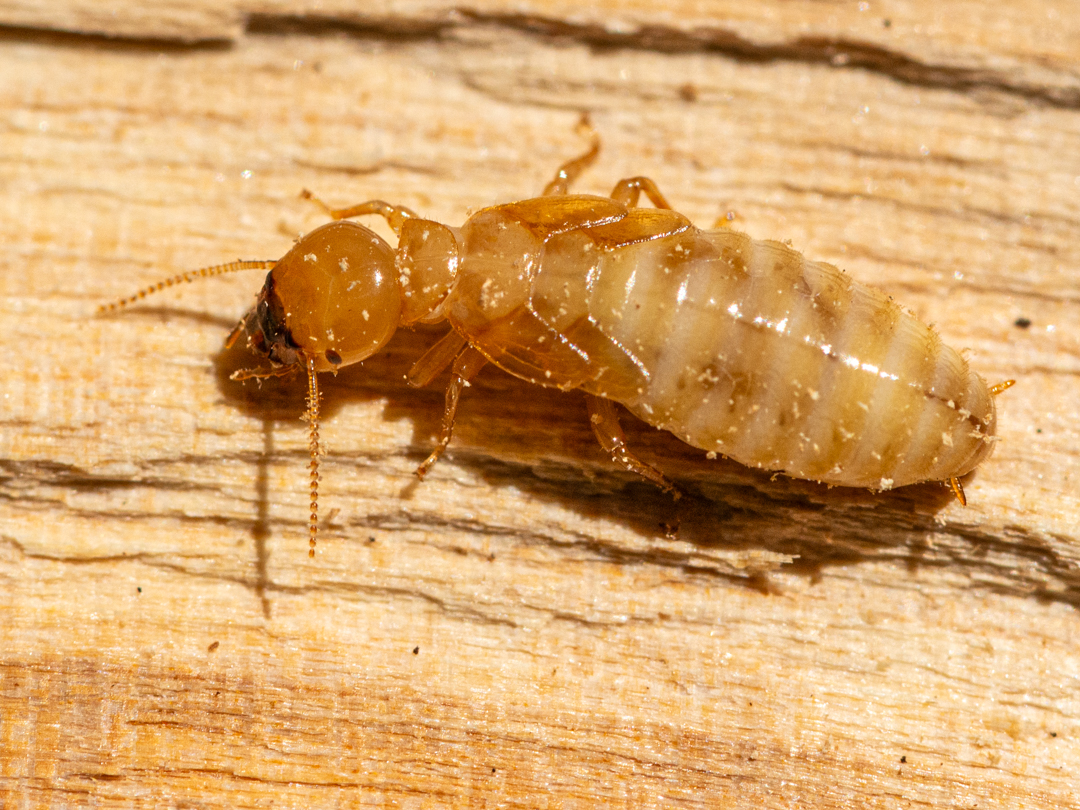
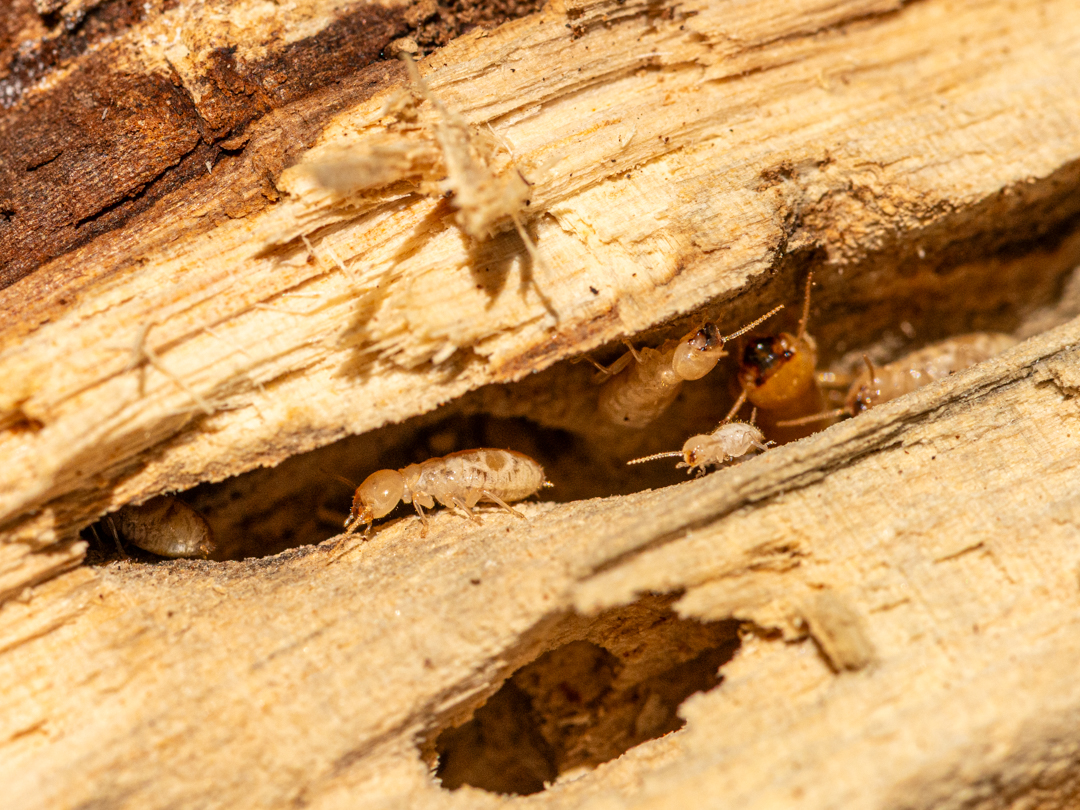
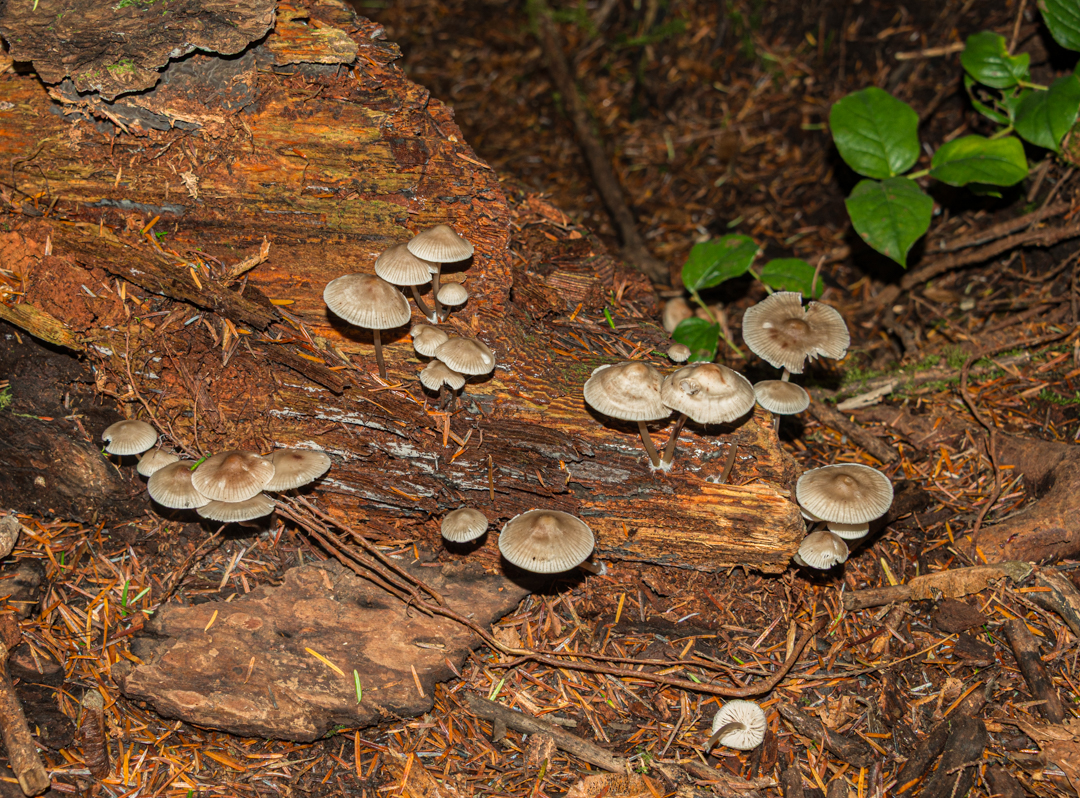
Pacific dampwood termites and fungi at home in a log.
Unlike the drywood termites that invade houses, Pacific dampwood termites are a natural and important part of coastal forest life. These native insects make their homes in damp, decaying logs, where the moist wood supports thriving colonies of thousands. Hidden from the sun and wind, the termites slowly chew through the wood. They use tiny gut microbes to break down tough plant fibers that once helped the trees stand tall.
As they eat, the termites slowly hollow out the wood. The tunnels they carve let in more moisture and fungi, speeding up the tree’s decay. These little passageways also create tiny homes for salamanders, beetles, mosses, and even young seedlings.
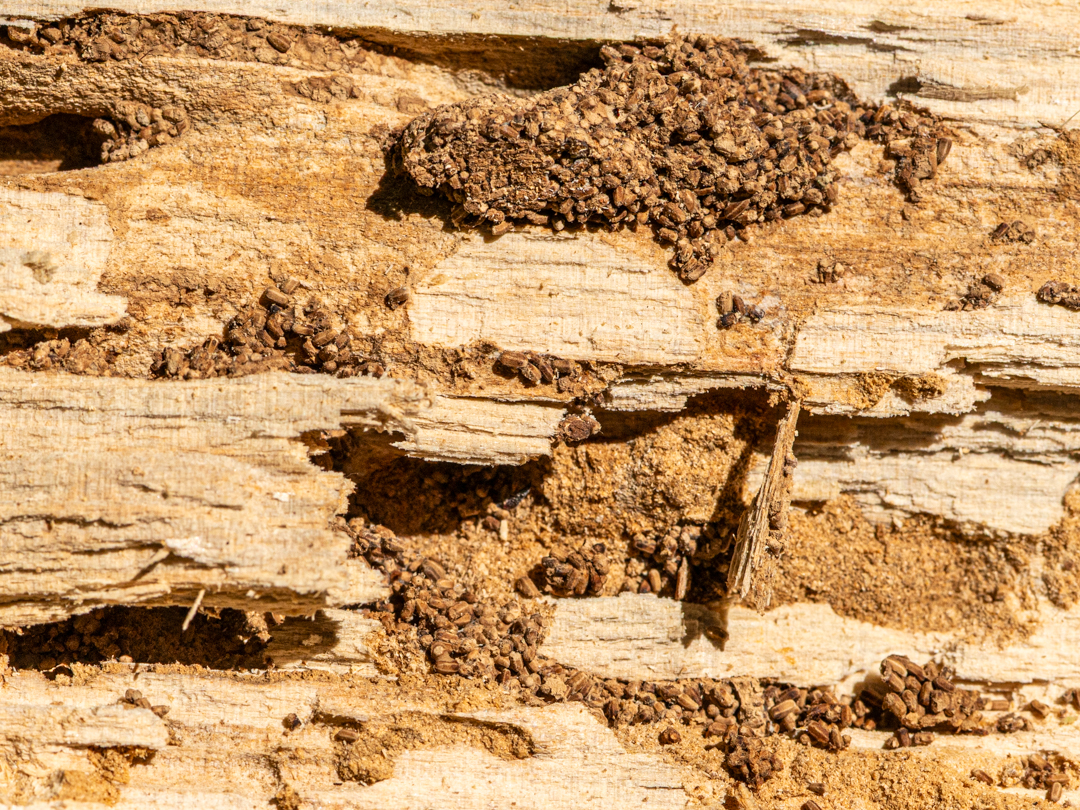
Holes, dust, and frass pellets show where termites have been active.
At the same time, the termites unlock nutrients buried deep in the wood, like carbon and nitrogen. These elements then return to the soil and help new plants grow. Ferns, huckleberries, salmonberries, and young fir trees will rise from this rich forest floor, all fed by tiny insects.
There are visible signs of the termites’ work, if you know where to look. That’s why, on my nature hikes, I like to stop beside fallen cedars and invite guests to get up close. Soft bark, crumbling wood, tiny bore holes, and delicate piles of “termite sawdust,” called frass, are all subtle clues. Together, we notice how the log is gently breaking down into the earth, evidence that the insects are still hard at work.
It won’t happen overnight. It will take many years, even decades, for all the fibers to return to the soil. But over time, the old tree will fully disappear. In its place, the forest will grow again, nourished by the steady work of tiny creatures most people never see.
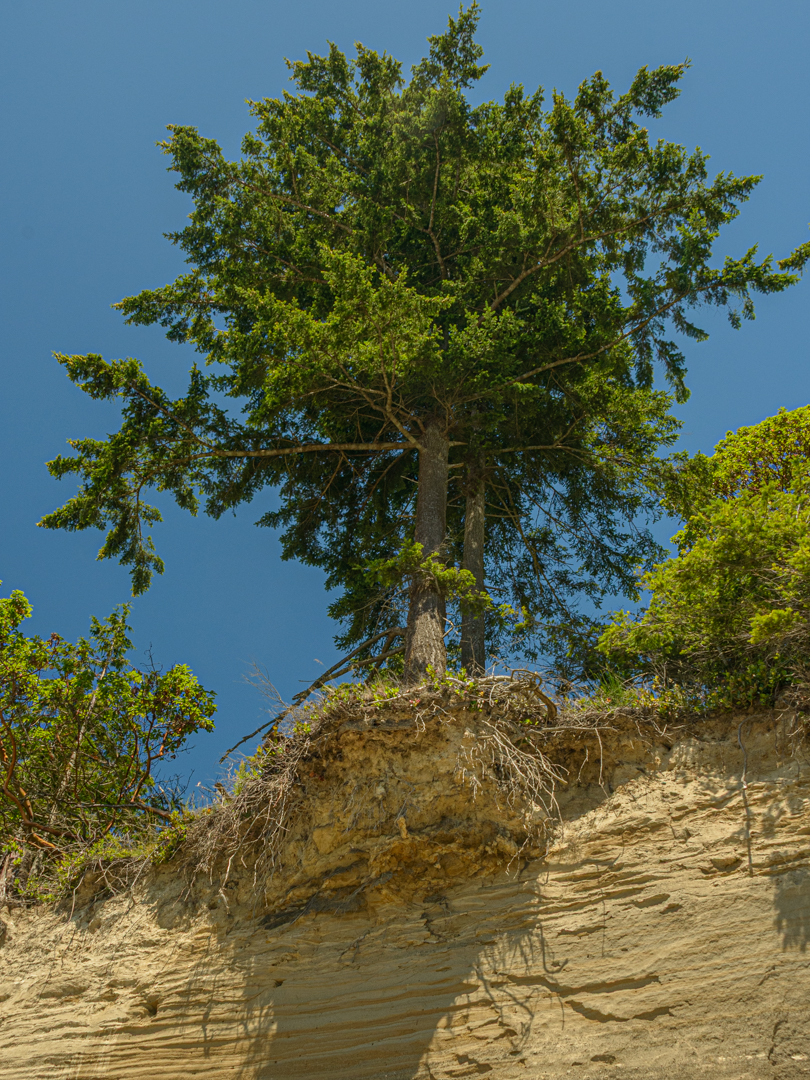
The eroded cliff gives the viewer an unusual glimpse of the soil a tree depends on for nutrients.

Celeste Hankins is a freelance writer and nature guide living in the Pacific Northwest, just a short hike from the Salish Sea. She has an MA in Science Writing from Johns Hopkins University and is a certified marine naturalist from the San Juan Whale Museum. Celeste also volunteers as a habitat interpreter at the Seattle Aquarium and as a citizen scientist monitoring sea birds and harbor porpoises. Come rain or shine, you can find Celeste narrating scenic cruises on the fjord, swimming with seals, or leading family beach walks.
Issue Page
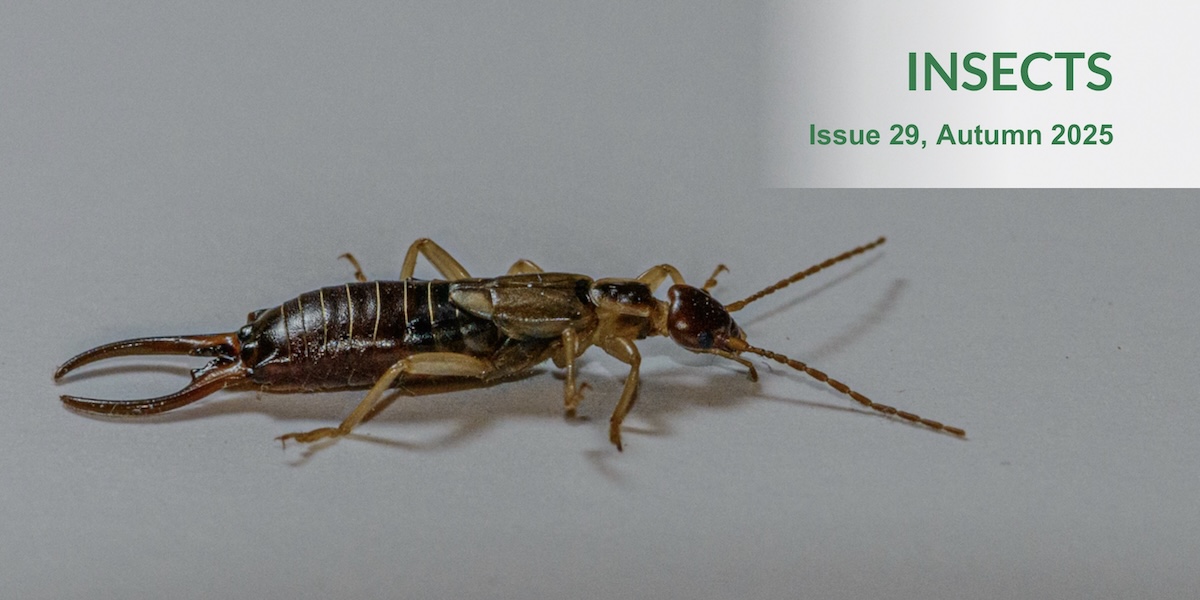
Table of Contents, Issue #29, Autumn 2025
Stream Bugs
by Mercedes Garcia Autumn 2025Dogfish Creek in Fish Park in Poulsbo, WA. photo by John F. Williams by Mercedes Garcia Autumn 2025Streams are teaming with life of all shapes and sizes. Salmon and sculpin swim along the rocks, dodging the branches and leaves. Within the...
Tiny Hunger
by Lucienne Miodonski Autumn 2025Shore pine. photo by John F. Williams by Lucienne Miodonski Autumn 2025On the southwestern corner of my waterfront property — high on a bluff above the Saratoga Passage, where the land begins to lose its grip on the sea, a single...
Poetry 29 B
Poetry 29 B by multiple poets Autumn 2025A wasp in the house! photo by John F. Williamsby multiple poets Autumn 2025Dinner on the Web Judy Shimek Drechsler The spider with a round back endcreates a dinner table of diaphanousstrings capable of holding a cornucopiaof...
Insect Garden
Insect Garden by Sarah Ottino, Autumn 2025A bee helping to pollinate a lupine plant. photo by Sarah Ottinoby Sarah Ottino Autumn 2025A garden is more than flowers and vegetables. It’s an ecosystem — a collaboration of sunlight, soil, water, plants, animals, fungi, and...
Elk and Insects
Roosevelt elk. oil painting by Justin JohnsonA BROADER LOOK AT THE COMPLEX RELATIONSHIPS BETWEEN ELK AND INSECTS IN THE PACIFIC NORTHWEST by Justin Johnson, Autumn 2025Here in North Bend, Washington, we're lucky to live alongside one of the state's resident elk herds....
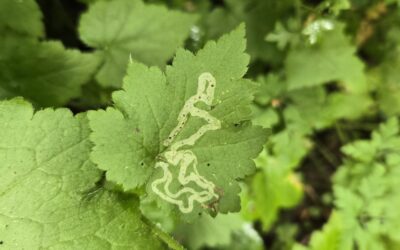
A Leaf Miner’s Journey
Under Cover — A Leaf Miner's Journey by Mary Johnson, Autumn 2025Leaf mine of Phytomyza tiarellae (a fly) on youth-on-age (Tolmiea menziesii). photo by Mary Johnsonby Mary Johnson Autumn 2025Within the confines of the darkened space, the organism tunnels its way...
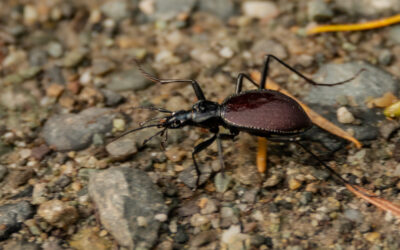
Poetry 29 A
Poetry 29 A by multiple poets Autumn 2025Narrow-collared snail-eating beetle — it eats spiders too! photo by John F. Williamsby multiple poets Autumn 2025A Bug's Life by Diane Moser He scurries across the walltiny legs more nimblethan size seven Keds.Miniscule feelers...
COPYRIGHT
Copyright SEA-Media
All rights reserved. Reproduction or distribution, in whole or in part. without consent of copyright owner is strictly prohibited — except for brief quotations in critical reviews and other noncommercial uses permitted by copyright laws.
SEA-Media is a 501(c)(3) nonprofit corporation
PLEASE HELP SUPPORT
SALISH MAGAZINE
DONATE
Salish Magazine contains no advertising and is free. Your donation is one big way you can help us inspire people with stories about things that they can see outdoors in our Salish Sea region.
We also don't advertise Salish Magazine, so please spread the word of this online resource to your friends and colleagues.
Thanks so much for your interest and your support.