
THE SLOWDOWN ON SLUGS
by Sarah Ottino
Winter 2025-26
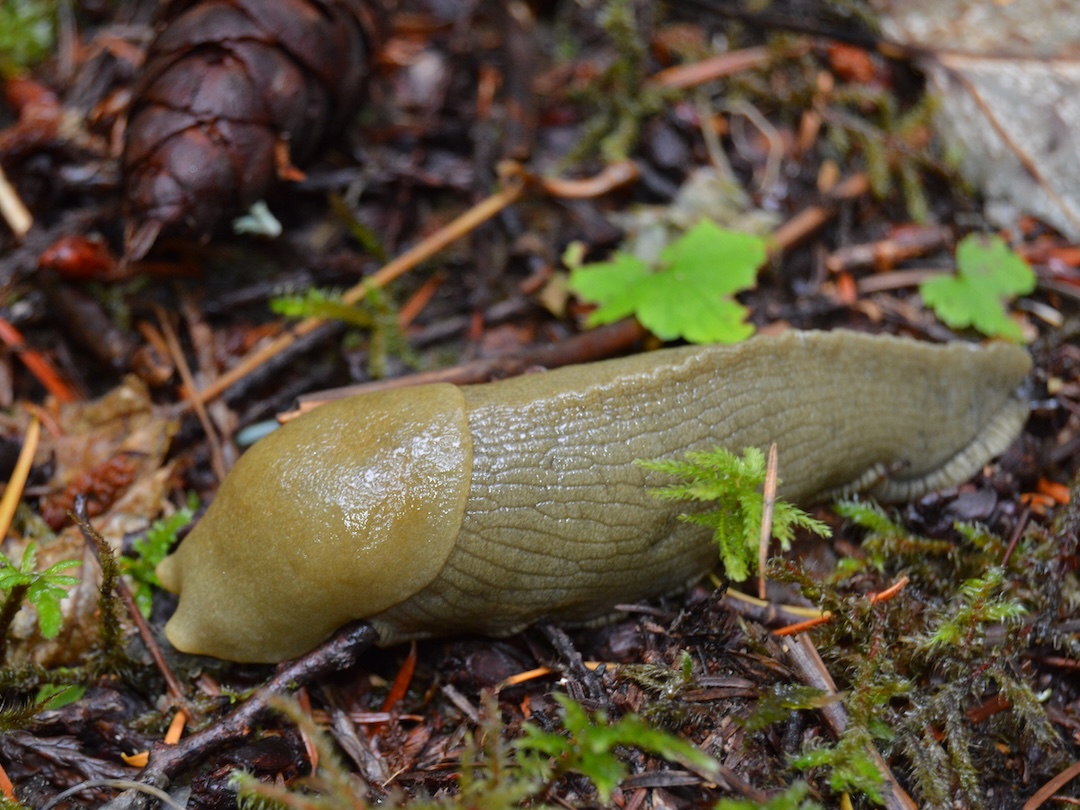
A disrupted banana slug has retracted its tentacles. photo by Sarah Ottino
The Slowdown on Slugs
by Sarah Ottino
Winter 2025-26
As the drizzle and mud return, slugs emerge into the open. Moist and damp for much of the year, the Pacific Northwest is a slug paradise. While noses may crinkle at the thought of a slug, these slimy and slow creatures have an important role in the ecosystem.
what is a slug?
Slugs are animals in the phylum Mollusca, the second largest phylum in the animal kingdom. They are most closely related to snails. If snails are the RV campers of the mollusk world, then slugs are the tent campers. Slugs evolved from snails, and many species have internal vestigial shells under their mantle. There are also semi-slugs who have external shells that are small. Slugs and snails are terrestrial mollusks in the class Gastropoda.
The word gastropod is derived from the Greek word gastrós meaning “stomach” and podós meaning “foot”. Gastropods are animals with a stomach-foot, referring to the muscular foot used for locomotion. The foot makes up most of a gastropod’s body.
A slug has two sets of tentacles. The larger, upper pair are primitive eyes that sense light/dark and movement. They also are used for smell. The smaller, lower pair are used for taste and touch. A slug can retract its tentacles under its protective mantle. Tentacles can be regrown if damaged.
Christina Woolf and Ron Hirschi discussing slugs. video by John F. Williams, Steve Stolee
The mouth of a slug is made up of a jaw and radula. A radula is a tongue-like structure covered in thousands of microscopic teeth. When feeding, the jaw cuts off pieces of food and the radula scrapes across it, breaking it into smaller pieces.
Located on the side of the mantle is a pneumostome, also called a breathing pore, which is used for respiration. Oxygen enters through the pneumostome into a single, primitive lung. A slug’s anus and reproductive organs are also hidden beneath the mantle.
While not an organ, a slug’s slime is vital to its survival. Slug slime is made up of 90-99% water; the remaining composition includes proteins, sugars, and salts. The slime is an important part of a slug’s locomotion. A slug travels by producing muscular waves in its foot. At the front of the foot is a gland that produces the slime. The slime allows the slug to glide over surfaces as well as providing adhesion, allowing the slug to move up vertical surfaces.
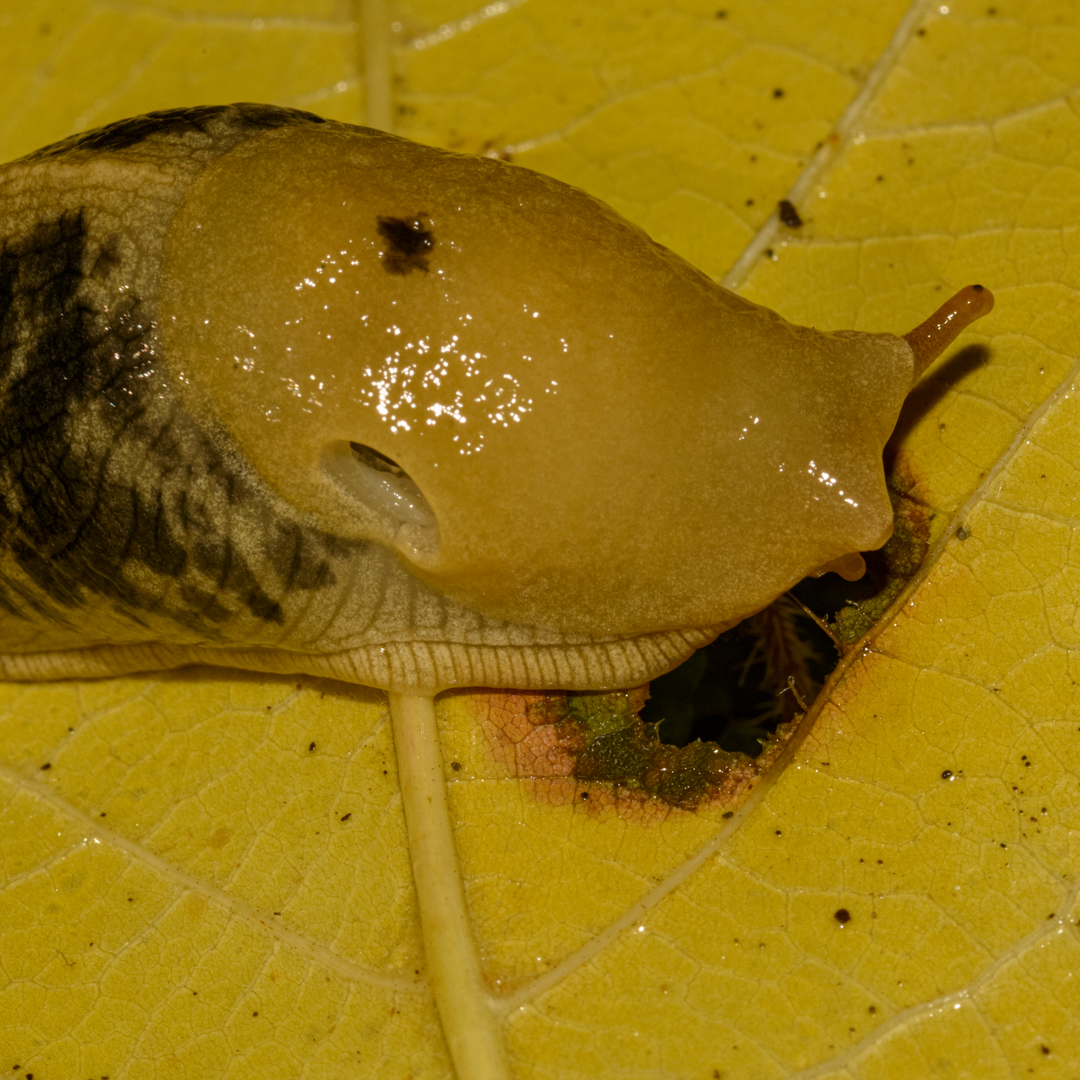
Banana slug eating a leaf. This close-up shows its open breathing pore (pneumostome). photo by John F. Williams
A slug’s slime is also used for protection. The high water content helps keep a slug from desiccation during dry periods and is a deterrent for predators. The slime of a banana slug contains chemical compounds that cause a numbing effect, which keeps potential predators at bay. The slime of some slugs can change in consistency and color depending on their mood, e.g. if they are feeling threatened or agitated.
 Slug slime is a non-Newtonian fluid which can act like both a liquid and a solid depending on the force applied. Learn more:
Slime: Is It a Solid, Liquid–or Both?
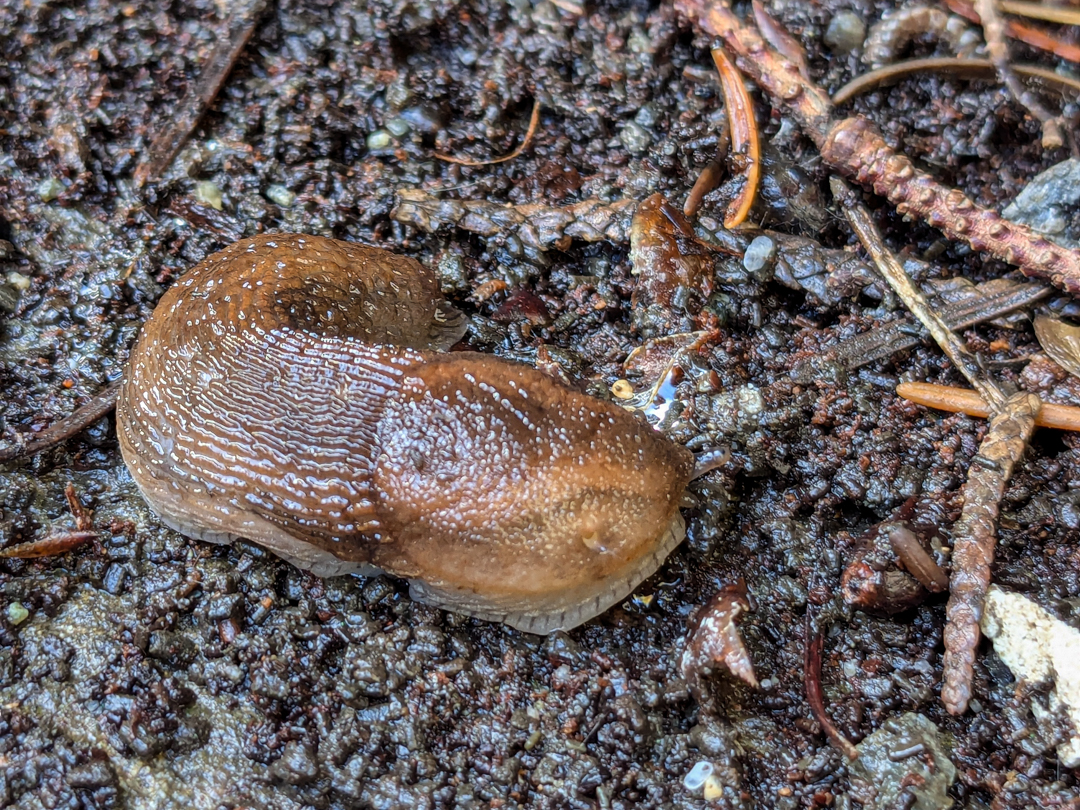
An arion slug with its tentacles barely visible. photo by Sarah Ottino
slug identification
The identification of slugs can be a sticky process. Some slugs, such as the iconic Pacific banana slugs, are easily identifiable. But others require DNA analysis to determine the exact species. To make it more complicated, the coloration of the same species can vary.
Some slugs that can be found around the Salish Sea include:
| Darkface Arion (Arion distinctus) | Common in suburban areas | |
| Dromedary Jumping Slug (Hemphillia dromedarius) | Common in conifer forests | Native |
| Greenhouse Slug (Milax gagates) | Common in gardens, greenhouses, and hotbeds/cold frames | |
| Grey Field Slug (Deroceras reticulatum) | Common in gardens, lawns, and piles of wood or stone | |
| Hedgehog Arion (Arion intermedius) | Common in yards, gardens, grassy areas, and forest edges | |
| Leopard Slug (Limax maximus) | Common in urban and suburban areas, often found on building walls | |
| Longneck Field Slug (Deroceras panormitanum) |
Common in urban and suburban areas | |
| Meadow Field Slug (Deroceras laeve) | Common in and around wetlands | Native |
| Pacific Banana Slug (Ariolimax columbianus) | Common in forests, often found on forest floor or under woody debris | Native |
| Papillose Taildropper(Prophysaon dubium) | Common in conifer forests, usually found on logs and in leaf litter | Native |
| Red/Chocolate Arion(Arion rufus) | Common in urban and suburban areas | |
| Reticulate Taildropper (Prophysaon andersoni) | Common in moist conifer forests | Native |
| Scarletback Taildropper (Prophysaon vanattae) | Common in forests, often found on forest floor, logs, and shrub branches | Native |
There are several different species of banana slug living along the Pacific Coast.
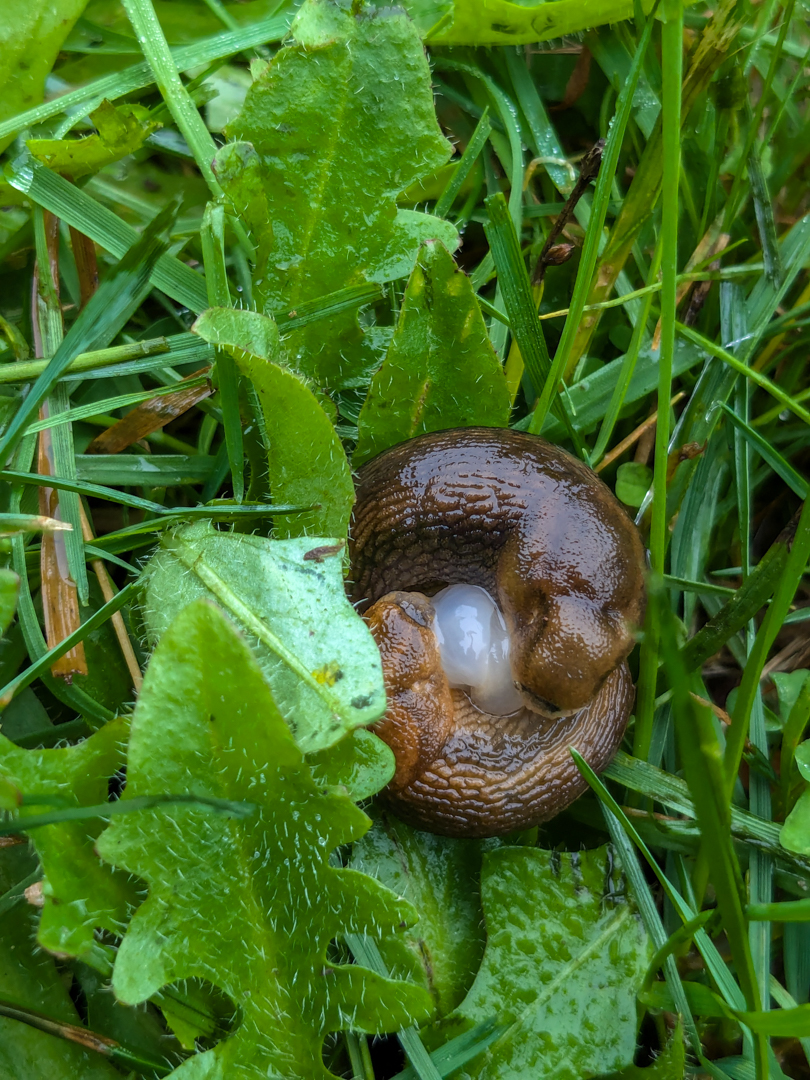
Two slugs in the throes of passion. photo by Sarah Ottino
life of a slug
The lifespan of a slug depends on the species. Some species only live a year while others can live up to several years. The banana slug is one of the longest-living slugs and can reach seven years in age. Sexual maturity is reached early in a slug’s life, and a slug can start laying eggs around three months of age.
When mating, two slugs locate each other using intoxicating chemical signals mixed into their slime trails. They intertwine and investigate each other before mating. Slugs are hermaphrodites, meaning they have both female and male reproductive organs. When parting ways, both slugs carry fertilized eggs which they deposit in a sheltered and moist location such as leaf litter. A banana slug can lay 20-50 eggs per clutch. That number varies depending on the slug species. A slug can lay hundreds of eggs during its life. Slugs can mate and lay eggs at any time of year, but reproduction is more frequent during cool wet weather.
Slug eggs take roughly one to four weeks to hatch, depending on the species and weather. Neonates, newly hatched slugs, are independent and require no parental care. They are small versions of their adult selves and do not undergo metamorphosis.
While slugs are often solitary, when they do meet up, they are collectively called a cornucopia.
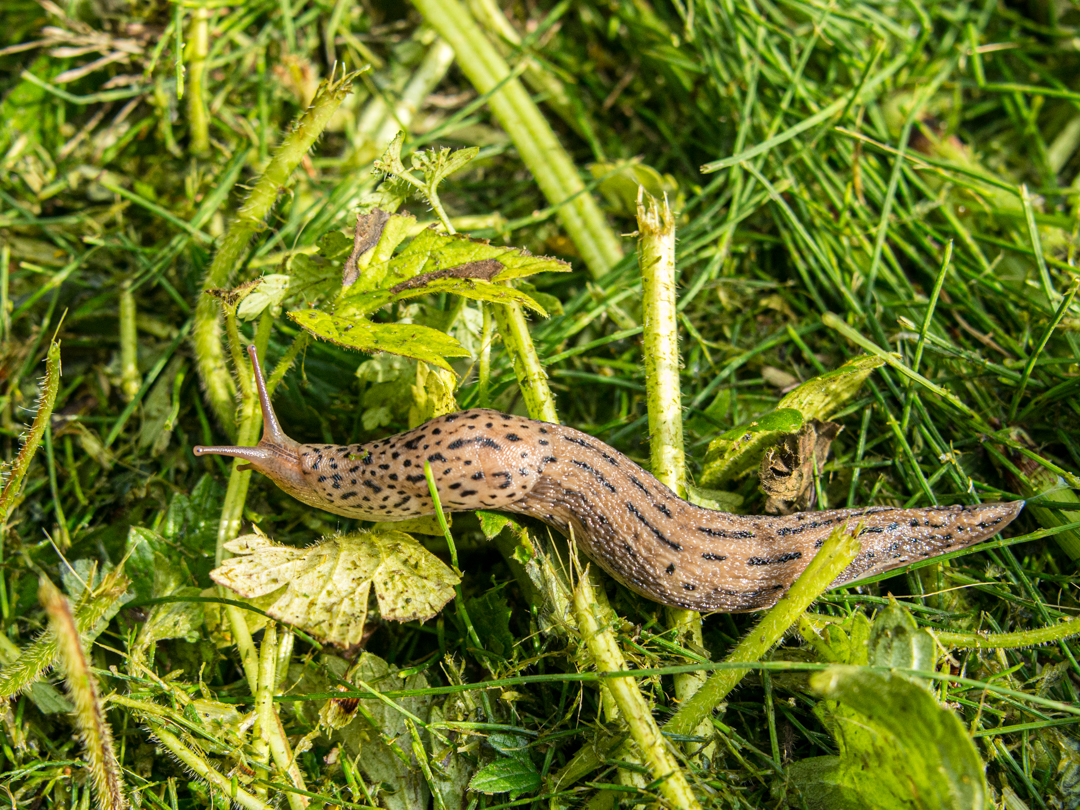
Leopard slug. The black dot at the end of each upper tentacle is an eye. photo by John F. Willliams
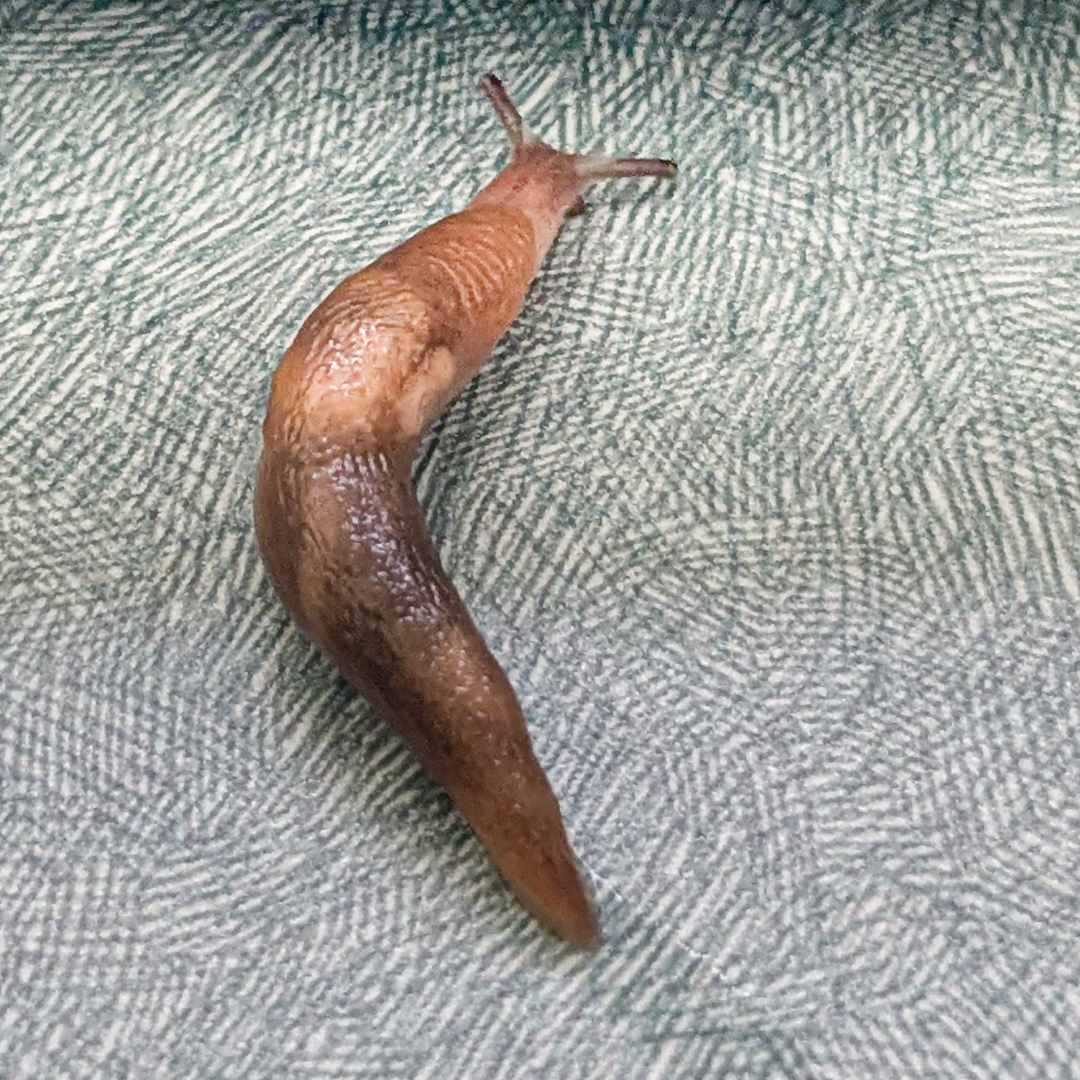
A field slug hitched a ride onto a kitchen counter via some garden produce. photo by Sarah Ottino
slugs in the ecosystem
Slugs are an important part of their ecosystem. They assist with nutrient cycling, are a food source for other species, and disperse fungal spores. Native species have had time to evolve with their ecosystem and have a niche.
The PNW’s native slugs are typically found in forests, though there are slugs endemic to the grasslands on the eastern side of Washington. These slugs navigate through the leaf litter, munching away on leaf mold, fungus, dead animals, and even animal poop. Some slugs, such as the meadow field slug, delight in eating skunk cabbage (Lysichiton americanus) while others scrape their way across the underside of bark on decaying logs. The Pacific banana slug has a special affinity for mushrooms.
See lots more about skunk cabbage, aka swamp lanterns in our 2025 article: Spring Aliens in the Woods.
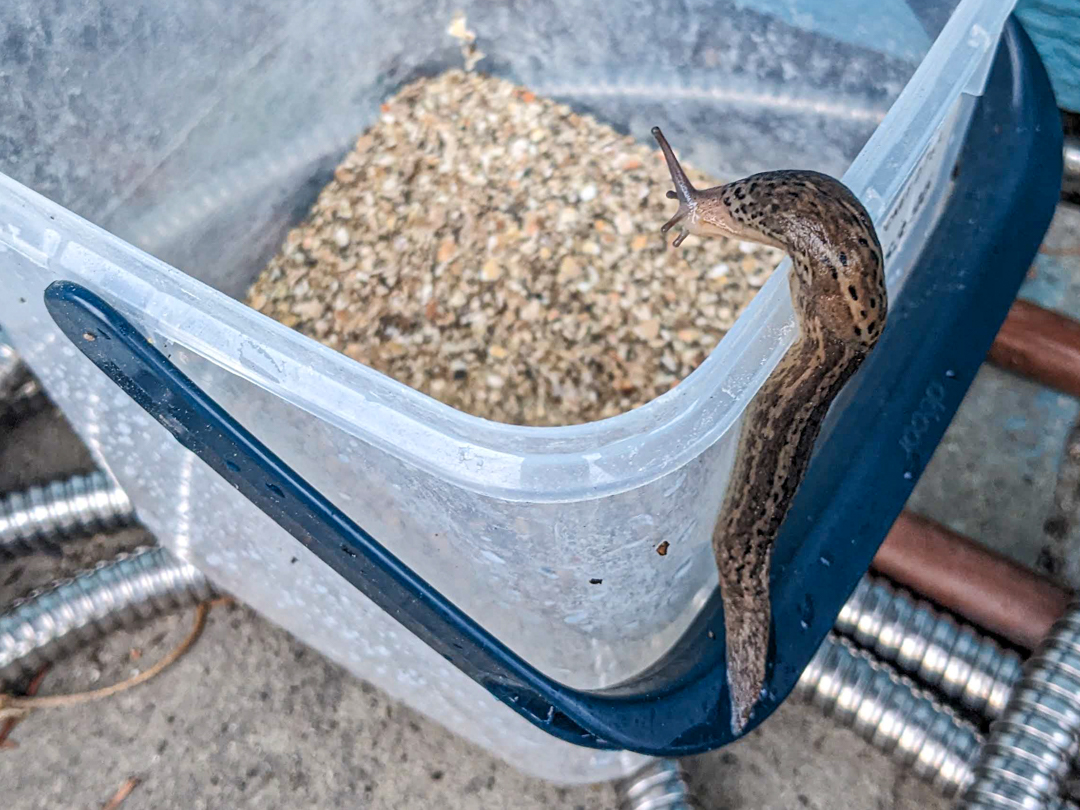
An invasive leopard slug explores a tub of organic fertilizer. photo by Sarah Ottino
The appetite of slugs is diverse and varies among species. They can be herbivores, carnivores, omnivores, or scavengers. Some slugs, such as the leopard slug, are cannibalistic and eat other slugs. Introduced species, primarily from Europe, tend to prefer the delicacies found in the garden and have created a bad reputation for native slugs. Introduced slugs are often the culprits behind nibbled lettuce leaves, and are the ones found dangling on a daffodil. They may turn to decaying organic matter if tastier options are not available, but the true decomposing superstars are native slugs.
During the cold of winter, slugs hibernate. During heat of summer, slugs aestivate, summer’s version of hibernation.
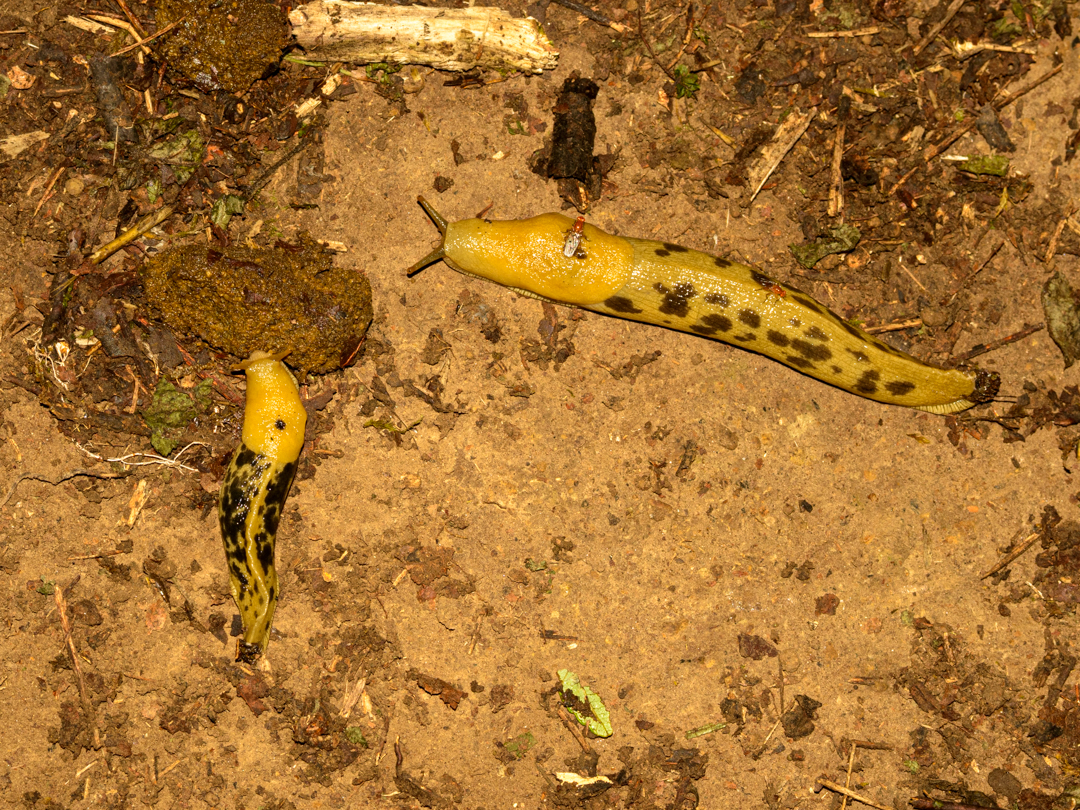
Pacific banana slugs finding a pile of food on the forest floor. photo by John F. Willliams
Slugs native to the PNW have preferences for the tree composition of a forest. The slugs found in a conifer forest can differ from those in a hardwood forest and even in a forest with a blend of both conifer and hardwood trees. While some slug species used to be found abundantly around the Salish Sea region, logging of forests and development of wetlands means some species can only be found in small pockets around the state.
The spotted taildropper (Prophysaon vanattae pardalis) is a subspecies of slug only found in Pacific County, Washington. It has been identified as a Species of Greatest Conservation Need under Washington’s State Wildlife Action Plan. However, it has not yet been listed as endangered by the state or federally. The blue-gray taildropper (Prophysaon coeruleum) has a range throughout Western Washington as well as populations in British Columbia and Idaho. While its range is large, it is rare in Washington, and its population is declining. The species is threatened by logging and loss of coarse, woody debris. It is a Washington Department of Fish & Wildlife conservation list candidate.
The Salish Sea region is also home to several jumping slug species (Hemphillia spp.) that are vulnerable to habitat loss. Slugs move slowly, so when the forest they inhabit is logged, it is a challenge for them to reach a new home, and they are vulnerable while on the move.
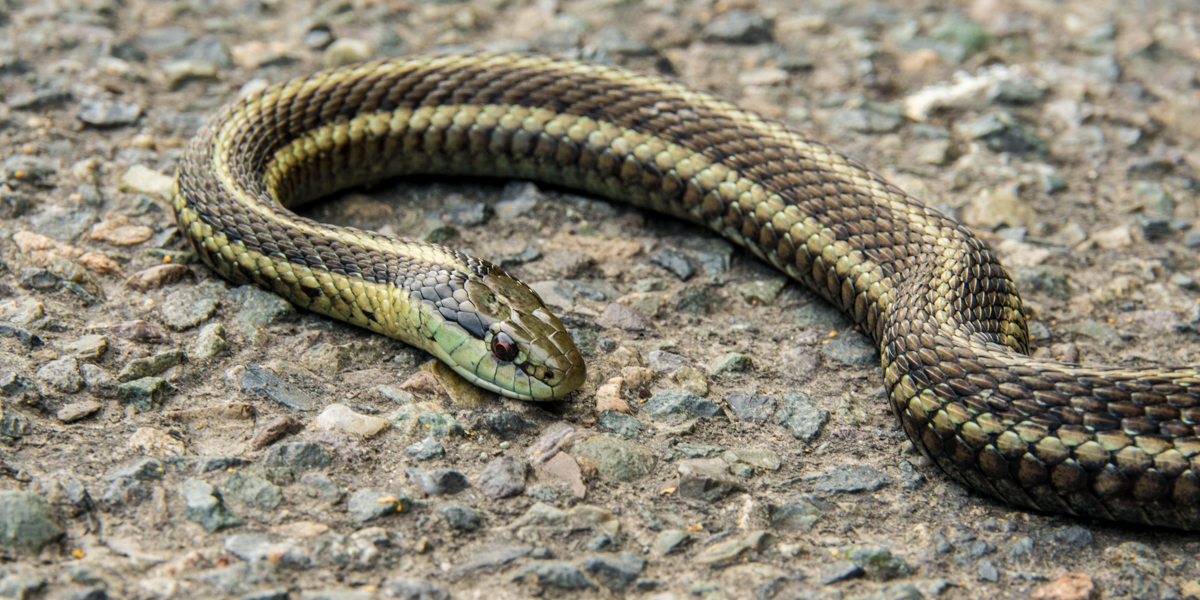
Garter snake. photo by John F. Williams
Slugs do have some native predators which help keep the ecosystem in balance. A few slug-eating animals include garter snakes (Thamnophis species), rough-skinned newts (Taricha granulosa), Pacific giant salamanders (Dicamptodeon tenebrosus), ducks, geese, and even some insect larvae.
See more about newts in our autumn 2020 issue: NEWTS: WETLAND MAGICIANS
Although invasive slugs can cause exasperation for gardeners, native slugs are seldom a nuisance. For many people, spotting a banana slug on a hike is a delight. The native slugs around the Salish Sea live in forests and wetlands. They may venture into a nearby yard or garden and, if they do, they will help recycle nutrients as they go.
FIND OUT MORE
Videos
Banana Slugs Unpeeled: Science on the SPOT – YouTube
The Pacific Banana Slug – YouTube — Note: Not all Pacific banana slugs have black spots.
Web Pages
Hold That Salt! Native vs. Invasive Slugs and Snails – Rebecca Lexa
Slugs of the PNW – Burke Museum
What’s So Good About Being a Slug? – Carnegie Museum of Natural History
Jumping Slugs – John Ryan, KUOW
Book
Land Snails and Slugs of the Pacific Northwest by Thomas E. Burke, OSU Press

Sarah Ottino — Freelance Writer & Photographer
Sarah loves to write, create, and explore nature. She travels full-time in a 20 ft. Airstream with her husband and her border collie, Nimbus. She uses life’s adventures as inspiration for healthy living, outdoor recreation, and environmental content. She often uses her photography or design graphics to complement her writing. Her website is: www.naturewritten.com
Issue Page
Table of Contents, Issue #30, Winter 2025-26
Salmon: Upstream Recyclers
SALMON: UPSTREAM RECYCLERS by Paul Dorn Winter 2025-26Salmon alevins. photo by John Gussman by Paul Dorn Winter 2025-26The salmon life cycle begins with a tiny fertilized egg buried in clean freshwater stream gravel. Years later that egg has grown into an adult who...
Undertakers of the Forest
UNDERTAKERS OF THE FOREST Boreal Burying Beetles by Thomas Noland Winter 2025-26Boreal burying beetle (Nicrophorus defodiens). photo by Thomas Noland by Thomas Noland Winter 2025-26something rotten, something good I crawled out of the leaf litter this morning, and my...
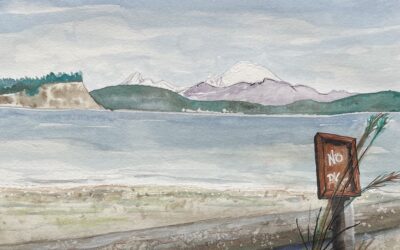
Nature’s Recyclers — Big picture
by Dr. Adelia Ritchie Winter 2025-26View of myriad habitats in which nature recycles, from Norwegian Point, Washington. watercolor by Adelia Ritchie by Dr. Adelia Ritchie Winter 2025-26The Salish Sea, that vast inland waterway stretching between Washington and British...
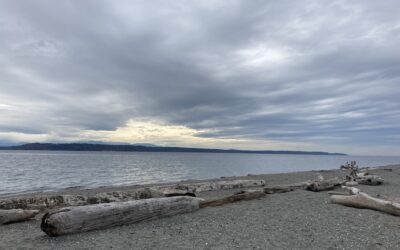
Driftwood and Sand
by Gunnison Langley Winter 2025-26Driftwood logs on a beach. photo by Gunnison Langley by Gunnison Langley Winter 2025-26A stroll on the beach offers plentiful examples of how nature recycles. A late fall morning outing last year on the beach at Seattle’s Carkeek Park...
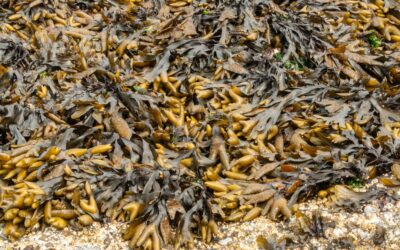
What the Tide Leaves Behind
by Celeste Hankins Winter 2025-26Rockweed at home on rocks on the beach. photo by John F. Williams by Celeste Hankins Winter 2025-26Kayaking through San Juan Islands. photo by Celeste HankinsI first noticed Pacific Rockweed shortly after moving from Lake Chelan in...
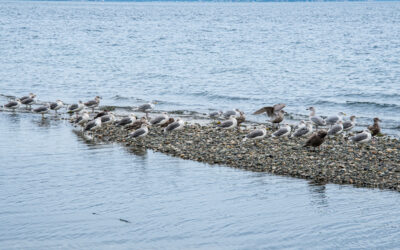
Poetry 30
by multiple poets Winter 2025-26Seagulls at the edge of the tide. photo by John F. Williams by multiple poets Winter 2025-26Recycle, a Watercolor by Carl Jensen A she gull lies flattenedthe gray of her barely distinct from sand or sky.Nearby the flock shifts with the...
COPYRIGHT
Copyright SEA-Media
All rights reserved. Reproduction or distribution, in whole or in part. without consent of copyright owner is strictly prohibited — except for brief quotations in critical reviews and other noncommercial uses permitted by copyright laws.
SEA-Media is a 501(c)(3) nonprofit corporation
PLEASE HELP SUPPORT
SALISH MAGAZINE
DONATE
Salish Magazine contains no advertising and is free. Your donation is one big way you can help us inspire people with stories about things that they can see outdoors in our Salish Sea region.
We also don't advertise Salish Magazine, so please spread the word of this online resource to your friends and colleagues.
Thanks so much for your interest and your support.