
NATURE'S RECYCLERS
A BIG PICTUREby Dr. Adelia Ritchie
Winter 2025-26
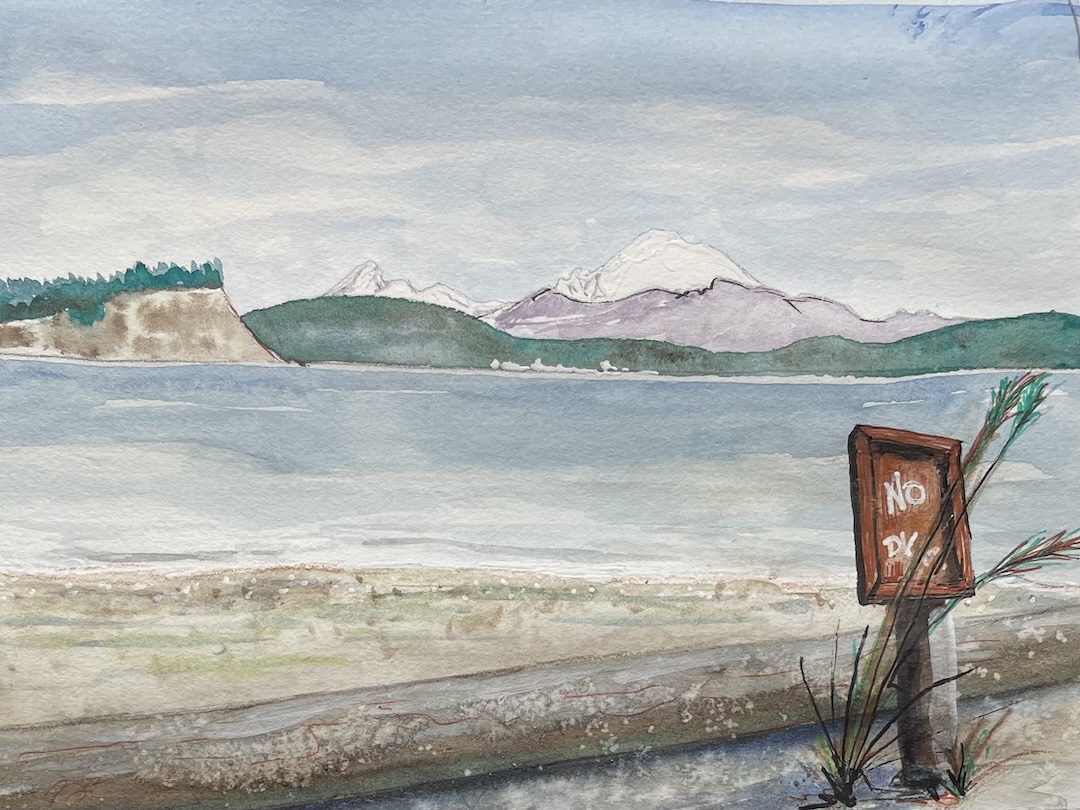
View of myriad habitats in which nature recycles, from Norwegian Point, Washington. watercolor by Adelia Ritchie
NATURE'S RECYCLERS
A BIG PICTUREby Dr. Adelia Ritchie
Winter 2025-26
The Salish Sea, that vast inland waterway stretching between Washington and British Columbia, is one of the most ecologically diverse places on Earth. From its misty forests to its rocky tidal shores, it hums with life, both seen and unseen. Beneath all this beauty, though, lies a quiet but essential workforce: nature’s recyclers. These are the organisms and natural processes that break down the old to make room for the new, keeping the entire ecosystem alive and balanced.
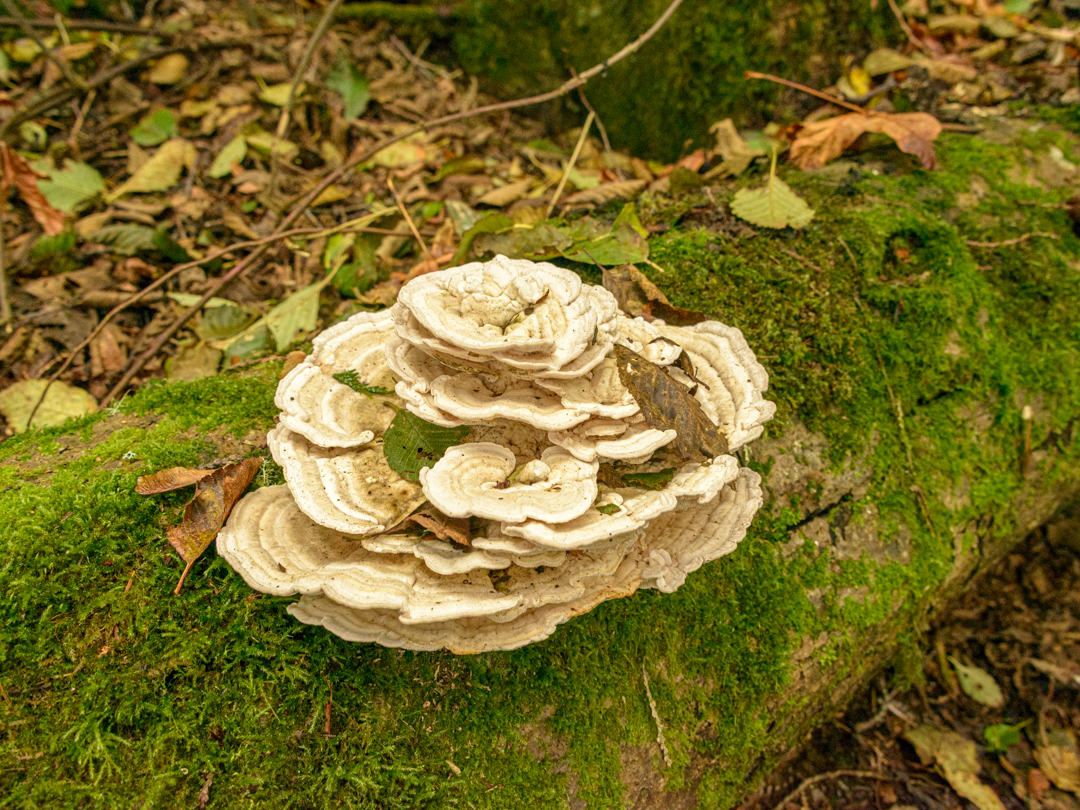
Mushroom on a fallen log. photo by John F. Williams
the unsung heroes: bacteria and fungi
If you’ve ever walked a forest trail and noticed a bright orange fungus growing on a fallen log or a mushroom sprouting from a decaying stump, you’ve met some of the hardest-working recyclers in the region. Fungi and bacteria might not capture our attention like eagles or orcas do, but they’re a major engine behind the Salish Sea’s productivity.
Fungi send out mycelia — those fine, web-like threads that weave through soil and wood — breaking down dead matter and sharing nutrients with living plants. It’s a partnership as old as life itself. Through these hidden networks, fungi help trees absorb phosphorus and other minerals, turning waste into food and decay into renewal.
Bacteria, too, play their part. Those colorful, slippery mats that sometimes coat wet rocks or tidal pools are signs of microbial life at work. These microscopic recyclers digest organic material, clean the water, and release nutrients that circulate through the complex food web. They nourish life at every level, through a living network that connects microbes, invertebrates, fish, birds, and mammals in a dynamic exchange.
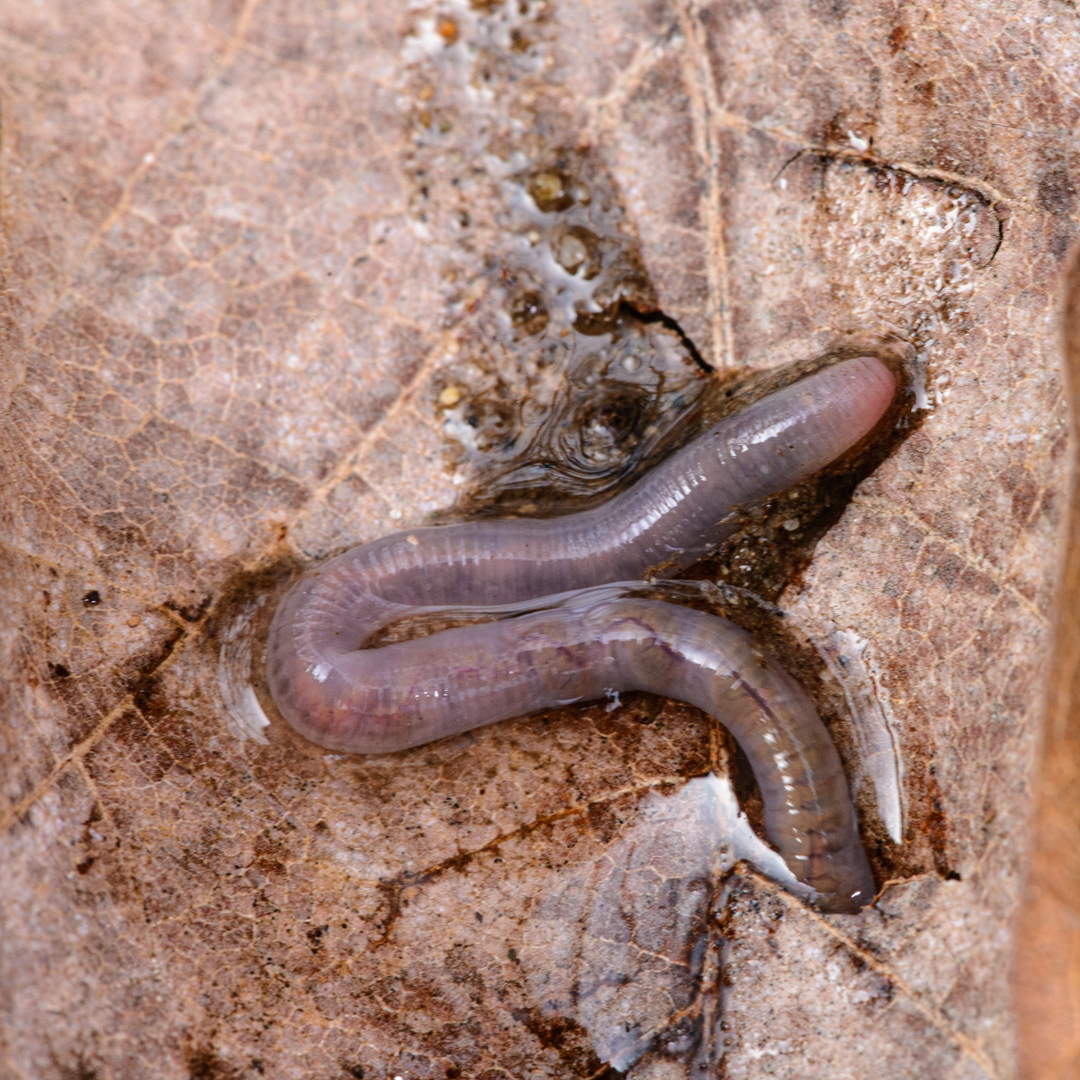
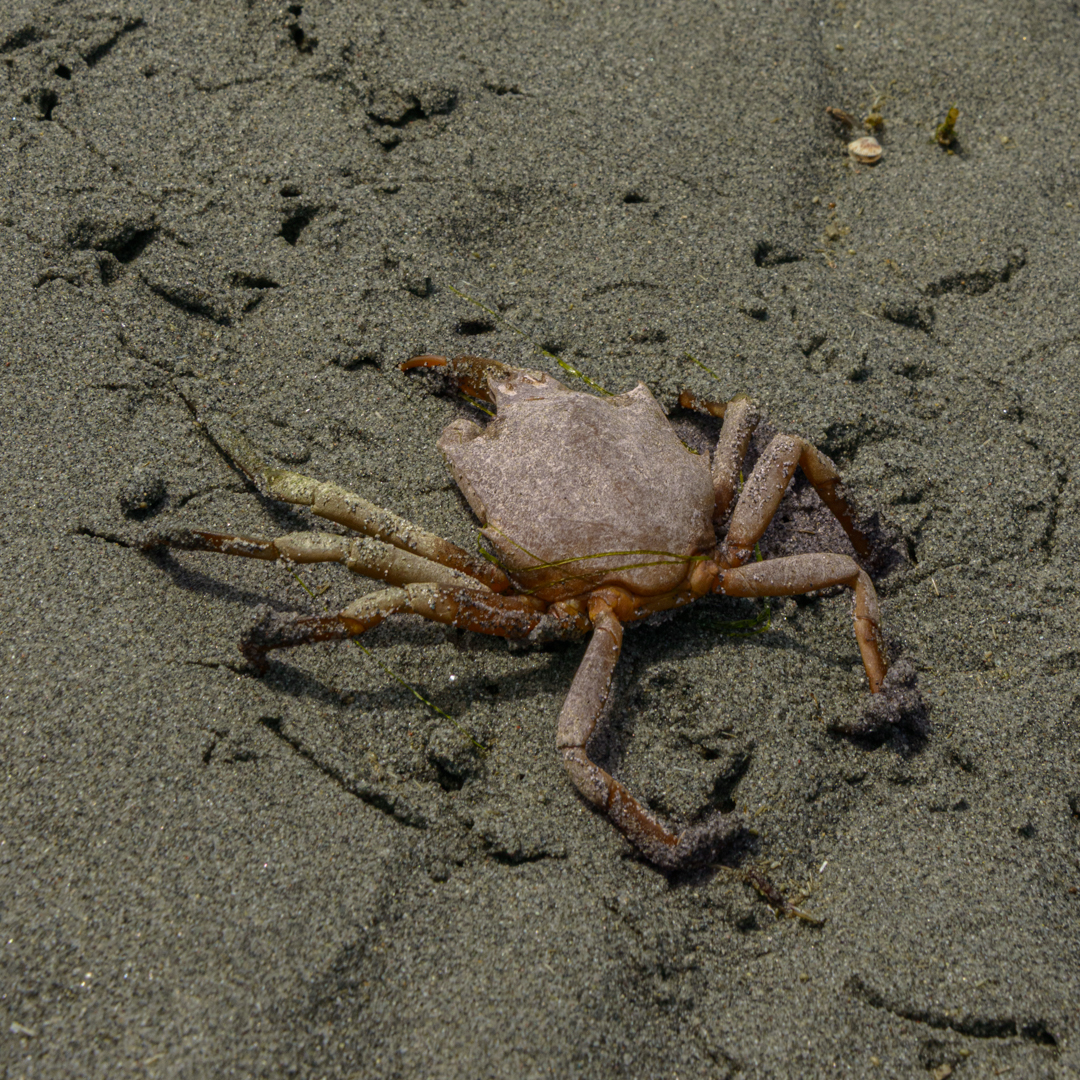
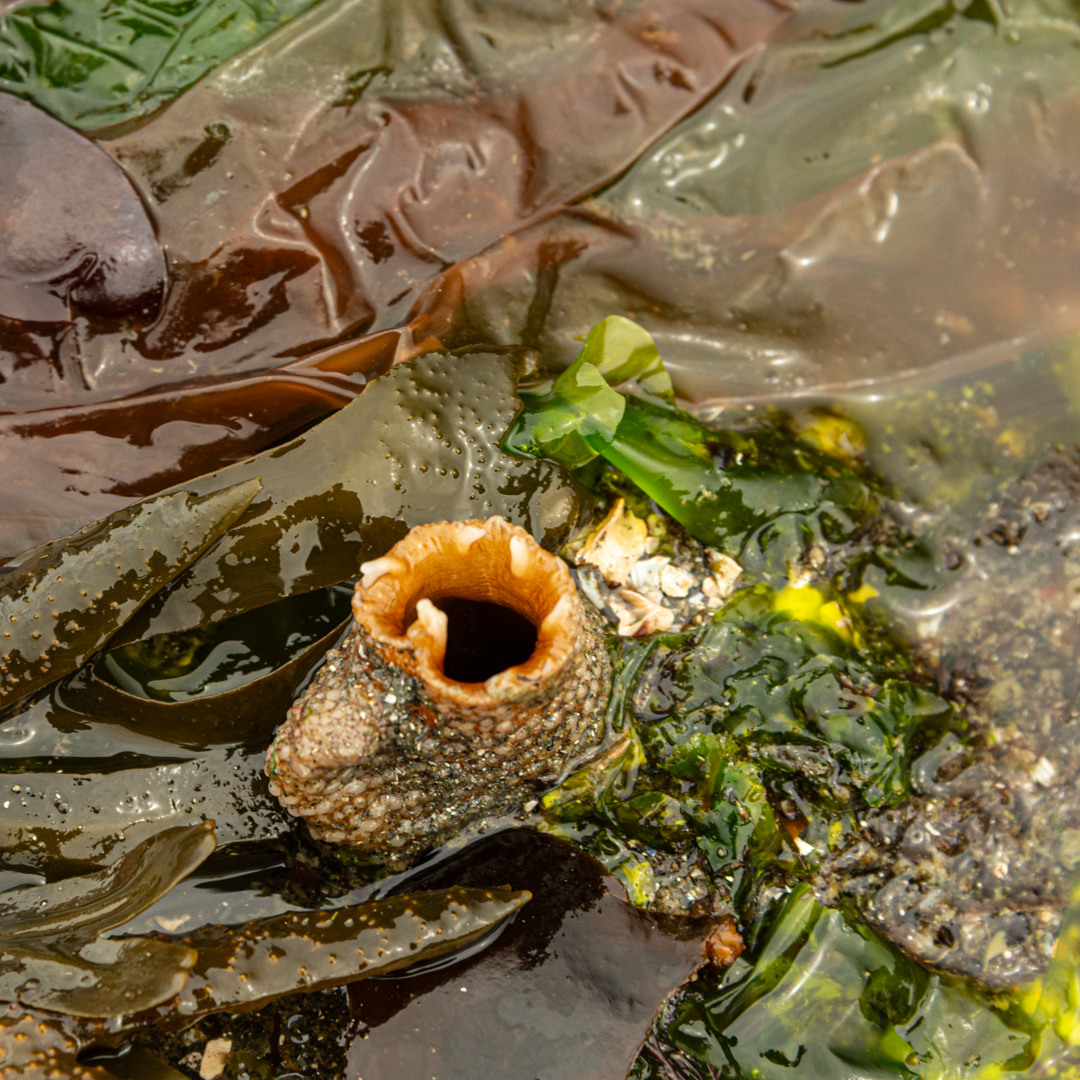
Worm, kelp crab, clam. photos by John F. Williams
the bigger players: worms, crabs, and clams
If fungi and bacteria do the microscopic work, earthworms, snails, and other invertebrates handle things on a larger scale. Gardeners know this story well: worms churn the soil, eat decaying matter, and leave behind nutrient-rich castings that plants adore.
Along the Salish Sea’s edges, crabs, clams, and other invertebrates do much the same. Crabs clean up detritus — those bits of broken-down plants and animals — while clams filter the water, pulling in organic material and releasing cleaner, nutrient-packed water in return. Together, these small creatures keep tidal ecosystems breathing and balanced.
 For more about worms, see “I Dig Worms” in our Spring 2022 issue.
sea otters: the charismatic recyclers
And then there’s the sea otter. Who can resist their charm, floating on their backs, cracking open shellfish with stones? But beyond the cuteness, they’re critical players in the health of kelp forests.
Sea otters feast on sea urchins, which otherwise would mow down kelp beds completely. Kelp forests, in turn, are among the planet’s great carbon sinks and nurseries for marine life. So by keeping urchin populations in check, sea otters become guardians of biodiversity and quiet participants in the carbon and nutrient cycles that sustain the Salish Sea.
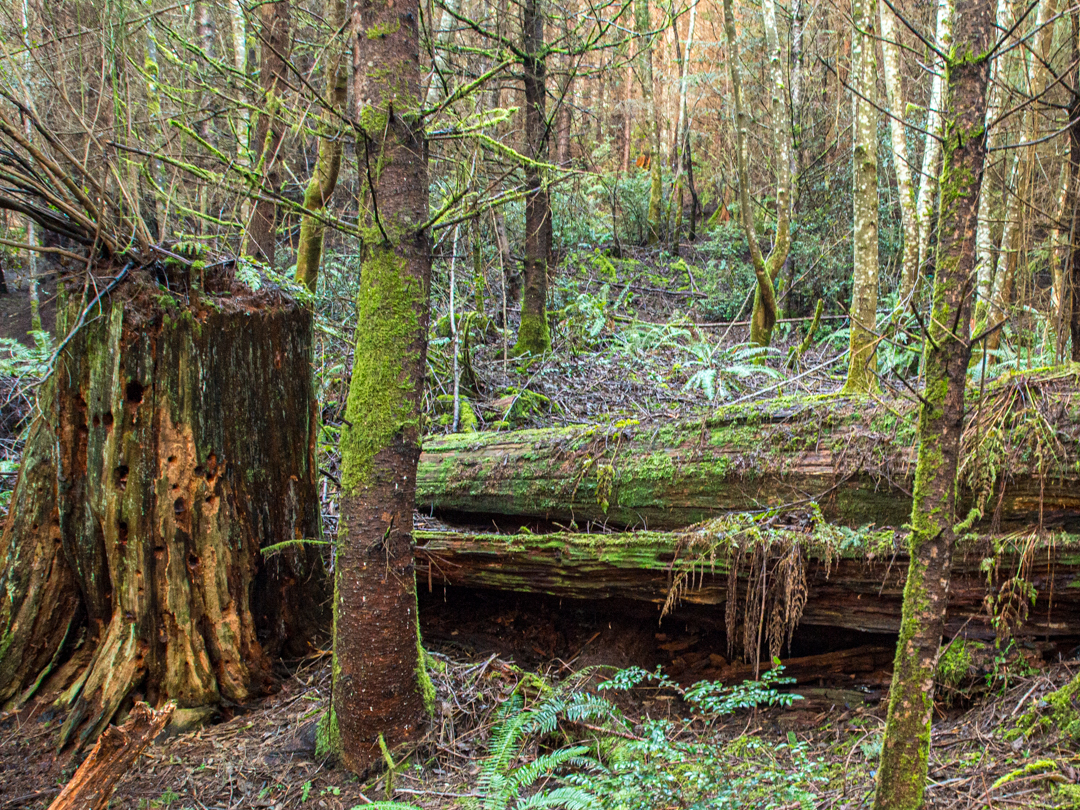
Decaying log and stump in forest. photo by John F. Williams
forest giants and their fallen gifts
In the temperate rainforests that frame the Salish Sea, trees are not just producers; they’re recyclers too. Every leaf that falls, every log that decays, feeds the next generation. The forest floor becomes a living compost pile where fungi, microbes, and insects transform death into soil and soil into life.
Roots also do their part. They share sugars with mycorrhizal fungi, exchange nutrients with bacteria, and store carbon deep underground. When we talk about recycling, it’s easy to think of bins and bottles, but the forest has been perfecting that cycle for millennia.
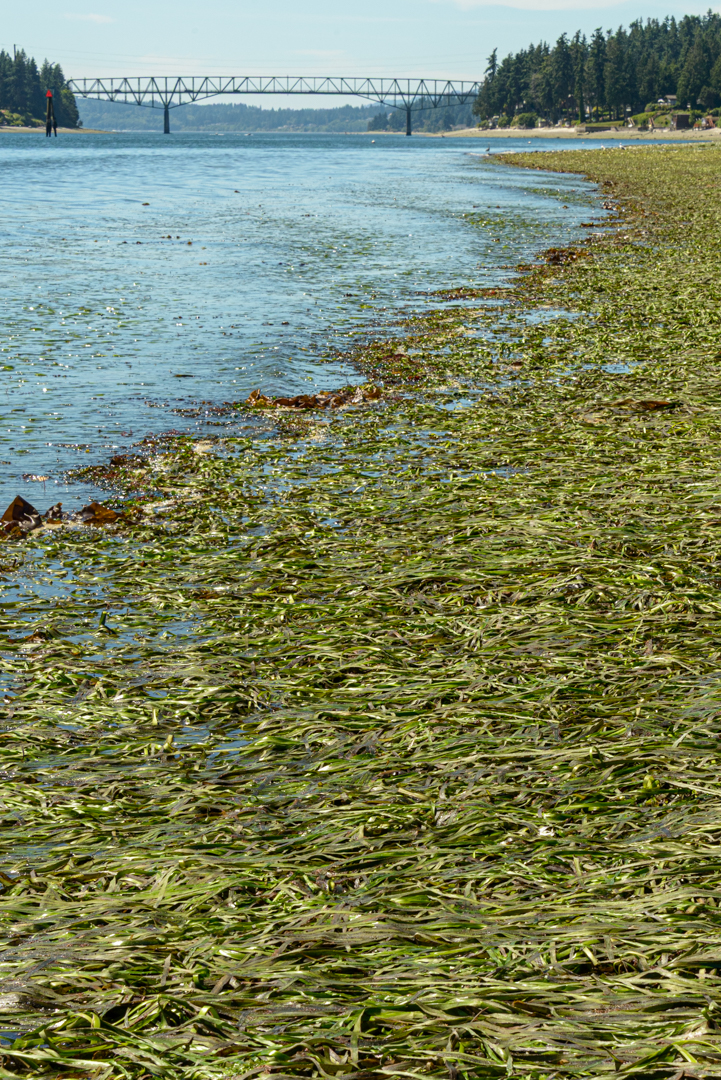
A large eelgrass bed at low tide. photo by John F. Williams
beneath our feet: the rhizosphere
Dig a little deeper — literally — and you find another world of recycling. The rhizosphere, that thin layer of soil around plant roots, buzzes with microscopic life. Here, bacteria and fungi feed on plant exudates (yes, roots leak tiny sugars and amino acids), and in return, they release nutrients the plants can use.
In the tidal regions of the Salish Sea, this invisible economy gets an extra twist from the tides themselves. The daily rhythm of rising and falling water redistributes nutrients, giving life to everything from eelgrass beds to mudflat microbes.
the living edges: intertidal zones
If you’ve ever walked along a Salish Sea beach at low tide, you’ve seen one of nature’s busiest recycling centers. Seaweeds, barnacles, mussels, crabs — all working, feeding, and breaking things down. Seaweeds, for instance, absorb nutrients like nitrogen and phosphorus from the water, helping prevent harmful algal blooms. When they die or get eaten, those nutrients move along the food web, continuing the cycle.
Even seabirds contribute. Their droppings — rich in nitrogen — fertilize coastal plants and tidepool communities. It’s not glamorous, but it’s essential. Everything, it seems, has a purpose in this interconnected web.
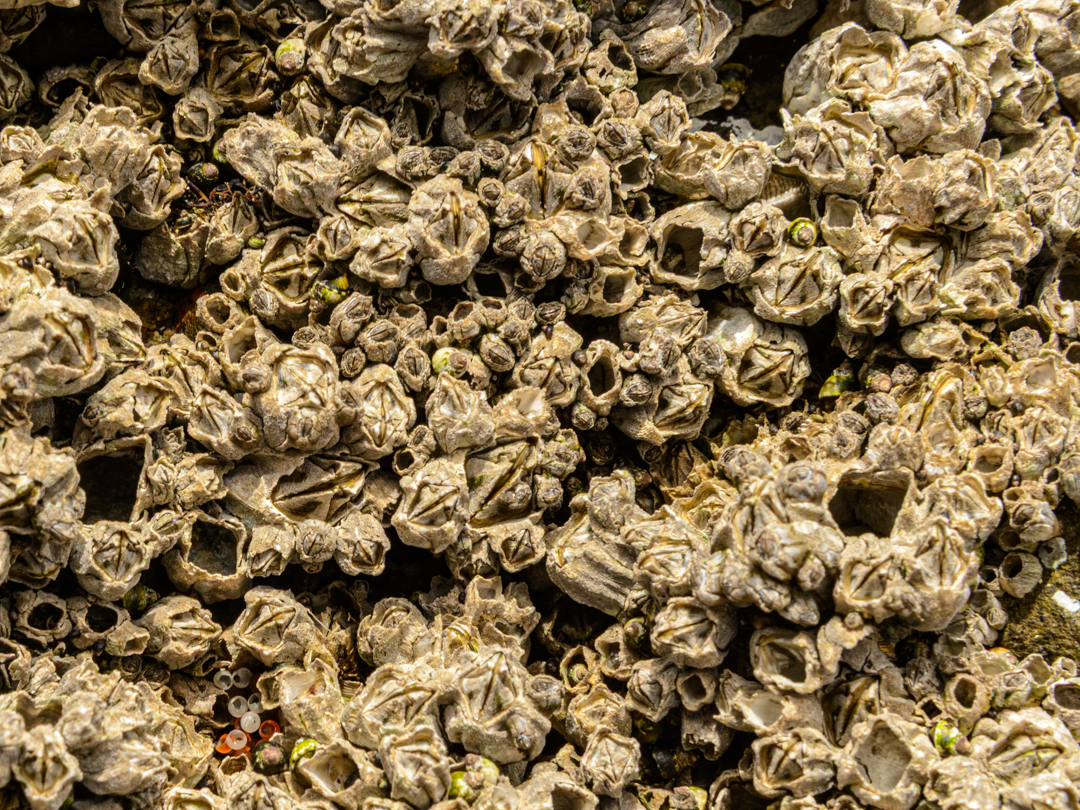
Barnacles on a rock at low tide. photo by John F. Willliams
salt marshes: where land meets sea
Salt marshes are the quiet heroes of the coastline. They filter pollutants, trap sediments, and provide food and shelter for fish, birds, and countless tiny organisms. The dense roots of cordgrass and other marsh plants not only hold the soil together but also capture carbon from the atmosphere — a process known as “blue carbon” storage.
As plant material decomposes in these marshes, it fuels microbial life, feeding back into the system. It’s one of the most efficient recycling operations on the planet — one we can’t afford to lose.
See more about salt marshes: Carpenter Creek Salt Marsh in our Autumn 2020 issue.
See even more about salt marshes in our 2024 article: Edmonds Marsh: Small But Mighty by Katherine Derbyshire
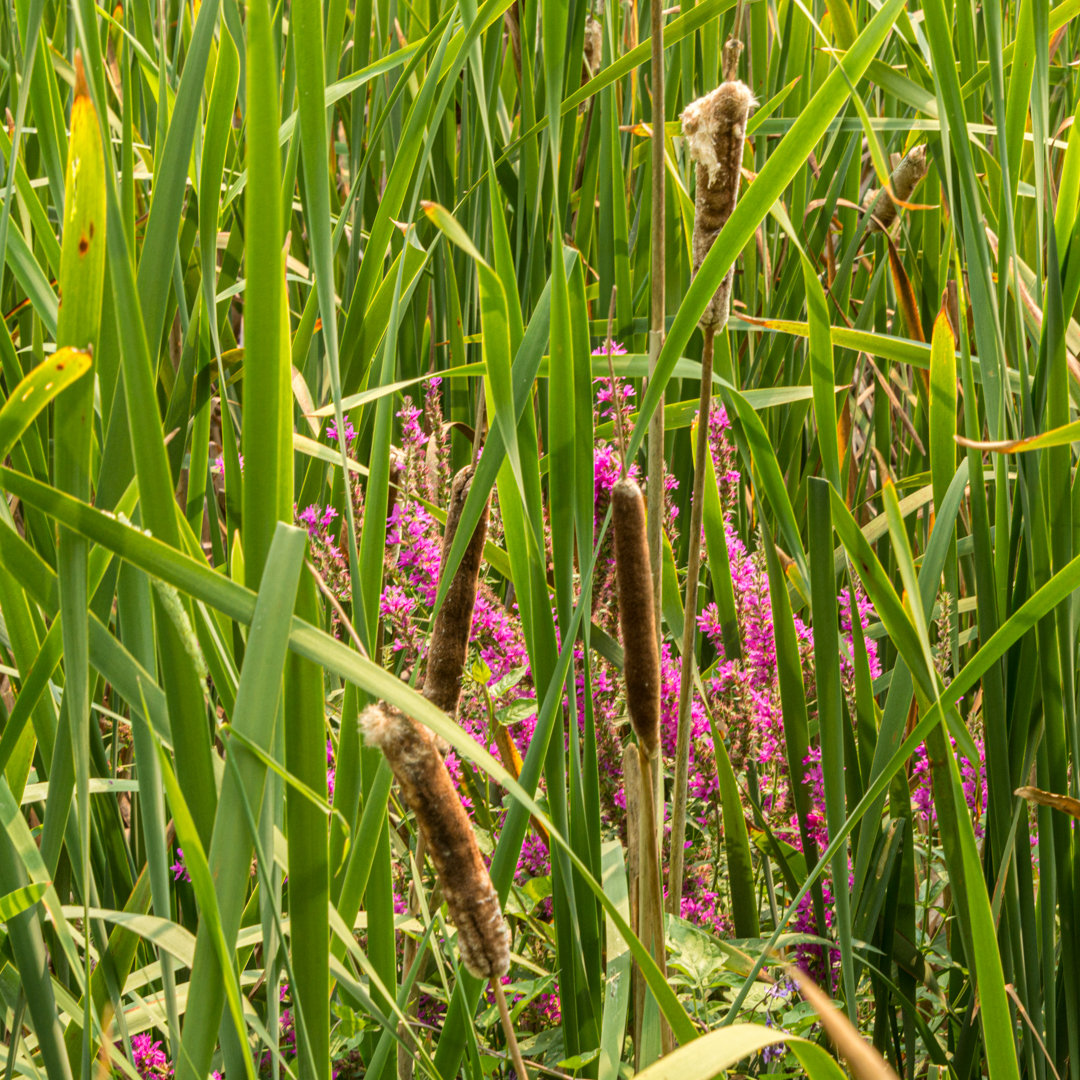
Salt marsh at Edmonds, WA. photo by John F. Williams
our part in the cycle
For all its resilience, the Salish Sea is under pressure. Pollution, overfishing, habitat loss, and climate change are tipping the balance in ways nature’s recyclers can’t easily fix on their own. But there’s hope. Community restoration projects — from eelgrass replanting to salt marsh rehabilitation — are showing real results.
Every time we reduce plastic waste, protect wetlands, or simply pause to appreciate the cycles of life around us, we participate in this grand system of renewal.
Nature doesn’t waste a thing. From the tiniest bacterium to the sleek sea otter, every organism has a role in keeping the Salish Sea alive. The more we understand these connections, the better we can protect them.
Next time you walk a forest trail or stroll along a rocky shore, take a moment to notice the quiet recyclers at work. Beneath the surface and under your feet, the Salish Sea is constantly renewing itself. It’s a reminder that life’s beauty lies not just in growth, but in the graceful act of giving back.
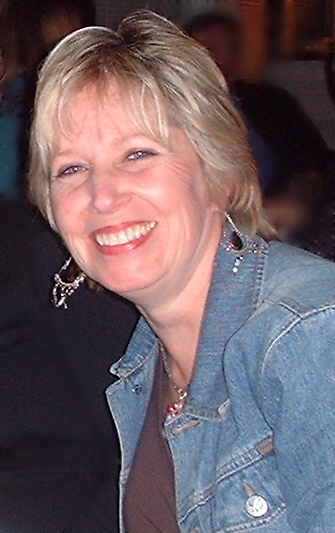
Adelia Ritchie grew up on a northern Virginia farm with horses, cattle, dogs, and her pet pig Porky, who ran the whole show. A long-time resident of the great Pacific Northwest, Adelia is a serial entrepreneur, scientist, educator, and artist, and currently works with educators and legislators to promote a deeper understanding of the science of climate change and its impacts on the complex ecological web of life. Adelia resides in Hansville, WA, with her garden, her dogs, and a flock of very entertaining chickens.
Issue Page
Table of Contents, Issue #30, Winter 2025-26
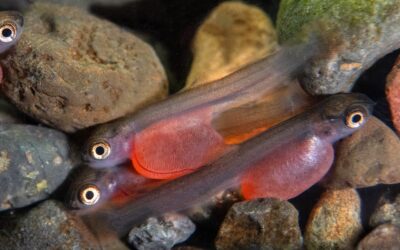
Salmon: Upstream Recyclers
SALMON: UPSTREAM RECYCLERS by Paul Dorn Winter 2025-26Salmon alevins. photo by John Gussman by Paul Dorn Winter 2025-26The salmon life cycle begins with a tiny fertilized egg buried in clean freshwater stream gravel. Years later that egg has grown into an adult who...
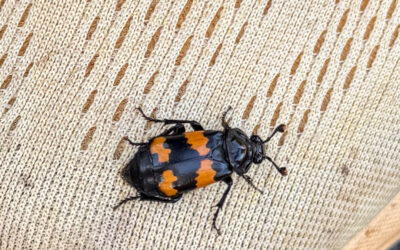
Undertakers of the Forest
UNDERTAKERS OF THE FOREST Boreal Burying Beetles by Thomas Noland Winter 2025-26Boreal burying beetle (Nicrophorus defodiens). photo by Thomas Noland by Thomas Noland Winter 2025-26something rotten, something good I crawled out of the leaf litter this morning, and my...
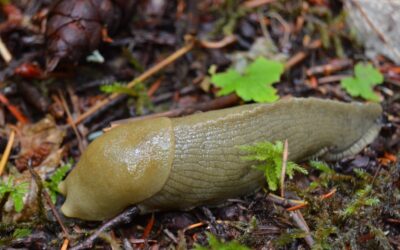
The Slowdown on Slugs
by Sarah Ottino Winter 2025-26A disrupted banana slug has retracted its tentacles. photo by Sarah Ottino by Sarah Ottino Winter 2025-26As the drizzle and mud return, slugs emerge into the open. Moist and damp for much of the year, the Pacific Northwest is a slug...
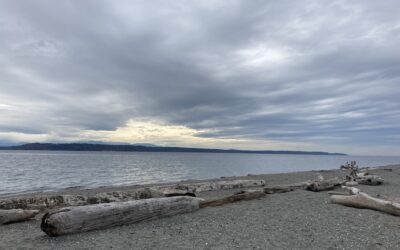
Driftwood and Sand
by Gunnison Langley Winter 2025-26Driftwood logs on a beach. photo by Gunnison Langley by Gunnison Langley Winter 2025-26A stroll on the beach offers plentiful examples of how nature recycles. A late fall morning outing last year on the beach at Seattle’s Carkeek Park...
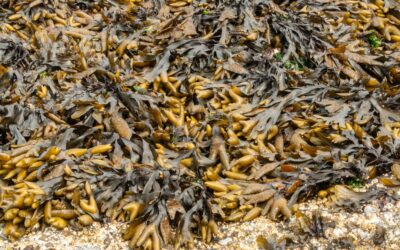
What the Tide Leaves Behind
by Celeste Hankins Winter 2025-26Rockweed at home on rocks on the beach. photo by John F. Williams by Celeste Hankins Winter 2025-26Kayaking through San Juan Islands. photo by Celeste HankinsI first noticed Pacific Rockweed shortly after moving from Lake Chelan in...
Poetry 30
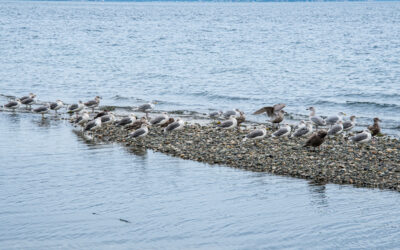
by multiple poets Winter 2025-26Seagulls at the edge of the tide. photo by John F. Williams by multiple poets Winter 2025-26Recycle, a Watercolor by Carl Jensen A she gull lies flattenedthe gray of her barely distinct from sand or sky.Nearby the flock shifts with the...
COPYRIGHT
Copyright SEA-Media
All rights reserved. Reproduction or distribution, in whole or in part. without consent of copyright owner is strictly prohibited — except for brief quotations in critical reviews and other noncommercial uses permitted by copyright laws.
SEA-Media is a 501(c)(3) nonprofit corporation
PLEASE HELP SUPPORT
SALISH MAGAZINE
DONATE
Salish Magazine contains no advertising and is free. Your donation is one big way you can help us inspire people with stories about things that they can see outdoors in our Salish Sea region.
We also don't advertise Salish Magazine, so please spread the word of this online resource to your friends and colleagues.
Thanks so much for your interest and your support.