
The Wild Indoors
by Sarah Ottino, Summer 2024
images by Sarah Ottino except as noted
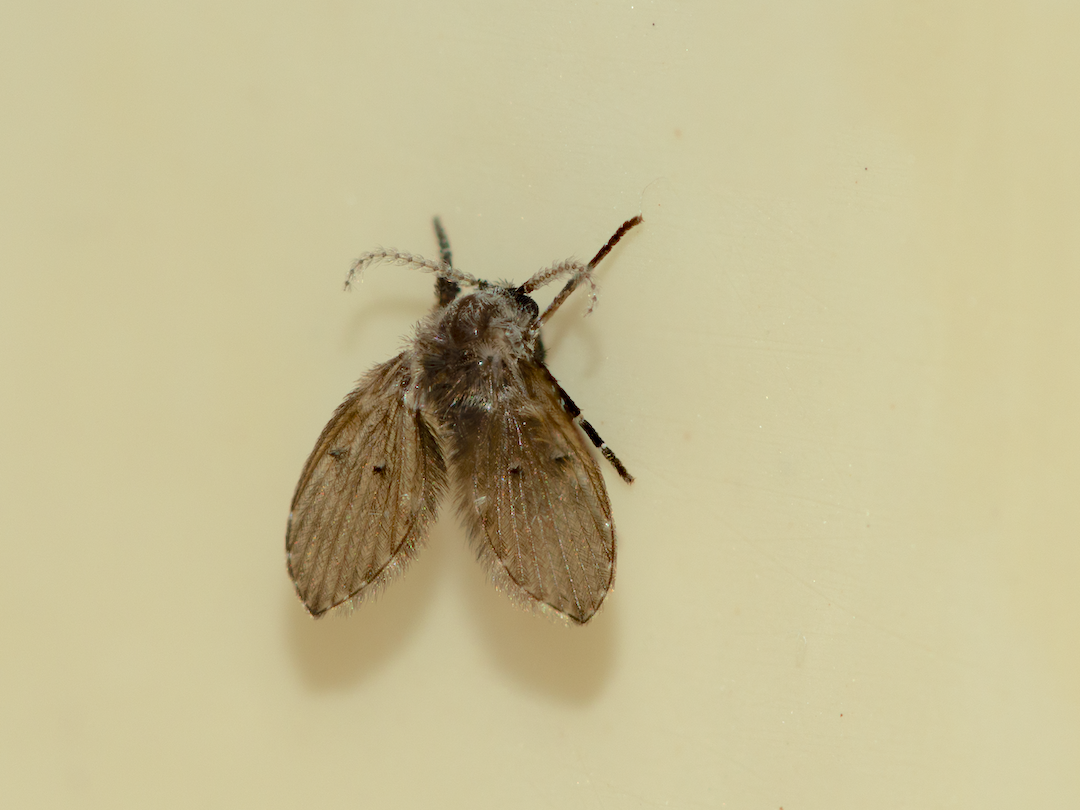
Clogmia albipunctata or drain fly, less than 1/4″ long. photo by John F. Williams
The Wild Indoors
by Sarah Ottino
images by Sarah Ottino except as noted
Summer 2024
Many of us think of nature as being restricted to the outside world. We go for hikes to experience the wild, then close our front doors and settle onto our couches away from it all, blissfully unaware of the ecosystems inside our homes. Unfortunately, many of our indoor companions are considered pests and eradicated. If fear and disgust can be put aside for a moment, we can start to see the true beauty of indoor ecosystems.
Throughout history, as humans expanded their territory and began building structures, the organisms around them died off, moved on, or adapted. Some organisms such as crows and racoons continue to live outdoors but side by side with us. Other organisms found that the structures we built suited their needs and took advantage of their offerings.

While bats, rats, mice and other animals may try to make our home theirs, until we boot them out, there is a more permanent but fluid ecosystem in our indoor spaces. Many of these inside dwellers belong to the phylum Arthropoda which includes insects, spiders, and other “bugs”. While none of these animals are seeking to harm or frighten their human roommates, it is easy to forget this, especially when you can hear the pitter-patter of Eratigena atrica, a giant house spider with tarsal claws. The size and speed of this creature can cause even the heartiest of arachnologists to jump when it unexpectedly crosses their path as they blunder to the bathroom for a midnight glass of water.
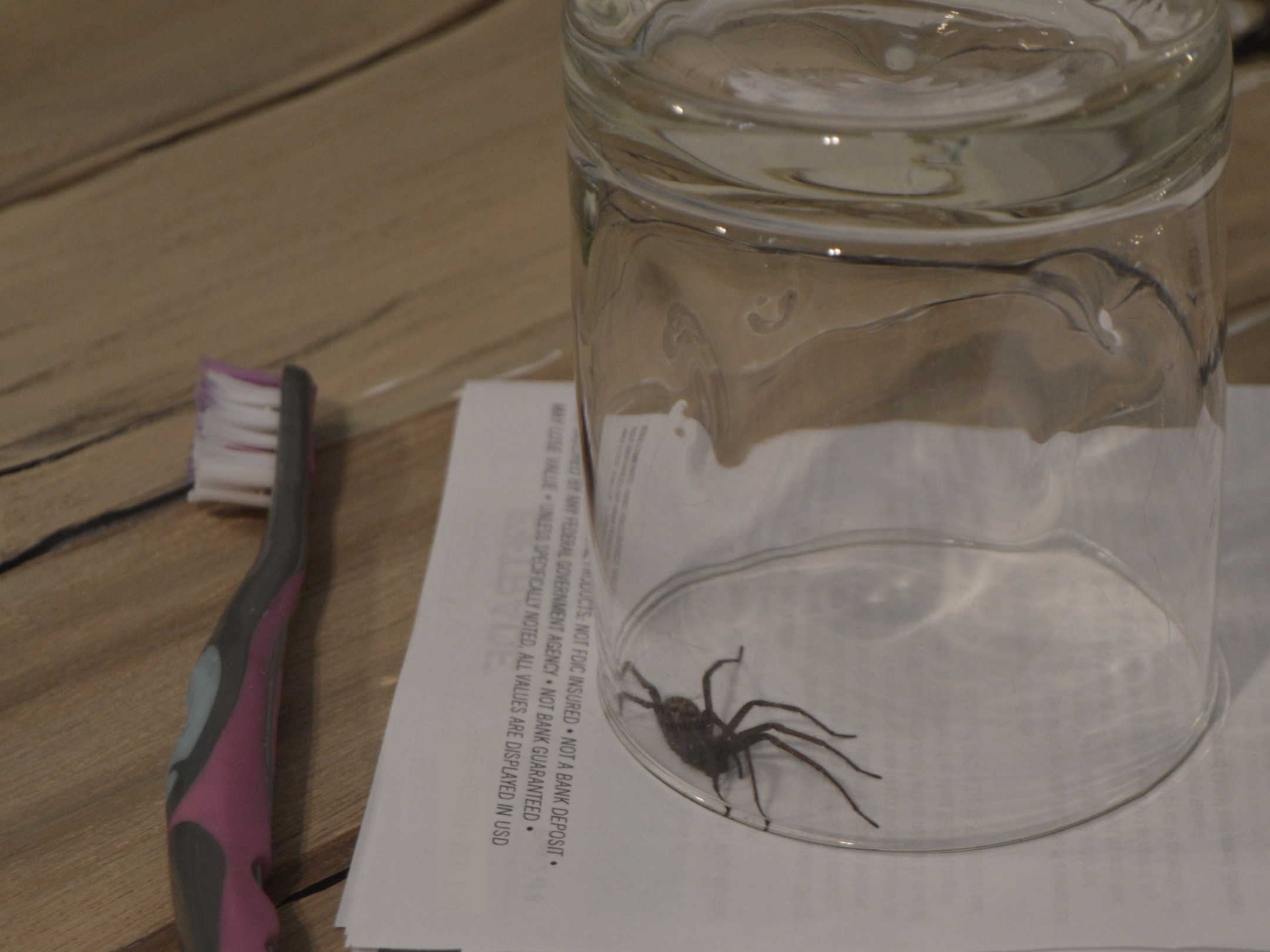
A giant house spider in a re-location vessel. Toothbrush for scale.
Despite its appearance, this spider is quite docile and harmless to humans. It spends most of its life out of our sight in dark spaces such as basements and garages. It builds a sheet web with a funnel where it resides waiting for lunch to crawl by. “Spider season” in the Pacific Northwest, midsummer to early fall, is when the males venture out of hiding to look for love, and it may feel like your home is the setting of a horror movie (while visiting family last year there seemed to be a giant house spider hanging out in the bathroom every time I went in).
If we do not judge the giant house spider by appearance but get to know it, we will find that it makes an excellent housemate. It is quiet, keeps to itself, and pays rent by controlling “nuisance pest” populations. They do get thirsty at times, and this is usually when they are found in sinks and bathtubs. They are less skilled at climbing and frequently become trapped there. Should you come across a giant house spider you can simply say hello and let it be on its way or you can use a glass and paper to relocate it to a suitable spot. Often confused with the hobo spider, there are far more giant house spiders than hobo spiders in Western Washington. Learn more about spiders in Issue 13 of Salish Magazine.

A permanent resident spends their days sleeping out of sight.
Another common household resident is the silverfish (Lepisma saccharina), one of the most primitive insects. It has an affinity for starchy materials such as glue, wood, and the cellulose in paper. The more discerning of these simple creatures prefer glossy paper. While silverfish pose no threat to humans, their voracious appetite can cause damage to wallpaper and libraries. Silverfish are nocturnal and are usually only seen at night in humid areas such as bathrooms. While a few silverfish residents are not an issue, if the conditions are right, their numbers can increase to a bothersome size. If this happens, adjusting the humidity level inside can reduce their numbers.
While there are many other animals such as cluster flies, drain flies, mice, ants, termites, and rats that find our homes fit their needs, our indoor spaces are also home to plenty of organisms that we may not even know are living there.
When a home is built, there are measures taken to prevent non-humans from taking occupancy such as covering openings with screens. Over time things rust, break, crack, and generally start to fall apart, making it easier for creatures to seek refuge inside our dwellings. If they find a food source, they may try to make it their permanent residence.

The microscopic organisms that make their way into our house often do so with less intention. They float in when windows or doors are open or hitch a ride on us, our pets, groceries, or anything else that enters our homes. Unless your foyer has a built-in sterilization chamber and is airtight, microorganisms will get inside.
Despite the best attempts to have a clean home, there will always be microorganisms around. The pink in your sink? That is the bacteria Serratia marcescens. The fuzz on your French bread? That is called Rhizopus stolonifer, black bread mold decomposing our baked goods.

Our indoor spaces provide a comfortable temperature, moisture level, and substrates to grow upon. If left to their own devices, these microorganisms thrive. As they grow and expand, we may start to notice them and combat them with household cleaners. This may devastate their empire, but only temporarily. Survivors often remain and will build their numbers back up.
Just as with nature out of doors, an indoor ecosystem can be balanced or unbalanced. When an outdoor disturbance occurs, such as logging or a landslide, the exposed area eventually becomes colonized. If aggressive species such as Himalayan blackberry (Rubs armeniacus) take root first, they will take over the area and make it difficult for other plant species to grow. The same thing is true for the indoor ecosystem.
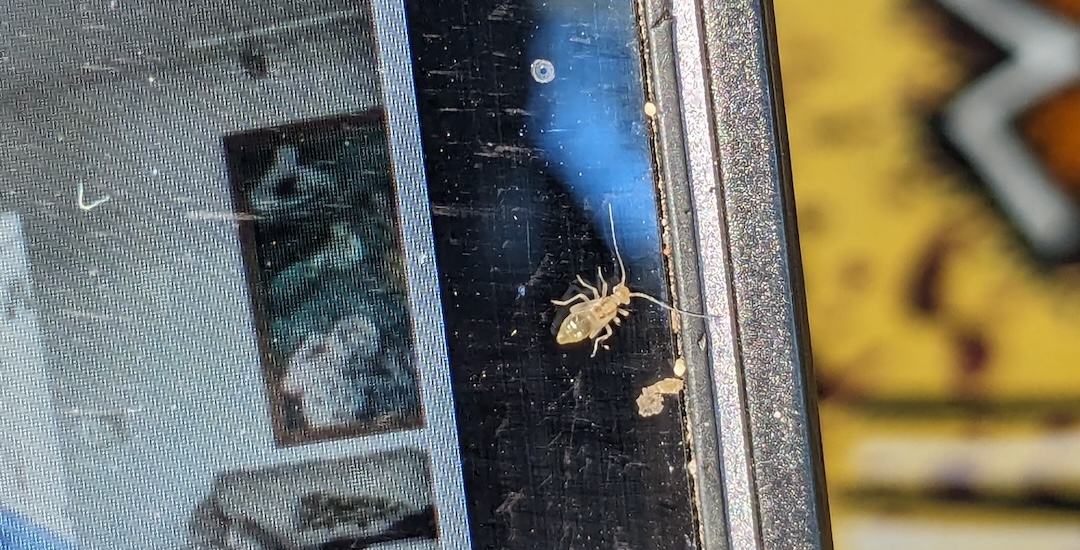
An unidentified insect investigating a laptop.
While deep cleaning with bleach can reduce the spread of harmful viruses such as the flu or Covid-19, trying to maintain a sterile environment can backfire. Sterilizing the inside of our homes kills all microbes, the good, the infectious, and the benign. This gives surviving, harmful microbes the opportunity to gain more ground quickly and as their numbers increase it will put humans and pets at risk.
Every indoor microbiome (community of bacteria, fungi, and viruses) varies. According to the National Library of Medicine, there is no “normal” indoor microbiome. In 2021, a study detected more than 10,928 viruses and 1,302 bacteria in urban transit systems such as on buses and ticket machines. It also indicated that every city tested had a unique microbiome; though there are some species found in all 60 tested cities. Thankfully, of the known microbial species on earth less than 1% are harmful to humans. The rest are benign or even beneficial, such as lactobacilli, a group of bacteria that is used for fermenting delicious foods such as cheese and are vital for our gut health.
Penicillium is a genus of fungus that produces the antibiotic penicillin. While penicillin is useful in destroying bacterial infections in humans, it also kills off the cheese bacterium Staphylococcus equorum. Should we travel around our homes with microscope eyes, we would be witness to a jungle of fungal hyphae and lakes of biofilm with territorial battles taking place on our countertops. Certain bacteria and fungi help keep harmful organisms at bay and it is in our favor to let them do so.
Weekly cleaning is often sufficient to keep these housemates from getting out of control.
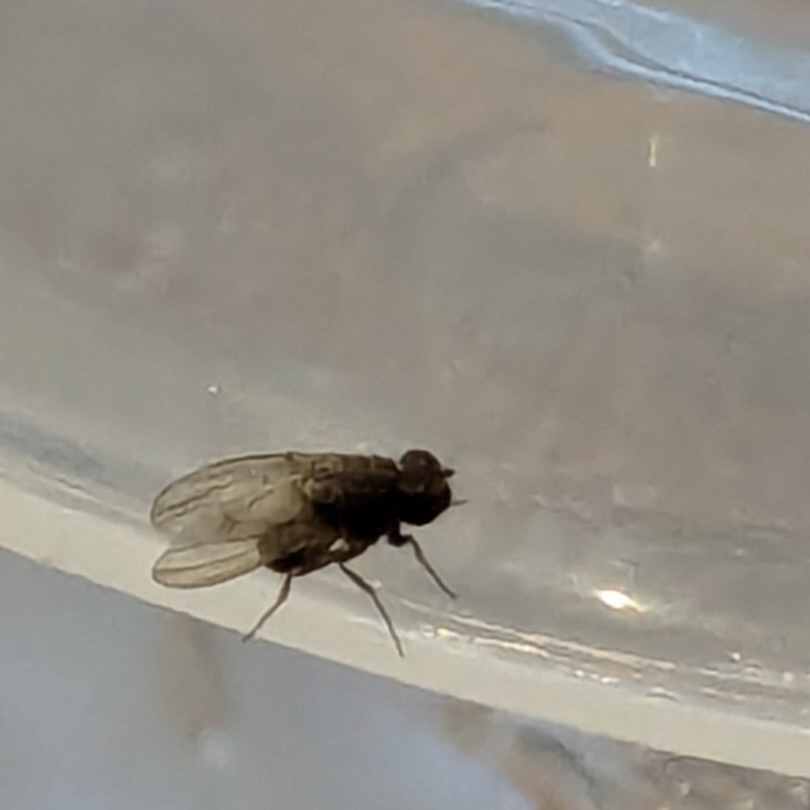
A fly taking a break from sampling the remnants of some refried beans.
Another aspect of the indoor ecosystem is house plants. Just as trees and bushes outside help with air quality, the snake plants and monsteras we bring inside help with indoor air quality. While the soil in our potted plants may not always be as diverse as the soils in our gardens, they are still home to a variety of life. Houseplants provide a habitat for organisms such as fungus gnats, scale insects, and spider mites. These arthropods often go unnoticed until the ecosystem is out of balance and their population levels soar. Often this is due to the conditions the plants are in. Overly wet soil is a culprit for many house plant pests, as is poor plant health. Sick plants are more susceptible to infestations, so taking the time to get to know our houseplants and the conditions they prefer can help keep our indoor ecosystem in balance.
While the exact makeup of indoor ecosystems varies from building to building, even ones next door to each other, indoor spaces all have ecosystems. Just as a forest or ocean ecosystem can get out of balance, allowing certain species to take over and cause harm, the same goes for indoor ecosystems. Allowing our homes to burst with diversity keeps its ecosystem in balance. So, if the fruit fly convention is getting out of hand, then allow the triangulate cobweb spider (Steatoda triangulosa) to take up residence in a kitchen corner to act as crowd control in your indoor ecosystem.
FIND OUT MORE
Indoor Microbiome and Airborne Pathogens — National Library of Medicine
A Global Metagenomic Map of Urban Microbiomes and Antimicrobial Resistance — in the journal Cell, Volume 184, Issue 13, June 24, 2021
How to Have a Clean and Microbe-Friendly Home — by Justine Dees, Joyful Microbe June 30, 2023
Microbiology by Numbers – Nature Reviews Microbiology, 12 August 2011
Integrated Pest Management – Washington State Dept. of Health

Sarah Ottino — Freelance Writer & Photographer
Sarah loves to write, create, and explore nature. She travels full-time in a 20ft Airstream with her husband and her border collie, Nimbus. She uses life’s adventures as inspiration for healthy living, outdoor recreation, and environmental content. She often uses her photography or design graphics to complement her writing. Her website is: www.naturewritten.com
Table of Contents, Issue #24, Summer 2024

Pocket Beach
by Julie Jeanell Leung, Summer 2024images by Julie Leung except as notedPocket beach in Myrtle Edwards Park, adjacent to Olympic Sculpture Park in Seattle.by Julie Jeanell Leung, Summer 2024images by Julie Leung except as notedLooking through Alexander Calder's...

Avalon Pond
by Joshua Ralph, Summer 2024Everett Crowley park, Vancouver Canada. photo by Chelaxy Designs via Unsplashby Joshua Ralph Summer 2024a history in a landscape Nestled within the far southeast corner of what is today Vancouver, British Columbia, lies a 40-hectare park,...
Wild Birds and Window Collisions
by Jeff Beyl, Summer 2024Black-capped chickadee. photo by Skyler Ewing via Pexelsby Jeff Beyl Summer 2024It happened again this morning. At first, I thought it was a gunshot. My head jerked, my shoulders jumped, and I quickly ducked beside the breakfast table. I...

Salamanders, Stormwater, and Skateboards
by Susan McCleary, Jessica Sandoval, Max Lambert, Claire Kerwin, Summer 2024Yauger Pond when the area is not flooded. photo courtesy of WDFWby Susan McCleary, Jessica Sandoval, Max Lambert, Claire Kerwin Summer 2024Map of the route of water from Yauger Park to the...
Neanderthals in the House
by David B. Williams, Summer 2024 images by David B. Williams except as notedFrench Limestone containing fossils in an exterior wall of Westlake Center, Seattle. photo by John F. Williamsby David B. Williams images by David B Williams except as noted Summer 2024In the...
Joy & Woes: Anna’s Hummingbirds
by Anya Gavrylko, Summer 2024Anna's hummingbird. photo by Veronika Andrews via Pixabayby Anya Gavrylko Summer 2024My freshman year of college I was in a regular state of awe as I adjusted to my new surroundings. I had moved to Seattle from the suburbs of Chicago, and...
Poetry 24
by multiple poets Summer 2024photo by of John F. Williamsby multiple poets Summer 2024Three Colleagues and a Coyote by Jessica Levine This poem was written in the morning of April First, describing the wild and wonderful life of being a bike commuter in the city. This...
COPYRIGHT
Copyright SEA-Media
All rights reserved. Reproduction or distribution, in whole or in part. without consent of copyright owner is strictly prohibited — except for brief quotations in critical reviews and other noncommercial uses permitted by copyright laws.
SEA-Media is a 501(c)(3) nonprofit corporation
PLEASE HELP SUPPORT
SALISH MAGAZINE
DONATE
Salish Magazine contains no advertising and is free. Your donation is one big way you can help us inspire people with stories about things that they can see outdoors in our Salish Sea region.
We also don't advertise Salish Magazine, so please spread the word of this online resource to your friends and colleagues.
Thanks so much for your interest and your support.