
A WOODLAND WITNESS: HOLDING AN ECOSYSTEM TOGETHER
by Zoe Wadkins
Winter 2020
Drawings by Zoe Wadkins
A WOODLAND WITNESS: HOLDING AN ECOSYSTEM TOGETHER
by Zoe Wadkins, Winter 2020
Drawings by Zoe Wadkins
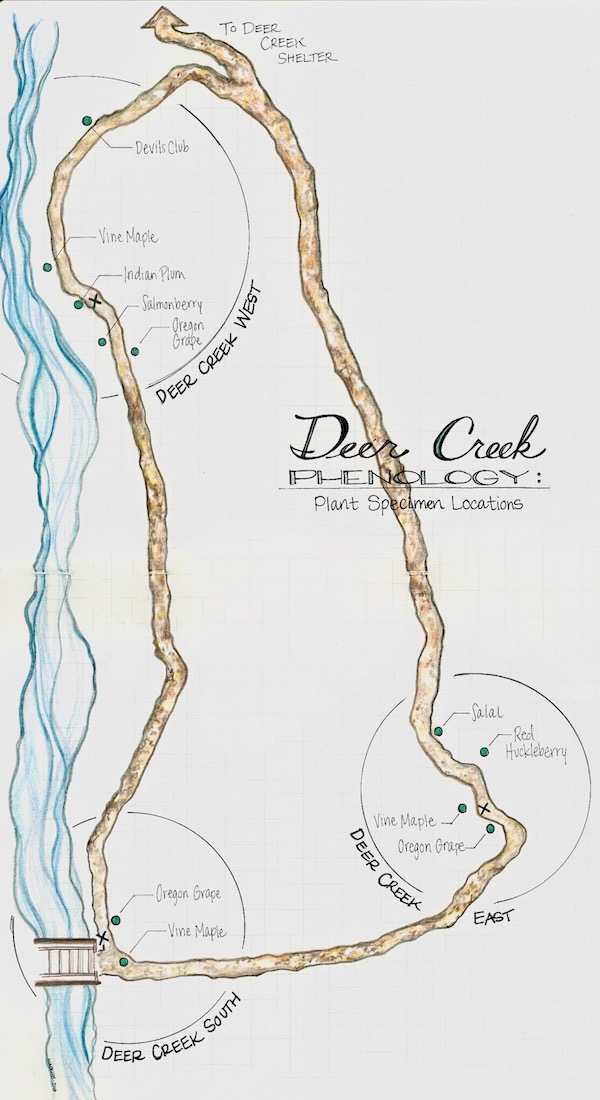
In the three years since our first introduction, I have walked this loop of Deer Creek more than one hundred times. Its rich macroinvertebrate habitat constitutes a liquid western border to what is otherwise a vibrant sea of green. The elegant bowing of vine maple marks the entrance to an understory blanketed with Oregon grape and salal. Douglas fir, red alder, and western red cedar tower in their reach for the sky.
I have seen things grow here; bud, flower and fruit here. I have seen them struggle here, die here, and then — in what seems to be inexplicable — revitalize here. And at every one of their stages, I have witnessed a willing recipient seeking shelter or sustenance. Possibly, they have witnessed the same in me. It is a beautiful complexity; each physical circumlocution I walk is done in proximity to creatures engaged in their own cyclical process of budding and dormancy. And yet it is these very cycles for which I am here.
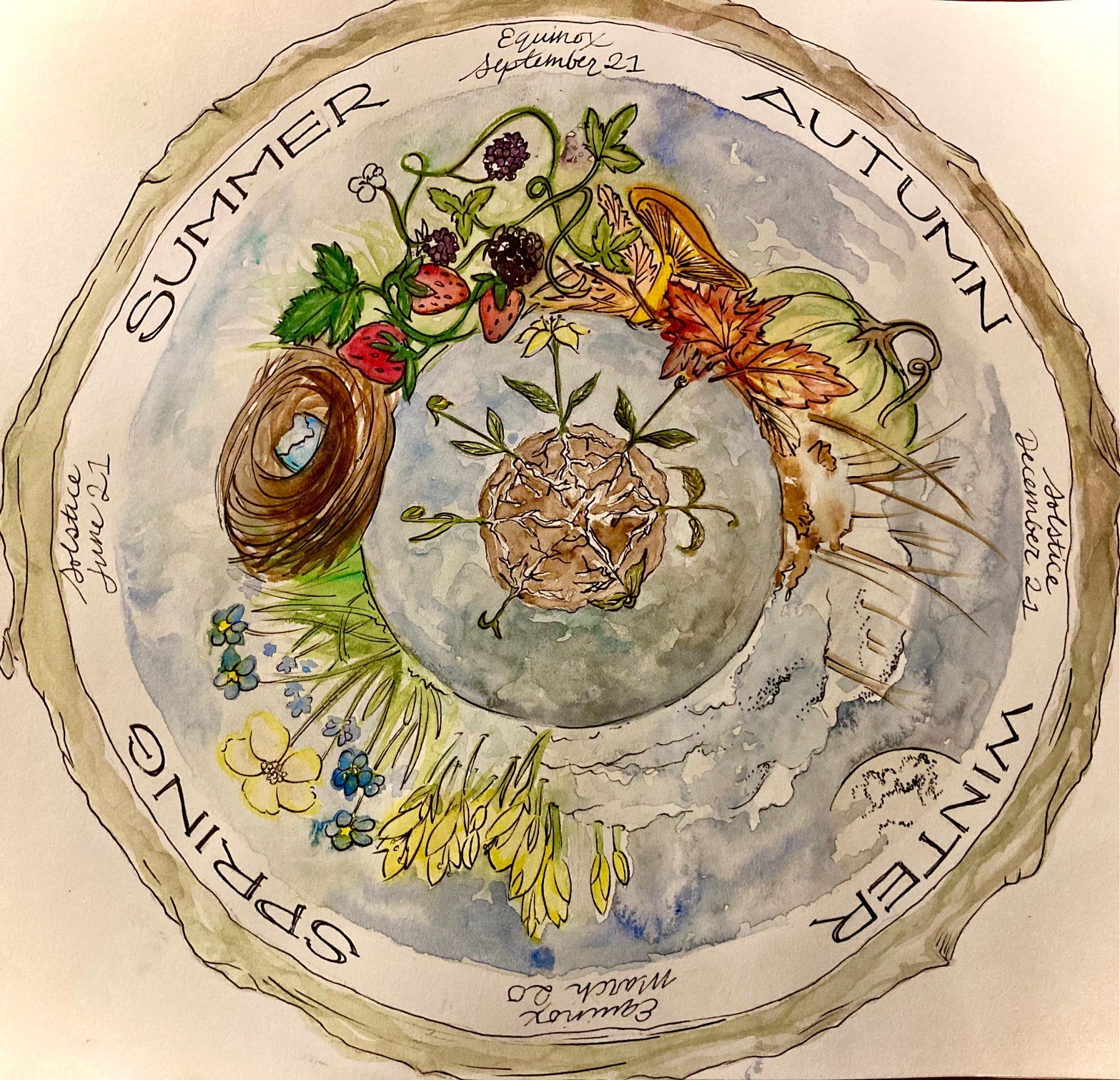
Once weekly for the last three years I have walked this loop to take note of the changes occurring within it. Every data set builds upon the last in what has become an ongoing anthology of this land’s phenological stories. Phenology (the study of cyclic and seasonal natural phenomena, especially in relation to climate and plant and animal life) engages us in perceiving nature’s calendar; an attuning to the cyclical and seasonal phenomena that surround us all of the time. As the seasons change, so too do flora and fauna shift in their appearance and behaviors. At each juncture, I find myself in eager anticipation of each season’s transience — what new arrival will present itself this week? As the season crests into fall, I am reminded of bountiful summer berries and the languid heat of August nights. Replaced with the pattering of rain, summer’s fruits have all but withered now — the land heeding to the oncoming ripeness of apples, the emergence of chanterelles along the forest floor, and the swell of the Skagit river as she welcomes the arrival of coho salmon.
Week to week, month to month, this land speaks volumes. Yet, in aligning chapters of one year to the next, these narratives entwine at a much grander scale. What do we learn if we notice longer durations of shorter blooming seasons or a never-diminishing snowpack? What do these overlapping observations communicate about nature’s cycles? In a world that frequently bends toward haste, phenology demands languidity. Phenology is a process of observance, of intimacy, of knowing. It is relationship. And like all relationships, it requires our care.
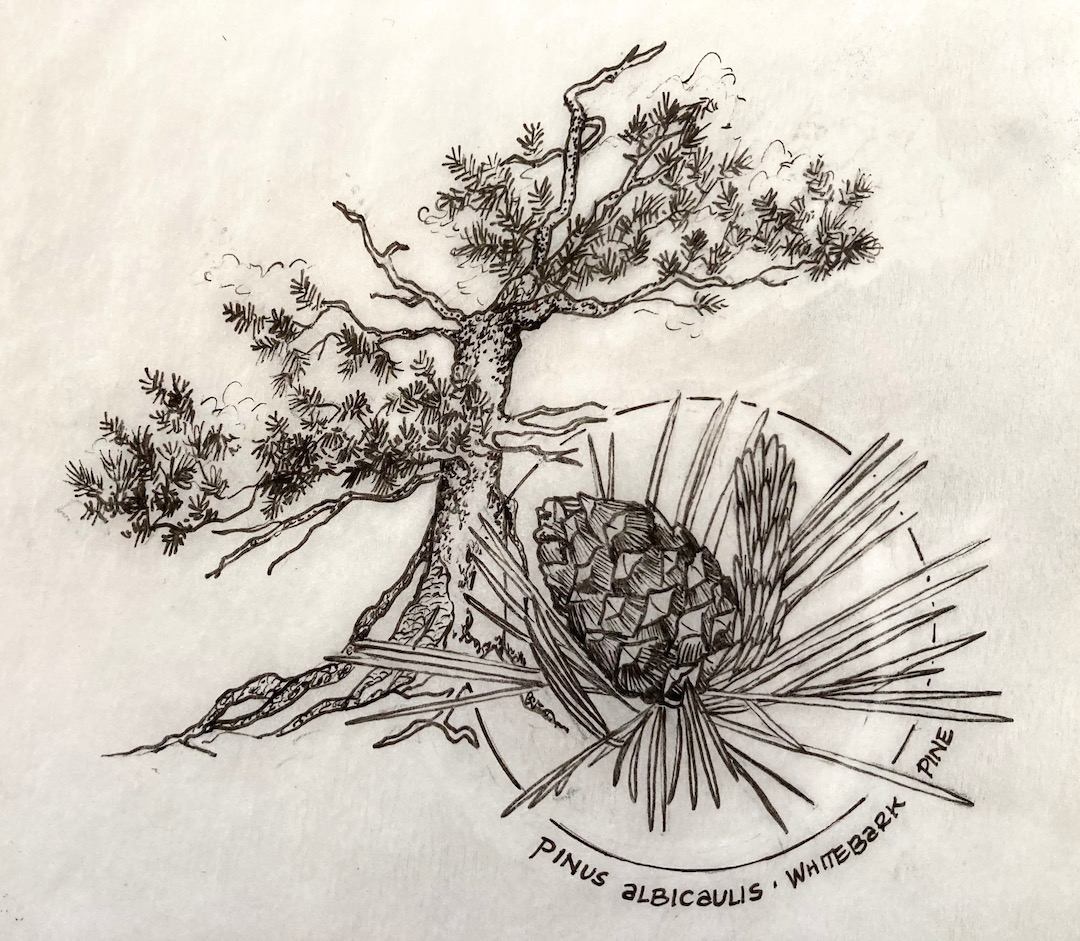
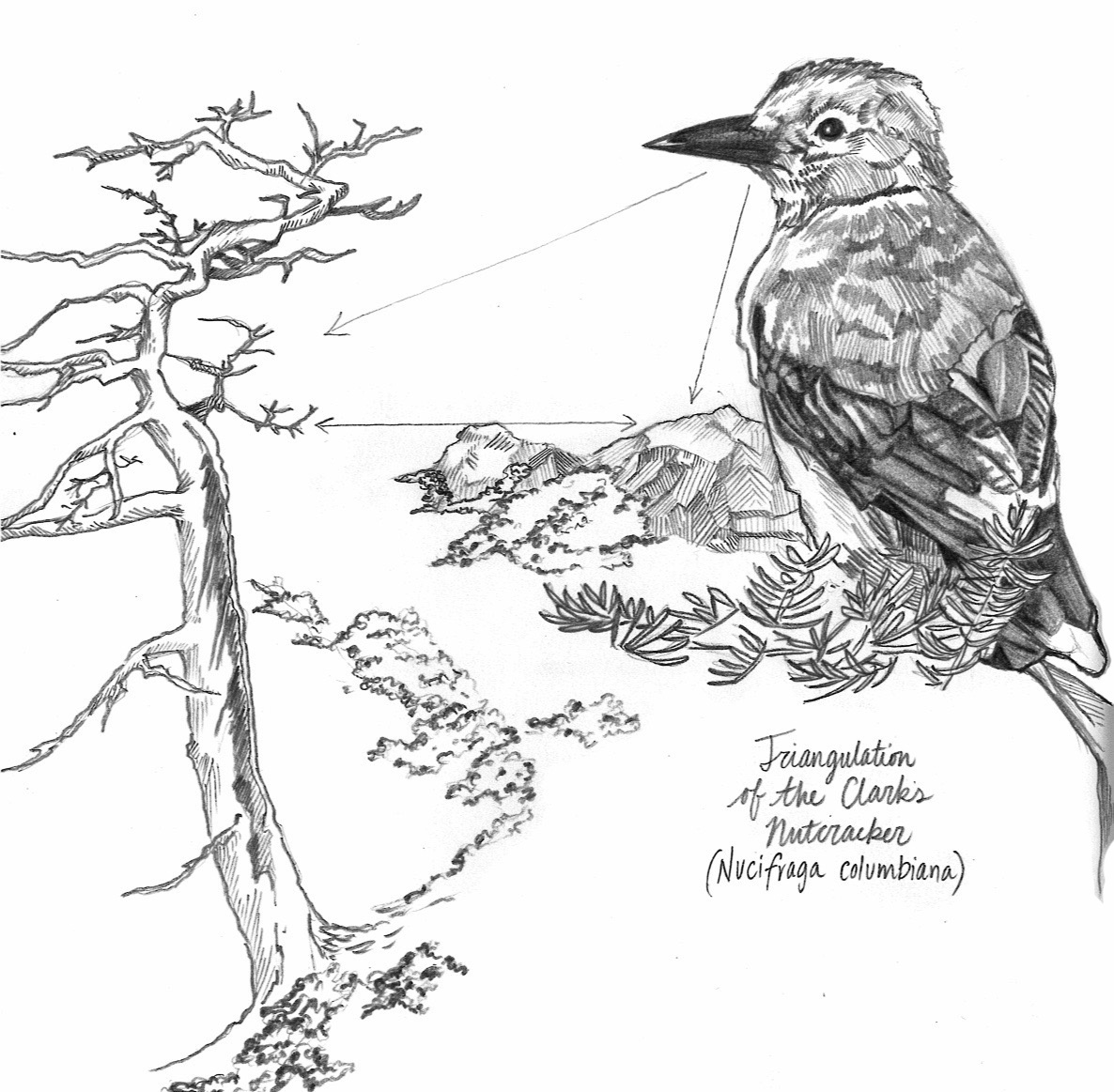
Pyramid Peak is embellished in this season’s first snow and I am reminded of distant cycles that affect our here and now. At high elevations in the Cascades, whitebark pine and Clark’s nutcracker exist in what scientists refer to as obligate mutualism; together, they are dependent on each other for survival. Simultaneously, both are keystone species — organisms that hold the ecosystem together and without which the landscape would gravely change.
Unlike other trees, whitebark pine is not a wind-dispersed species. Rather, it produces sizable, highly nutritive seeds that rely upon the Clark’s nutcracker to scatter. In tandem, these seeds serve as a crucial food source to Clark’s nutcrackers. Many of these seeds are forgotten in caches that then germinate into another year’s trees. But their mutualism is not lost purely on one another. Other species of plants and animals benefit from their relationship for subsistence, be it through food, shelter, or nesting.
Functioning as nurse logs for other conifers to root, whitebark pine nurtures life in what would otherwise be an inhospitable alpine environment. Their tolerance for harsh climates further secures snowpack and regulates snowmelt, both of which reduce erosion, stabilize soil, and regulate downstream flow. However, as our planet’s climate shifts, the high alpine is becoming increasingly susceptible to disease. Whitebark pine is swiftly collapsing from infections of blister rust, and with it ushering in dangerous implications for Clark’s nutcracker.
Other evergreen conifers provide similar nesting and nourishment structures for the creatures in their habitat. And, akin to the interdependence of whitebark pine and Clark’s nutcracker, other conifers also seek assistance from creatures for seed dispersal and microbial soil enrichment. Consequently, to what degree are these relationships in seemingly separate ecosystems dependent upon or influenced by that of the other? As the climate shifts, Douglas fir forests are increasingly important as secondary habitat for Clark’s nutcracker; yet is this from preference or necessity? As whitebark pine contends with its own survival, what impact trickles into the reliability of Deer Creek’s flow? Where do we as humans find ourselves within this web?
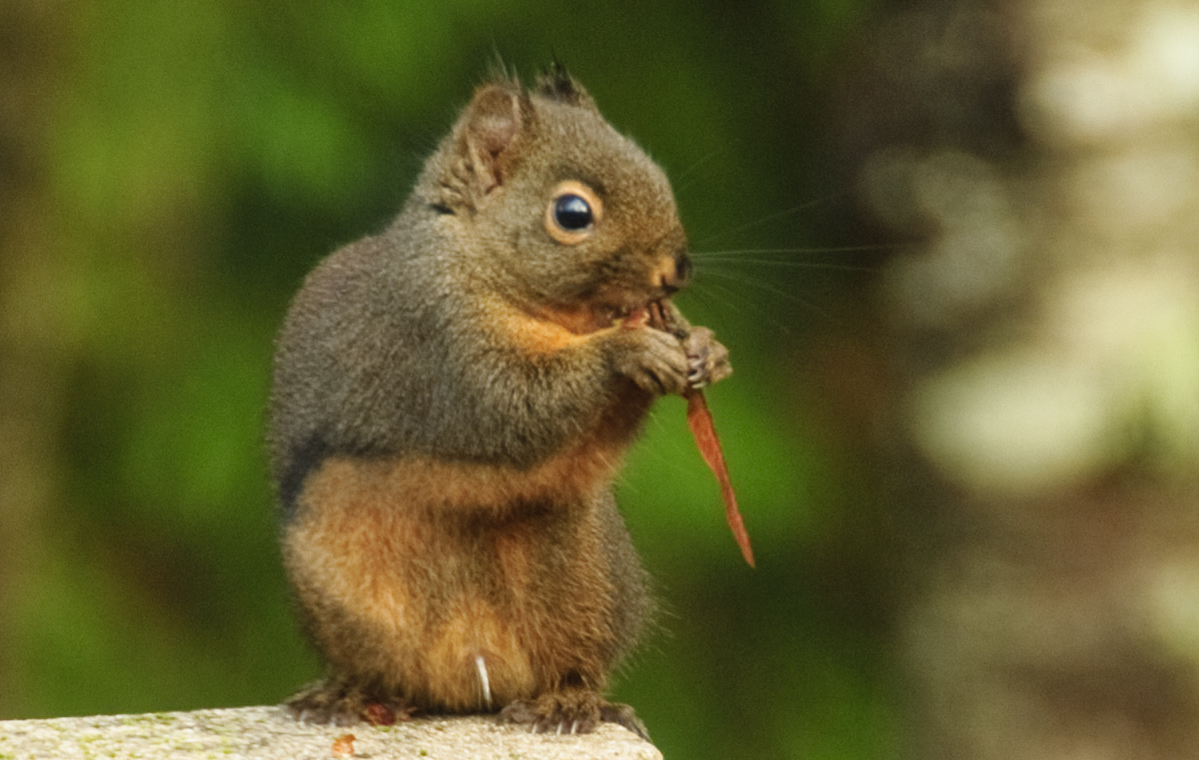
Photo by John F. Williams
It is evident that each plant, animal, and element has its own individual cycle that is embedded within the cycles of others. These loops are not closed; they emerge as a spiral because of our interdependence. Species act on their own behalf to thrive, but how quickly we forget that our survival is reliant upon the survival of others. To thrive, we must all give as much as we take. Soil provides plants with nutrients as equally as it absorbs plant tissues and elements.
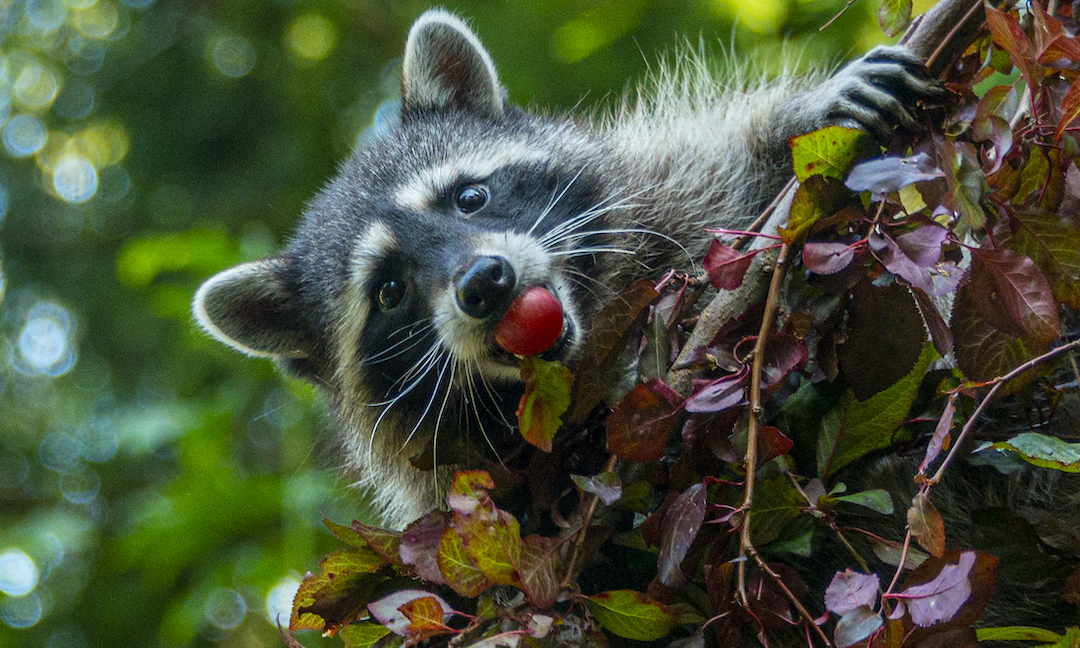
Photo by John F. Williams
Plants dispense nectar to moths and hummingbirds as equally as they accept pollination for another year’s growth. Pollinators become a food source to others as equally as others have been a food source to them. And thus, from our interdependence, the spiral continues. Relationships only endure in reciprocity, and cycles only curve when they are carried on. What cost is incurred if we fail to adhere to their cyclical fragility? Reciprocity with earth is an indigenous way of knowing, less a common consideration of settler-colonialists. What does reciprocity look like when this spiral reaches you?
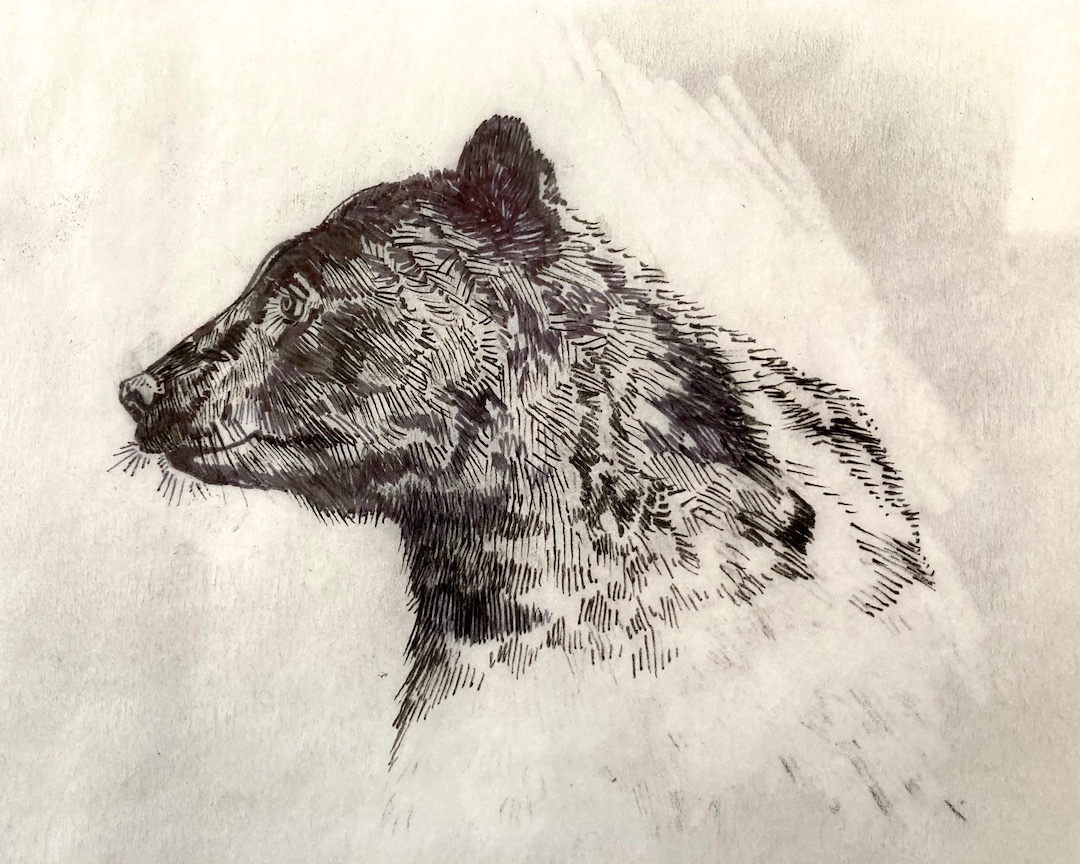
These plants, the spider and the web that weave them together, the black bear as he saunters through, the lazuli buntings perched above, they know this land. They are sustained by this land — not merely by the neighbors in their own community, but by natural systems cycling at a significant distance. They know the transference of sunlight across the sky, the essential thirst for rain, and the threat imposed if insufficiently prepared for winter.
We do not innately love what we do not know, yet loving and knowing too become cycles — of engaging, of committing, of falling off course and beginning again. When we quiet ourselves enough, temper ourselves to engage, we too may know the land. We too may realize that these cycles equally comprise us. May extending kinship to our ecosystems, as greatly as to their cycles, become the compass that guides our relationships; relationships as nascent as the dawn.
Nascency rose with the dawn;
the indigo of early morning
laden with gentility and sweetness
uniquely discernible
in decay and waiting.
Leaves once sated of chlorophyll
now cast in deciduous nets
across thousands of glittering dew drops.
Their copper and crimson yields
to eventual decomposition
and nutrient dispersal.
Soon, mushrooms will bloom in their place.
Today, the sky is absent
the exalted cacophony
of songbirds that filled this forest
in earlier months.
Today, stillness resounds.
Fall has come early this year.
The air is crisp, and I too shift
alongside the newness
that ventured in overnight;
it feels like settling.
In every direction
these surroundings
have changed –– have I?
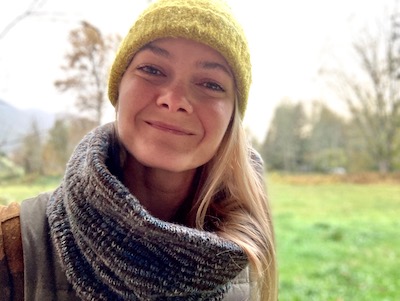
Raised among the salty waters of the Salish Sea, Zoe spent her youth immersed in tidepools and forests of the Pacific Northwest. After witnessing the profundity that is fostered through an appreciation for the natural world, Zoe sought a path that fuses natural curiosity with lifelong learning and children’s laughter. After earning an M.Ed. in 2018 from Huxley College of the Environment at Western Washington University and North Cascades Institute, she found her love for ecology and naturalist illustration. When she’s not working as an environmental educator, Zoe is likely deep in thought about bioluminescence, splitting rounds of firewood, or howling at the moon with her love and their four-legged fur babies.
Table of Contents, Issue #10, Winter 2020
Restoring Forests
by Dan Hintz, Winter 2020You can see this 2019 Mountains to Sound Greenway tree planting site at Lake Sammamish State Park, located along Issaquah Creek. Photo by Katie Egresi.You can see this 2019 Mountains to Sound Greenway tree planting site at Lake Sammamish State...
Salish Sea and Dinosaur Pee
by Sarah Lorse, Winter 2020 Photo by Sarah Lorseby Sarah Lorse, Winter 2020 Photo by Sarah LorseHow wonderfully wet things are here beside the Salish sea. Whether it is a big fat raindrop dangling off your nose or the impressive volume of a king tide, water is all...
See the Salish Sea by Saddle
by Jessica C. Levine, Winter 2020 Photos by Jessica C. Levineby Jessica C. Levine, Winter 2020 Photos by Jessica C. LevineI spend a considerable amount of time pondering cycles. As a cyclist, I bike year round. I’m also a naturalist and place-based science educator....
Many Cycles of Nature
by Leigh Calvez, Winter 2020 Photos by John F. Williams except as notedby Leigh Calvez, Winter 2020 Photos by John F. Williams except as notedAs children we come into a world filled with the cycles of nature. We watch with wonder as the first crocuses of spring poke...
Swallow Season
by Donna Bunten, Winter 2020 Photos by Donna Bunten except as notedPhoto by John F. WilliamsPhoto by John F. Williamsby Donna Bunten, Winter 2020 Photos by Donna Bunten except as notedI dread August—the end of summer, sliding farther down the slope towards darkness,...
Sacred Stream Insects
by Gavin Tiemeyer, Winter 2020 Photos courtesy of King County except where notedby Gavin Tiemeyer, Winter 2020 Photos courtesy of King County except where notedLearning about the natural cycles that govern the health of the Salish Sea starts with peering into your...
Issue 10 Poetry
Winter 2020Photo by Adelia RitchiePhoto by Adelia RitchieWinter 2020Water Drop By Mahathi Mangipudi Wide strokes of grey paint the sky On the windward side of the Cascades Air masses from the Pacific Ocean Saturated with water vapor Condense into little...
The Many Lives of Tree
by Pat Kirschbaum, Winter 2020Photo by John F. WilliamsPhoto by John F. Williamsby Pat Kirschbaum, Winter 2020We are so lucky in the Pacific Northwest to have many places to go where we can be surrounded by trees. As I sat alongside a nearby stream recently, I...
Community Gardens
by Alison Ahlgrim, Winter 2020Photo by Michael YatesPhoto by Michael Yatesby Alison Ahlgrim, Winter 2020My first visit to Everett was a reconnaissance mission to see if my husband and I might like to live there. Drawn to the water, we ended up at the waterfront...
COPYRIGHT
Copyright SEA-Media
All rights reserved. Reproduction or distribution, in whole or in part. without consent of copyright owner is strictly prohibited — except for brief quotations in critical reviews and other noncommercial uses permitted by copyright laws.
SEA-Media is a 501(c)(3) nonprofit corporation
PLEASE HELP SUPPORT
SALISH MAGAZINE
DONATE
Salish Magazine contains no advertising and is free. Your donation is one big way you can help us inspire people with stories about things that they can see outdoors in our Salish Sea region.
We also don't advertise Salish Magazine, so please spread the word of this online resource to your friends and colleagues.
Thanks so much for your interest and your support.